
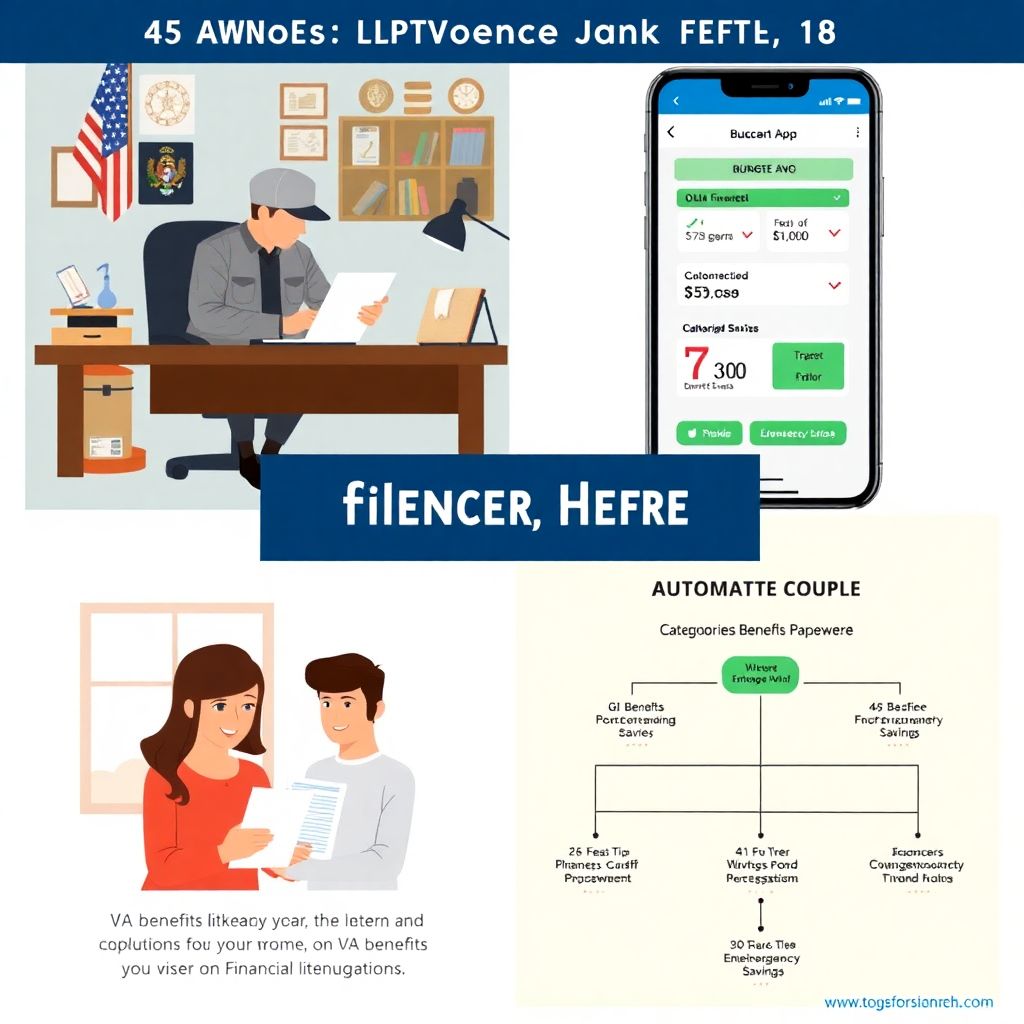
Context and measurable needs
Financial literacy for veterans is shaped by transitions: variable income after separation, benefits navigation, and credit shocks from relocations. Surveys by federal agencies consistently show elevated exposure to high-cost credit and uneven emergency savings among former service members compared with civilians. While definitions vary, the pattern is robust: liquidity buffers are thin, debt service ratios rise after discharge, and benefit complexity raises frictions. These structural factors explain why money management tips for veterans must emphasize cash‑flow stabilization, benefit optimization, and credit hygiene rather than generic advice aimed at stable civilian households.
Comparing approaches to behavior change
Two dominant models coexist. The DIY path leverages budgeting apps, debt snowball/avalanche methods, and automated savings; it scales cheaply and suits self‑starters, but attrition is common without accountability. The coaching path—peer mentors, certified counselors, or unit‑based workshops—improves adherence and benefit uptake yet demands time and trust. A hybrid wins in practice: automated categorization plus monthly human check‑ins. For veterans financial planning, adding a benefits‑aware planner reduces errors around Tricare, VA disability, and GI Bill interactions that pure algorithms routinely misclassify.
Operational money management mechanics

Effective budgeting advice for veterans starts with segmenting cash flows into guaranteed benefits, variable wages, and episodic entitlements. Build a three‑tier reserve: a 30‑day buffer in checking for volatility, a 3–6 month emergency fund in high‑yield savings, and a sinking fund for annual expenses like insurance or PCS‑related moves. Map debt by APR and servicemember protections; apply avalanche as default, but use snowball when morale is binding. Consolidation only pencils out if weighted APR drops after fees. Automate retirement and HSA contributions once a stable surplus is verified over two full pay cycles.
Evidence, statistics, and risk vectors
Public datasets indicate higher rates of service‑connected disability, earlier retirement ages, and distinctive credit profiles among veterans. These correlate with income variability and medical cost uncertainty, elevating default probabilities in stress periods. Credit report studies show improved on‑time payments when consumers receive real‑time nudges and benefit reminders, which supports veterans financial education programs that integrate alerts with claims status. Household simulations suggest that a 1–2 percentage‑point reduction in borrowing costs via credit score repair can deliver more lifetime value than small equity overweights, given typical horizons post‑separation.
Forecasts and macro sensitivities

Over the next five years, expect intensified digitization: claims APIs, payroll‑linked savings, and AI budgeting will raise adherence while lowering coaching costs. As interest rates normalize from recent peaks, refinancing windows may reopen, improving debt service metrics for households that maintained prime scores. Forecasts also point to growth in targeted fintech serving veterans, with embedded benefits verification reducing fraud and friction. Scenario analysis indicates that inflation persistence primarily threatens low‑buffer households; therefore, indexation of benefits and COLA mechanics must be integrated into veterans financial planning models.
Economic aspects and household balance sheets

The economics are straightforward: optimize net disposable income by minimizing frictions. Align insurance deductibles with emergency‑fund size, convert volatile gig income into smoothed budgets via envelope systems, and time large purchases around benefit disbursements to reduce credit utilization spikes. Tax efficiency matters: coordinate GI Bill housing stipends, disability exclusions, and retirement contributions to avoid phase‑out cliffs. Money management tips for veterans should include disputing erroneous military‑related derogatories, leveraging SCRA‑style rate protections where applicable, and calibrating mortgage choices to PCS probability and local rent‑price ratios.
Industry impact and program design
As demand grows, lenders, insurers, and ed‑tech will compete to embed veterans financial education programs into onboarding. Institutions that integrate benefits counseling with credit building can lower acquisition costs and delinquency, reshaping underwriting for this segment. For budgeting advice for veterans to scale, providers must standardize data on entitlements and eligibility, enabling real‑time verification. This industry shift rewards firms that combine secure data exchange, behavioral design, and fiduciary alignment. Ultimately, robust financial literacy for veterans strengthens household solvency and reduces systemic risk in communities with high military concentration.