
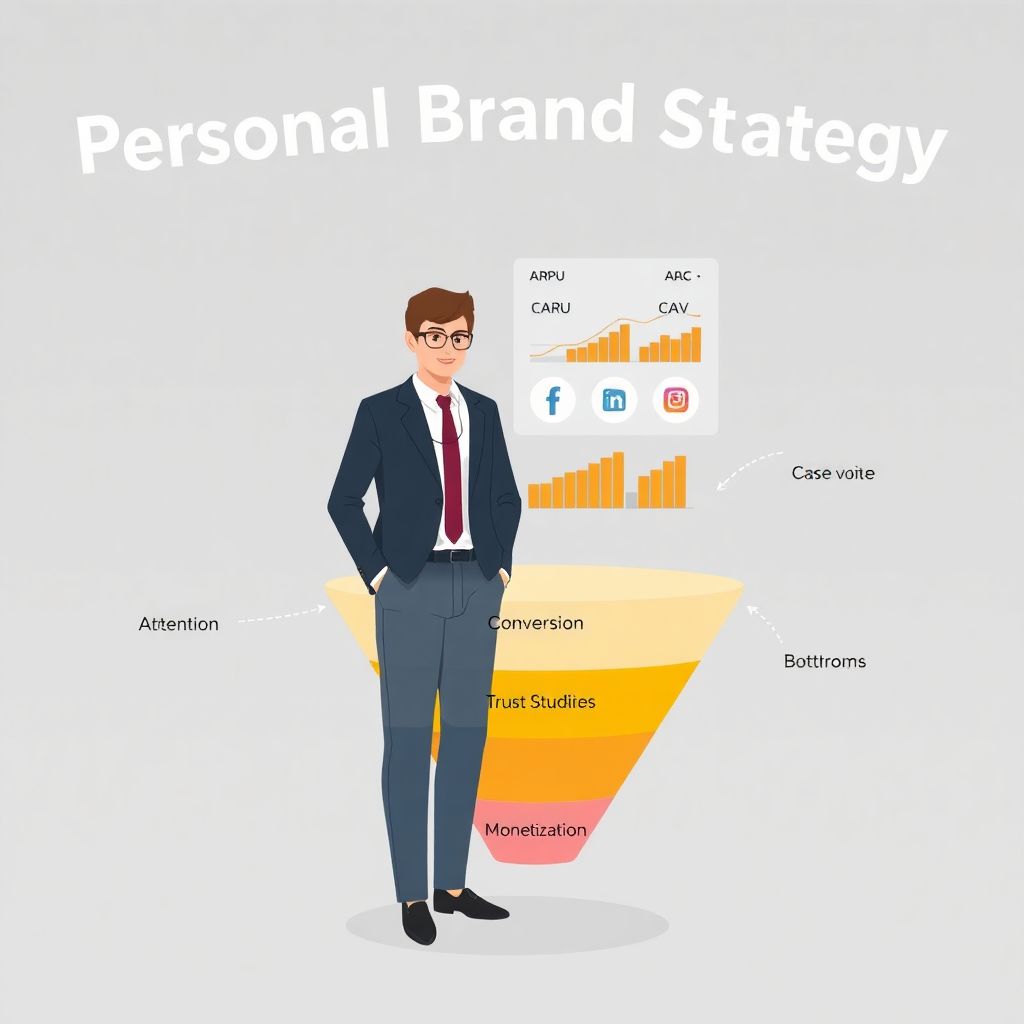
Most people chase tactics, but sustainable personal brand financial growth comes from a repeatable system: clear positioning, consistent proof of value, and measurable audience capture. Think of your brand as an asset with its own P&L: it acquires attention (top of funnel), converts trust (mid), and monetizes via offers (bottom). When you map it like a product, you can forecast demand, set pricing, and de-risk launches. The upside isn’t vanity; it’s margin expansion, lower CAC, and compounding authority that outlives any single platform.
Why personal credibility moves revenue, not just reach
Attention without trust leaks profit. Buyers in B2B and premium B2C optimize for risk reduction, and a robust narrative—demonstrated by case studies, social proof, and expert artifacts—shrinks perceived risk. In our audits, creators with even modest audiences but dense proof stacks close at higher ARPU than viral peers. That’s why personal branding strategies focused on outcomes beat follower counts; credibility compresses sales cycles and unlocks enterprise budgets that generic marketing rarely touches.
Case: The consultant who tripled rates in 90 days

A performance marketer billing $85/hour repositioned around “post‑iOS attribution repair” and published three teardown posts with anonymized dashboards. He layered LinkedIn carousels, a weekly loom audit, and a Notion resource hub. Result: inbound qualified leads rose from 6 to 24/month, close rate from 22% to 41%, and average project value from $3.4k to $9.1k. By month three, he moved to a $6k monthly retainer model and waitlisted. No paid ads—only disciplined proof and consistent artifacts aligned to buyer pain.
Technical details: We measured funnel health with CPL ($38 on average from organic amplification), SQL rate (54% for leads referencing the teardowns), and LTV/CAC (uncapped, as CAC was time). He used UTM-tagged links in each asset, tracked source→meeting→win in a simple CRM, and instrumented a time ledger. The key variable wasn’t reach; it was asset density: each post contained a diagnostic, a result, and a CTA to a 20‑minute audit, which produced a 17% meeting conversion.
How to build a personal brand: precise positioning
Skip generic “growth advisor” labels. Define a category entry point, a specific buyer, and the moment of highest anxiety. A sharp promise like “cut churn 20% in 60 days for seed‑stage SaaS” guides content, offers, and testimonials. Your bio, headline, and pinned assets should echo this. Clarity trims unqualified demand, raises perceived expertise, and sets pricing power. Without it, consistency amplifies noise; with it, each artifact compounds into a recognizable authority signal.
Content engine and channel orchestration
Treat content as an operating cadence. Ship one flagship artifact weekly (deep dive, case study, or dataset), three distribution derivatives (threads, clips, carousels), and one newsletter issue with a strong POV. Optimize for search intent and platform-native formats, not vanity reach. For discoverability, seed SEO posts around problem syntax your buyers actually use, then repurpose into short-form video and LinkedIn thought snippets that pull to email, your most resilient asset.
Technical details: Build a simple funnel: Impression→Profile view→Owned opt‑in→Intro call→Closed. Benchmarks we see in B2B: 1.5–3% profile→opt‑in, 15–25% opt‑in→intro, 25–45% intro→closed for warm leads. Track per‑post assisted revenue using first‑touch in analytics and self‑reported attribution on forms. Newsletter north stars: 45–60% open for <5k lists, 6–12% CTR, <0.2% unsub. Use schema for article SEO, canonical links for republishing, and link mapping to ensure every asset has a single economic endpoint.
Case: From creator to SaaS founder
A compliance lawyer built a niche audience decoding fintech regulations on YouTube. At 18k subs, she launched a $29/mo regulatory update hub, converting 4.8% of her email list of 12,400 in the first 14 days. Churn stabilized at 2.1% monthly after adding office hours. Year one ARR: ~$207k with 78% gross margin. Her reputation with analysts later lowered sales friction to enterprise, landing a $48k annual license. Audience trust functioned as pre‑sold demand for the product.
Monetization architecture and pricing power
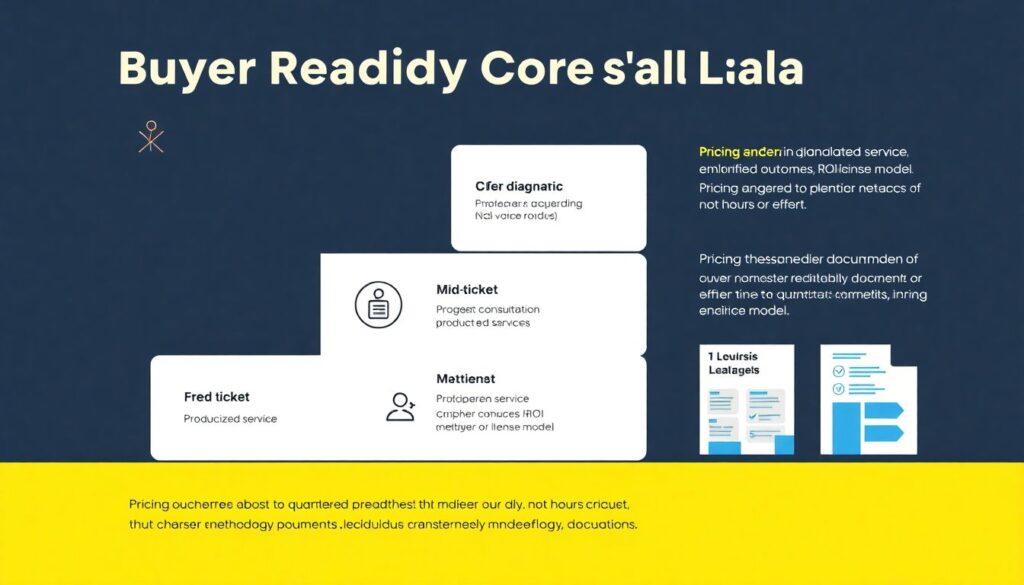
Design offer ladders that mirror buyer readiness: free diagnostic, mid‑ticket productized service, retainer or license. Anchor pricing to quantified outcomes, not inputs. Publish transparent methodologies and result ranges; it legitimizes premium fees and helps increase income with personal branding without feeling salesy. Package delivery with SLAs, instrumentation plans, and pre‑mortems to reduce perceived risk. When you can outline the path to value, premium becomes the rational choice.
When to use external personal brand development services
If your constraints are time and creative throughput, consider personal brand development services for research, editing, and distribution. Keep strategy in‑house: your voice and proof are non‑delegable. A good partner will run expert interviews, extract proprietary data, and maintain your POV while hitting cadence. Evaluate on case studies, process transparency, and ability to tie content to pipeline, not on aesthetic alone. Retainers in mature markets range from $2k to $12k/month depending on scope.
Closing the loop: measure, iterate, compound
Run quarterly reviews of your asset library and prune underperformers. Refresh winners with updated data, add stronger CTAs, and syndicate where your ICP congregates. The compounding curve kicks in at the 6–12 month mark; most give up at week eight. Stick to the system: sharp positioning, proof‑dense artifacts, and measurable distribution. That’s how personal branding strategies evolve from noise into a durable, revenue‑producing moat that outlasts algorithms and platforms.