
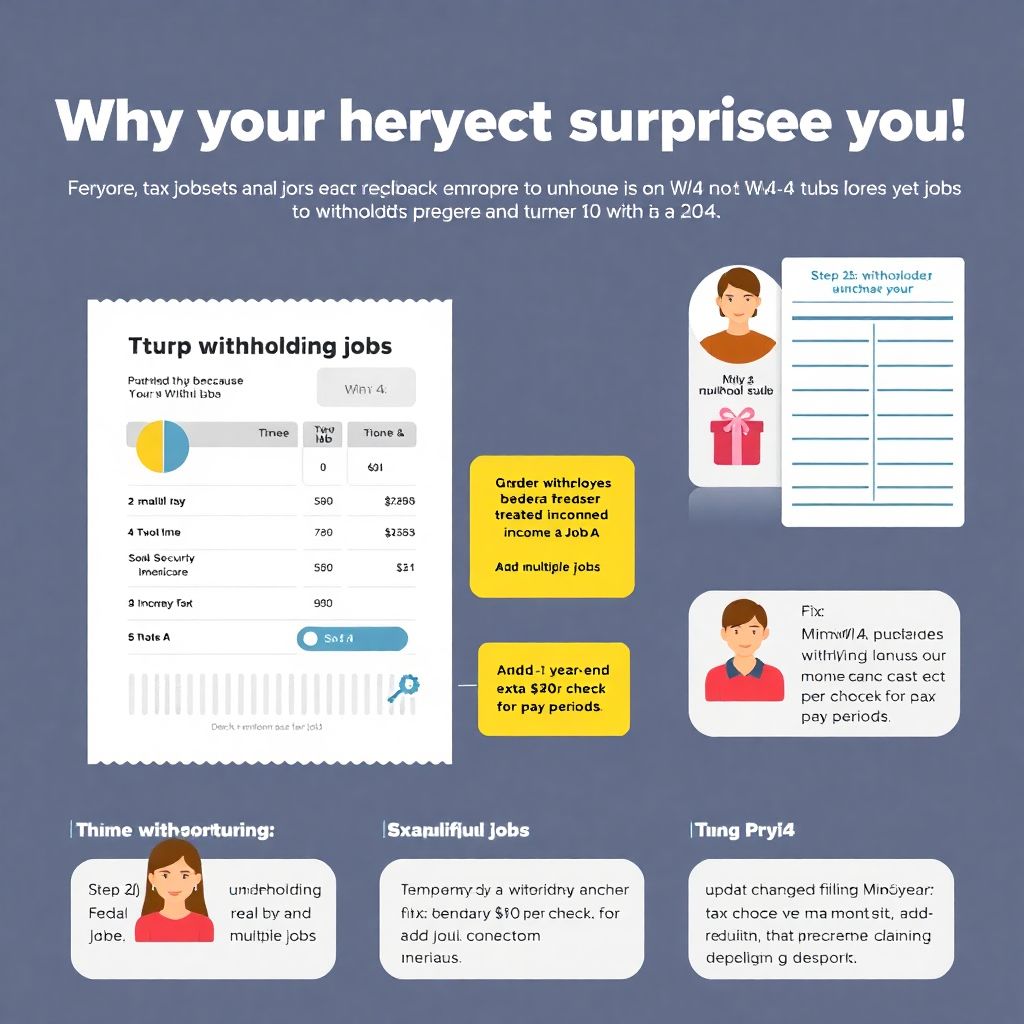
Why your paycheck surprises you
Your paycheck isn’t just hours times rate minus a mystery chunk. That “chunk” is federal income tax withholding, plus Social Security, Medicare, and maybe state taxes. The surprise comes from how your employer estimates your annual income and slices withholding across pay periods. If you work overtime, get a bonus, or have two jobs, the system can overshoot or undershoot. That’s why two coworkers with similar salaries can net different amounts. The fix starts with understanding what your W-4 tells payroll and how quickly life changes throw it off.
Real cases: when withholding goes wrong
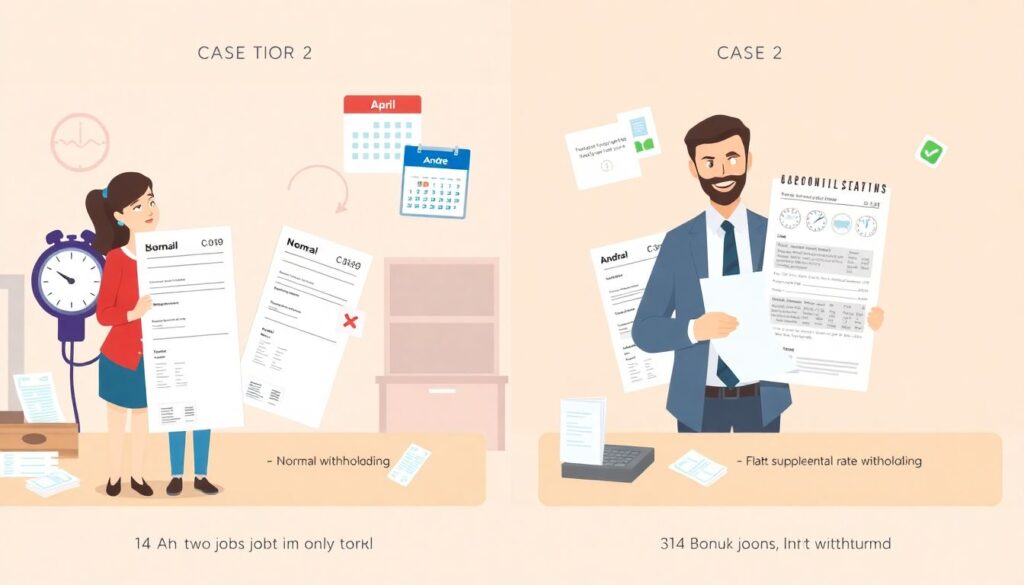
Case one: Mia picked up a second part-time job. Each employer withheld as if their paycheck was her only income, leaving her short at filing time. Case two: Andre got a big year-end bonus taxed at a flat supplemental rate; the next spring, his refund was tiny because earlier months were too light. Case three: Priya switched from single to married midyear but never updated forms, creating an accidental underpayment. In each situation, the outcome wasn’t fate—it was a W-4 mismatch that could be tuned.
Non‑obvious fixes you can try
– Tell payroll to withhold a fixed extra dollar amount per check when you expect spikes. It’s a simple buffer that works better than guessing allowances. After a bonus or overtime stretch, drop the extra so you don’t overpay. This trick helped Andre smooth his bonus: he set a temporary $120 add‑on for six checks, then removed it once the busy season ended, keeping cash flow steady without waiting for a refund next April.
– If you juggle two jobs, choose one as your “withholding anchor” and push more tax there. On the other job, set minimal withholding but add a specific extra amount on the anchor to cover combined income. Mia did this: at Job A she enabled the multiple jobs box and added $80 per check; at Job B she kept standard settings. Her April bill turned into a small refund, and her monthly budget finally stabilized.
– Seasonal earners can sync withholding to their earning calendar. During peak months, increase the per‑check add‑on; in off months, remove it rather than pausing withholding entirely. That rhythm protects you from penalties without starving your slow season. Think of it like cruise control on hills: add power when climbing, ease up when coasting, but always keep a baseline so the year‑to‑date trajectory stays on target.
Alternative methods to dial it in
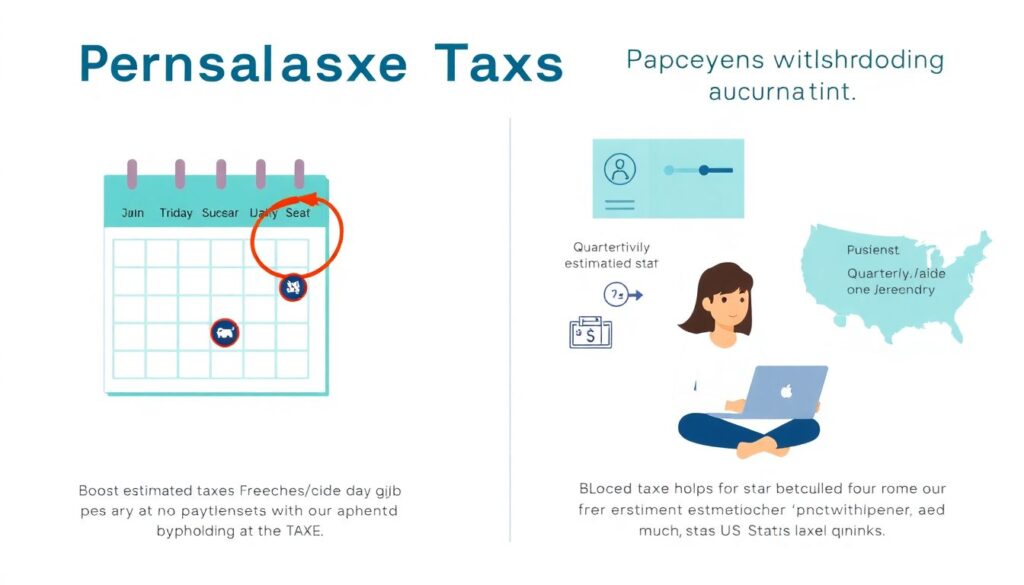
Some folks prefer quarterly estimated taxes, especially freelancers or people with sizable side gigs. Others lean on paycheck automation. You can blend both: boost withholding at the day job and make small estimates after big side‑income months. If you live in a state with its own quirks, mirror the strategy for state forms too. And if you receive equity, plan around vest dates: a one‑time vest can distort the year unless you preemptively raise withholding for a few pay cycles before and after.
Pro tips and workflows
– Start with your latest stub: check filing status, extra withholding, and year‑to‑date tax versus year‑to‑date income. If the ratio looks low early in the year, it may be fine; by midsummer, it should roughly track your effective rate. For windfalls like bonuses, confirm whether your employer uses the supplemental method, and temporarily increase your add‑on so that the net doesn’t trick you into overspending what will later be owed.
– Learn how to fill out W-4 with intent. Step 2(b) for multiple jobs is powerful but easy to miss, and Step 4(c) is your precision dial for extra dollars. Revisit after life events—marriage, child, home purchase, or a raise. Priya fixed her underpayment by checking the multiple jobs box and adding $50 per paycheck; she revisited it again after claiming a dependent so the extra could be reduced without risking a surprise bill.
– Keep a simple rule: any time your monthly income changes by 10% or more, adjust paycheck withholding for the next two pay periods and reassess. This rolling tweak keeps you close to break‑even. Use calendar reminders each quarter, and save one prior stub to compare. Consistency beats one‑time heroics, and small changes compound into a smooth tax season with no panic when forms arrive.
W‑4 timing and life changes
Submitting a fresh W‑4 midyear isn’t dramatic; it just updates your next checks. If you had a midyear event—new dependent, second job, or pay jump—act within the next pay cycle so the fix compounds. Waiting until December compresses the catch‑up and can feel harsh. If cash is tight, spread the correction: add a moderate extra amount now and revisit in six weeks. Your goal isn’t perfection; it’s a glide path that avoids penalties and refunds the size of a vacation.
Tools that actually help
Before guessing, run numbers through a paycheck tax calculator to see how net pay shifts when you toggle filing status or extra withholding. Pair it with a tax withholding calculator that models your full year, especially if you have side income or large deductions. These tools make “what if” scenarios cheap and quick. Compare the result to your stub’s year‑to‑date pace; if the gap is wide by autumn, it’s a signal to adjust paycheck withholding while there’s time to spread the impact.
Year‑end strategy without drama
In the last quarter, focus on predictability. If you’re behind on federal income tax withholding, add a flat amount to each remaining check rather than one painful lump. Expecting a bonus? Pre‑raise withholding two pay periods beforehand. Harvesting deductions—like higher 401(k) contributions—can lower taxable income and reduce the needed add‑on. Keep receipts for credits, and after the final stub, do a quick dry run and freeze settings until the new year unless something major changes.