
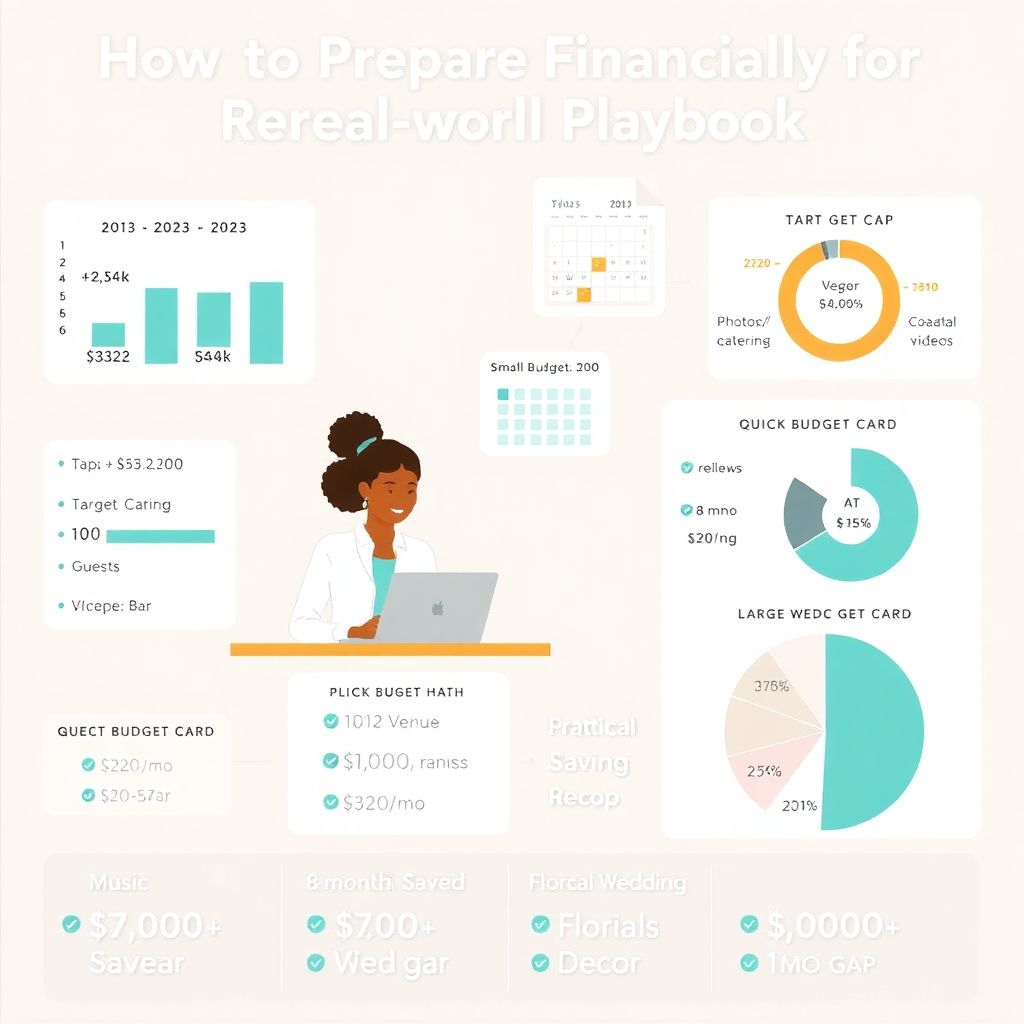
How to Prepare Financially for a Wedding: A Real-World Playbook
Planning a wedding is part spreadsheets, part emotions, and a lot of prioritizing. Money doesn’t have to steal the joy—if you set up the right system early. Let’s walk through a practical, no-fluff approach that real couples are using right now.
What weddings actually cost in 2023–2025
Before we talk tactics, let’s anchor to real numbers.
– In the U.S., the average wedding cost reported by major industry trackers hovered around:
– 2023: about $35,000 (The Knot Real Weddings Study; urban markets often exceeded $40,000)
– 2024: early reports and venue/vendor rate cards showed a mild bump to roughly $35,000–$37,000, driven by food inflation and labor
– 2025: year-to-date inquiries and contracts suggest a further 2–4% increase in many metro areas, with coastal cities regularly landing $40,000–$55,000 and small-town weddings often in the $18,000–$28,000 range
Those ranges vary widely by guest count, location, and day-of-week. But they’re honest benchmarks to sanity-check your plan.
Real couple snapshot
Maya and Luis booked a Saturday in late September, 110 guests, mid-sized city. Their initial quotes in 2024 came to $36,200. Re-checking in early 2025, the same caterer revised menus +3.5% and staffing +2%. They trimmed guest count to 100 and moved to a Friday to land at $33,800—without compromising on photography or live music.
Start with a number and a date (in that order)
Pick a cap you won’t cross. Then set the date around vendor availability that fits that budget, not the other way around.
– Cap first, calendar second
– Guest count drives everything
– Non-negotiables get funded before “nice-to-haves”
Technical details: A quick budget math block
– Target cap: $32,000
– Guests: 100
– All-in per guest: $32,000 ÷ 100 = $320 (helpful for tradeoffs)
– 8-month runway: $32,000 ÷ 8 = $4,000/month required savings
– If you already have $8,000 saved: Gap $24,000 → $3,000/month
If that number makes you sweat, reduce guests by 10–20, move to Friday/Sunday, or extend the timeline.
A practical wedding cost breakdown you can actually use
Here’s a realistic split many planners use as a baseline, then adjust:
– Venue + catering + bar: 45–55%
– Photo/video: 10–12%
– Attire/beauty: 6–8%
– Music/entertainment: 8–10%
– Florals/decor/rentals: 8–12%
– Stationery/favors/website: 2–4%
– Planner/coordination: 5–10%
– Transportation: 1–3%
– Misc/insurance/permits/fees: 3–5%
– Contingency: 5–10%
On a $30,000 cap, a 50% venue/catering share means $15,000. If your favorite venue quotes $18,000 all-in for food/bev/space, you’ll need to compress other categories or raise the cap. That’s the point of a working wedding cost breakdown—it shows tradeoffs in plain sight.
Technical details: Turning a split into dollars
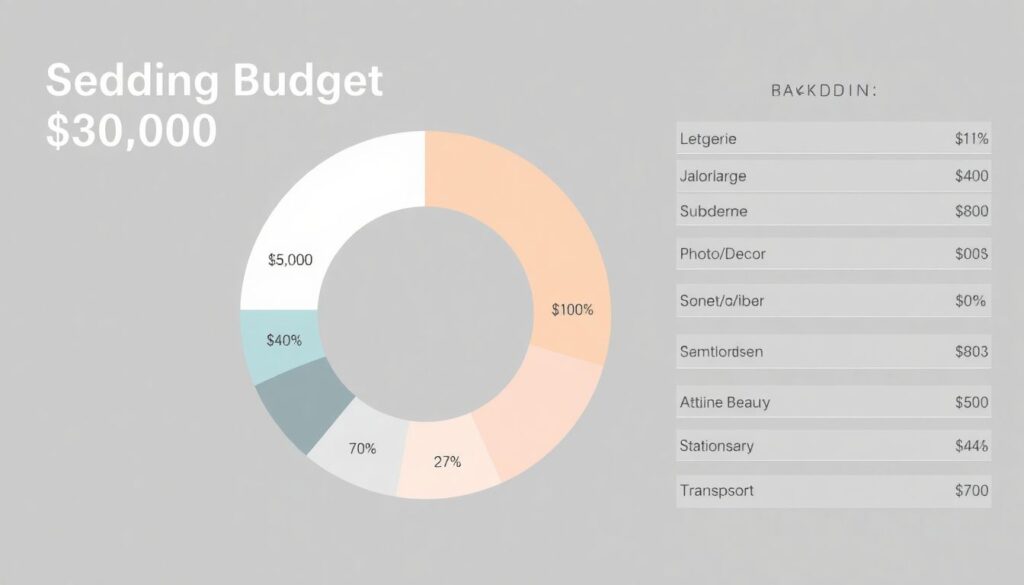
Budget $30,000 example:
– Venue/catering/bar (50%): $15,000
– Photo/video (11%): $3,300
– Music (9%): $2,700
– Florals/decor (9%): $2,700
– Attire/beauty (7%): $2,100
– Planner (6%): $1,800
– Stationery (3%): $900
– Transport (2%): $600
– Misc + insurance (3%): $900
– Contingency (5%): $1,500
If service fees + tax are not included (commonly 20–28% combined in the U.S.), back them into the venue/catering line or you’ll blow the cap at contract time.
How to save money for a wedding without feeling deprived
You don’t need austerity; you need automation and a couple smart levers.
– Open a high-yield savings account (HYSAs in 2023–2025 have commonly paid ~3–5% APY). Automate transfers the day you’re paid.
– “Reverse budget”: Pay wedding and essentials first, then discretionary.
– Trim the big 3 for six months: housing (sublet a room or negotiate), transportation (pause rideshares, use transit), dining (set a weekly cap).
– Cut guest list by 10–20 people. At $180–$260 per guest in many markets, that’s an immediate $1,800–$5,200 saved.
– Choose a Friday or Sunday; off-peak months (Jan–Mar, late Nov) can shave 10–25% on venues and vendors.
Technical details: A 10-month savings schedule
Goal: $24,000 in 10 months
– Employer bonus earmark: $4,000
– Monthly auto-transfer: $1,600 × 10 = $16,000
– Side income (two weekends/month): $400 × 10 = $4,000
– Expected HYSA interest at 4% APY (declining balance): ≈ $250–$350
Total: ≈ $24,250–$24,350
Jess and Andre used this exact structure, plus swapped a Saturday to a Sunday, freeing $2,800 that covered their videographer.
Use tools, not guesswork
A good wedding budget calculator is worth its weight in gold. Plug in guest count, city, and must-haves to see category ranges instantly. Then override with actual quotes from vendors. Update weekly; your budget is alive, not a PDF.
– Keep quotes, deposits, due dates, and balances in one shared sheet
– Track “quoted vs. contracted vs. paid”
– Add a “decision deadline” column to avoid indecision penalties
What’s changed since the pandemic-era surge
– Staffing and food costs stayed elevated through 2023–2024; 2025 hasn’t fully reversed that.
– Demand normalized, but prime Saturdays still book 12–18 months out in popular metros.
– Cancellation clauses are stricter than pre-2020. Read force majeure and reschedule fees carefully.
Technical details: Deposits and fees you’ll actually see
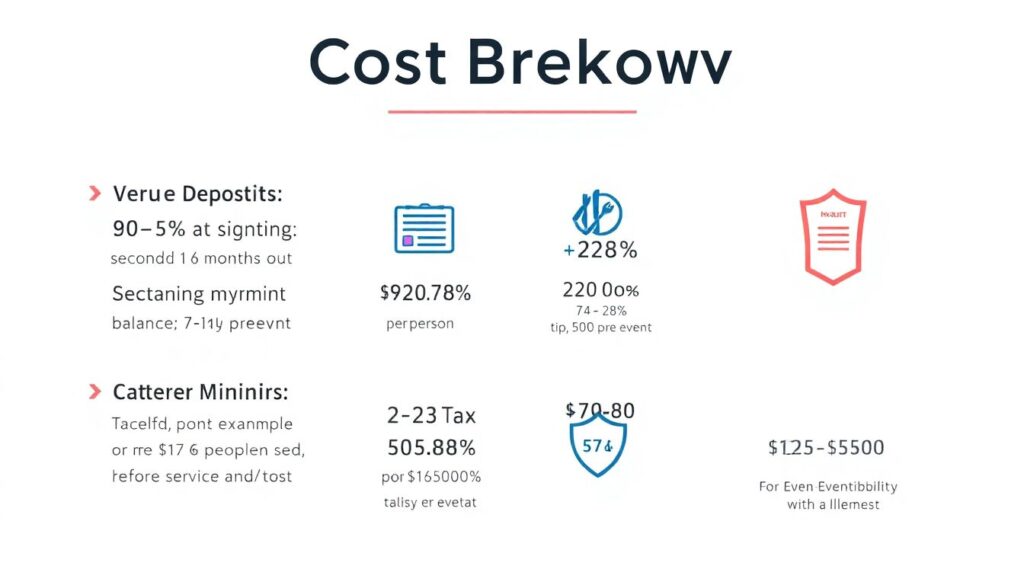
– Venue deposits: 20–50% at signing; second payment 6 months out; balance 7–14 days pre-event
– Caterer minimums: Often $90–$180 per person before service and tax
– Service + tax: Commonly 20–28% combined; on $15,000 food/bev, that’s $3,000–$4,200
– Insurance: $125–$500 for event liability with host liquor coverage
– Overtime: $300–$1,000 per hour for venue; $200–$500 per vendor per hour
When, if ever, to consider wedding loans
I’m pro-cash-first. But let’s be adults about realities.
– Personal loan APRs in 2024–2025 often range from about 8% to 20% depending on credit
– A $10,000 loan at 12% for 36 months costs about $332/month; total interest ≈ $1,940
– If you’re using debt, set a hard cap and tie repayment to a concrete plan (bonus, RSU vest, car payoff rolling off)
Debt should fund timeline constraints, not upgrades. Fund the date, not the extras.
Technical details: Simple loan math
Loan: $8,000 at 11% APR, 24 months
– Monthly payment ≈ $372
– Total interest ≈ $928
– Compare to saving that $8,000 over 8 months: $1,000/month plus a small HYSA interest gain. If you can wait, saving wins almost every time.
Vendor strategy that protects your budget
– Shortlist three vendors per category; ask for itemized quotes
– Request “value-engineer” options: fewer floral types, smaller wedding party bouquets, or a DJ + live sax hybrid
– Lock what moves: Photographers and planners book out early; linens can wait
– Ask about cash or off-peak discounts—but never at the expense of contract clarity
And always confirm what’s included: setup, teardown, staffing ratios, and equipment. Hidden rentals can ambush you.
Guest count: your master lever
If you need to cut $6,000 fast, don’t start with flowers—start with heads.
– Cut 25 guests at $220/guest average: ≈ $5,500 saved
– Or host a plated dinner for family (60 guests) and a larger dessert-and-dancing reception later
It’s your day; build it around connection, not obligation.
Contingency and “surprise” lines you’ll be glad you planned
– 5–10% contingency for price creep and last-minute needs
– Weather plan: tent holds, heaters/fans
– Transportation buffers if ceremony and reception are far apart
– Postage and reprints for stationery changes
Technical details: A clean, final prepay checklist
– Reconfirm headcount and dietary needs at T–14 days
– Zero out vendor balances; keep receipts and bank confirmations
– Print a one-page payment ledger for day-of coordinator
– Set gratuities in labeled envelopes; typical ranges:
– Lead server or captain: $2–$5 per guest equivalent
– Delivery/setup crews: $25–$50 per person
– Officiant: $75–$150 (or donation)
– DJ/band: $50–$100 per performer
Putting it all together
– Define a non-negotiable cap based on cash flow and timing
– Use a wedding budget calculator to model scenarios quickly
– Build a realistic wedding cost breakdown, then plug in real quotes
– Automate savings; keep money in a separate HYSA
– Book vendors in order of scarcity; read every clause
– Use wedding loans only if the math (and timeline) demand it
You can absolutely design a beautiful celebration without financial whiplash. Set the number, let it guide the plan, and keep your eye on what you’ll remember a decade from now: the faces in the room, not the chair style.