
Building a financially secure future on a fixed income isn’t about deprivation; it’s about clarity, repeatable habits, and smart use of simple tools. When your paycheck or pension doesn’t flex, your plan must. The good news: predictability can be a superpower if you set up systems that capture small wins automatically. Below you’ll find an actionable playbook—with expert-backed moves—to help you stabilize cash flow, grow savings, and reduce risk without adding complexity to your life.
Essential tools that make fixed-income planning easier
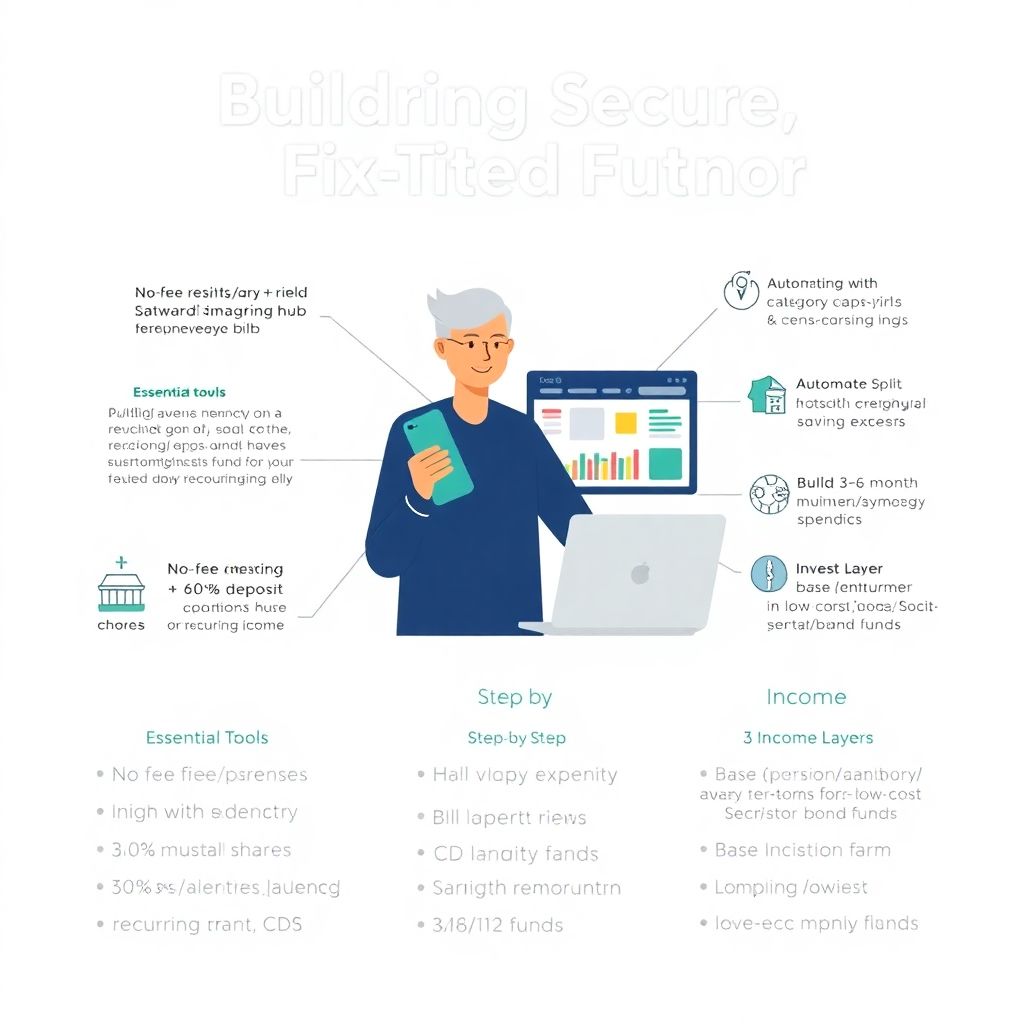
A fixed income rewards consistent, low-maintenance tools that do the heavy lifting for you. Start by pairing a no-fee checking account with a high-yield savings hub and a clear budgeting dashboard. Many experts suggest automating transfers on payday, labeling each bucket with a purpose—bills, essentials, emergencies, and goals—so you can see your month at a glance. If you prefer your phone to spreadsheets, search for the best budgeting apps for fixed income and choose one that lets you set category caps, alerts for overspending, and recurring bill reminders. Round out your toolkit with a broker that offers fractional shares, free reinvestment of dividends, and access to certificates of deposit with the best CD rates today for your short-term cash.
– Budgeting app with category caps, alerts, and recurring bills
– High-yield savings account with automatic transfers
– Brokerage or bank offering CDs and low-cost index funds
Step-by-step process to stabilize, save, and grow
Step one: map the money. Tally net monthly income, then list fixed expenses (rent, utilities, insurance) and realistic variable categories (food, transit, health). Aim for a “must-have” limit under 60% of take-home, leaving room for saving and a small fun buffer—because sustainability matters. Step two: automate guardrails. Set up a split deposit so essentials move to bills, savings gets at least a small cut (even $25), and discretionary money lands in a separate debit card to prevent bleed. Step three: build a 3–6 month safety reserve in one of the best high-yield savings accounts; label it “Job/Health Buffer” to avoid raiding it. Step four: ladder short-term cash with CDs—stagger maturities (3, 6, 9, 12 months) so something comes due each quarter, letting you capture the best CD rates today without locking everything up. Step five: invest only what you won’t need for at least three to five years, using low-cost index funds or low-volatility bond funds. For many, low-risk investments for retirees like T-bills, investment-grade bond ETFs, and short-duration bond ladders create steadier income while dampening swings.
– Split direct deposit into bills, savings, and spending
– Build a CD ladder for upcoming expenses within 1–2 years
– Invest long-term funds in diversified, low-cost vehicles
Smart income design on a fixed paycheck
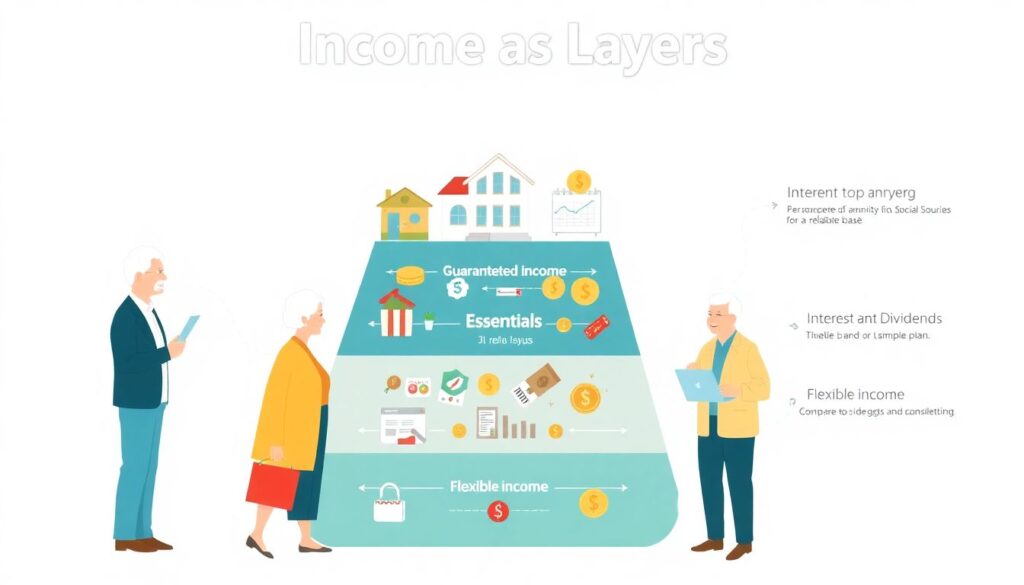
Think of income as layers. Your fixed income (pension, annuity, Social Security) should cover essentials; the next layer is interest and dividends; and the top layer is flexible, like side gigs or occasional consulting. If a guaranteed base appeals to you, compare the best annuities for retirement income with an independent fiduciary advisor, focusing on low-cost immediate or deferred income annuities that fill specific gaps rather than trying to do everything. Keep taxes in mind: place tax-inefficient assets (bond funds, REITs) in tax-advantaged accounts if possible, and use tax-loss harvesting or strategic withdrawals to smooth brackets. Finally, create a “raise” every year by renegotiating insurance, phone, and internet—many providers will cut fees if you ask, effectively increasing your safe spending rate without touching your portfolio.
Risk control without paralysis

Risk management isn’t only about investments—it’s about life friction. Cap large, unpredictable costs first. Set deductibles you can actually cover from your emergency fund. Use cash-flow calendars to preview tight weeks, and shift autopays to align with your check date. On the investment side, align risk to time horizon: money needed within two years stays in cash, T-bills, or short-term CDs; three to five years leans conservative bond funds; beyond five years can handle broad stock index exposure. Rebalance annually or when allocation drifts by 5 percentage points; this trims risk automatically and enforces discipline when markets swing. If markets stress you out, consider a “sleep-well allocation”—slightly more cash and bonds than a textbook might suggest—so you can stick with the plan when headlines get loud.
Expert-backed tactics that move the needle
Advisors often highlight that fixed-income households win by reducing decision fatigue. Bundle your money tasks into one weekly “money hour”: approve bills, check category balances, and scan bank alerts. Behavioral finance experts recommend pre-committing windfalls (tax refunds, rebates, gifts): 50% to savings, 30% to debt or future bills, 20% for enjoyment—this preserves motivation. Retirement researchers also point to partial annuitization—converting only the gap needed to cover must-have expenses—as a way to combine security with flexibility. And many planners stress cash-flow matching: hold one to three years of expected withdrawals in a ladder of safe assets, which reduces the chance you sell stocks during a downturn.
Troubleshooting common snags and how to fix them
Overspending despite a budget? Shrink decision points. Reduce categories to five or fewer and switch to a weekly allowance; people are more accurate when budgeting short intervals. Savings keeps getting raided? Rename accounts with goals and move them to a separate bank so transfers take a day—friction helps. Market drops rattling you? Turn off daily notifications and focus on your “needs are funded” metric: if essentials are covered by guaranteed income and cash buckets, you’re on track. Interest rates fall and your income dips? Rebuild the CD ladder as each rung matures, explore stepped-rate CDs, and compare brokered CDs; meanwhile, look at qualified dividend funds for a measured boost. Inflation bites? Prioritize debt paydown with variable rates, and renegotiate recurring contracts annually. If your app feels clunky, audition two of the best budgeting apps for fixed income and stick with the one that surfaces alerts you actually act on.
– If cash flow is tight mid-month, move autopays to the 3–5 days after your deposit
– If you miss savings targets, cut them in half but make them weekly to keep momentum
– If investments feel complicated, cap holdings to one stock index fund and one bond fund
Maintaining momentum: reviews, raises, and reality checks
Lock in a simple review rhythm. Quarterly, confirm your bills, savings rate, and CD ladder maturities; annually, revisit your asset mix, insurance, and tax plan. Treat every expense cut as a permanent raise and redirect the difference to savings on autopilot. Keep an eye on rate changes so you can hop to the best high-yield savings accounts as the landscape shifts, and don’t hesitate to ladder fresh cash when you see the best CD rates today improve. Above all, embrace progress over perfection: the mix of guaranteed income, a right-sized emergency fund, selective low-risk investments for retirees, and periodic tune-ups is what turns a fixed income into a flexible, resilient life.