
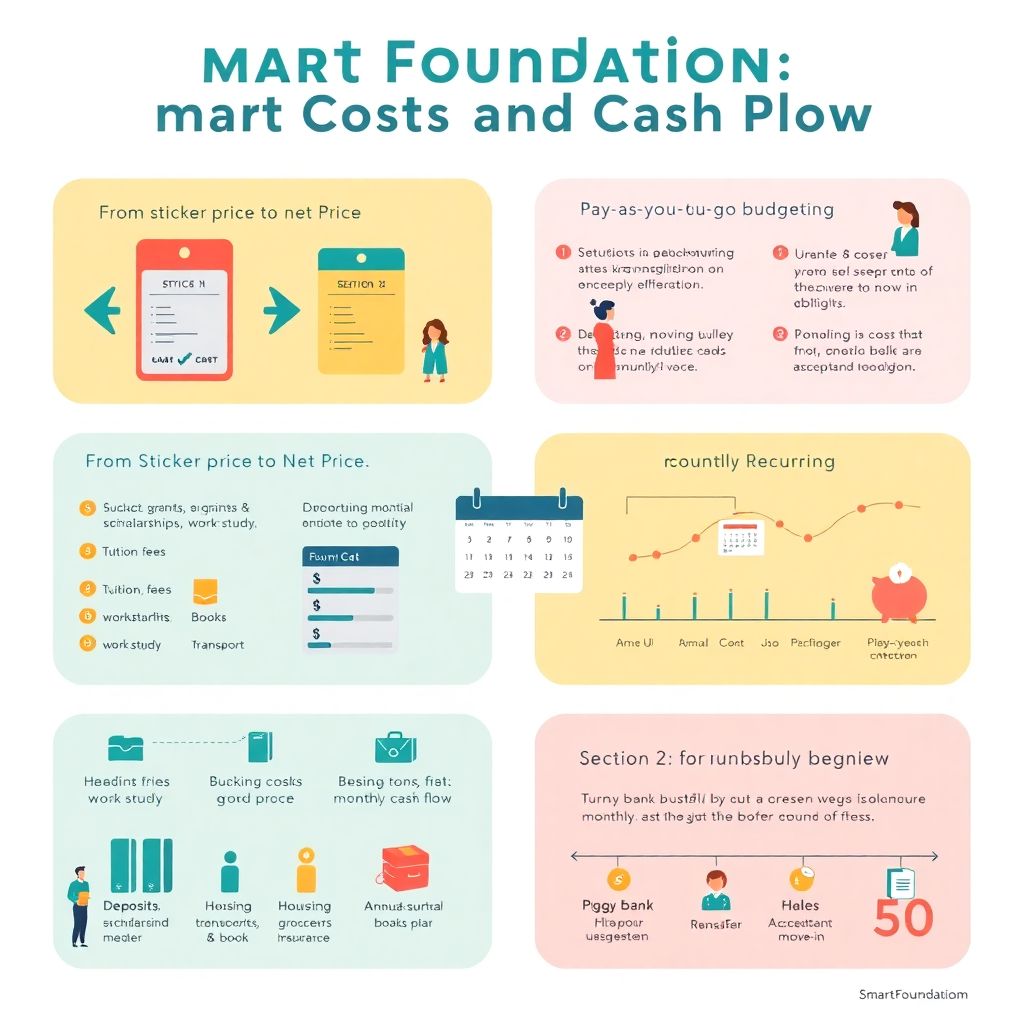
Smart foundations: mapping costs and cash flow
From sticker price to net price
Before hunting for funds, pin down what you’ll actually pay. The sticker price rarely matches the net price after grants, discounts, and tax benefits. Compare offers using each school’s cost of attendance, then subtract gift aid and realistic work-study. Build a year-by-year map: tuition, fees, housing, books, transport, even health insurance. Add a 5–10% buffer for surprises. This clarity turns the vague question of how to pay for college into a concrete monthly plan, and it prevents overborrowing just to feel “safe.” If numbers don’t fit, pivot early—cheaper housing, more credits per term, or a co-op model can change the math.
Pay-as-you-go budgeting
Split costs into what must be paid upfront and what can be smoothed. Upfront items—deposits, initial fees, moving—favor cash reserves. Recurring costs—rent, food, books—fit a monthly budget anchored by wages, family help, and small grants. Automate savings during the gap between acceptance and move-in; even a few hundred dollars monthly reduces stress. Treat every committed dollar like a subscription: if it doesn’t fit in the monthly cash flow, reconsider. This approach also makes it easier to compare financing tools by their monthly impact rather than their glossy totals.
Comparing ways to pay
Savings, work, and debt trade-offs
The classic trio—save, earn, borrow—works best in combination. Savings lower risk and interest but take time to build. Work offsets living costs and builds resume value, yet heavy hours can slow graduation and erase gains. Debt expands options now but compresses freedom later. A practical blend: use savings for one-time spikes, work 8–12 hours weekly in career-adjacent roles, and borrow only what covers essential gaps. For families asking how to pay for college without panic, compare paths by total time-to-degree and postgrad cash flow, not just freshman-year affordability.
Tax-smart savings and family strategies
For families who can plan ahead, 529s remain the tax-efficient workhorse. Look at low-cost, age-based index options when scouting the best 529 college savings plans, and mind state tax deductions or credits. Grandparent-owned 529s got friendlier under updated aid rules, reducing worries about aid penalties. If starting late, front-load contributions during the senior year and draw down strategically over the first two academic years. Pair this with the American Opportunity Tax Credit by timing which expenses you pay out-of-pocket versus via 529 to maximize tax value.
Borrowing options decoded
Federal first, private if needed
Start with federal loans for their fixed rates, income-driven repayment (SAVE) eligibility, and forgiveness pathways. Direct Subsidized/Unsubsidized loans usually beat entry-level private offers once protections are priced in. When the gap remains, shop the best private student loans with ruthless detail: true APR, origination fees, in-school payment options, cosigner release, and hardship policies. A slightly higher rate with generous forbearance can be safer than a bare-bones “cheapest” offer. Always compare scenarios over the likely time in repayment, not just at graduation.
Refinancing and timing
Refinancing can cut costs, but only when it improves both rate and flexibility. Track student loan refinance rates relative to your credit profile and job stability; fixed beats variable if you expect rates to rise. Never refinance federal loans into private while you might need income-driven repayment, forgiveness, or interest subsidies. A smarter path: refinance only private loans, or split the stack—keep federal as-is, refinance the private remainder. Revisit quotes after 6–12 on-time payments or a promotion; your APR can move meaningfully with better credit and income.
Tech tools and payment innovations
Installments, BNPL, and automation
Most schools offer college tuition payment plans that split term bills into monthly chunks for a small fee. They’re not loans, so no interest, but do watch penalties for missed dates. New “BNPL for tuition” platforms promise flexibility, yet late fees and opaque terms can rival credit cards—read the fine print. Use automation wisely: scheduled payments, alerts for bursar deadlines, and app-based cash envelopes for rent and books. Technology lowers friction, but discipline wins—set calendar guardrails and keep a one-month expense buffer parked in a high-yield account.
Scholarship engines and credit shortcuts
AI scholarship matchers and essay tools can save hours, but quality beats volume: target awards that fit your profile and reuse essays thoughtfully. Verify every listing to dodge scams. On the academic side, credit by exam, prior-learning assessments, and accredited online modules can shave a semester off—cheaper than any loan. The catch: transfer rules vary, and some majors limit outside credits. Edtech helps you find options fast, yet human advising remains crucial to avoid dead ends where “cheap credits” don’t actually reduce time-to-degree.
Recommendations you can act on
Profiles and practical routes
Undergrads: Max gift aid, pick a co-op or internship-heavy program, work a light, career-relevant job, and borrow only against required costs. Parents: prefer 529 drawdowns first, then federal Parent PLUS only if the monthly payment fits; consider modest home equity only with long fixed rates and job stability. Grad students: ROI rules—choose assistantships, employer tuition benefits, and selectively consider the best private student loans if federal Grad PLUS looks pricey. Everyone: build a payoff plan at disbursement, not after graduation, and rehearse the monthly number.
2025 trends to watch
Policy shifts, pricing, and alternatives

Expect continued fine-tuning of income-driven plans like SAVE, expanding safety nets for federal borrowers. States are sweetening 529 perks, and the 529-to-Roth IRA rollover window adds a backup use for excess savings. Employer-sponsored education is growing, with more firms fronting tuition for in-field programs. Sticker prices remain stubborn, but more schools push outcome guarantees and simpler pricing. student loan refinance rates will track broader credit markets, likely staying sensitive to inflation data. Meanwhile, micro-credentials and stackable pathways let you buy education in smarter, career-aligned slices.