
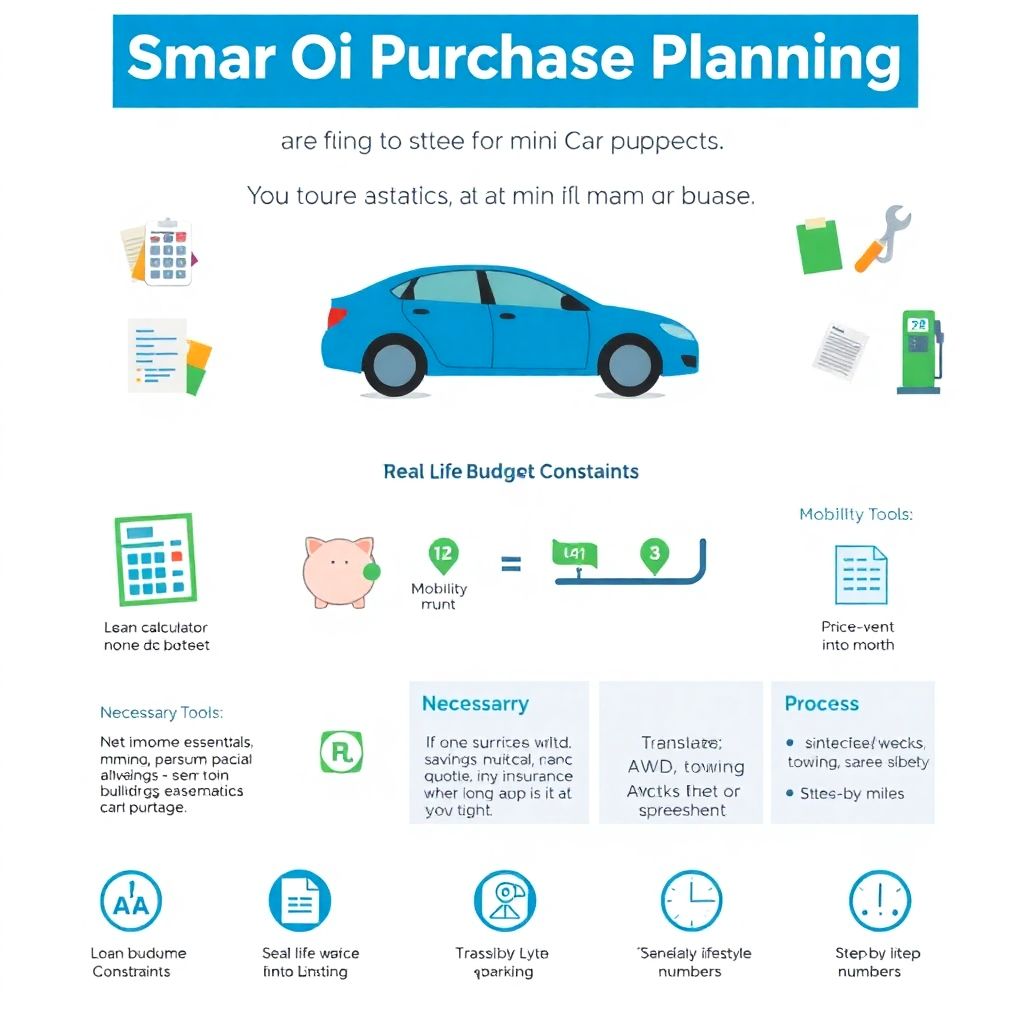
Setting the Stage for a Big Car Purchase
You’re not just buying a ride—you’re committing to a multi‑year cash flow decision that touches insurance, maintenance, taxes, and your future goals. Treat it like a mini project with a clear budget, realistic assumptions, and a buffer for the unknowns.
Think of the car payment as rent on mobility, not a personality upgrade.
Define Your Real-Life Budget Constraints
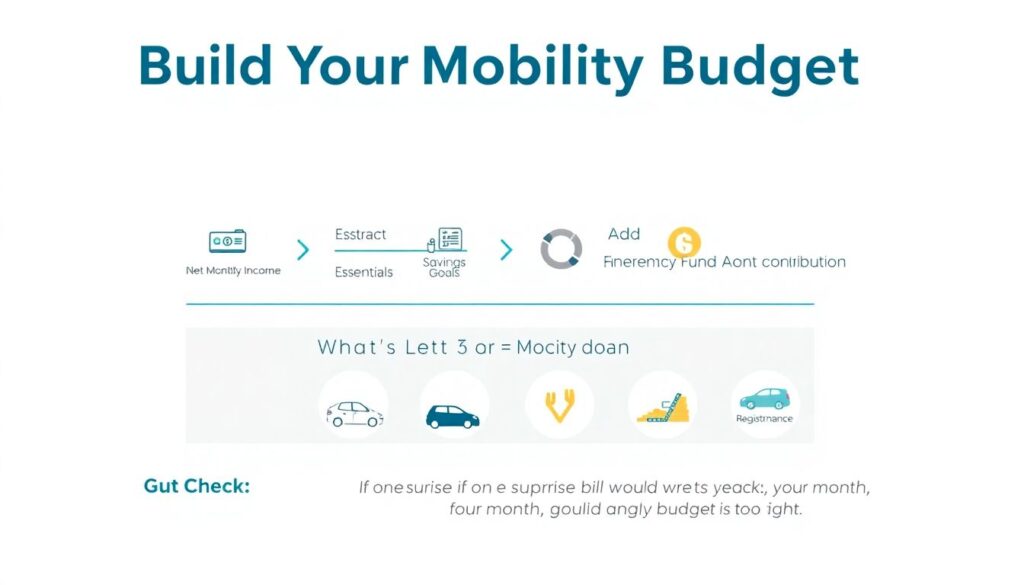
Start with your net monthly income and subtract essentials, savings goals, and an emergency fund contribution. What remains is your mobility budget: payment, insurance, fuel, parking, maintenance, and registration.
A quick gut check: if one surprise bill would wreck your month, the budget is too tight.
Necessary Tools
A handful of simple tools makes you sharper than most buyers walking into a dealership. Use them before you fall in love with any specific model.
– A car loan calculator to model payment, term, and interest trade‑offs
– Price trackers and local listings to benchmark fair purchase prices and fees
– Insurance quotes for real VINs or close equivalents
– A maintenance schedule and warranty coverage summary from the manufacturer
Also keep a note-taking app and a spreadsheet for scenarios. You’ll spot patterns—and pitfalls—fast.
Step-by-Step Process
1) Translate Lifestyle Into Numbers
List your must-haves and nice-to-haves (safety tech, AWD, towing, cargo). Estimate realistic annual miles and driving mix. This narrows choices and impacts fuel, tire costs, and depreciation.
The goal is fit first, flex later.
2) Set a Hard Ceiling: “How Much Car Can I Afford?”
Answer how much car can i afford by anchoring on total cost of ownership, not just the monthly payment. Cap the all-in monthly mobility budget at 10–15% of take-home pay if you’ve got other debt, 15–20% if you’re debt-light and saving aggressively.
Short terms (36–48 months) cost more monthly but reduce total interest and keep you out of negative equity.
3) Finance Framework: Rate, Term, Down Payment
Pre-qualify with your bank or credit union to see best auto loan rates before talking to dealers. Compare 36, 48, and 60-month options with a car loan calculator, and check total interest paid under each. If cash is tight, evaluate zero down car financing—but model the risk of owing more than the car is worth for longer.
Keep the APR discussion separate from the vehicle price; mixing them muddies negotiation.
4) Lease vs Buy: Match the Tool to the Job
Run a lease vs buy car comparison using identical assumptions (miles, sales tax, incentives). Leasing can lower the monthly outlay and reduce repair risk during the term, but watch mileage limits, disposition fees, and wear charges. Buying builds equity slowly and gives flexibility to keep the car once it’s paid off.
If your driving is predictable and you value new tech often, leasing can be rational. If you keep cars 6–10 years, buying usually wins on total cost.
5) Price, Fees, and Out-the-Door Reality
Request itemized quotes from multiple dealers: vehicle price, documentation fees, add-ons, taxes, and registration. Negotiate the vehicle price first, then financing, then extras. Decline unnecessary add-ons (nitrogen tires, mystery protection packages) unless they pass a cost–benefit test.
Out-the-door beats sticker every time.
6) Insurance, Warranty, and Maintenance Check
Get binding insurance quotes before you sign. Price unexpected items: tires for larger wheels, synthetic oil intervals, brake jobs for hybrids/EVs, and any required premium fuel. Compare extended warranties only after you’ve priced the manufacturer’s maintenance schedule.
If the warranty overlaps your planned ownership period, the upsell is often redundant.
7) Final Sanity Pass
Re-run the car loan calculator with the exact APR, term, and price. Add insurance, fuel, and maintenance to confirm the total monthly still fits your cap. Sleep on it.
A 24-hour pause saves four years of regret.
Troubleshooting: What to Do When Things Go Sideways
Payment Too High After Taxes and Fees
– Shorten the option list or step down a trim
– Extend the term modestly (e.g., 48 to 60 months) while planning principal prepayments
– Increase down payment to avoid negative equity
If none of that works, switch segments: compact instead of midsize, hybrid instead of turbo.
APR Higher Than Expected
Check your credit file for errors, ask for a rate match against a credit union, and time your rate shopping within a 14–45 day window to minimize score impact. If you can’t reach best auto loan rates, wait 2–3 months, pay down revolving balances, and retry.
Sometimes patience is the highest-yield “incentive.”
Tempted by Zero Down Offers
Zero down car financing can be fine if the price and APR are still competitive. The fix is discipline: buy gap coverage, keep a 3–6 month emergency fund, and avoid long terms that trap you underwater.
If the deal only works at 72–84 months, the car is too expensive.
Common Rookie Mistakes (and How to Dodge Them)
Chasing Monthly Payment Instead of Total Cost
Stretching the term to “hit your number” balloons total interest and amplifies depreciation risk. Focus on out-the-door price and total interest paid; use the car loan calculator to see the real delta between terms.
Cheap monthly can be costly overall.
Skipping Pre-Approval
Walking in without a comparison baseline invites marked-up financing. Even a soft-pull pre-approval changes the conversation and often the price.
Leverage beats charisma at the finance desk.
Falling for Add-Ons at Signing
Paint sealants, VIN etching, and surprise protection packages erode value. If it’s not on your pre-visit checklist, it’s probably not mission-critical. Ask for the MSRP of the add-on and the actual coverage details; many are either already included or resold at a steep markup.
Your “no” is worth real money.
Ignoring Insurance and Taxes

Beginners budget the payment, then get blindsided by insurance spikes or local taxes. Solve it upfront: plug real quotes and tax rates into your scenario sheet and confirm the all-in monthly fits your cap.
No surprises equals better ownership.
Buying the Future You, Not the Current You

Assuming raises, lower expenses, or perfect reliability is optimism bias. Base the plan on today’s income and today’s needs, with a buffer for what breaks.
If the margins only work in a perfect month, it’s not a plan.
Quick Decision Framework You Can Reuse
– Define the mobility budget cap as a percent of take-home
– Select 2–3 vehicles that meet needs, not wants
– Get pre-approved and lock rate options
– Compare lease vs buy car using identical assumptions
– Negotiate out-the-door price, then financing, then extras
– Re-check the total cost and sleep on it before signing
Small, boring steps beat big, flashy mistakes.
When to Walk Away
If the dealer won’t itemize fees, the APR is far from your pre-approval without cause, or you feel rushed, leave. Inventory changes daily, but your budget and peace of mind are worth more than any “today only” pitch.
There’s always another car—and there’s only one of your balance sheet.