
Why your credit report secretly runs your money life
Most people ignore their credit report until something hurts: a loan rejection, a shocking interest rate, or a fraud alert from the bank. But that report is basically your financial CV, and lenders read it much more внимательно than anything you put on a job application. Every card you’ve opened, every loan you’ve paid (or missed), your limits, balances, even how long you’ve had accounts — it all sits there, line by line. Understanding it is not about becoming a finance nerd; it’s about having the same information the bank has when it decides whether you get the apartment you want or the car payment you can actually afford. So let’s break down how to read credit report step by step in normal language and turn that confusing document into a tool you actually use.
Short version: if you can read your report, you can predict how lenders see you — and then tweak the details in your favor.
Step 1: Get your credit report the smart (and free) way
Before you do anything, you need a copy that’s current and complete. In the U.S., you’re entitled to a credit report free check from each of the three major bureaus every year, and since COVID many people can pull them more often. Use the official AnnualCreditReport website, not random ads promising “totally free forever” access. Real case: Amanda applied for a mortgage assuming her credit was “good” because her bank app said so. Her actual reports showed an old collection that auto-updaters had missed. One online request, three PDFs later, and she understood why lenders were giving her a worse rate than coworkers with similar salaries. Don’t rely only on a score in an app — that’s a summary, not the evidence behind it.
Small tip: download and save each report as a PDF right away; dispute and improvement work often takes months, and you’ll want a “before” snapshot.
Step 2: Start with your personal info and red flags
Once you open the report, skip the dense legal text and go straight to the personal information section. That’s where your names, addresses, employers, and sometimes phone numbers live. It looks boring, but it’s your first fraud filter. If you see addresses from cities you never lived in, or employers you don’t recognize, don’t shrug it off — that might point to mixed files or early identity theft. One client of mine, Leo, discovered a completely unknown address tied to a department store card he never opened. Catching that detail early let him lock down his reports before the fraudster escalated to bigger loans. Another non-obvious move: if an old address is linked to a messy breakup or shared mailboxes where others might grab your statements, request that outdated addresses be removed once everything linked to them is closed and clean. It slightly shrinks the attack surface for future identity issues.
If anything in this section looks off, write it down immediately; you’ll use that list when you dispute errors on credit report online later.
Step 3: Decode the account section like a lender
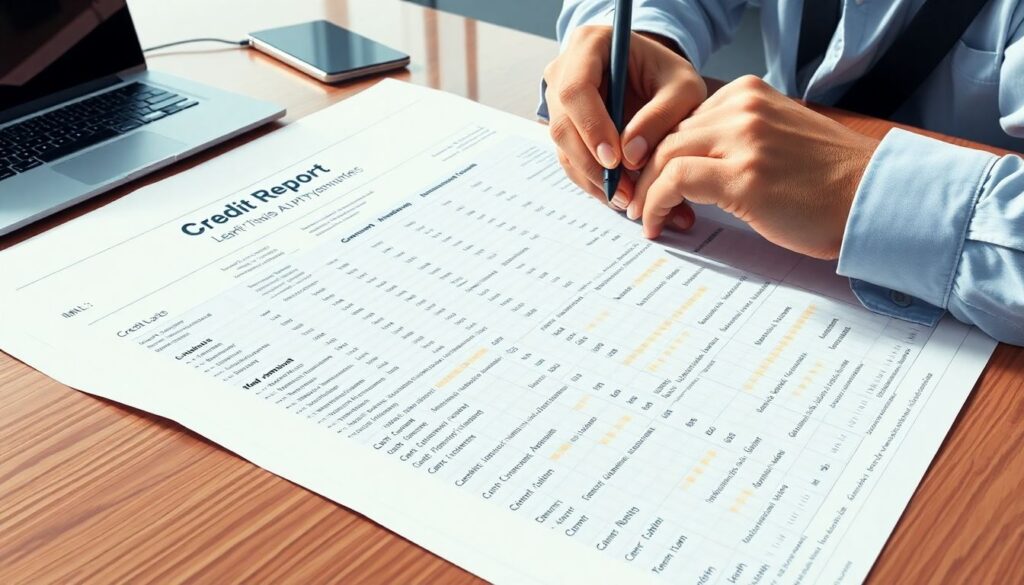
This is the heart of your report: every credit card, auto loan, student loan, mortgage, personal loan. Don’t just skim the list — read it like an underwriter. Look at each account’s open date, credit limit or original loan amount, current balance, and payment status by month. The pattern matters more than one bad mark. For example, Mia had a single 30-day late payment from three years ago, but otherwise her history was spotless and her utilization low. A lender saw that as a past mistake, not a current risk. Meanwhile, Dan never paid late but constantly used 95% of every card limit. On paper, he looked more dangerous. Use your report to spot your own pattern: are you always near maxed-out? Do you open new cards every few months? Do some accounts show “closed by credit grantor” instead of “closed by consumer”? Each of those details nudges your risk profile up or down.
Fast reality check: if you wouldn’t lend your own money to “past you” after reading this section, lenders probably feel the same way.
Pro move: Use your report to plan utilization, not just debt payoff
Many people only see balances; pros look at utilization. To improve credit score using credit report data, list all cards with their limits and balances, then calculate the percentage used on each. Instead of throwing all extra money at one random card, first drop any card over 80% utilization below 50%, then below 30%. Lenders and scoring models hate “maxed” behavior more than moderate debt spread out. One tech worker I coached cut her card utilization on just two accounts from 92% to 40% without paying off everything, then asked for small limit increases on clean cards. Her score jumped enough to refinance a car at a lower rate, and the interest savings over three years were bigger than the remaining credit card interest she was worried about.
Step 4: Understand the “ugly stuff” without panicking
Next, check the section with derogatory marks: collections, charge-offs, bankruptcies, foreclosures, liens. This page is where most people slam the laptop shut, but facing it calmly is where real progress starts. First, confirm what’s actually yours. Shared names, old roommates, or messy divorces can all create mixed files. Real case: Sergey found a medical collection he never heard of. The date matched a period when he’d switched health insurance, and the bill had gone to an old address. Because he caught it early, he negotiated a “pay for delete” in writing; the collector agreed to update the bureaus to remove the entry entirely once he paid. Non-obvious solution: even when collectors say, “We never delete,” that’s often just their first script. Ask for a supervisor, be polite but firm, and frame it as, “I’m willing to pay in full if we can agree to accurately update my reports to remove this collection line.”
Mental trick: think of every negative item as a project with a start and finish date, not a life sentence.
Alternative tools when you can’t afford credit repair help
If money is tight, skip paid “fix your credit fast” companies and use the report plus free tools. Most consumer protection agencies and some nonprofits offer sample dispute letters and guides. If you’re not sure whether something’s been reported correctly, pull all three bureau reports side by side and compare dates and balances. That alone often exposes reporting mistakes. You can also freeze your reports for free if you suspect ongoing fraud — that doesn’t fix history, but it stops new fake accounts cold while you dispute.
Step 5: Disputes — how to actually get things changed
Disputing is where many people give up, because it feels like arguing with a wall. Done right, though, it’s surprisingly effective. Use each bureau’s portal to dispute errors on credit report online; it’s faster than mail and lets you upload supporting documents. But don’t rely only on the little checkboxes. Write a short, specific explanation: “This account is not mine; see attached police report and FTC identity theft report,” or “Payment reported as 60 days late; bank statement attached shows payment cleared on [date].” One overlooked tactic: dispute simultaneously with the lender and the bureau. When the creditor’s internal record is corrected, the bureaus usually fall in line on the next reporting cycle. Keep a simple log: date, bureau, account, what you requested, and any responses.
If a bureau “verifies” something that’s still wrong, don’t stop; escalate with a new dispute adding fresh documents, or send a certified letter to the creditor’s credit reporting department.
Real-world timing: what changes first, and when
You won’t see miracles overnight. Bureaus usually have 30 days to investigate, then another reporting cycle or two before lenders see the update. A client of mine, Julia, planned a home purchase. She disputed one wrong late payment three months before applying for a mortgage. By the time the lender pulled her file, the mark was removed, her rate quote improved, and the monthly payment dropped enough to cover her internet and utilities. The boring calendar work — doing it early — made more difference than any “hack.”
Step 6: Use monitoring services without wasting money
Once your report is cleaner, you want to keep it that way. This is where marketing for the best credit report monitoring service gets aggressive. Do you need one? Sometimes. If you’ve had identity theft, work in a data-heavy field, or have a high income and many open accounts, a good monitoring service can be worth it. But there are alternatives: many banks and card issuers now offer free alerts when a new account appears or your score moves sharply. Combine those with an annual deep dive using your full reports and you’ve already covered most serious risks. Pro-level hack: rotate which bureau you pull for a detailed review every four months. January — Experian, May — Equifax, September — TransUnion. That turns your “once a year” right into a near-continuous view without paying a subscription.
If you do pay for monitoring, choose a service that tracks all three bureaus and offers real-time alerts, not just monthly summary emails.
Professional-style lifehacks when reading reports
Credit pros skim differently from casual readers. They scan for patterns: many recent inquiries, sudden new store cards, limits secretly lowered by banks, or an account quietly reported as “closed by credit grantor.” Adopt that habit. Every time you pull your report, ask yourself three questions: Did any bank reduce my limit without telling me? Has any account changed status since last time? Did a new hard inquiry appear I don’t recognize? This turns reading into surveillance, not just curiosity. You’ll catch problems early, when fixes are easier and cheaper.
Turning your report into a roadmap, not a verdict
The most powerful mental shift is to stop treating your credit report as a grade you either pass or fail. It’s more like a health chart: some numbers are fine, some need attention, and almost all of them can change. Use the data to plan what to do next month, not just to judge last year. Maybe your first priority is cleaning up one stubborn collection; maybe it’s getting utilization under 30%; maybe it’s simply adding on-time payments for the next 12 months to push down the weight of older mistakes. Whatever the case, your report tells you exactly where to get the biggest score boost for the least effort. Combine that with occasional credit report free check sessions and targeted actions, and you don’t just improve credit score using credit report information — you take control of the story lenders read about you.
Your next move: pull one report today, read just the personal info and accounts, write down three things that surprised you, and pick one concrete fix. That’s how real, lasting credit improvements start.