

Why an Emergency Fund Matters More Than Ever in 2025
If you’ve been through 2020’s pandemic chaos, inflation spikes in 2022–2023, and all the job market drama since, you already know: life doesn’t send calendar invites for crises.
That’s exactly why people keep googling *how to start an emergency fund* — not because it’s trendy, but because living without a safety cushion in 2025 feels like driving without brakes.
Let’s walk through this step by step, in normal human language, with real‑world examples and a bit of history so всё было по полочкам.
A Quick Historical Detour: How People Saved for Emergencies Before
Emergency funds aren’t some modern TikTok hack.
– In the early 1900s, many families hid cash in envelopes or metal boxes at home. Banks weren’t widespread or trusted, so “savings” often meant a stash under the floorboard.
– After the Great Depression, people saw what real financial collapse looked like. Governments created deposit insurance, and savings accounts became the go‑to place for emergency money.
– In the 1980s–2000s, employer stability shrank, but credit cards became mainstream. A lot of people quietly replaced their emergency fund with a credit limit — and paid for it later with interest.
– Then came 2008. The financial crisis made it painfully clear: relying on debt alone is dangerous. Personal finance experts started emphasizing cash reserves again.
– And finally, 2020–2023: pandemic layoffs, remote work, rising prices. Suddenly, “3–6 months of expenses” stopped sounding like a cute suggestion and started sounding like survival gear.
In 2025, with AI reshaping jobs and the economy still weird, an emergency fund isn’t a luxury. It’s a basic defense system.
Step 1: Define What an Emergency Fund Is (And What It Isn’t)
An emergency fund is a pot of money set aside strictly for unexpected, important problems:
– You lose your job
– Your car dies and you need it for work
– A medical bill drops out of nowhere
– Your landlord decides not to renew, and you must move fast
It is not for: upgrading your phone, sales on sneakers, concert tickets, or “I’m just tired and want takeout.”
Think of it like a fire extinguisher. If you use it to warm your hands, you won’t have it when the kitchen actually catches fire.
Step 2: Answer the Big Question — “How Much Should I Have in My Emergency Fund?”
This question trips up almost everyone. You might have heard “$1,000 starter fund” or “3–6 months of expenses.” Those are decent rules of thumb, but let’s refine them.
A basic way to think about it:
– Stage 1: Starter fund – Aim for $500–$1,500 as fast as possible. This covers annoying but common surprises like car repairs or a broken phone.
– Stage 2: Stability fund – Work up to 1–3 months of essential expenses (rent, food, utilities, transport, meds).
– Stage 3: Full emergency fund – Target 3–6 months of essential expenses, or even more if your income is unstable or you’re self‑employed.
If you’re wondering in practical terms *how much should I have in my emergency fund*, the answer is: enough that a job loss or big unexpected bill is a crisis, not a catastrophe.
You don’t need to guess. Use an emergency fund calculator online: punch in your monthly rent, food, insurance, and other must‑pay costs. It will spit out a number that’s tailored to your life, not to a generic rule you saw on social media.
Step 3: Map Your Starting Point (Without Judging Yourself)
Before you build anything, you need to know where you’re starting from. This part can feel uncomfortable, but it’s quick.
Write down:
– How much cash you have right now (checking, savings, even that forgotten account)
– Any upcoming big bills (taxes, insurance, tuition, subscription renewals)
– Your essential monthly expenses (housing, food, utilities, transport, medicine, minimum debt payments)
Don’t obsess over every coffee. You just need a ballpark. If your essentials are $2,000 a month, then a full 3‑month emergency fund is roughly $6,000.
If that number feels impossible, good news: you’re not being graded. It’s a direction, not a demand. You build it the same way you walk 10,000 steps — one step at a time.
Step 4: Decide Where to Keep Emergency Fund Money
This is where people overcomplicate things. Your emergency fund should be:
– Easy to access in a true emergency
– Hard to raid for random temptations
– Safe from big swings (so not in risky investments)
In 2025, the sweet spot for most people is a separate high‑yield savings account. These online banks usually pay more interest than regular checking or brick‑and‑mortar savings. When you’re comparing options, you’re basically hunting for the best high yield savings account for emergency fund storage — something with:
– FDIC (or equivalent) insurance
– No or low fees
– A decent interest rate
– Fast transfer times to your main account
Avoid putting your emergency fund in:
– Stocks or crypto (they can drop 30–50% right when you need the money)
– CDs with penalties if you withdraw early (unless it’s just a small portion)
– Prepaid cards or apps that make it too easy to swipe it away
Think “safe, boring, separate.” Boring is beautiful when everything else in life feels chaotic.
Step 5: Set a Realistic First Goal (Not a Fantasy Target)
Saying “I’ll save $10,000 this year” sounds impressive, but if you’re barely covering rent, it’s just self‑sabotage.
Instead, pick a tiny first goal:
– “I want $200 in my emergency fund in the next 30 days.”
– Or, “I want to hit $1,000 in the next 4–6 months.”
That’s it. Small, clear, realistic. Once you hit that, you adjust the goal and keep going.
This works for one simple reason: you stay motivated because you’re actually winning, not constantly disappointing yourself with impossible targets.
Step 6: Automate the Boring Part
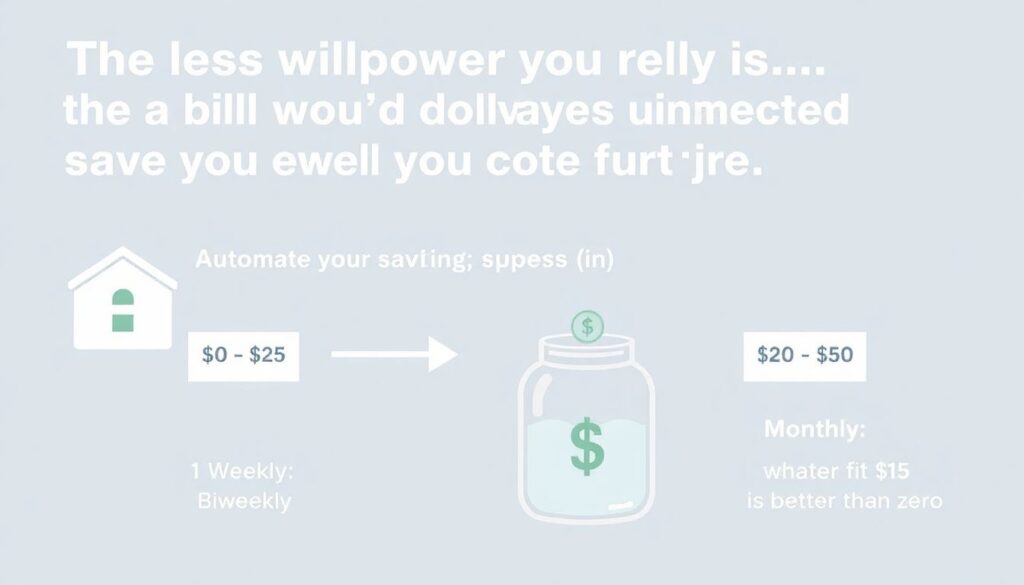
The less willpower you rely on, the more money you’ll actually save.
Set up an automatic transfer from your main account to your emergency fund every payday. Treat it like a bill you owe your future self:
– Weekly: $10–$25
– Biweekly: $20–$50
– Monthly: whatever fits — even $15 is better than zero
If your income is irregular (freelancer, gig worker, self‑employed), use a percentage instead of a fixed amount. For example:
– “Every time I get paid, 5–10% goes straight to my emergency fund.”
You’ll barely notice the small transfers, but over months they pile up. Automation is the quiet hero of personal finance.
Step 7: Find Money to Redirect (Without Living Like a Monk)
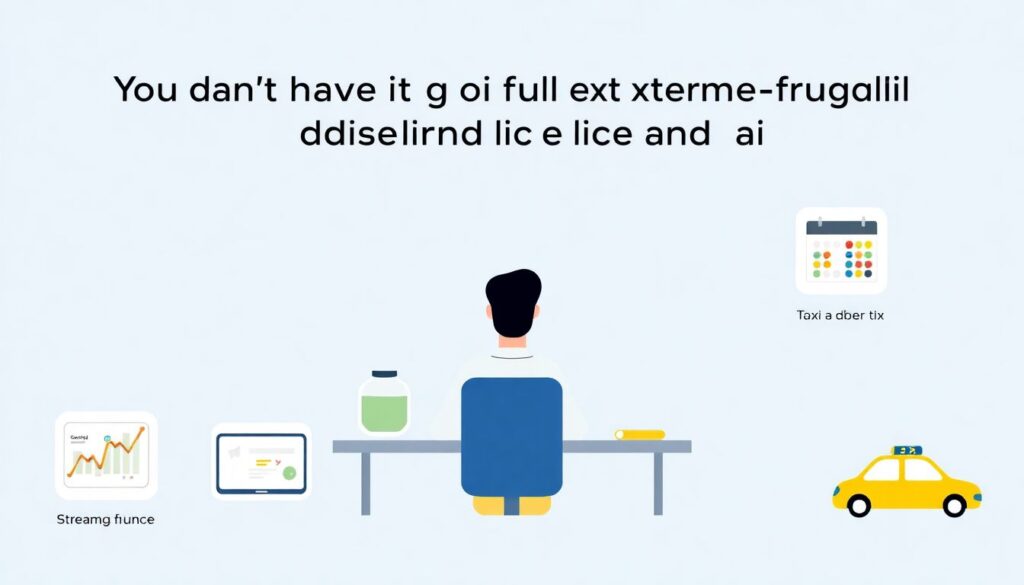
You don’t have to go full extreme-frugality and live on rice and air. But if you want your emergency fund to grow faster, look for low‑pain adjustments.
Examples that often work:
– Downgrading a streaming bundle you barely use
– Cutting impulse food delivery from 3x a week to 1x
– Reducing Uber/Taxi rides by pairing errands in one trip
– Selling unused gadgets or clothes gathering dust
You can even play a simple game for a month:
– Any unexpected money (rebates, gifts, refunds, overtime) → straight into the emergency fund.
When you frame it as “temporary boost” rather than permanent sacrifice, it’s much easier mentally.
Step 8: Avoid Common Beginner Mistakes
People starting their emergency fund in 2025 often fall into the same traps. If you know them upfront, you can sidestep a lot of frustration.
Typical errors:
– Mixing it with everyday money. If your emergency cash sits in your main checking account, it will quietly evaporate. Separate account = less leakage.
– Using credit cards as the only backup. They’re useful tools, but expensive if you carry a balance. A real emergency fund reduces how much debt you need to take on.
– Investing it for “better returns.” Emergency money is not for chasing profit; it’s for staying afloat. Leave the risk for your long‑term investments.
– Waiting for “the right moment” to start. There isn’t one. Inflation, rent, everything is always something. Start with $5 if that’s all you can do. Momentum matters more than the size.
If you avoid just these four mistakes, you’re already ahead of a huge chunk of people.
Step 9: Decide Your Personal “Emergency Rules”
To protect your fund from “fake emergencies,” write your own rules now — while nothing is on fire.
For example, money can be used for:
– Job loss or major income drop
– Health and dental emergencies
– Necessary car or home repairs (roof leak, broken heater, transmission failure)
– Sudden move or family emergency travel
And not used for:
– Vacations
– Gifts and holidays
– New gadgets, hobbies, or décor
– “I’m bored and don’t want to cook” evenings
You can bend the rules in extreme situations, of course. But having clear guidelines helps you say no to the random temptations that would drain your hard‑earned safety net.
Step 10: Refill After You Use It
At some point, life will do what it does best and throw a curveball. You’ll dip into the fund. That’s not failure — that’s the fund doing its job.
What matters next:
– Pause extra investing or non‑essential savings for a bit
– Turn your attention back to rebuilding the fund
– Restart or increase your automatic transfers if you can
Think of it like a battery: it’s okay to drain it during a storm, but afterwards, your priority is to recharge it so you’re ready for the next one.
Step 11: Adjust as Your Life Changes
Your emergency fund in your early 20s shouldn’t be identical to your emergency fund if you’re 40 with kids and a mortgage. Life in 2025 can change fast: remote jobs, relocations, career pivots.
You’ll want to review things when:
– You move to a more expensive city
– You start a family or take on dependents
– You switch to freelance or contract work
– Your rent or mortgage jumps significantly
Every 6–12 months, quickly revisit:
– Your monthly essential expenses
– Your target number
– Your actual balance
If the gap has widened, adjust your automatic transfers even slightly. A $10–$20 increase per month matters over time.
Step 12: Use Tools (But Don’t Get Lost in Them)
There are plenty of apps, budget planners, and online tools in 2025 that can help you figure out *how to start an emergency fund* in a structured way. Just don’t let setup become procrastination.
Practical ways to use tools without overthinking:
– Use an emergency fund calculator once to get your target number.
– Use your banking app to set up automatic transfers.
– If you like tracking, use a simple budgeting app — but a notes file on your phone also works.
You don’t need a perfect system; you need a working one.
Final Thoughts: Your Future Self Will Thank You
If the whole topic feels heavy, remember this: you’re not trying to impress anyone with how much you’ve saved. You’re trying to make sure that the next crisis doesn’t knock you flat.
In the last century, people went from cash under mattresses to savings accounts, to overusing credit cards, and now back to a more balanced approach. In 2025, we have the benefit of history, technology, and hard lessons from recent years.
Start where you are:
– Open a separate savings account where to keep emergency fund money securely.
– Move a small amount today — even $10 or $20.
– Set one automatic transfer before the end of the day.
That’s it. The emergency fund you want a year from now is built by the tiny, almost boring decisions you make this week.