
Why Zero-Based Budgeting Works When Other Methods Don’t
Most people don’t overspend because they’re bad with money – they overspend because their money has no clear job. Zero-based budgeting flips this by assigning every dollar a purpose before the month even starts. You begin at zero and tell your income where to go: bills, goals, fun, debt, savings. Nothing is “leftover,” so it can’t quietly disappear. Financial planner Emily Rhodes notes that clients who switch from vague tracking to a simple zero based budget for beginners usually see “hidden leaks” of 10–20% of their income in the first month alone. That’s not about sacrifice; it’s about seeing, in black and white, where your cash actually lives and whether you agree with that.
Weekend Game Plan: What You’ll Actually Do
Forget the fantasy of a perfect system in one sitting. The realistic version: you use a single weekend to build a “good enough” first draft and then refine it over your next pay cycles. On Saturday, you gather numbers and map your real spending. On Sunday, you build your first zero-based plan and connect it to tools you’ll actually open. Behavioral economist Mark Chen stresses momentum over precision: a rough, honest budget implemented now beats a flawless spreadsheet you never finish. Treat this weekend as a prototype sprint, not a life sentence; you’re designing a budget that will evolve with your habits, not a rigid contract to feel guilty about.
Day 1 — Face the Chaos Without Burning Out
Day 1 is all about turning messy financial data into something you can work with. Don’t start with 12 months of history; it’s overwhelming and mostly unnecessary. Pull just the last 60–90 days from your bank and card accounts and skim for patterns: rent, groceries, eating out, subscriptions, random “I deserved it” purchases. Money coach Lisa Ortiz recommends color-coding: needs in one color, wants in another, and “no idea why I bought this” in a third. This simple visual trick quickly reveals where emotions, stress or boredom are steering your wallet. Your goal today isn’t to judge yourself; it’s to build a clean baseline of what “normal” actually looks like.
Real Case: The “We’re Fine” Couple
One couple Ortiz worked with insisted they were “fine with money” because there was no credit card debt. A quick 90‑day review said otherwise. They discovered they were spending the equivalent of an extra rent payment every month on food delivery and impulse Amazon orders. Once they saw the total, they didn’t slash everything; they set a realistic cap and created a “no-questions-asked” fun line in their zero-based plan. Within three months, the same money that used to vanish was going into a house down payment fund. The key shift was not austerity but conscious trade-offs backed by real numbers, not guesswork and optimism.
How to Start a Zero Based Budget in One Sitting
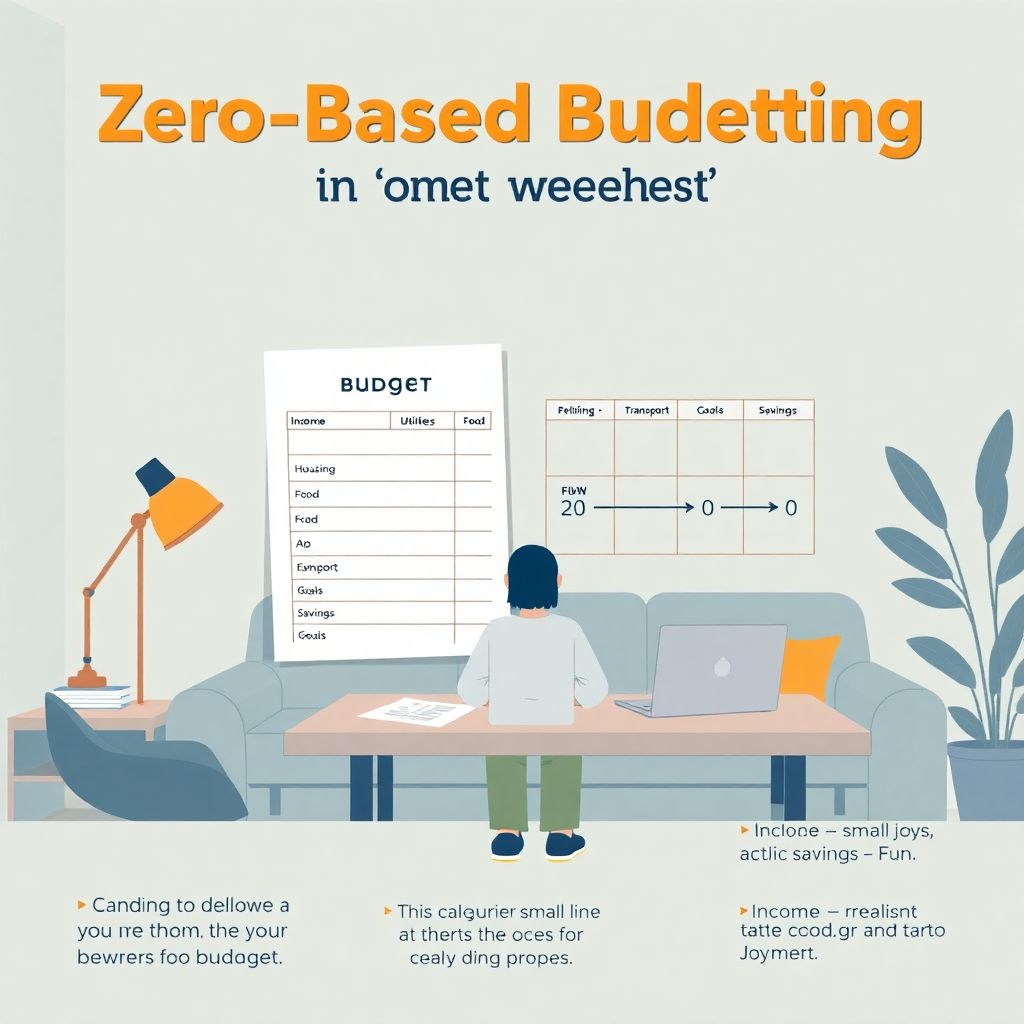
Now that you know where your money currently goes, you can tell it where it should go. Start by writing your monthly take-home income at the top of a page or digital sheet. Then list your categories: housing, utilities, food, transport, debt, savings, goals and guilt-free fun. Allocate amounts to each until your income minus expenses equals exactly zero. If the math doesn’t work, don’t panic; this is the point where you intentionally cut, shrink or delay. Financial therapist Dr. Nadia Hill suggests inserting at least one small “joy” category even when money feels tight. People stick with a budget longer when it includes realistic pleasure instead of pretending they’re a robot.
Alternative Ways to Structure Categories
Not everyone thinks naturally in bill-category language. Some people do better with goal-based buckets, assigning money to “Future Me,” “Stability,” and “Today’s Life” rather than 20 micro-categories. Others prefer cash-style envelopes, either physical or digital, to feel limits more tangibly. An unconventional approach is event-based budgeting: you group expenses by scenarios like “Workdays,” “Weekends,” “Family Time” and “Solo Time.” This helps if your overspending is triggered by specific contexts, like bored Sunday evenings. The best zero based budgeting method is the one that mirrors how your brain actually sees choices, so you feel each trade-off, not just read numbers in a rigid list.
Choosing Tools: From Pencil to zero based budgeting app
You don’t need fancy software, but you do need a tool you’ll open more than once. Some people thrive with a notebook and calculator; others want automation. If you’re spreadsheet‑friendly, build a zero based budget template excel with columns for planned, actual and difference, plus a running balance to show how close you are to zero. Prefer your phone? A zero based budgeting app can handle syncing, category tracking and reminders so you mainly decide, not type. Tech advisor Jason Lee warns against chasing the “perfect app” for weeks; he recommends picking the simplest tool you already understand and committing to use it for at least one full month.
- Paper & pen: Maximum flexibility, zero learning curve, ideal if you like writing things out.
- Spreadsheets: Great for customization nerds and people who enjoy tweaking formulas and reports.
- Apps: Best for automation, alerts, and real-time tracking on the go with shared access for couples.
Non-Obvious Moves That Make Your Budget Stick
Zero-based budgets often fail not because the math is wrong, but because they ignore human behavior. One underrated trick is budgeting for your weakest moments first. If Friday nights regularly end in takeout, put a line item for “Friday Food” in your plan instead of pretending you’ll cook every week. Another subtle move: create a “Chaos Buffer” category for the weird expenses that show up each month but never repeat exactly – emergency school fees, sudden gifts, parking tickets. Advisor Emily Rhodes has seen that simply renaming “Miscellaneous” to “Chaos Buffer” makes clients feel proactive instead of sloppy, which quietly improves how consistently they update their plan.
Expert-Backed Guardrails You Probably Haven’t Tried
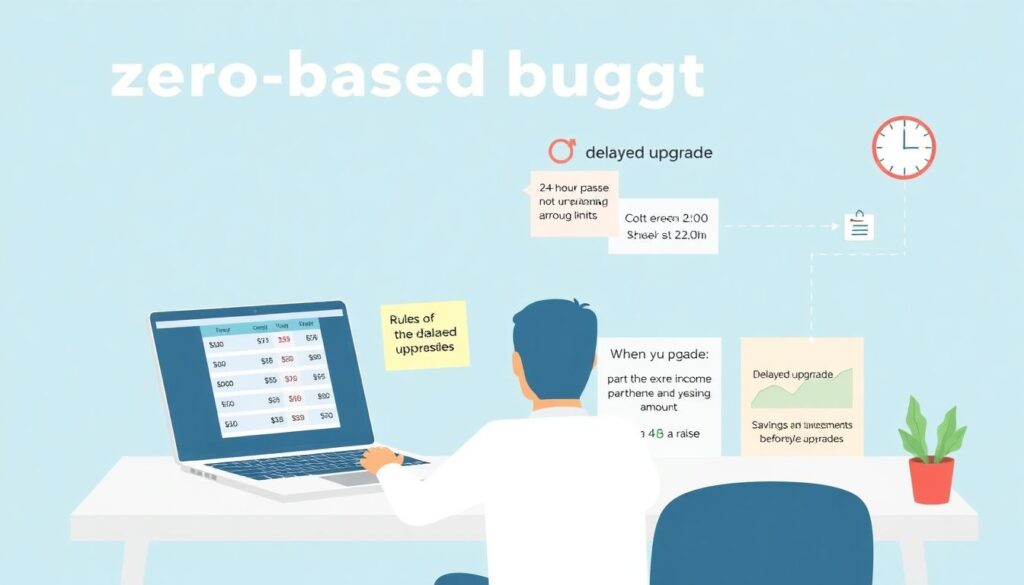
Several experts suggest adding process rules to your zero-based budget, not just spending limits. For example, set a 24‑hour pause rule for any unplanned purchase above a certain amount and write that rule into your notes. Another expert tactic is the “delayed upgrade”: when you get a raise, automatically send the new money to savings or debt for two paychecks before you allow any lifestyle bump. This gives you time to design on purpose rather than reacting. Finally, schedule a standing 15-minute “money standup” each week. Treat it like brushing your teeth: not exciting, but the reason things don’t rot in the dark.
Alternative Zero-Based Setups for Different Personalities
If you’re freelancing or your income is irregular, the classic monthly setup might feel impossible. In that case, run a per‑paycheck budget: every time money lands, you give those specific dollars jobs until you hit zero, even if that covers only a week or two. For people who hate details, a “three-bucket zero-based” approach works well: Essentials, Goals and Fun. You still hit zero, but with only a handful of categories. For couples, experts recommend maintaining one shared zero-based budget plus small individual “no comment” allowances to reduce fights. The structure is flexible; what matters is that every unit of income gets an intentional assignment.
- Per‑paycheck zero-based: Perfect if your inflows are irregular or gig-based.
- Three-bucket method: Minimalist structure with just a few broad categories.
- Couple-friendly design: Shared core budget plus personal, judgment‑free money.
Pro-Level Hacks to Get More From the Same Income
Once your basic system works, you can add a few professional‑grade tweaks. First, create a “Month Ahead” category and slowly build it until you’re using last month’s income to fund this month’s budget. This removes panic when payments are late or variable. Second, split your savings into named goals – “Italy Trip,” “Laptop Fund,” “Emergency Cushion” – rather than one vague pot. Behavioral research shows specific labels dramatically increase follow-through. Third, review subscriptions every quarter and require each one to “re-justify” its place in your plan. Planners often find 50–100 dollars a month this way without touching anything that truly matters to their clients.
Real Case: The Freelancer Who Stopped Dreading Invoices
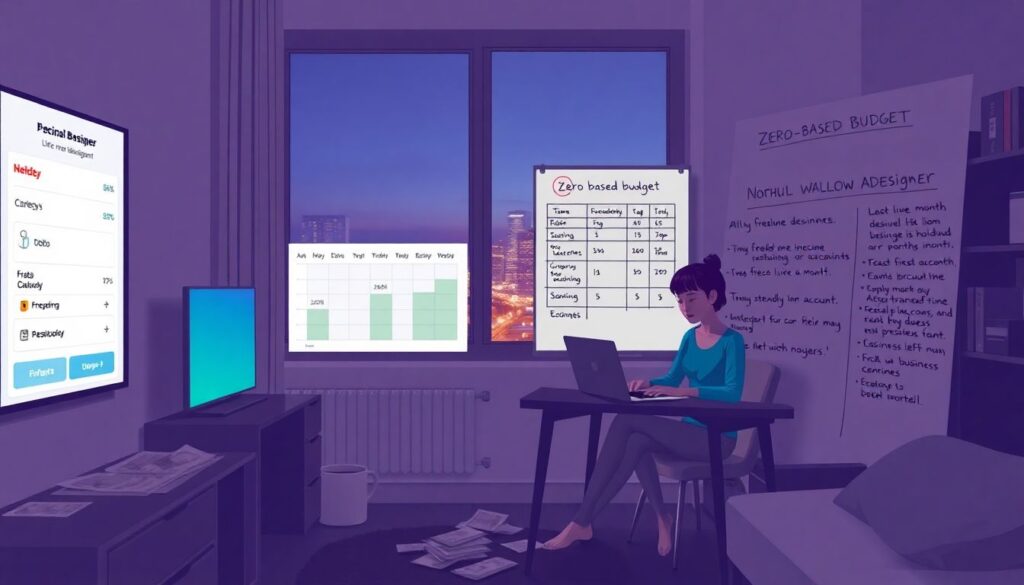
A freelance designer was constantly anxious, even during good months, because she never knew if she could pay next month’s rent. Her coach had her route all income into a holding account first. Twice a month, they “paid” her a steady pseudo‑salary into her main account and ran a zero-based budget from that fixed amount. They also added a “Taxes” and “Dry Spells” category to her plan, funded every time money came in. Within six months, she’d built a two‑month cushion. Same income, different structure. The anxiety dropped not when she earned more, but when each dollar had a clear, time-based job.
Using Templates Without Becoming a Spreadsheet Zombie
A good zero based budget template excel can save hours, but it can also tempt you into tinkering forever instead of acting. Experts recommend starting with a simple template that includes only income, core categories, goals and a quick summary. Use it for one full cycle before adding any bells and whistles. If a feature doesn’t directly help you make a better decision or reduce friction, skip it. Remember, your template is a living document: let it evolve with your real life. Drop categories you never use, merge ones that confuse you and adjust amounts monthly as you learn your true priorities and trigger points.
Zero-Based in One Weekend: A Practical Checklist
By Sunday evening, your aim is not perfection; it’s a working v1 that can survive real life for at least two weeks. You should have: clear take-home income numbers, honest spending baselines for the last 2–3 months, your first zero-based allocation that hits exactly zero, plus a chosen tool – whether paper, sheet or zero based budgeting app – ready to track. Finish by booking your first three weekly check‑ins on your calendar. Those recurring appointments are what transform a one‑off burst of motivation into a sustainable habit. From there, small monthly refinements will gradually turn this into the best zero based budgeting method for your specific situation and brain.
Комментарии
У «Страны Домов» как раз профиль — каркасные дома и дома из профилированного бруса под ключ, работают с 2005 года, делают проекты и под ПМЖ, и под дачу, плюс бани. Удобно, что всё под одной крышей: проект, фундамент, коробка, отделка. Сайт тут: https://strana-domov.ru — есть примеры реализованных домов и можно примерно понять бюджет до того, как связываться с менеджером.