
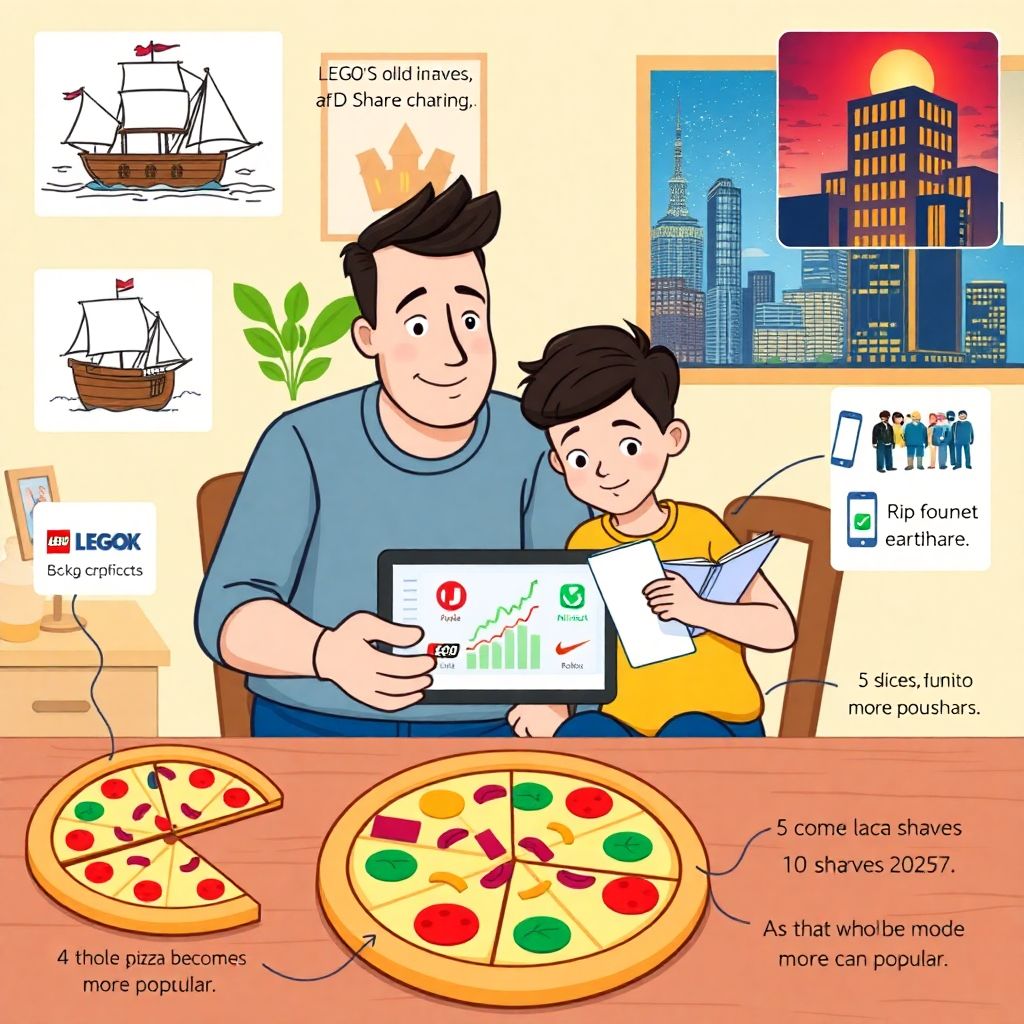
Why Your Kid Already Knows More About Stocks Than You Think
If your child can list ten favorite brands before breakfast—LEGO, Disney, Apple, Nike, Minecraft, Roblox—then they already hold the key to understanding what a stock is. They might not know the word “shareholder,” but they absolutely know what it means to care about a company’s success: Will there be a new movie? A cooler game update? Better shoes? That emotional connection is the doorway to explaining investing for kids using brands they actually love.
So instead of starting with charts, ratios, and scary news headlines, we can begin with something far simpler: “You know that company that makes your favorite things? You can own a tiny piece of it.” That’s the core idea of a stock, stripped down to something a 9‑year‑old can not only grasp, but get excited about.
—
Quick History Lesson: From Old Ships to Smartphone Stocks

To make sense of what a stock really is, it helps to travel back a few centuries, long before kids were asking for AirPods and V‑Bucks. In the 1600s, big trading voyages—like sending ships from Europe to Asia—were incredibly risky and extremely expensive. One storm could wipe out a fortune. A few clever merchants came up with a solution: instead of one rich person paying for the whole ship, lots of people could each pay a small part and share both the risk and the reward.
Those pieces of ownership were recorded on paper certificates. That’s the ancestor of the modern stock. Over time, specialized places called stock exchanges appeared, where people could buy and sell these pieces of companies. Fast‑forward to 2025: today your phone can do in seconds what once required shouting traders, paper tickets, and smoky coffee houses.
The concept, though, hasn’t changed much. When your kid sees a Tesla zoom past, or streams a movie on Disney+, they’re seeing the result of thousands or millions of people who own tiny slices of those businesses—and who hope those slices become more valuable over time.
—
So… What Is a Stock, Really?
Here’s the one‑sentence version you can use:
“A stock is a tiny piece of a company that anyone can buy, own, and sell.”
Owning that tiny slice gives you certain rights (like voting on some company decisions) and potential rewards (like price increases and sometimes dividends—cash the company pays out to owners). You’re not just “betting” on a random number going up; you’re becoming a co‑owner of a real business that sells real products to real people.
For kids, it can help to compare a stock to a pizza. Imagine the company as a large pizza cut into many slices:
– Each slice is a “share.”
– Some people own one slice, some own thousands.
– If the whole pizza grows in value—because it tastes amazing and everyone wants it—each slice becomes more valuable.
– You don’t have to own the whole thing to benefit from its success.
When they realize that buying one share of a company like Nintendo is a bit like having one slice of a giant Nintendo pizza, the abstract word “stock” suddenly turns into something they can picture.
—
Necessary Tools: What You Need Before You Talk Money
You don’t need a finance degree or a Bloomberg terminal to start. You do need a few simple tools—most of them non‑technical and very kid‑friendly:
– A short list of your kid’s favorite brands that also belong to publicly traded companies (Disney, Apple, Nike, Roblox, Hasbro, McDonald’s, etc.).
– Access to basic information about those companies (official websites, investor pages, kid‑friendly articles).
– A way to track prices over time: a brokerage app in “view‑only” mode, a stock‑tracking website, or even a simple notebook.
– A small amount of money (real or pretend) to use in examples.
– At least one or two stock market games for children—online simulators or board games make learning safer and more fun.
In other words, the best “kit” for how to explain stocks to kids is mostly curiosity plus a few familiar logos they already love.
—
Step-by-Step: Teaching Kids Using Real Companies They Recognize
Let’s turn this into a practical, repeatable process you can actually use with a child, step by step.
Step 1: Start From What They Already Obsess Over
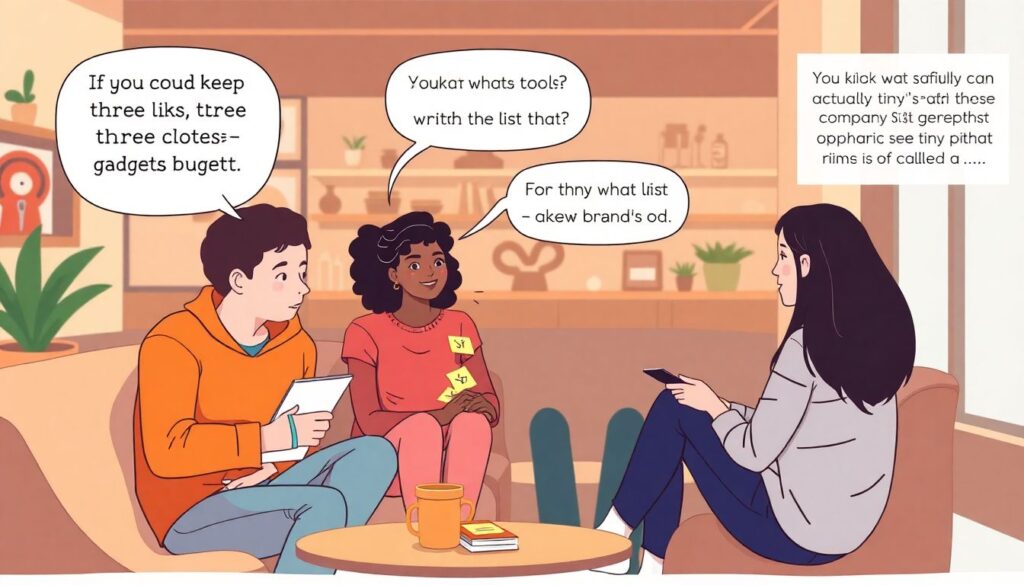
Ask them a casual question: “If you could only keep three brands forever—games, clothes, or gadgets—which ones would you pick?” Write those down. That list is gold.
Then say something like:
“You know what’s cool? Grown‑ups can actually own a tiny piece of those companies. That tiny piece is called a stock.”
From there, briefly explain that buying one share of Nike means that when Nike sells more shoes and earns more profit over many years, your share can become more valuable. Don’t rush into charts yet—stay with the story of “owning a piece of what you love.”
—
Step 2: Show Them the “Before and After” Story
Kids love progress stories: then vs. now. Use historical context to connect the dots. In 2001, when the first iPod came out, Apple was not the giant it is in 2025. People who believed in the company early and bought shares watched the business—and their ownership slices—grow wildly over two decades.
You might say:
– “Imagine if Grandma had bought just one share of Disney when she was a kid, and never sold it. She’d still own it today—and it would probably be worth a lot more, after years of movies, theme parks, and Disney+.”
– “Decades ago, LEGO was mostly plastic bricks. Now it’s movies, video games, and theme parks. Investors who held on through that growth shared in the company’s success.”
That historical angle helps them see that investing is about long‑term stories, not quick flips.
—
Step 3: Connect Products to Profit
A crucial piece of teaching kids about investing with real companies is making the invisible link between what they buy and the company’s money. Ask questions like:
– “Every time someone buys a Happy Meal, who gets that money?”
– “When you buy Robux, who makes money from that?”
– “When we rent a Disney movie, whose business grows?”
Explain that when a company earns more money than it spends, that’s profit. Over time, profitable and growing companies tend to become more valuable. If you own a stock, you benefit from that rising value.
Short, direct explanation you can use:
“Stocks go up over the long term when the business behind them sells more stuff, makes more money, and convinces people it will keep doing that for years.”
—
Step 4: Do a Mini “First Investment” Simulation
You don’t have to actually buy real stocks on day one. Start with pretend money.
Pick 3–5 companies they recognize. Then:
– Let your child “invest” an imaginary $100 split between them (or all into one favorite).
– Write down the company name, the price per share today, and how many shares that $100 would equal.
– Check back once a week or once a month and see how the values move.
Over a few months, they’ll see that:
– Prices wiggle around day to day.
– Some companies go up, some down.
– Long stretches of time matter more than daily noise.
Later, if you feel comfortable, you can open a custodial account and turn that simulation into a very small real investment. That makes the abstract lesson suddenly feel real and memorable.
—
Step 5: Make It a Game, Not a Lecture
If the conversation feels like homework, you’ll lose them. Integrate play. There are digital stock market games for children that mimic real‑world prices using fake money. Many of these let kids build virtual portfolios using exactly the brands they already love.
You can also invent offline games:
– “Brand Draft”: Each person drafts five brands they think will be more popular in five years, then checks news about those companies over time.
– “Investor Detective”: Pick one company and have your child spot all the places it appears in daily life—ads, stores, apps, movies—then guess how it makes money in each place.
This playful approach quietly develops pattern‑recognition: they begin to notice that behind every logo is a real business with real financial consequences.
—
Recommended Resources: Books and Games That Actually Work for Kids
If you’d like to go deeper than casual conversations, there are some genuinely good best stock market books for kids written in simple language with lots of examples. Look for books that:
– Use comics, stories, or characters their age.
– Focus on long‑term thinking rather than “get rich fast.”
– Include exercises where kids pick, track, and reflect on companies they know.
Combine these books with apps or simple websites that support investing for kids using brands they already interact with. The mix of reading, watching, and doing helps the ideas stick far better than a single lecture.
—
Common Confusions Kids Have (and How to Fix Them)
No matter how clear you think you’ve been, certain misunderstandings pop up again and again. Here’s some quick troubleshooting.
Short myth‑busting set you can keep handy:
– “If I buy a stock, the company suddenly gets all my money.”
Not exactly. The company usually gets money when it first sells shares (like at an IPO). When you buy from another investor later, you’re mostly trading ownership with someone else, not directly paying the company.
– “If the stock goes down today, my investment failed.”
Day‑to‑day changes are like weather. Investors care about the climate: many years of growth. It’s normal—and unavoidable—for prices to bounce around.
– “Stocks are just a kind of gambling.”
Gambling is pure chance with no real asset behind it. Stocks are shares of actual businesses with employees, products, and customers. You can still make bad choices, but you’re not just rolling dice.
If things still feel fuzzy, circle back to the pizza: the pizza can be more or less popular over time, but a slice is always a slice of something real.
—
Parent Troubleshooting: When the Conversation Goes Sideways
Sometimes the problem isn’t the child’s confusion—it’s the adult’s discomfort. A few issues often show up:
– You’re worried about promising big returns.
Solution: Be honest. Say, “Stocks can go up and down. Over long periods, people who spread their money across many good companies have usually done well, but nothing is guaranteed.”
– You feel you don’t know enough yourself.
Solution: Learn together. Admit it openly: “I’m still learning this too. Let’s figure it out side by side.” That models curiosity and reduces pressure.
– Your child only wants to “bet” on one trendy brand.
Solution: Introduce the idea of diversification with a simple analogy: “If you only cheer for one player on the team, what happens if they get hurt? It’s safer to cheer for the whole team.” Then show what a fund or ETF is: a basket of many companies in one.
That way, the experience of teaching kids about investing with real companies turns into a shared project, not a one‑way lecture.
—
From Consumers to Co‑Owners: The Big Mindset Shift
The real magic here isn’t just understanding a definition of “stock.” It’s a mindset change: your child moves from being only a consumer—someone who spends money on brands—to being a potential co‑owner of those brands.
By weaving their favorite companies into lessons, using simple historical stories, and adding a bit of play, you’re quietly giving them a powerful long‑term advantage. They learn that:
– Money can work for them, not just be spent.
– Companies are not mysterious; they’re just organized groups of people solving problems.
– Patience and curiosity often beat excitement and hype.
In a world where markets move at the speed of a tap and headlines often shout about crashes and bubbles, helping a child calmly understand what a stock really is—and why owning a tiny slice of a strong company can matter over decades—is one of the most practical gifts you can give in 2025.