
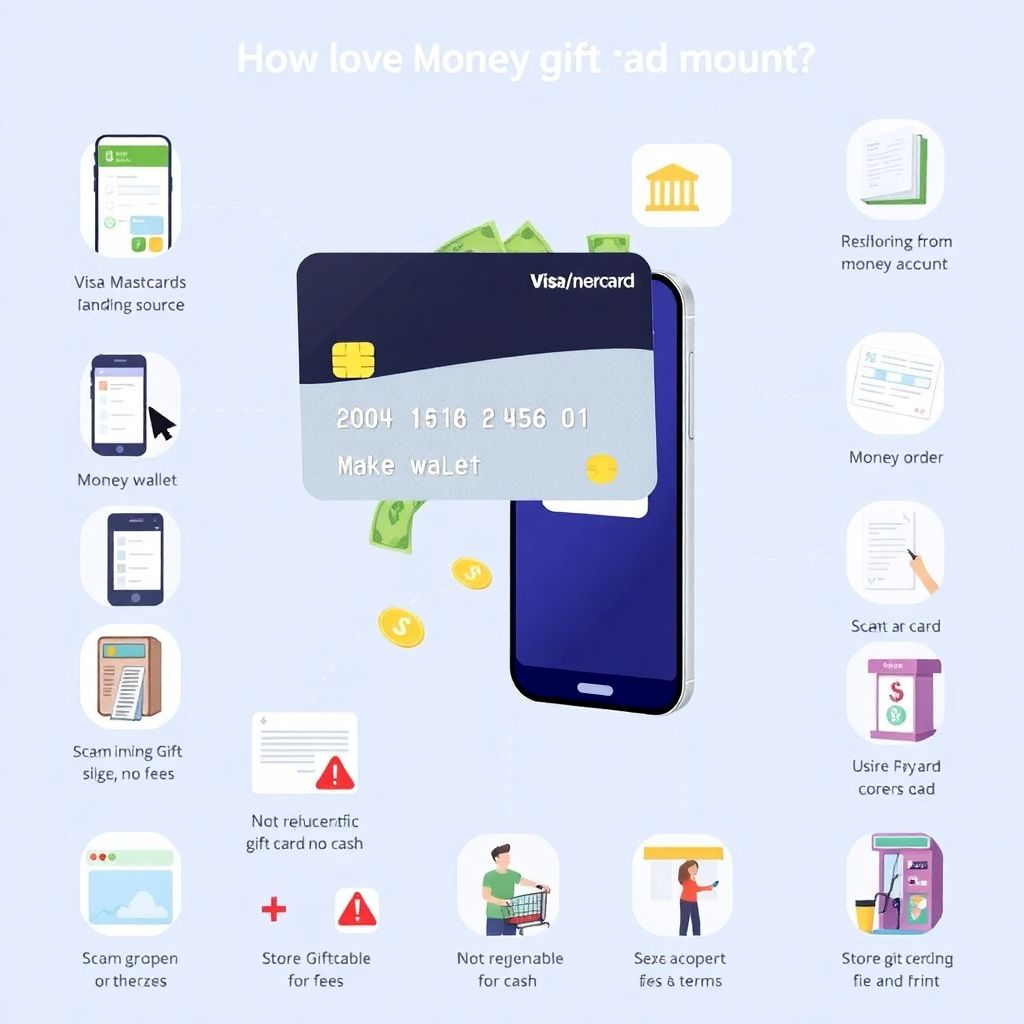
How to Move Gift Card Money to Your Bank Account: What Actually Works
Getting a gift card loaded with a decent amount of money is great—until you realize you’d much rather have that balance in your bank account. Whether you want to pay bills, build your savings, or just prefer cash, it’s natural to ask if you can turn that card balance into real money in your bank.
The short answer: sometimes you can, but it depends on the type of gift card, the rules of the issuer, and which services you’re willing to use. Below is a breakdown of your realistic options, what to watch out for, and when it might not be worth the hassle.
—
1. Identify what kind of gift card you have
Your first step is to figure out exactly what card you’re dealing with, because your options change a lot depending on this:
1. Prepaid network gift cards
– Examples: cards with Visa, Mastercard, American Express, or Discover logos.
– Usually can be used anywhere those cards are accepted.
– These are the easiest to convert to bank money indirectly.
2. Store-specific gift cards
– Examples: gift cards for a single retailer or restaurant (like a clothing store, grocery chain, coffee shop, etc.).
– Can typically be used only at that brand.
– Much harder to turn into bank funds without going through extra steps like reselling.
3. Digital gift cards / codes
– Codes for online platforms, app stores, gaming platforms, or subscription services.
– Often can’t legally or practically be withdrawn as cash.
– Usually the only realistic way to “use” them is by spending within that ecosystem or reselling.
Before doing anything, read any text on the card or packaging. It may clearly state whether cash withdrawals or balance transfers are allowed or prohibited.
—
2. Direct transfer vs. indirect methods
Most gift cards do not allow a simple “transfer to bank” button. Traditional bank transfers are normally reserved for debit cards linked to checking accounts or official prepaid bank accounts.
So you typically have two broad categories of options:
– Direct or semi-direct methods: using the card with apps or services that can move money to your bank (when allowed).
– Indirect methods: converting the gift card to cash or another form of value first, then depositing that money into your bank.
Understanding which category you fall into will save time and prevent you from chasing impossible solutions.
—
3. Using payment apps that support card loading
Some payment and money transfer apps allow you to add a debit or prepaid card as a funding source, then send that balance to your bank account. This can sometimes work with Visa or Mastercard gift cards, though not always.
General process (where supported):
1. Create or log into your account on a payment app.
2. Add your gift card as if it were a regular debit card:
– Enter card number
– Expiration date
– CVV
– Billing ZIP (often needed for network gift cards)
3. Try sending money from that app to your bank account using that card as the funding source.
Important notes:
– Some apps reject gift cards outright or only allow them for purchases, not for pulling money into your balance.
– Fees may apply when sending money out, especially to a bank account.
– Not all countries or regions support these features.
If the app lets you use the gift card as a payment method to “add funds” or send money to yourself, that’s one of the simpler paths to getting those funds into your bank.
—
4. Using the gift card with digital wallets
Another approach: add the gift card to a digital wallet (where allowed), then use that wallet to move money.
Typical flow:
1. Add the gift card to your digital wallet as a payment method.
2. Use the wallet to send money to:
– Another account you control, or
– A person you trust who can then return the money via bank transfer or cash.
3. Deposit that cash or receive the transfer into your bank account.
Limitations:
– Not all wallets accept gift cards as payment methods.
– Some wallets only let you pay merchants, not send money person-to-person with that card.
– You might incur fees on transfers or withdrawals.
Always test with a small amount first if possible, to make sure the transaction type you’re trying is allowed.
—
5. Buying a money order (where allowed)
In some regions, certain retailers and service counters let you buy a money order using a prepaid Visa or Mastercard-style gift card. Then you can deposit that money order into your bank just like a check.
Typical process:
1. Visit a retailer or outlet that sells money orders.
2. Ask if they accept prepaid gift cards with Visa/Mastercard logos as payment.
3. If they do, pay for the money order with your gift card.
4. Make the money order out to yourself.
5. Deposit the money order at your bank.
Cautions:
– Some places do not allow gift cards to be used for money order purchases.
– There may be transaction limits, ID requirements, and service fees.
– Banks may place a hold on money orders, especially larger amounts.
Always confirm store policies and fees before you commit to this route.
—
6. Selling the gift card for cash
If your card is store-specific or you can’t use any of the semi-direct methods, you may need to sell the gift card, then deposit the cash into your bank.
Two main paths:
1. In-person sale
– Sell the card to someone you know at a small discount.
– Example: $100 card sold for $80–$90.
– They get a bargain, you turn the balance into cash.
2. Using gift card resale services or kiosks
– Some physical kiosks and platforms buy unwanted cards for less than face value.
– You receive cash, a different card, or store credit, then deposit any cash into your bank.
Considerations:
– You almost always lose a portion of the value (the buyer’s profit margin).
– There’s risk of scams or disputes if you sell peer-to-peer.
– Always verify the card balance before and after the sale if possible.
—
7. Spending the gift card on essentials you’d buy anyway
If converting to bank funds is too complicated or inefficient, a practical alternative is to use the gift card to pay for expenses you already have, then keep more of your bank money untouched.
For example:
– Use a store card to buy groceries, cleaning products, or household items.
– Use a network gift card for gas, pharmacy purchases, or everyday online orders.
– If possible, buy things for someone you trust who then reimburses you in cash or transfers money to your bank.
This isn’t a direct “transfer,” but in real financial terms, you’re still freeing up your bank balance by letting the gift card handle some of your costs.
—
8. Situations where you probably *can’t* transfer to your bank
There are some types of gift cards that are almost never convertible into bank funds in a legitimate, straightforward way:
– App store or digital content cards
Cards for apps, games, music, or video services are typically locked to digital purchases only.
– Cards with strict terms prohibiting cash conversion
Many store cards and promotions state “Not redeemable for cash” except where required by law.
– Promotional or one-time-use cards
Some rebate cards or promotional cards have heavy restrictions and short expiration dates, making them very difficult to convert to cash or bank deposits.
If the card terms explicitly forbid cash redemption and you don’t want to break any rules or risk your account standing, your realistic options are reduced to spending the card or possibly reselling it at a discount.
—
9. Watch out for scams and unrealistic promises
Whenever you’re trying to convert card balance to bank money, you’ll encounter offers that sound too good to be true. Treat these as red flags:
– Services promising “100% value cash-out, no fees” for any card type.
– Requests to send your card details and wait for a later bank transfer.
– Strangers offering to “flip” or “double” your gift card value.
– Instructions that involve violating platform rules or lying about the transaction type.
Common-sense safety tips:
– Never share full card numbers, security codes, or photos of the back of the card with strangers.
– Avoid deals that require sending your code first and hoping to get money later.
– If a method seems to violate the rules of a financial app, your account could be frozen or closed.
Your goal is to unlock value from the card, not risk losing both the card and your accounts.
—
10. Fees, limits, and tax considerations
Even when a method works, it may not be free or unlimited:
– Transaction fees: Payment apps and services may charge a percentage or flat fee for pulling money to your bank.
– Load or withdrawal limits: Daily or monthly caps might prevent you from moving a large balance all at once.
– Exchange rates: If your card is in a different currency than your bank account, conversion costs may apply.
– Tax issues: In most everyday gift scenarios, using a gift card isn’t a taxable event. However, if you’re receiving gift cards as payment for business activities and then cashing them out, that income may need to be reported just like cash.
If your card holds a sizable amount, it’s worth reading any fine print and, if needed, asking a financial professional how best to handle it, especially if this is part of regular income rather than a one-off gift.
—
11. Step-by-step quick plan
If you just received a gift card with a large balance and want to move funds to your bank, here’s a practical sequence to try:
1. Confirm card type and balance
– Determine if it’s a network gift card or store-specific.
– Check the expiration date and any fees.
2. Try payment apps or wallets first (for Visa/Mastercard-style cards)
– Add the card as a payment method.
– See if you can send money to your bank or another account you control.
3. Look into money orders if allowed locally
– Only if retailers in your area accept prepaid gift cards for money orders.
– Deposit the money order into your bank.
4. Consider selling the card if it’s store-specific
– Accept that you may get less than the face value.
– Use a trusted buyer or platform.
5. As a fallback, use the card for essential purchases
– Let the card pay your regular expenses and preserve your bank balance.
—
12. When it might be better to leave the balance on the card
If every option you explore involves high fees, major discounts on resale, or complicated workarounds that risk your accounts, it may be smarter to:
– Keep the gift card for planned purchases.
– Use it to cover gifts, holidays, or larger buys you were already considering.
– Combine it with sales or discounts to stretch the remaining value.
In many cases, the card is effectively money, just with a narrower “spending zone.” The key is to think about where you regularly spend your own cash, and see if the card can replace that spending rather than forcing a direct conversion to your bank.
—
In summary: transferring gift card funds to a bank is sometimes possible, more often with Visa/Mastercard-type gift cards and via indirect methods like payment apps, money orders, or resale. For store or digital-only cards, your best options are usually reselling at a discount or using the card strategically for things you already need. Carefully weigh the fees, effort, and risk before deciding how far to go in chasing a full cash-out.