
Elizabeth Warren opens inquiry into surge in U.S. car repossessions
Senator Elizabeth Warren has launched a formal investigation into the sharp rise in car repossessions across the United States, warning that millions of Americans may be at risk of losing their vehicles as the cost of auto loans climbs and household budgets are squeezed.
The probe focuses on how auto lenders, banks, and finance companies are handling delinquent loans, as well as whether aggressive lending and collection practices are pushing vulnerable borrowers into default. Warren is pressing major industry players for detailed data on repossessions, interest rates, loan terms, and the use of risky financing structures that can trap consumers in long-term debt.
According to Warren, the boom in repossessions is not an isolated market fluctuation but a symptom of deeper structural problems in the auto finance industry: soaring vehicle prices, longer loan terms, high interest rates, and opaque fees. She argues that these factors, combined with stagnant wages and rising living costs, are creating a perfect storm for working families who depend on cars to keep their jobs and care for their families.
A central question of the investigation is whether lenders have been extending loans to borrowers they know are unlikely to afford them over the full term, particularly by stretching repayment periods to six, seven, or even eight years. These ultra-long loans often keep monthly payments superficially low, but they significantly increase the total cost of the car and can leave borrowers “underwater” — owing more than the vehicle is worth — for most of the loan’s life.
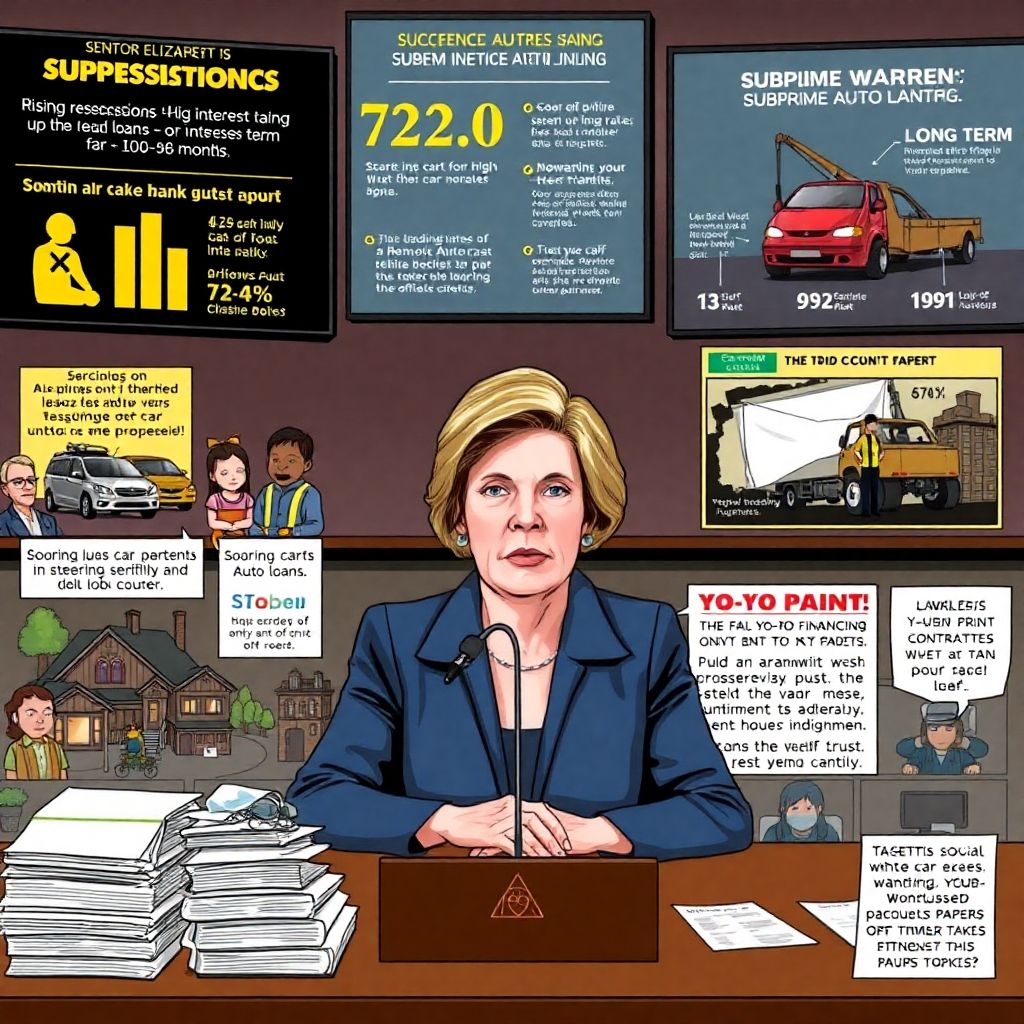
Warren is also examining the role of subprime auto lending, a segment of the market that targets borrowers with weaker credit histories. Subprime loans typically come with much higher interest rates and stricter penalties for late payments. Consumer advocates have long warned that some subprime lenders profit from a churn of repeated defaults and repossessions, rather than from sustainable, affordable repayment.
Another area under scrutiny is the use of technology in repossession. Many modern vehicles can be outfitted with devices that allow lenders to remotely disable the engine if a borrower falls behind on payments. Warren’s investigation is expected to probe whether these technologies are used fairly, whether borrowers receive adequate notice, and how often they are triggered in error, potentially stranding families without transportation with little warning.
The senator has framed car repossessions as not just a financial issue but a threat to basic economic stability. For many Americans, a car is not a luxury; it is the only way to commute to work, reach medical appointments, or take children to school. Losing a vehicle can quickly spiral into job loss, missed healthcare, and deeper financial distress. Warren argues that any system that allows cars to be taken away too quickly or unfairly risks destabilizing entire communities.
Her inquiry is also likely to dig into dealership practices. In recent years, some dealerships have relied heavily on so-called “yo-yo” financing, where a buyer is allowed to drive off the lot before their financing is fully approved. Days or weeks later, the buyer may be told the original deal has fallen through and is pressured into a more expensive loan. Warren’s team is expected to question whether such practices contribute to higher default and repossession rates.
In addition, the investigation will look at how clearly lenders disclose the true cost of borrowing. Auto loan contracts can be dense and difficult to understand, filled with add-on products like extended warranties, service contracts, and credit insurance. Each add-on raises the monthly payment and the total amount financed. Warren’s probe could reveal whether borrowers fully understand what they are signing up for — or whether confusion and lack of transparency are part of the problem.
Warren’s move comes amid broader concerns about household debt. Auto loans now represent one of the largest categories of consumer debt in the country, alongside mortgages and student loans. As interest rates have risen and car prices remained elevated, the average monthly payment for a new vehicle has climbed to levels that many middle- and lower-income families struggle to afford. The spike in repossessions may be an early indicator that this burden is becoming unsustainable.
The senator has signaled that, depending on the findings, she may push for stronger regulatory oversight of auto lenders, clearer disclosure rules, and tighter restrictions on predatory practices. Possible policy responses could include setting limits on interest rates or fees, requiring more robust income verification before loans are approved, or creating standards that discourage loans with a high likelihood of default.
Consumer protection agencies will be closely watching the outcome of the probe. If Warren uncovers widespread abuses, it could lead to enforcement actions, new guidelines for fair lending in the auto market, or even legislative proposals aimed at reforming the industry. Industry groups, in turn, are likely to argue that tighter rules could make credit harder to obtain, particularly for borrowers with weaker credit scores, and may push back against sweeping reforms.
At the same time, the probe may shed light on racial and income disparities in repossessions. Previous research in related areas of consumer finance has shown that borrowers in low-income neighborhoods and communities of color are often charged higher interest rates and are more likely to face aggressive collection tactics. Warren’s investigation may seek data that reveals whether similar patterns exist in auto lending and repossessions, raising questions about fairness and discrimination.
For drivers already at risk of losing their vehicles, the investigation underscores the importance of understanding their rights. In many states, lenders must follow specific steps before repossessing a car, such as providing notice, allowing a grace period, or offering a chance to catch up on payments. Borrowers often have the right to redeem their vehicle by paying the past-due amount plus fees or by negotiating a modified payment arrangement. However, these rights are frequently buried in fine print, and many people only learn about them after it is too late.
Warren’s effort could also prompt a broader public discussion about alternatives to the current model of auto finance. Some advocates argue for expanding access to lower-cost credit through community-based lenders and credit unions, supporting public transit to reduce reliance on personal vehicles, or encouraging employers to assist workers with transportation costs. Others call for more robust financial education so that consumers are better equipped to compare loans, negotiate terms, and avoid risky deals.
Ultimately, the investigation aims to answer a simple but far-reaching question: are car lenders and repossession practices exacerbating financial hardship for people who can least afford it, or are they operating within reasonable bounds in a difficult economic environment? Warren’s probe suggests that she believes the balance has tilted too far toward profit and away from fairness and stability for ordinary borrowers.
As the inquiry proceeds, lenders may be pressed to justify not only the terms they offer but also the speed with which they move to repossess vehicles when payments are missed. The outcome could reshape how auto credit is extended, how risk is priced, and how much protection is afforded to the millions of Americans who rely on a car not just for convenience, but for their livelihoods.