
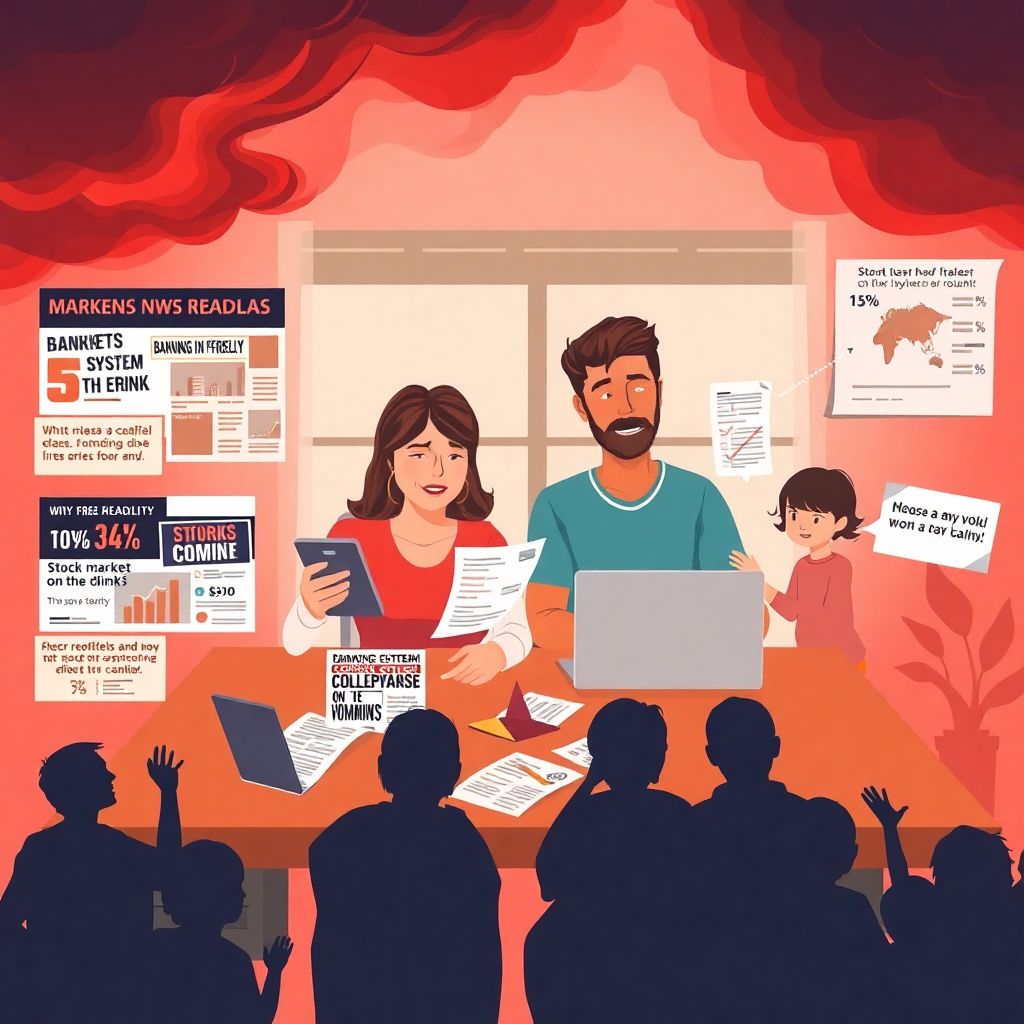
Why scary money headlines work so well on us
Newsrooms live on clicks and attention. Fear sells better than calm explanations, so headlines are designed to hit your survival instincts:
– “MARKETS IN FREEFALL”
– “BANKING SYSTEM ON THE BRINK”
– “CURRENCY COLLAPSE IMMINENT”
Even if the article itself is nuanced, the headline is often written to trigger a spike of anxiety. For beginners, this usually leads to one of two reactions:
1. Panic action – sell everything, pause all investing, hoard cash.
2. Panic avoidance – stop opening statements, avoid news, and hope it all goes away.
Both are costly over time. The goal isn’t to ignore financial red flags in the news, but to react like a pilot in turbulence: alert, methodical, and calm, not like a passenger screaming in the aisle.
—
Red flags in financial news that actually matter
Not every dramatic headline is important for your household finances. Some are just short-term market noise. Others are real structural problems you should respond to.
Hints that news is mostly “noise”
These are dramatic but usually *not* a reason to change your long-term plan by themselves:
– “Stock market drops 2–3% in one day”
– “Analysts predict recession next year”
– “Tech stocks have worst week since 2020”
– “Crypto crashes 15% overnight”
Historically, the US stock market has had a correction (‑10% or worse) about once every 1–2 years, and a bear market (‑20% or worse) roughly once every 5–6 years. Volatility is normal, not exceptional.
News that deserves your focused attention
Some events can directly affect jobs, cash flow, or access to money:
– Banking problems: news about your specific bank limiting withdrawals, needing a bailout, or being taken over by regulators.
– Policy changes: tax law shifts, cuts to benefits you use, or big changes in mortgage rules.
– Job market shocks: mass layoffs in *your* industry or *your* employer announcing major restructuring.
– Credit tightening: multiple banks raising interest rates on lines of credit or cutting credit limits.
In these cases, staying calm doesn’t mean doing nothing. It means acting with a checklist instead of reacting to fear.
—
Common beginner mistakes when reacting to scary headlines
New investors and families often fall into predictable traps when the news turns dark.
Mistake #1: Treating headlines as personal forecasts
People see “Recession Coming” and immediately assume:
– “I’ll lose my job next month”
– “The stock market will halve”
– “My kids’ college fund is ruined”
In reality, recessions are declared after they start, and unemployment rises unevenly. In the 2008–2009 crisis, US unemployment peaked around 10%. That was terrible—but it also means 90% of workers kept their jobs. Headlines describe averages, not your specific situation.
Mistake #2: All‑or‑nothing portfolio moves
A classic beginner move: selling 100% of investments after a 20–30% drop, “until things calm down,” then missing the recovery.
Real example from practice (simplified, but realistic):
– Investor A sells a $50,000 portfolio in March 2009 after a ~50% market drop, waits in cash until “the economy looks better,” and only buys back in 2013.
– Investor B stays invested.
Twenty years after the 2000 peak, US stock investors who stayed in (dividends reinvested) earned roughly 6–7% annualized despite two huge crashes. The biggest losers were those who sold low and bought back late.
Mistake #3: Overreacting with debt
In a panic, people often:
– Max out credit cards to “stockpile” cash or goods
– Take expensive short‑term loans “just in case”
– Ignore high‑interest debt because “everyone is struggling”
This is how a temporary shock becomes a multi‑year debt hangover.
Mistake #4: Mixing long‑term savings with short‑term needs
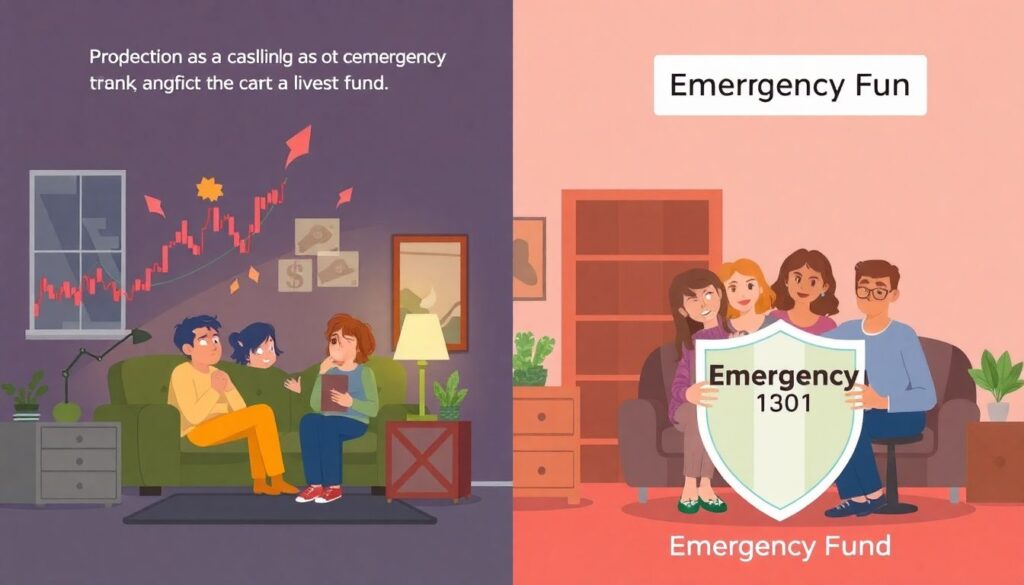
Another frequent beginner error: treating the stock portfolio as a “backup emergency fund.” When a crisis hits, they’re forced to sell investments at bad prices because there’s no cash buffer.
That’s why proper emergency fund planning for families is a core defense, not a boring afterthought.
—
A simple framework: Signal vs. noise
Before reacting to any scary article, run through three questions.
H3: Step 1 — “Does this affect my cash flow directly in the next 12 months?”
Examples of direct impact:
– Your employer announces lay‑offs or pay cuts.
– Your adjustable‑rate mortgage will reset much higher within a year.
– A key client or contract is lost or at risk.
Examples of indirect impact (often less urgent):
– “Global slowdown in manufacturing”
– “Central bank may raise rates again”
– “Tech sector earnings under pressure”
Your first priority is always your household’s ability to pay bills, eat, and stay housed.
—
H3: Step 2 — “Is my core safety net ready?”
Three quick checks:
– Cash buffer: Could you cover 3–6 months of basic expenses (rent/mortgage, food, utilities, transport, minimum debt payments)?
– High‑interest debt: Are you actively working down any debt above 10–12% interest?
– Insurance basics: Do you have at least minimal health and income protection appropriate for your country (e.g., disability coverage, basic life insurance if others depend on your income)?
If any of these are weak and the news is getting darker, that’s a clear signal to strengthen defenses instead of chasing new investments.
—
H3: Step 3 — “What is the *smallest* sensible adjustment?”
Beginners look for big moves—“Sell everything,” “Move all into gold,” “Quit my job.” Experienced investors look for the smallest effective change, such as:
– Pausing discretionary spending for 2–3 months
– Increasing automatic savings by $50–100/month
– Rebalancing the portfolio back to the plan (not reinventing it)
– Topping up the emergency fund instead of buying more stocks
Small, boring moves, repeated, protect you far more than dramatic one‑time decisions.
—
How to stay calm when markets panic
Let’s make it practical. Imagine headlines: “Market plunges 25% on recession fears.” You open your investing app and see you’re down $8,000. What now?
1. Slow down your reaction window
Do not:
– Place trades in the first 10–15 minutes after you see the news.
– Make big decisions late at night or when very emotional.
Instead, set a rule for yourself:
– “I wait at least 24 hours before any big financial move triggered by headlines.”
Often, the desire to “do something” fades once the initial adrenaline drops.
—
2. Re‑read your original plan (or create one)
If you have an investment policy statement or written plan, check:
– Target stock/bond mix
– Time horizon for each goal (retirement, education, house down payment)
– Rules about when you rebalance
If you don’t have a plan yet, this is a red flag by itself. It’s also exactly what financial planning services for families are designed to provide: a written, boring, repeatable process so that crisis decisions are mostly pre‑decided.
—
3. Rebalance, don’t reinvent
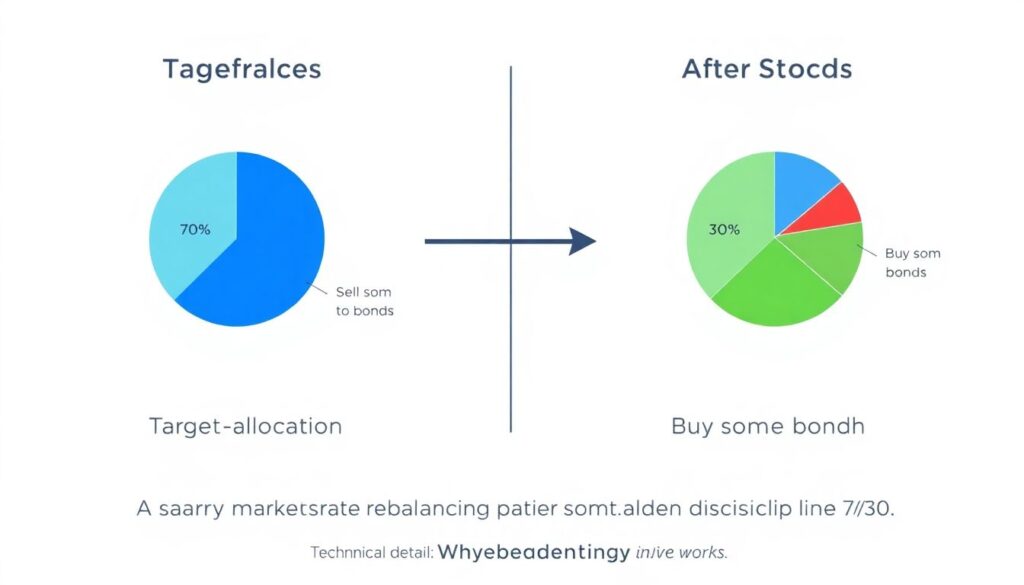
If your plan said:
– 70% stocks
– 30% bonds
And a crash pushes you to:
– 60% stocks
– 40% bonds
Then the “scary” market is actually offering a disciplined investor a rebalancing opportunity: sell a bit of bonds, buy enough stocks to go back to 70/30. That’s it.
Technical detail: Why rebalancing works
– Historically, stocks outperform bonds over long horizons.
– After large declines, the expected long‑term return *from that point* is often higher.
– Rebalancing forces you to buy what’s relatively cheap and sell what’s relatively expensive, without trying to time exact bottoms or tops.
—
How to protect savings during economic crisis
You don’t need genius timing; you need structure. Protecting your savings in a crisis is mainly about matching risk to time horizon.
H3: Match money to time
A simple rule of thumb:
– Money needed in 0–3 years: keep mostly in cash or safe short‑term instruments (high‑yield savings, short‑term government bonds, money market funds).
– Money needed in 3–7 years: blend of conservative and growth assets (e.g., 30–60% in stocks, rest in bonds/cash).
– Money for 7+ years: higher stock exposure is usually reasonable if you can handle volatility.
The mistake beginners make is storing all savings in one bucket—either all in cash (and losing to inflation) or all in risky assets (and being forced to sell low).
—
H3: Build “crisis‑ready” cash reserves
For most households, a practical target is:
– Single‑income families or unstable income (freelancers, commission‑based): 6–12 months of core expenses.
– Dual‑income stable households: 3–6 months of core expenses.
Keep it:
– In a separate account from daily spending
– In an institution with strong regulation and deposit insurance
– Easily accessible but not too easy to raid for impulse buys
When emergency fund planning for families is done well, every scary headline feels less personal. You still care, but you’re not wondering how to pay rent next month.
Technical detail: How much is “enough” in numbers
If your family’s bare‑bones monthly cost (rent, utilities, groceries, basic transport, minimum debt) is $2,500:
– 3 months = $7,500
– 6 months = $15,000
– 9 months = $22,500
Seeing a concrete target helps you track progress and stay motivated.
—
Dealing with debt before and during crises
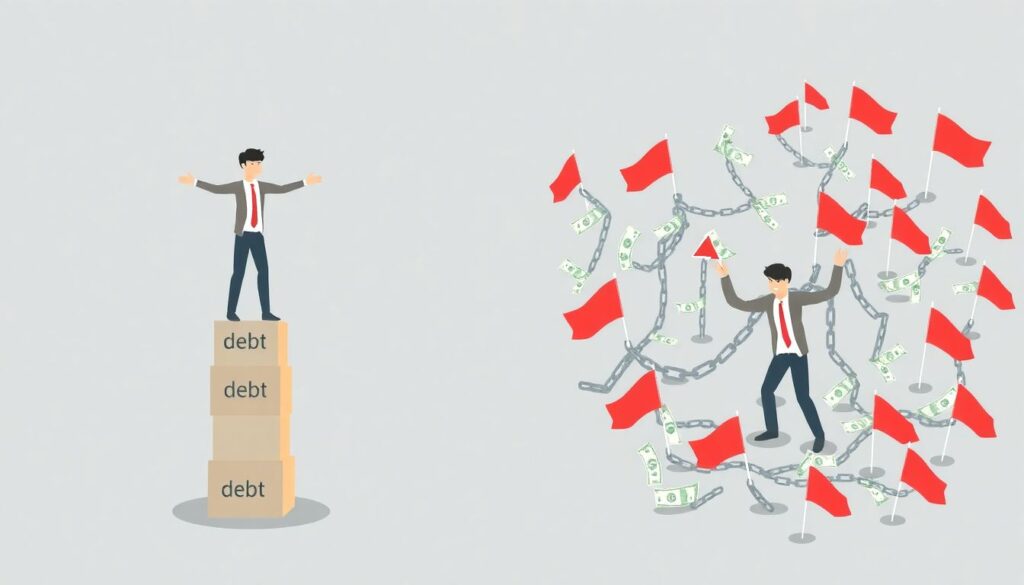
Debt can be a stabilizer or a trap, depending on how you handle it when red flags appear.
H3: Prioritize by interest rate, not by noise
When times feel uncertain, beginners often:
– Pay down the smallest balance first (because it “feels good”)
– Ignore student loans or personal loans because “everyone has them”
Instead, rank your debts by interest rate:
1. Credit cards and payday loans (often 15–30%+)
2. Personal loans and overdrafts (typically 8–18%)
3. Auto loans (usually 3–10%)
4. Mortgages and student loans (often lower, 2–7% depending on country and period)
High‑interest debt is a guaranteed negative return. In a crisis, eliminating it is as powerful as getting a risk‑free investment with that same return.
H3: Use consolidation carefully
You’ll see lots of ads for debt consolidation services for households when the economy slows. They’re not automatically bad—but they’re not magic either.
Use them cautiously if:
– The *total* interest cost goes down, not just the monthly payment.
– Fees are transparent and modest.
– The new loan term is not so long that you pay far more interest overall.
Avoid them if:
– They require you to secure the loan against your home for previously unsecured debt.
– The main benefit is “lower monthly payment” but at a much higher total cost.
– The provider pressures you to sign quickly or hides fees in complexity.
—
When to get outside help (and how to choose it)
Financial anxiety plus confusing news can paralyze you. That’s often a good time to get a second pair of eyes.
H3: What a good advisor does in a crisis
The best financial advisor for household budgeting doesn’t try to predict markets. They:
– Help you clarify priorities: food, housing, safety, then goals.
– Build and maintain a budget that holds even when income drops temporarily.
– Make sure your investments match your time horizons and risk tolerance.
– Act as an emotional circuit‑breaker when you want to panic‑sell or over‑borrow.
Look for:
– Transparent fees (flat or percentage clearly stated)
– Fiduciary duty (legally required to put your interests first, where applicable)
– Willingness to say “do nothing” when that’s the right move
If full‑service advice is too expensive, you can still use one‑time sessions, group programs, or low‑cost online financial planning services for families to build a framework you can manage yourself.
—
A simple “crisis playbook” for your household
Here’s a practical checklist you can save and reuse whenever the headlines go red.
When bad news hits:
1. Pause 24 hours before big decisions.
2. Check cash flow: any immediate threats to your job or income?
3. Review safety net: emergency fund, insurance, and high‑interest debt status.
4. Revisit your plan: is this event truly outside the risks you planned for?
5. Adjust minimally: small spending cuts, tiny savings/investing tweaks, not wholesale changes.
Ongoing habits that make future crises easier
– Automate saving and debt payments so they keep going even when you’re distracted by news.
– Separate accounts: one for bills, one for emergency fund, one for long‑term investing.
– Once or twice a year, run a “stress test”:
“If our income dropped 30% for 6 months, what would we do?”
Adjust the plan based on your answers.
—
Staying calm in the face of financial red flags in the news is a skill, not a personality trait. You build it by:
– Knowing what actually matters for *your* household
– Having buffers in place before you need them
– Making small, rational changes instead of emotional leaps
Do that consistently, and scary headlines become background noise, not personal emergencies.