
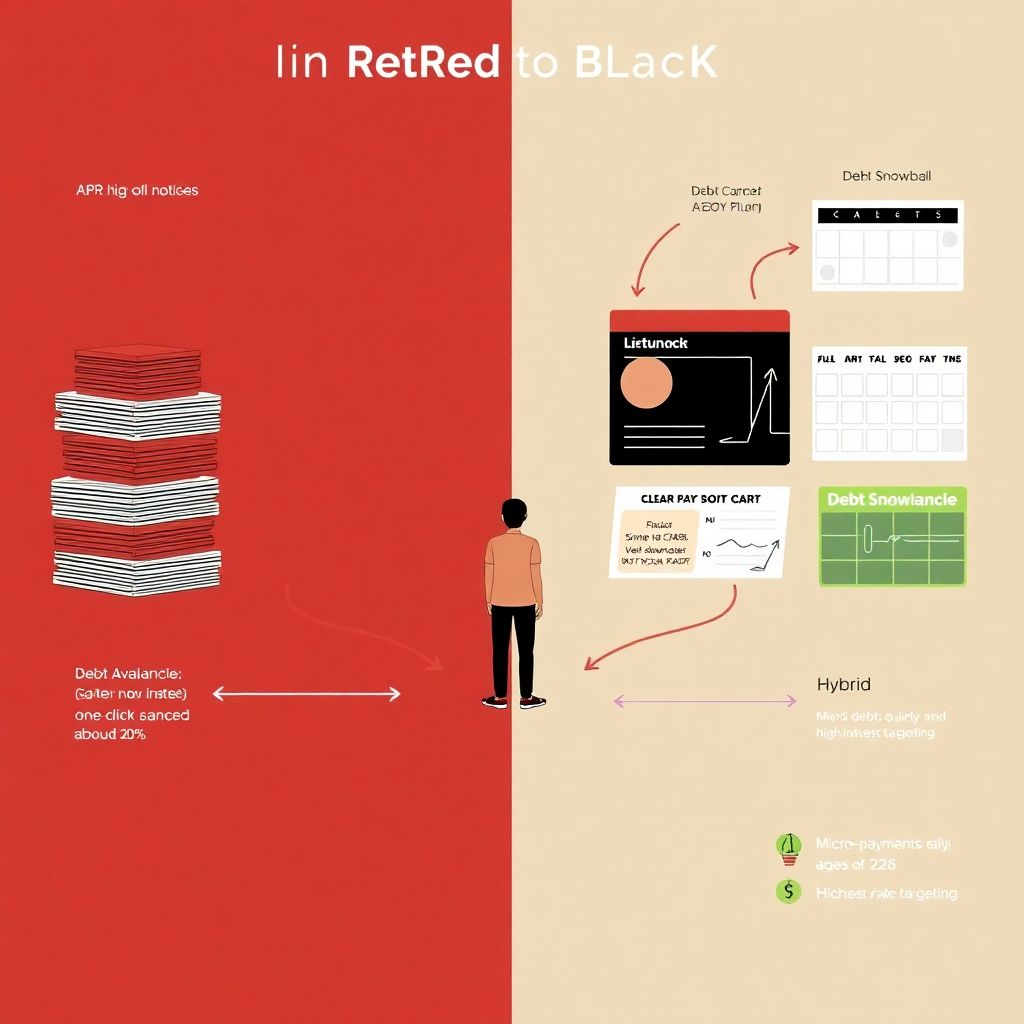
Why “From Red to Black” Matters More Than Ever in 2026
If your credit cards feel like a leaking boat you’re constantly bailing out, you’re not alone. According to the Federal Reserve, total U.S. credit card balances jumped from about $856 billion at the end of 2021 to roughly $986 billion by the end of 2022, and then crossed the $1 trillion mark in mid‑2023. That’s the highest level on record, and it came together with average interest rates pushing above 20%. More recent official numbers for 2024–2025 haven’t been fully published yet, but early Fed and bank earnings reports show the same pattern: balances staying high, delinquencies creeping up, and more people carrying debt month to month. In other words, moving from “red” (negative net worth) to “black” (positive) is no longer a nice‑to‑have — it’s survival strategy.
Step 1. Get the Real Numbers: Turning Fog into a Clear Dashboard
Before you can learn how to get out of credit card debt fast, you need to know exactly what you’re dealing with. That means more than “I think I owe around five grand.” You want a precise list: every card, balance, APR, minimum payment, and due date. This isn’t just bookkeeping; it’s the basis for every later decision, from balance transfers to consolidation. People routinely underestimate their total by 10–20%, and that gap is exactly where “mystery interest” hides and erodes your progress. Treat this like building a cockpit dashboard: once it’s set up, every other move becomes clearer and less emotional.
Practical way to collect your data
The easiest starting point is your credit reports and your online banking portals. Download or screenshot each card’s info and put it into a simple list or spreadsheet. If you use a budgeting app, link all cards and check that the balances match your last statements; small discrepancies can reveal pending transactions you’ve forgotten. The key is to stop guessing. In 2023, survey data from multiple personal finance apps showed that users who tracked card APRs explicitly were about twice as likely to change cards or negotiate rates within six months, which directly cut their interest costs. Awareness by itself doesn’t erase debt, but it changes your behavior faster than any “hack.”
Step 2. Choose Your Core Payoff Strategy: Avalanche vs. Snowball vs. Hybrid
Once you see the full picture, the next move is choosing a payoff method. Here начинаются реальные различия между подходами. They’re all trying to solve the same problem — shrinking balances and interest — but they optimize for different things: math, motivation, or flexibility. Understanding how they compare helps you commit to one, instead of bouncing between methods and losing momentum every time an unexpected bill pops up.
Debt Avalanche: Math‑First Efficiency
The debt avalanche method channels every spare dollar to the card with the highest interest rate while paying minimums on everything else. When that card is gone, you redirect its payment to the next highest APR, and so on. On paper, this is almost always the fastest and cheapest path, because you’re attacking the most expensive debt first. Simulation studies based on 2021–2023 rate data show that, for someone with $10,000 spread over three cards, avalanche can save hundreds of dollars in interest compared with more random payoff patterns, especially now that many cards charge over 20% APR.
– Pros:
– Minimizes total interest paid
– Gives the mathematically fastest route to zero
– Easy to automate once you sort cards by APR
– Cons:
– Emotional payoff is slower if your highest‑rate card also has the biggest balance
– Some people lose motivation before seeing a “win”
Debt Snowball: Motivation‑First Momentum
The debt snowball flips the logic. You ignore interest rates at first and attack the smallest balance, even if its APR is slightly lower. Every time you eliminate a card, you roll that payment onto the next smallest one. Behavioral studies between 2020 and 2023 show a consistent pattern: people who see quick wins are more likely to stick with their plan for six months or longer, which often matters more than the theoretical interest savings they could have had with avalanche but never followed through on.
– Pros:
– Fast psychological wins
– Simple rule that’s easy to remember in daily life
– Good fit if you’ve tried and “failed” other plans before
– Cons:
– Can cost more in total interest
– Less optimal when one card has a very high APR
Hybrid Strategy: Real‑World Compromise
In practice, many people do best with a hybrid strategy: start with one or two tiny balances to create momentum, then quickly pivot to an avalanche order based on APR. This keeps the motivational boost of the snowball while avoiding the worst interest inefficiency. Think of the hybrid as “snowball for 2–3 months, avalanche for the remaining years.” The exact mix depends on your personality: if you’re very numbers‑driven, lean avalanche with maybe one “quick win”; if you’re easily discouraged, lean snowball first, then shift once the habit of overpaying is solid.
Step 3. Compare Modern Approaches to Speeding Up the Payoff
Beyond the payoff order, 2026 offers more tools than ever to reduce interest and simplify your debt. The landscape now ranges from traditional strategies like credit card debt consolidation loans to app‑driven micro‑payments that round up spare change and throw it at your balance daily. Choosing among them means comparing how much they cut interest, how much complexity they add, and what risks they quietly introduce in the fine print.
0% Balance Transfers and “Rate Hopping”
The best credit card balance transfer offers can give you 0% APR for 12–21 months in exchange for a one‑time transfer fee, usually 3–5%. Used correctly, this is one of the most powerful ways to accelerate repayment: you pause interest while you aggressively shrink the principal. But it only works if you have decent credit and strict self‑control. From 2021 to 2023, bank data showed strong growth in promotional balance‑transfer volumes as rates rose, but a meaningful share of users ended the promo period with higher total balances because they kept spending on the old cards as if the problem had been solved. The math works only if you stop new charging and have a realistic plan to wipe out the balance before the promo expires.
Debt Consolidation Loans and Personal Loans
credit card debt consolidation loans combine multiple card balances into one installment loan with a fixed rate and a clear payoff period. When average card APRs float above 20%, even a 12–15% personal loan can be a large improvement, especially if you’ve got good or improving credit. The advantage is predictability: one payment, fixed term, and a scheduled debt‑free date. The tradeoff is that you’re turning revolving debt into installment debt, which can extend the life of your balance if you focus only on lowering the monthly payment instead of the total interest and timeframe.
– When consolidation shines:
– You juggle 4+ cards and keep missing due dates
– Your credit profile qualifies for a clearly lower rate
– You commit to no new card debt until the loan is gone
– When it backfires:
– You treat cleared cards as “available money” and run them up again
– The new loan rate isn’t really better after fees
– The term is so long that total interest barely improves
Credit Card Debt Relief Programs and Settlement
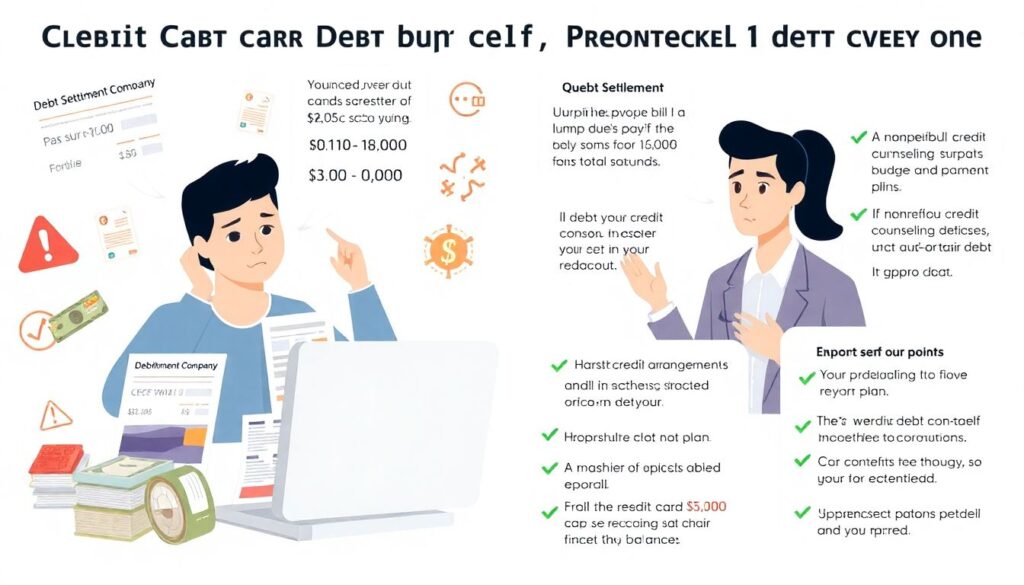
credit card debt relief programs, including debt settlement and hardship arrangements, are more extreme options. They usually target people already behind on payments or close to default. Settlement companies try to negotiate lump‑sum payoffs for less than you owe, while nonprofit agencies may arrange reduced interest or structured hardship plans directly with card issuers. Over 2020–2023, regulators repeatedly warned about aggressive marketing in this space, especially from firms that charge high upfront fees without clear results. These programs can reduce balances but typically hammer your credit score for years and may generate taxable “forgiven debt” income. They’re tools for last‑resort situations, not shortcuts for someone who’s still current on all accounts.
Step 4. Technology in 2026: Helpful Tools vs. Hidden Traps
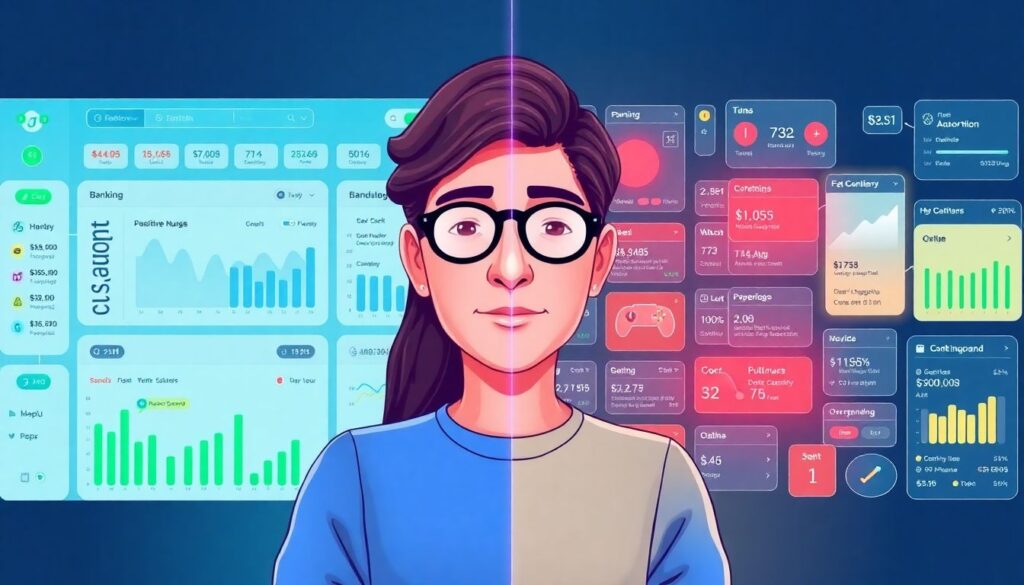
Technology can either be your co‑pilot or your saboteur. In 2026, most banks and fintech apps lean heavily into automation, AI‑driven spending categorization, and nudges. Used wisely, these tools help you stick to a paydown plan without constant willpower. Used carelessly, they can make overspending frictionless and hide the true cost behind cashback and rewards gamification.
Helpful Tech: Automation, Apps, and Micro‑Payments
Modern budgeting apps connect to all your accounts, forecast bills, and suggest how much you can send to each debt without wrecking your cash flow. Some support daily micro‑payments: tiny transfers to your highest‑rate card whenever your bank balance is above a safe threshold. Several studies from 2021–2023 show that people who automate “extra” payments, even as small as $3–5 per day, knocked months off their payoff time, mainly because they stopped letting money sit idle in checking where it earned near‑zero interest while cards charged 20% or more. When paired with alerts before due dates and spending caps on problem categories, technology becomes a practical ally.
Tech Traps: One‑Click Credit and Reward Illusions
On the flip side, technology also powers instant credit approvals inside shopping apps, “buy now, pay later” offers, and ultra‑easy virtual cards. Between 2021 and 2023, BNPL usage surged, especially among younger consumers, and regulators started tracking rising delinquencies for small‑ticket installment plans. The risk is psychological: it feels harmless to break a $200 purchase into four payments, but if you do that on five or six platforms at once and also carry credit card debt, your effective leverage climbs quickly. Cashback and travel rewards are similar: the average user earns maybe 1–2% back while paying 20% interest if they revolve balances. The arithmetic is brutal — rewards rarely offset the interest drag. In evaluating “technologies,” prioritize any feature that limits friction for paying down debt, not for opening new credit.
Step 5. When and How to Use Professional Help
Not everyone needs outside help, but many people wait far too long before asking for it. professional credit counseling for credit card debt can be surprisingly practical if you choose reputable, nonprofit agencies. These counselors review your budget, your debts, and your goals, then help you design a plan that fits your actual income and lifestyle, rather than some unrealistic “no fun for three years” schedule you’ll abandon after a month. Done early, counseling can prevent missed payments and collections; done late, it can still help you prioritize damage control and avoid worse outcomes.
What Professional Counseling Can Offer
Legitimate agencies, often tied to national nonprofit networks, can sometimes secure lower interest rates through structured debt management plans, though these are not the same as debt relief programs or settlement. They might consolidate your payments — you send one monthly amount to the agency, and they distribute it among your creditors under agreed terms. The benefit is a predictable timeline and lower fees, especially compared with for‑profit intermediaries. Data from counseling organizations over 2020–2023 shows that clients who enrolled before their first 60‑day delinquency had higher completion and lower default rates than those who waited until accounts were already in collections. Timing is critical: asking for help at the “struggling but current” stage gives you more options and better negotiation leverage.
How to Pick the Right Path for You
With so many options — avalanche, snowball, transfers, loans, programs, counseling — choosing can feel like another decision you’d rather avoid. The key is to match the method to your financial profile and your personality, not to chase whatever trend sounds clever on social media this month. A clean, honest self‑assessment saves you from bouncing between half‑implemented strategies and wondering why nothing seems to work.
Key questions to guide your choice
Ask yourself a few blunt questions: Are you current on all payments, or already behind? Is your credit score strong enough to qualify for lower‑rate products? Do you tend to overspend when credit is easily available? How stable is your income over the next year or two? If you’re current, have decent credit, and are confident you won’t swipe up new balances, a mix of avalanche plus a 0% transfer or consolidation loan can be highly effective. If your credit is damaged or your income is unpredictable, focusing on behavioral systems — snowball, strict budgeting, and maybe counseling — might be more realistic than chasing promotional offers you won’t qualify for.
– Lean toward avalanche + balance transfers if:
– You’re detail‑oriented and comfortable optimizing interest
– You can stick to a spending freeze on transferred cards
– Your credit profile is good enough for strong promo terms
– Lean toward snowball + strict budgeting if:
– You’re easily discouraged by slow progress
– You juggle several small balances you can clear quickly
– Your priority is building habits and confidence first
Current Trends in 2026: What’s Changing Around You
By 2026, several big trends are reshaping how consumers and lenders handle card debt. First, the era of ultra‑low interest rates is clearly over; higher benchmark rates that began in 2022 pushed card APRs to historic highs through 2023 and beyond. This makes the cost of carrying a balance heavier than what many people remember from the 2010s. Second, regulators in the U.S., U.K., and EU have become more aggressive about transparency for BNPL and card offers, which may gradually curb some of the more confusing terms but also lead issuers to tighten approvals. Third, digital‑first banks and fintechs are offering more granular tools — automated payoff schedules, “debt dashboards,” and behavioral nudges — that try to position themselves as allies in debt reduction rather than just lenders.
What These Trends Mean for Your Plan
For you, these trends have a few practical implications. High rates increase the payoff from every dollar you throw at principal, which makes disciplined strategies like avalanche more valuable than ever. At the same time, tighter underwriting means you shouldn’t assume you can always roll balances to another 0% card in 18 months; “rate hopping” is riskier if your future approvals are uncertain. The growth of digital tools is positive, but only if you consciously configure them to support your goals — turning on automatic extra payments, spending alerts, and category limits, rather than just accepting default settings. And as conversations about how to get out of credit card debt fast become more mainstream, so does the risk of oversimplified advice. The challenge in 2026 is to use the new tools and offers without letting them dictate your behavior; your plan should be based on clear numbers, honest self‑knowledge, and a realistic path from red to black that you can actually sustain.
From Red to Black: Pulling the Steps Together
Bringing it all together, the move from red to black is less about discovering a secret trick and more about stacking a series of well‑chosen, boringly effective steps. First, get complete clarity on your balances and rates. Second, pick a payoff strategy — avalanche, snowball, or hybrid — that matches your psychology. Third, evaluate whether best credit card balance transfer offers or credit card debt consolidation loans genuinely lower your costs without encouraging new spending. Fourth, harness technology to automate good behavior while resisting frictionless new credit. Finally, if you’re stuck or sliding behind, explore reputable professional options early, from counseling to structured management plans, instead of drifting into crisis. The statistics of the last three years show a world where more people are struggling with card debt, but they also highlight a simple truth: those who choose a clear plan, stick with it, and adapt intelligently to new tools are the ones who make it back to black — and stay there.