
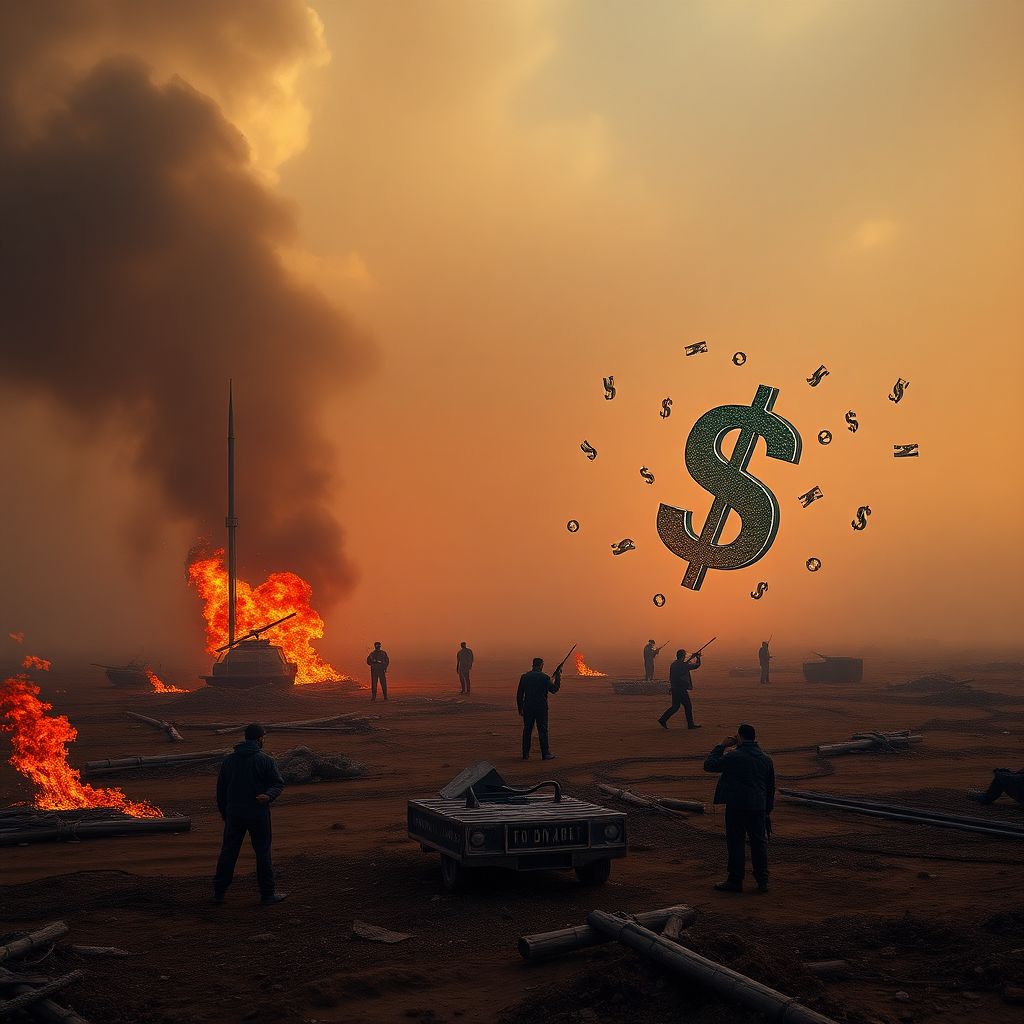
Iran War Turbocharges De‑Dollarization: Why the US Now Bleeds $1 Billion a Day
The latest escalation involving Iran is doing more than reshaping military alliances and energy routes. It is accelerating a financial shift that many in Washington have long feared: the steady move away from the US dollar as the world’s dominant currency. At the same time, the conflict is costing the United States an estimated one billion dollars every single day when military operations, logistics, aid, and indirect economic disruptions are added up.
This combination – rising war expenses and a growing challenge to the dollar’s supremacy – places the US in a uniquely dangerous position. The country is funding an expensive overseas confrontation while simultaneously undermining the very monetary system that has made such wars financially possible for decades.
How War Supercharges De‑Dollarization
The dollar’s global role has long rested on three pillars: military power, economic weight, and trust in US institutions. Regional wars involving Washington, especially in the Middle East, directly erode all three.
1. Military overextension
Every additional carrier strike group deployed, every new base reinforced, and every missile fired into a volatile region reinforces a global perception: the US is trapped in permanent conflict. Allies and rivals alike start to question whether a country that spends so heavily on war can maintain fiscal discipline over the long term.
2. Weaponization of finance
Sanctions on Iran, its partners, and allied entities push affected countries to seek alternatives to the dollar-based system. When Washington uses its financial dominance as a tool of coercion, it unintentionally motivates targeted states to build parallel mechanisms – new payment systems, alternative reserve currencies, and local-currency trade agreements.
3. Blowback from sanctions and asset freezes
Freezing foreign reserves, excluding banks from dollar clearing, and threatening secondary sanctions against third parties may achieve short-term political goals, but they also send a clear signal: any state’s assets can be blocked if it falls out of favor with Washington. For many governments, this risk is intolerable. The logical response is to reduce exposure to the dollar.
The $1 Billion a Day Price Tag
The financial cost of the current confrontation around Iran is not limited to bombs and fuel. When economists estimate the daily billion-dollar burn rate, they typically factor in several layers of spending and losses:
– Direct military operations: deployment of ships, aircraft, drones, and troops; munitions; logistics; intelligence.
– Heightened regional presence: extra bases, forward operating positions, and defense contracts with partners in the region.
– Security guarantees and military aid: funding for proxies and allies, missile defense systems, and emergency aid packages.
– Energy and shipping disruptions: attacks or threats in key choke points like the Strait of Hormuz can raise insurance costs, reroute tankers, and push up global energy prices.
– Spillover into global markets: market volatility, higher borrowing costs, and inflationary pressure eventually feed back into higher interest payments on US debt.
The figure of one billion dollars a day captures both visible budget line items and the less obvious economic drag spread across markets, trade, and energy.
Why the Dollar’s Status Matters So Much
For decades, the US enjoyed a unique “exorbitant privilege”: it could print the world’s primary reserve currency, borrow cheaply, and pay for foreign wars with money other countries were willing to hold.
When most global trade is denominated in dollars, and central banks store their reserves in US Treasury bonds, Washington can run large deficits without facing an immediate currency crisis. If that foundation erodes, the cost of war skyrockets.
Losing even a portion of the dollar’s dominance would mean:
– Higher borrowing costs for the US government
– Greater vulnerability to inflation
– Less external demand for US debt
– Reduced ability to impose financial sanctions effectively
In other words, the financial engine that has powered decades of interventions would start to sputter.
How the Iran Conflict Accelerates the Shift Away from the Dollar
The Iran confrontation catalyzes multiple existing trends:
1. Regional trade in local currencies
Countries tied to Iran economically, or politically aligned with it, are incentivized to expand trade in alternative currencies to avoid secondary US sanctions. Energy deals settled in non-dollar currencies steadily chip away at the greenback’s share of global transactions.
2. Strategic hedging by major economies
Large importers of Iranian oil – or those wanting leverage in Middle Eastern affairs – see an opportunity to deepen non-dollar arrangements, especially in energy, defense, and technology. Bilateral currency swaps and direct currency settlements become more attractive with every new round of US sanctions.
3. Gold and commodity accumulation
Concerned about the safety of dollar assets, some central banks increase their gold holdings and diversify into other currencies. Gold serves as a “neutral reserve asset” that cannot be frozen by the US Treasury.
4. Development of alternative payment networks
The more Washington threatens to cut institutions off from dollar clearing and established messaging systems, the more incentive other nations have to build parallel infrastructures. Once those systems reach critical mass, the dollar’s network effect – its strongest advantage – begins to weaken.
The Hidden Link Between War Spending and Dollar Credibility
A currency’s dominance depends not only on its current strength, but on confidence in its future. Persistent, costly conflicts send a dangerous signal: that the issuing country may be willing to sacrifice long-term fiscal health for short-term geopolitical goals.
The Iran war has three feedback effects on the dollar:
– Rising debt levels: A billion dollars a day adds rapidly to an already massive US debt burden. Investors may begin to question whether the US can sustainably finance its obligations without higher inflation or higher taxes.
– Political polarization at home: Expensive foreign wars deepen domestic tensions over spending priorities. The more polarized the US becomes, the less predictable its fiscal and monetary policy appears.
– Erosion of institutional trust: Perceptions of permanent warfare and financial bullying damage the reputation of US institutions as guardians of a stable, rules-based system.
As this trust declines, central banks and major investors look for ways to reduce their reliance on the dollar, even if alternatives are imperfect.
Can Any Currency Replace the Dollar?
For now, no single currency is ready to fully displace the dollar. The alternatives have their own weaknesses:
– Some potential challengers lack fully open capital markets and the rule-of-law frameworks that give investors confidence.
– Other currencies represent economies that are large but not yet trusted to be long-term, neutral stewards of global savings.
– Multicurrency or “basket” solutions remain complex and politically sensitive.
However, the threat to the dollar does not require a clean, one-to-one replacement. A gradual move toward a more fragmented system – regional currencies, bilateral arrangements, and commodity-based settlements – is enough to raise US borrowing costs and weaken its financial leverage.
The Iran conflict accelerates this fragmentation by pushing countries to test and refine alternatives sooner than they otherwise would.
Who Gains From De‑Dollarization?
The beneficiaries of a weakened dollar-centric system are not limited to direct US adversaries. They include:
– Energy exporters that prefer to sell in multiple currencies and reduce exposure to US sanctions.
– Rising powers that want more influence over global finance and trade rules.
– Smaller states wary of becoming collateral damage in sanctions wars and geopolitical rivalries.
For them, the Iran conflict is a real-time lesson in the risk of overreliance on any single country’s currency and legal system.
Domestic Consequences Inside the United States
The billion-dollar-a-day burn rate is not just an abstract figure on a ledger. If the war drags on and de‑dollarization gathers pace, Americans will feel the impact through:
– Higher interest rates as the US must offer better returns to attract buyers for its debt.
– Pressure on social programs as more of the federal budget is consumed by debt service and defense spending.
– Potential currency volatility if global confidence in the dollar’s long-term stability wavers.
– Greater economic inequality as asset holders adjust more easily to inflation and volatility than wage earners.
What once felt like “cost-free” dominance – paying for wars with cheaply borrowed dollars – turns into a visible burden shared across the economy.
Is There a Path to Slowing De‑Dollarization?
While the Iran conflict has turbocharged existing trends, the process is not irreversible. Measures that could slow or partially mitigate de‑dollarization include:
– Reducing the scale and frequency of foreign interventions to restore confidence in US fiscal restraint.
– Using sanctions more selectively and transparently, with clear legal frameworks, to limit the fear of arbitrary financial punishment.
– Strengthening domestic political and economic stability, thereby reinforcing trust in US institutions.
– Pursuing diplomatic strategies that lower tensions in key regions and reduce the premium on military solutions.
However, each of these steps would require a significant shift in long-standing US strategic habits.
The Bottom Line
The Iran war is not just another regional crisis. It has become a catalyst for deeper changes in the global financial order. As the US spends around one billion dollars a day on a conflict with uncertain outcomes, it simultaneously undermines the trust and stability that underpin the dollar’s global role.
The immediate costs are visible in defense budgets, energy markets, and shipping routes. The more profound damage may emerge over years: a fragmented monetary landscape, rising US borrowing costs, and a world increasingly determined to conduct trade and hold reserves in anything but the dollar.
War, once financed by the strength of the dollar, now threatens the very system that made such wars possible.