

401(k)s and IRAs are tax-advantaged retirement accounts that let your money grow for the future while you focus on raising kids. Parents should care now because small, consistent contributions, started early, compound over time, reduce stress later, and give you more flexibility for your family.
Top Retirement Myths Parents Still Believe

- “I will start saving when the kids are older” – waiting costs you years of compound growth and makes catching up much harder.
- “College savings matters more than my retirement” – kids can borrow for school; they cannot borrow to fund your retirement.
- “I need the best 401k plans for parents before I start” – any reasonably low-cost plan beats doing nothing for another year.
- “IRAs are only for high earners” – most working parents can use an IRA with relatively small monthly contributions.
- “I will downsize my house and be fine” – relying only on home equity is risky and ignores tax-advantaged growth.
- “Retirement planning services for families are only for the wealthy” – many providers offer low-cost or even free starter guidance.
How 401(k)s Work: Structure, Employer Roles, and Contribution Limits
A 401(k) is an employer-sponsored retirement plan. Money comes out of your paycheck and goes into an investment account before you see it, which is why it works even for busy parents. Many employers add a “match” – free money when you contribute up to a certain level.
Most plans offer a menu of mutual funds or index funds. You choose how aggressive or conservative to be, often with a default “target date” fund if you prefer simplicity. For people searching how to start a 401k for beginners, the default fund plus capturing the full employer match is usually the simplest first step.
Plans differ in fees, investment choices, and employer matches. When comparing options or choosing between jobs, look at match percentage, vesting rules (how long until the match fully belongs to you), and investment costs. These factors matter at least as much as hunting for the best 401k plans for parents.
| Account Type | Who Offers It | Typical Funding Source | Tax Timing | Best Fit For |
|---|---|---|---|---|
| 401(k) | Your employer | Payroll deductions, employer match | Taxed later when withdrawn (traditional) | Employees with access to a plan, especially with a match |
| Traditional IRA | Brokerage, bank, robo-advisor | Direct transfers from your bank | Often tax-deductible now, taxed later | Parents seeking flexible, independent accounts |
| Roth IRA | Brokerage, bank, robo-advisor | After-tax contributions from your bank | Taxed now, withdrawals usually tax-free later | Young parents expecting higher income in future |
| Custodial Roth IRA for a child | Brokerage offering custodial accounts | Child's earned income, controlled by parent | Taxed now, long-term tax-free growth | Kids with part-time jobs and supportive parents |
This comparison table helps you think clearly about ira vs 401k which is better for retirement savings in your situation: workplace plans shine when there is a strong match; IRAs shine when you want investment choice, control, or Roth options.
Understanding IRAs: Traditional, Roth and Custodial Options Explained
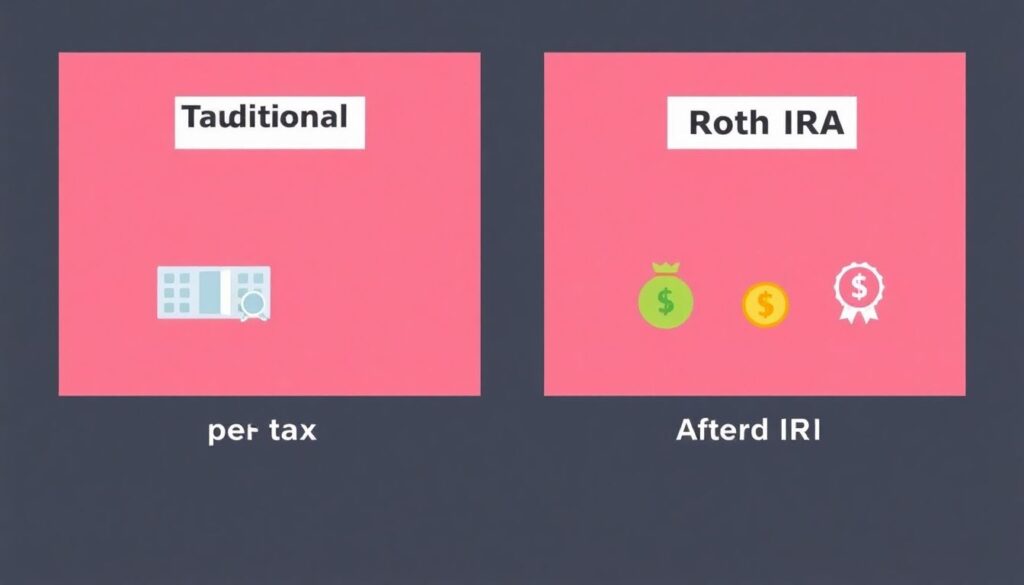
- Traditional IRA: You open it yourself at a brokerage, bank, or robo-advisor. Contributions may reduce your taxable income this year, and investments grow tax-deferred. You pay income tax when you withdraw in retirement.
- Roth IRA: Contributions use after-tax dollars, so there is no upfront tax break. In exchange, qualified withdrawals in retirement are usually tax-free. This is why many advisors highlight the best roth ira accounts for young parents who expect their income and tax rate to rise over time.
- Spousal IRA: If one parent has little or no income, the working spouse can fund an IRA in the non-working spouse's name, creating two separate retirement buckets for the household.
- Custodial Roth IRA for kids: Parents open the account as custodian, but the child must have earned income (like a part-time job or family business work). Parents can help invest, but the money legally belongs to the child.
- Investment choices: All these IRAs usually offer broad menus: index funds, target-date funds, and ETFs. Simple rules of thumb: prefer low fees, broad diversification, and automatic investing features.
- Using both IRA and 401(k): Many families contribute enough to their 401(k) to get the full match, then add money to Roth or traditional IRAs for more flexibility and potential tax advantages.
Tax Treatment and Withdrawal Rules Compared: When Money Is Taxed
Parents mostly care about two things: when the money is taxed and when it can be touched without penalties. Thinking in timelines makes these rules less intimidating.
- Traditional 401(k): You do not pay income tax when the money goes in; contributions lower your taxable income. The tradeoff is that withdrawals in retirement are taxed as ordinary income, and early withdrawals can trigger taxes and penalties except in specific hardship or separation cases.
- Traditional IRA: Works similarly to a traditional 401(k). You may get a tax deduction now, then pay tax later. Withdrawals before a set retirement age usually involve both income tax and an additional penalty, with some exceptions for first-home purchases or certain education costs.
- Roth 401(k) and Roth IRA: You pay tax now, but then qualified withdrawals in retirement are generally tax-free. With Roth IRAs, contributions (not earnings) can typically be taken out at any time without tax or penalty, giving parents a bit more flexibility if life gets messy.
- Custodial Roth IRA: Tax treatment matches a normal Roth IRA, but withdrawals must be made for the child's benefit. It is a powerful way to teach long-term investing and give them a head start.
- Rollovers between jobs: When you leave an employer, you can usually roll a 401(k) into a new 401(k) or into an IRA without triggering tax, as long as it is done correctly as a direct rollover.
Why Parents Should Act Now: Compound Growth, Time Horizons, and Tradeoffs
- Long runway for compounding: Every dollar you invest for retirement when your kids are small potentially works for decades. Even modest automatic contributions can grow meaningfully, especially inside tax-advantaged accounts.
- More flexibility later: Starting in your 30s or 40s creates choices in your 50s and 60s: cutting back work, helping kids as adults, or taking time off without financial panic.
- Better balance with college: A solid retirement foundation means you are not pressuring your kids to support you later, and you can make more rational choices about how much to help with tuition.
- Psychological relief: Knowing your retirement plan is in motion makes it easier to enjoy time with your family now instead of worrying constantly about “someday”.
- Less short-term cash: Money parked in a 401(k) or IRA is not easily available for near-term expenses, so you still need an emergency fund outside retirement accounts.
- Market ups and downs: Investments will fluctuate. Parents must accept short-term volatility in exchange for long-term growth potential.
- Rule complexity: Contribution limits, phase-outs, and withdrawal rules are not intuitive. Using basic guidance or low-cost retirement planning services for families can prevent avoidable mistakes.
- Competing goals: Childcare, debt, and housing often feel more urgent. You will not perfectly optimize everything; the goal is a workable balance, not perfection.
Practical Contribution Strategies for Dual-Income, Single-Parent and Self-Employed Families
- Myth: “Dual-income parents should each max their plan.” Reality-based action: Aim first for each partner to capture their full employer match; only then consider unevenly boosting the better plan (lower fees, better investments).
- Myth: “Single parents must be debt-free before investing.” Reality-based action: If high-interest debt is under control and you have a minimal emergency buffer, it often makes sense to split extra cash between debt payments and at least enough 401(k) or IRA contributions to stay on track.
- Myth: “Self-employed parents cannot get a 401(k).” Reality-based action: Explore options like a solo 401(k) or SEP-IRA through a brokerage; treat contributions like a fixed business expense, not an afterthought.
- Myth: “IRAs are too complicated for busy families.” Reality-based action: Open a basic IRA or Roth IRA at a reputable brokerage, pick a single low-cost target-date fund, and set an automatic monthly transfer.
- Myth: “I should choose ira vs 401k which is better for retirement savings and ignore the other.” Reality-based action: Use a simple priority order: grab the workplace match, then fund a Roth or traditional IRA, then add more to the 401(k) if you still have capacity.
- Myth: “Kids' accounts can wait until my retirement is perfect.” Reality-based action: Once you are consistently contributing for your own retirement, consider a small custodial Roth IRA if your child has earned income, mainly as a teaching tool rather than a primary savings vehicle.
Concrete Steps: Opening Accounts, Rollovers, Beneficiary Designations and Record-Keeping
To keep the focus on action, here is a simple, concrete flow many parents can adapt.
- Start at work:
- Log into your HR or benefits portal and enroll in the 401(k) if you are not already in it.
- Set your contribution to at least the level that triggers the full employer match.
- Choose a single target-date or broad index fund to keep things simple while you learn.
- Add an IRA:
- Pick a large, reputable brokerage that offers the best roth ira accounts for young parents and traditional IRAs with low fees.
- Open the right IRA type for you (traditional or Roth), then set a small automatic monthly transfer from your checking account.
- Handle old 401(k)s:
- List any accounts from previous jobs.
- Call your current 401(k) provider or chosen IRA provider and ask for help doing a direct rollover of each old plan.
- Consolidating reduces clutter and helps you see your overall progress.
- Set beneficiaries:
- Within each 401(k) and IRA, designate a primary and contingent beneficiary so money goes where you intend if something happens to you.
- Review these designations after major life events like marriage, divorce, or the birth of another child.
- Build a simple tracking system:
- Create one document listing each account, provider, and login instructions stored in a secure place.
- Schedule a recurring calendar reminder once or twice a year to review contributions, investments, and beneficiary details.
This step-by-step rhythm is enough to get started without drowning in theory: enroll at work, open one IRA, clean up old accounts, name beneficiaries, then review on a predictable schedule.
Recurring Concerns Parents Raise About Retirement Accounts
How much should I contribute to retirement while raising kids?
Begin by capturing any full employer match in your 401(k), then add what your budget allows. Even small amounts matter if they are automatic and consistent. Increase contributions slightly whenever you get a raise or a childcare bill disappears.
Should I fund college savings or my retirement first?
Prioritize retirement. You cannot borrow for retirement, but your kids have options for college such as scholarships, work-study, and loans. Once you are consistently saving for retirement, you can layer in college savings.
Is a 401(k) always better than an IRA?
No. A strong 401(k) match can beat an IRA on day one, but IRAs often offer more investment choices and Roth flexibility. Many families use both: 401(k) up to the match, then an IRA, then extra in the 401(k) if possible.
What if my employer does not offer a 401(k)?
If you do not have access to a 401(k), open an IRA or Roth IRA at a brokerage and set up automatic transfers. Self-employed parents can explore solo 401(k)s or SEP-IRAs to boost their retirement savings.
Can I use retirement money for emergencies?
You technically can, but it is usually expensive and risky. Early withdrawals often trigger taxes and penalties and reduce your future security. Build an emergency fund outside retirement accounts to avoid tapping long-term savings.
How do I choose investments if I feel clueless?
For many parents, a single low-cost target-date or broad-market index fund is enough. If you want more help, consider low-cost retirement planning services for families that can recommend an appropriate mix based on your age and goals.
When should I get professional retirement advice?
Seek advice when your finances get more complex: job changes, self-employment, large inheritances, or competing goals like college vs. retirement. A brief, focused consultation can prevent costly mistakes and streamline your plan.