
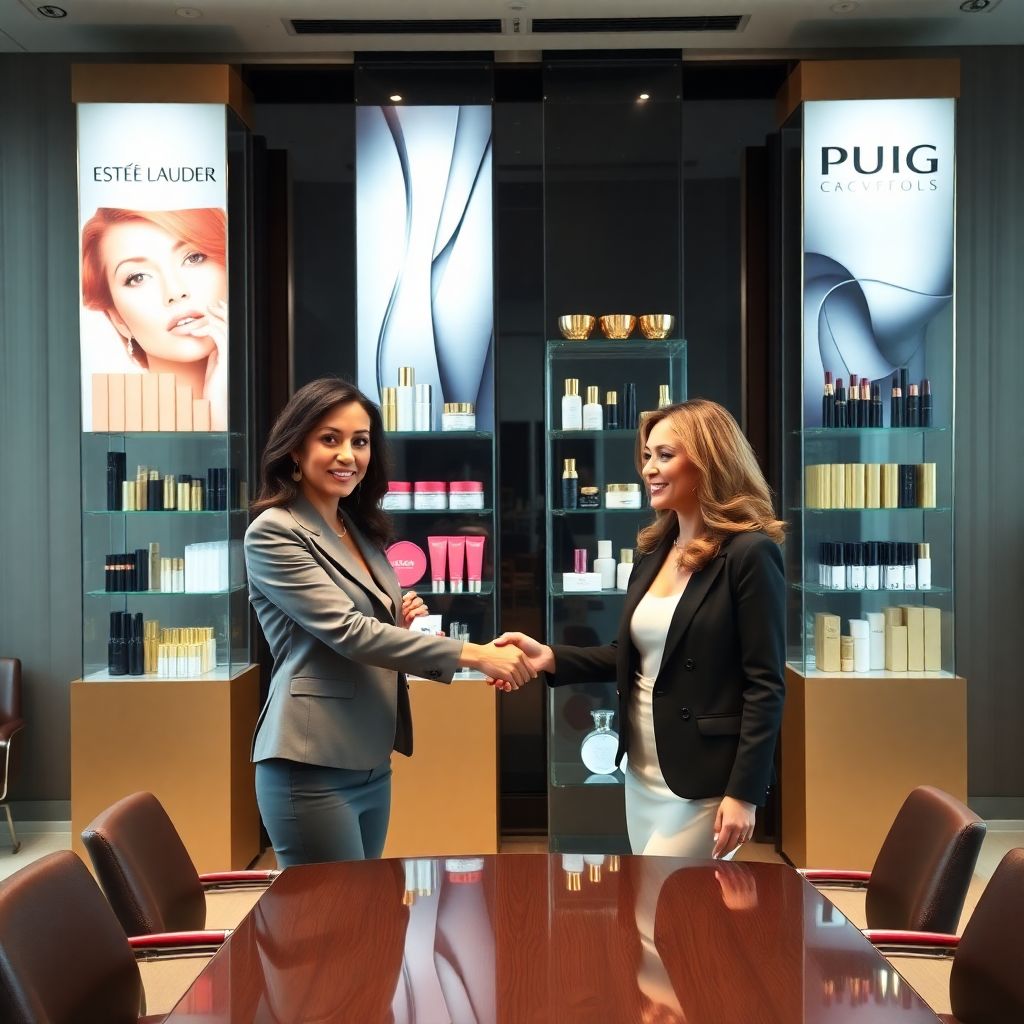
Verity: Estée Lauder and Puig Explore $40 Billion Beauty Megadeal
In the beauty industry, where heritage, storytelling, and scale determine who dominates shelf space and social feeds, a potential $40 billion combination involving Estée Lauder and Puig would mark a turning point. Under the working name “Verity,” this deal is being framed not just as another acquisition, but as a strategic realignment of the global cosmetics landscape.
At its core, the rumored transaction would blend Estée Lauder’s powerhouse portfolio of prestige skincare, makeup, and fragrance with Puig’s fast‑growing mix of fashion‑linked scents and disruptive niche brands. Both groups have deep roots, strong family influence, and a long history of building aspirational labels. Together, they could form one of the most influential beauty players in the world by revenue, market share, and cultural relevance.
Estée Lauder, long considered a benchmark for prestige beauty, has built a business spanning every major category: from high‑margin skincare and color cosmetics to travel retail exclusives and luxury fragrance. Its brands are staples in department stores, duty‑free outlets, and upscale specialty chains across continents. Puig, meanwhile, has quietly but aggressively scaled up, combining legacy fragrance licenses with bold acquisitions in fashion, niche perfume, and premium makeup. Puig’s strength lies in its agility: it has shown a rare ability to absorb and accelerate brands without diluting their identity.
A $40 billion valuation implies far more than a simple expansion of the product portfolio. It reflects expectations of synergies across distribution, marketing, R&D, and digital commerce. Estée Lauder brings highly developed capabilities in global supply chains, data‑driven marketing, and travel retail. Puig adds deep expertise in fashion‑related storytelling, European fragrance craftsmanship, and the ability to transform cult favorites into global must‑haves. Under the Verity umbrella, overlapping capabilities could be streamlined, while gaps-especially in high‑growth segments and regions-could be closed more quickly.
One of the biggest motivations behind a deal of this scale is geographic balance. Estée Lauder has long been strong in North America and Asia, particularly in China and travel retail hubs. Puig has deep roots in Europe and Latin America. Combining their footprints would create a more evenly distributed global presence, potentially smoothing out regional volatility and regulatory risks. In a world where beauty trends can go viral in one country and die in another in weeks, having diversified exposure has become a strategic necessity rather than a nice‑to‑have.
Consumer behavior is another driving factor. The modern beauty shopper is omnichannel, value‑conscious, and brand‑curious. They discover products on social media, research ingredients on their phones in real time, and expect brands to stand for something beyond aesthetics: sustainability, inclusivity, authenticity. A unified Verity group could pool data and insights from millions of customers worldwide, refining product development and marketing in ways that smaller, standalone companies simply cannot match. The bigger the data set, the more precise the predictions about what the next hit product or emerging micro‑trend will be.
There is also a clear strategic logic when it comes to categories and price tiers. Estée Lauder has a stronghold in premium skincare and classic prestige lines, while Puig is notably strong in fragrance and fashion‑linked beauty. If combined, the resulting portfolio would cover a vast range of price points-from accessible premium scents to ultra‑luxury skincare-offering retailers and e‑commerce platforms a one‑stop beauty powerhouse. This breadth could translate into stronger bargaining power with distributors and better placement both in stores and on digital platforms.
However, a merger of this magnitude is not without serious challenges. Integrating two large, historically independent organizations always carries risk. Corporate cultures differ: Estée Lauder balances a public‑company structure with family influence, while Puig has followed its own path as an international yet closely held group. Decisions about leadership roles, headquarters functions, and brand autonomy would be highly sensitive. Missteps could damage employee morale or trigger talent exits-especially among creative directors, formulators, and marketing leaders who are vital to the appeal of prestige brands.
Regulators would inevitably scrutinize the Verity transaction. A $40 billion deal in a concentrated global industry raises antitrust questions, particularly across Europe and the United States. Authorities would examine whether the combined company would have excessive power in key categories or markets, potentially requiring divestitures of some overlapping assets. That process could be lengthy and introduce uncertainty for investors, employees, and retail partners.
For competitors, the possibility of an Estée Lauder-Puig combination would be a wake‑up call. Other global giants might feel pressure to secure their own acquisitions-especially of independent, fast‑growing brands in skincare, niche fragrance, and clean beauty-to avoid falling behind in scale and innovation. Smaller prestige players could suddenly look more attractive as targets, raising valuations across the segment. At the same time, some brands may prefer to stay independent, positioning themselves as “alternative” to the mega‑groups in order to appeal to consumers craving individuality and authenticity.
From the perspective of retailers and e‑commerce platforms, the Verity megagroup would be both an opportunity and a risk. On one hand, a stronger, more integrated partner might offer better terms, more cohesive marketing programs, exclusive launches, and high‑impact collaborations. On the other, a more powerful supplier could negotiate tougher conditions, limit flexibility in assortment, or push for more prominent in‑store real estate at the expense of smaller brands. Retailers would need to balance the appeal of blockbuster names with the need to preserve a diverse and dynamic offering for shoppers.
Investors would focus on the financial logic: where exactly the value creation lies, and how realistic it is. A deal of this size is usually justified by projected cost savings and revenue synergies. Cost savings might come from consolidation of back‑office functions, shared supply chains, streamlined logistics, and unified technology platforms. Revenue synergies are harder to quantify but potentially more powerful: cross‑selling brands into new regions, leveraging shared influencer and celebrity relationships, and accelerating digital growth. The success of the Verity venture would depend on execution: how quickly and smoothly the combined entity could capture these gains without disturbing existing revenue streams.
Another dimension is innovation and sustainability. Both Estée Lauder and Puig have invested in cleaner formulas, more responsible sourcing, and reduced packaging waste. As consumers increasingly scrutinize ingredients and environmental impact, the merged company would be expected to set new standards in sustainable luxury beauty. With greater scale comes greater responsibility: the ability to pressure suppliers, invest in recyclable materials, and support scientific research into safer ingredients. Verity could position itself as the group that makes high‑end beauty compatible with long‑term environmental goals, turning sustainability from a marketing claim into a core strategic pillar.
The digital and tech angle is equally critical. Beauty has become a leading category in social commerce, augmented reality try‑on tools, and AI‑driven personalization. A combined entity would likely double down on virtual consultation platforms, data‑powered shade matching, customized skincare routines, and subscription models. Under a unified strategy, brands within the Verity portfolio could share the same advanced digital infrastructure while expressing themselves in very different ways visually and tonally, preserving each label’s distinct identity.
For consumers, the immediate impact of such a merger would probably be subtle rather than dramatic. Favorite products, counters, and websites would not vanish overnight. Over time, however, shoppers might notice more coordinated launches across brands, expanded availability of certain lines in new regions, and more integrated loyalty or membership programs spanning multiple labels within the group. The real test would be whether the new giant can keep products creative, desirable, and high‑performing while operating at an even larger scale.
Ultimately, the idea behind Verity-uniting Estée Lauder and Puig in a $40 billion beauty megamerger-captures the current tension in the industry: the need to be huge enough to compete globally, but nimble enough to feel intimate and authentic. If the transaction moves forward, it will reshape competitive dynamics and set new benchmarks for how beauty groups think about portfolio strategy, innovation, and brand building. Whether it becomes a case study in successful consolidation or a cautionary tale will depend less on the size of the deal and more on how thoughtfully the combined company manages integration, culture, and the ever‑evolving expectations of beauty consumers worldwide.