
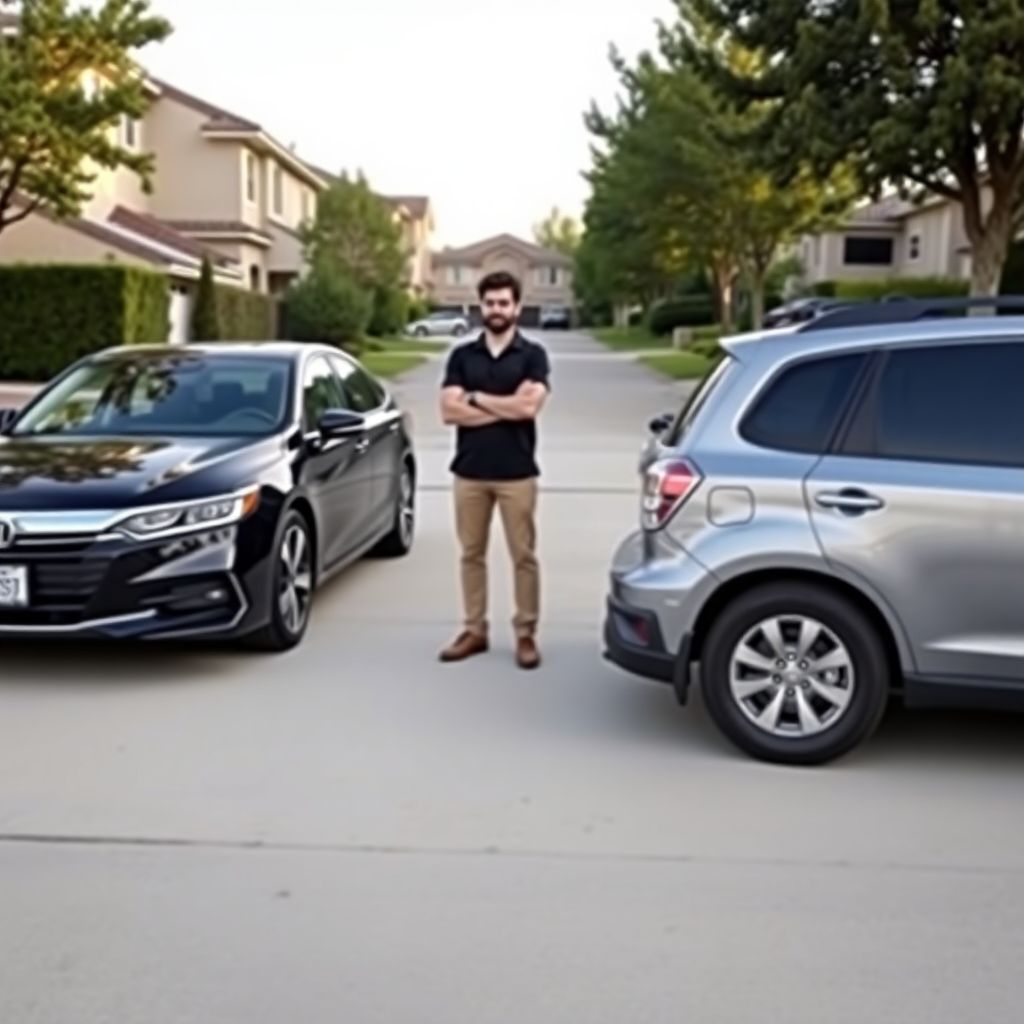
Selling a nearly new car a few months after buying it feels irrational on paper, but that’s exactly the situation I’m in.
At the start of the year, I moved in with my partner, which put me about 40 miles away from my job. My old daily driver is a high‑mileage Subaru Outback that has served me well, but I didn’t want to keep piling on long‑distance commuting miles. I decided it was time to semi‑retire the Subaru and invest in something newer, more comfortable, and more fuel‑efficient for the 80‑mile round‑trip.
That’s how I ended up with a brand‑new 2025 Accord Hybrid. I managed to lock in very favorable financing terms and, thanks to my financial situation, paid the car off almost immediately. It felt like a smart, responsible move: reliable hybrid, great mileage, modern safety tech, paid in full. For about five minutes, everything made perfect sense.
Then the situation changed.
Not long after I bought the Accord, I found out my employer sponsors a shared van service that literally stops one block from my home and takes employees to and from work every day. The cost structure is almost absurdly good: I effectively pay the equivalent of fuel plus about $20 a month. Considering maintenance, wear and tear, depreciation, and my time behind the wheel, using the van instead of driving myself is a financial and mental no‑brainer.
Now the Accord barely moves.
Instead of being a dedicated commuter, the car spends most of its time parked. I still have the Subaru for the random errand, grocery run, or occasional short trip. The original plan was that the Accord would be my high‑mileage warrior and the Subaru would slow down into light duty. Reality flipped that plan: the “retired” Subaru is working more than the brand‑new hybrid.
On top of that, I realized something I didn’t expect: the Accord isn’t very comfortable for me on longer drives. After about two hours in the seat, I start to feel enough discomfort that I wouldn’t call it a good road‑trip car, which was basically the one remaining role it could have played in my life. The Subaru, with its age and mileage, is no longer ideal for long road trips either, so I’ve somehow ended up with one car I don’t fully trust for long distances and another that doesn’t feel comfortable enough to justify using it for that purpose.
Financially, keeping the Accord “just because” is hard to defend. The best offers I’ve received from dealers and online car‑buying platforms would leave me roughly $5,000 in the red compared to what I paid. Most of that loss comes from sales tax and fees that are simply gone forever. Yet when I start to zoom out and look at the bigger picture, that immediate $5,000 loss is not as extreme as it seems.
I’m in a relatively stable financial position, so losing $5,000, while annoying, isn’t life‑altering. If I keep the Accord, I’ll continue to pay higher insurance premiums for a car that mostly sits, plus a sizable annual registration fee (my state is not cheap in that department). On top of that, there’s the opportunity cost: that money is tied up in a rapidly depreciating asset that I don’t even enjoy driving on long trips, instead of being invested or used for something that actually improves my life.
When I factor in those ongoing costs and the interest that money could be earning elsewhere, that $5,000 “loss” begins to shrink in real terms over the next couple of years. Emotionally, I know that within a short period of time I’ll stop thinking about the sunk cost. Practically, I’m already annoyed by the idea of paying insurance and registration for a car that I don’t really need.
There’s also the hassle factor. Theoretically, I could try to get a better price by selling the car privately instead of taking a quick dealer or instant‑offer sale. But realistically, the incremental gain might be a couple thousand dollars once everything is said and done-if that. For my income level and schedule, the time, effort, and uncertainty of dealing with private buyers, showings, and paperwork simply might not be worth it compared to taking a solid, immediate offer and moving on.
So the question is: in this specific situation, does it make sense to sell a nearly brand‑new, paid‑off car at a loss?
From a purely rational standpoint, the decision comes down to a few key points:
1. Usage:
The Accord is no longer serving its primary purpose as a commuter vehicle, and it doesn’t excel in the secondary purpose (long road trips) due to comfort issues. A car’s value is in being driven and used; if it sits unused, it’s just an expensive object decaying in the background.
2. Redundancy:
I already have the Subaru, which can cover local driving and occasional needs. It may not be perfect, but it’s fully capable for the kind of limited use it gets now. Having two cars when only one is truly necessary is an additional layer of cost with limited benefit.
3. Ongoing Costs vs One‑Time Loss:
Yes, selling means locking in an upfront $5,000 loss. But keeping the car means accepting silent, ongoing losses: insurance, registration, depreciation, and the opportunity cost of tied‑up capital. When you add those up over a couple of years, they can easily approach or even exceed that initial loss-without giving you any real extra utility or enjoyment.
4. Emotional Bias (Sunk Cost Fallacy):
A big part of my hesitation comes from not wanting to “admit defeat.” The car is brand new, fully paid off, and walking away from it feels wasteful. But that’s the classic sunk cost trap: money already spent shouldn’t dictate current decisions if the circumstances have changed. The only relevant question is what makes the most sense from this point forward.
5. Quality of Life:
I now have cheap, low‑stress, door‑to‑door transportation to work. That arrangement likely reduces fatigue, stress from traffic, and wear on my own car. Keeping the Accord doesn’t improve my daily life; if anything, it adds a background layer of guilt every time I see it sitting unused.
There’s also a future‑oriented angle to consider: by freeing up that capital now, I’d be in a better position to choose a truly comfortable long‑distance vehicle later, when I actually need one. Right now, I’m forcing the Accord into a role it doesn’t fill well for me. Selling gives me the flexibility to wait, reassess my needs in a year or two, and then buy something that genuinely fits my body, habits, and lifestyle-without trying to justify a car that’s already proving to be a compromise.
Another factor is risk. Even if a car is barely driven, things still age: rubber components dry out, batteries degrade, software eventually needs updates, and warranties tick away based on time as much as mileage. Owning a vehicle you hardly use doesn’t freeze it in time; it just means you’re watching the clock run on a depreciating asset while hoping your life circumstances eventually realign to justify it.
On the psychological side, there’s a kind of mental relief that comes from aligning your finances with your actual behavior. Right now, I own a car that represents what I *thought* my life would look like: daily long‑distance commuting, regular road trips, and a desire for something modern and fuel‑efficient. Reality is different. Letting go of the Accord is, in a way, accepting that my life took a different turn-and that’s okay. Holding onto it just to stay consistent with a past decision doesn’t serve me.
It’s also worth noting that my tolerance for “friction” is low relative to the amount in question. For someone else, spending weekends meeting private buyers to squeeze out an extra thousand dollars might feel worthwhile. For me, the additional stress and time commitment are not. Recognizing your own threshold for hassle is part of making a decision that you won’t resent later.
From a financial planning perspective, the move that makes the most sense is to stop thinking of the $5,000 as “money I’m losing” and start viewing it as “the price I’m paying to correct a decision that no longer fits my life.” People pay cancellation fees, break leases, and walk away from prepaid commitments all the time when circumstances change. This situation is similar, just with a bigger number attached.
So, would I sell in this situation?
Yes, I would. In my place, selling the Accord now-even at a $5,000 loss-looks like the more rational and ultimately less stressful choice. I’d lock in the loss, eliminate ongoing costs for a car I barely use, free up capital for future goals, and accept that sometimes a decision that was perfectly logical at the time no longer makes sense later.
If I ever truly need a new car again-one that’s comfortable for long drives and fits my actual usage patterns-I’ll be in a cleaner, simpler financial position to make that purchase without the baggage of owning a misfit vehicle. The Accord served its purpose for a brief phase of my life: it gave me peace of mind when I thought daily long‑distance commuting was permanent. Once that assumption changed, its role was basically over.
In the end, I’d rather take a clear, upfront hit now than silently pay for years for something that doesn’t earn its keep in my driveway.