
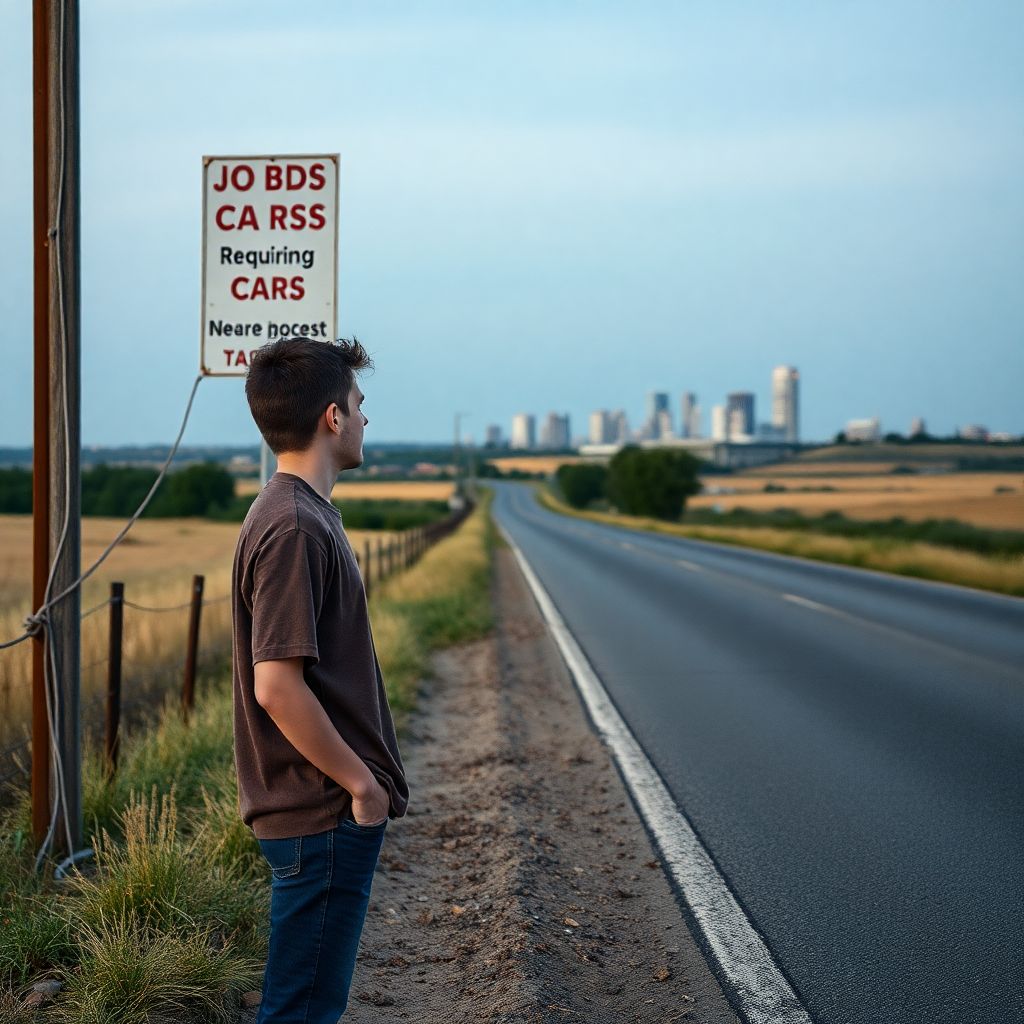
I’m 27, living in rural Pennsylvania, and it feels like every path out is blocked. I’ve been trying to leave this area for what feels like forever, but I can’t even land a basic job to get started. Everything nearby either requires a car or offers so few hours that the cost of getting there would swallow most of the paycheck. Public transport is basically nonexistent, and relying on rideshare would burn through my money faster than I can earn it. The math just doesn’t work, and it’s exhausting to keep pretending it might.
Most of the local employers don’t even look twice if you don’t have your own car. It doesn’t matter if you’re willing to show up early, stay late, or work weekends. No car equals no job. If I try to work farther away, I’m stuck paying ridiculous amounts for Uber just to clock in, and there’s no way to build savings like that. I’d essentially be working just to fund the commute, not to improve my life.
Remote work seemed like the obvious escape route, but that turned out to be another dead end. So many “work-from-home” listings are fakery: shady “opportunities,” fake companies, or job ads designed to collect personal data and resell it. You click through pages of vague promises, no clear pay structure, and zero verifiable details. I’m not interested in being scammed or having my identity stolen just because I’m desperate to work.
On top of that, I can’t get approved for any credit cards. My credit either isn’t established enough or just isn’t good enough in the eyes of lenders. So I don’t even have that basic financial tool to help bridge me into a new place, cover a deposit, or buy a cheap used car. I would honestly be willing to go into debt if it meant I could move out of this state and start over somewhere with better opportunities, but I don’t even qualify for the kind of debt that might help.
I keep circling the same options and they all hit the same walls: no car, no job; no job, no money; no money, no way to leave. It feels like being trapped in a loop with no exit, and the stress of it is wearing me down mentally. It’s hard not to feel like I’ve already failed at life before I’ve really been allowed to start.
Still, there are a few angles I’m trying to look at more strategically, even if none of them are simple or instant. One is transportation itself. If I can’t get a car right now, I have to think in terms of anything that gets me from point A to point B without annihilating my budget. That might mean looking into carpooling with coworkers or neighbors, trying to arrange a fixed weekly rate with someone who drives into town anyway, or focusing only on jobs within biking distance if that’s physically possible. It’s not ideal, but a basic bike or cheap used e‑bike could, in some cases, open up options that look impossible on paper.
Another thing I’m forced to consider is how I’m applying for jobs. In a rural area, a lot of hiring still happens by word of mouth and local reputation rather than through formal online postings. That means speaking directly to managers, walking into businesses in person, and being brutally upfront: explaining that I don’t have a car yet but am determined to work, even if it means flexible hours or shifts that line up with when I can get a ride. Sometimes, if a manager sees that determination face-to-face, they’re more likely to take a chance than if they just see a missing checkbox on an online application.
Housing is another piece of the puzzle. If there truly are no jobs within any reasonable distance, one strategy is to focus all energy on getting into a location where work actually exists, even if the first months are uncomfortable. That might mean looking for a room in a shared house, subletting a space temporarily, or staying somewhere cheap while working any stable job available in a town or city with better infrastructure. Getting closer to opportunity, even in cramped or imperfect conditions, can sometimes be more powerful than staying comfortable but stuck.
On the remote work side, I’m trying to approach it more carefully rather than just writing it off entirely. Yes, there are a lot of scam postings, but there are also legitimate roles that don’t require a degree or years of experience: basic customer support, data entry, content moderation, or simple administrative work. The key is to be extremely skeptical of anything that asks for upfront payment, refuses to list the company name, or avoids giving clear information about salary, employment status, and responsibilities. If it sounds too vague or too good to be true, it usually is.
Because my credit is an obstacle, I’m also forced to think in terms of rebuilding it step by step instead of waiting for an instant solution. That might look like starting with something like a secured card, where I put down a deposit equal to my own limit and then use it carefully to prove I can handle payments. Even a low limit card, paid on time every month, can start to shift my credit situation slowly. It’s not fast and it doesn’t solve today’s problem, but it’s one of the few long-term levers I can actually control.
On the income side, odd jobs and gig-style work might not build a career, but they can create small flows of money and references. Things like yard work, snow shoveling, moving help, basic repairs, pet sitting, or cleaning can, over time, turn into repeat clients. That kind of local hustle doesn’t fix everything, but it can create a small safety net and a track record of reliability that might matter later when I apply for something more stable.
I’m also starting to see that, as trapped as I feel, the situation might be slightly less hopeless if I break my goal into stages instead of imagining one giant leap out of here. Stage one could be any job I can realistically reach, even if it’s low pay or not what I want long term. Stage two would be saving up specifically for either a cheap used car or a move to a better job market. Stage three would be rebuilding my finances and mental health in a place where there are actual options. None of that is glamorous, and it’s definitely not fast, but thinking in stages is less overwhelming than trying to solve every problem at once.
Mentally, this is brutal. It’s hard not to internalize the struggle as a personal failure. But the reality is that rural poverty, lack of transportation, and underemployment are structural problems, not proof that I’m lazy or worthless. Remembering that doesn’t put money in my pocket, but it at least helps me push back against the guilt and shame that make it harder to keep trying. I’m not stuck because I don’t care; I’m stuck because the odds are stacked, and I’m still looking for the few moves I can make anyway.