
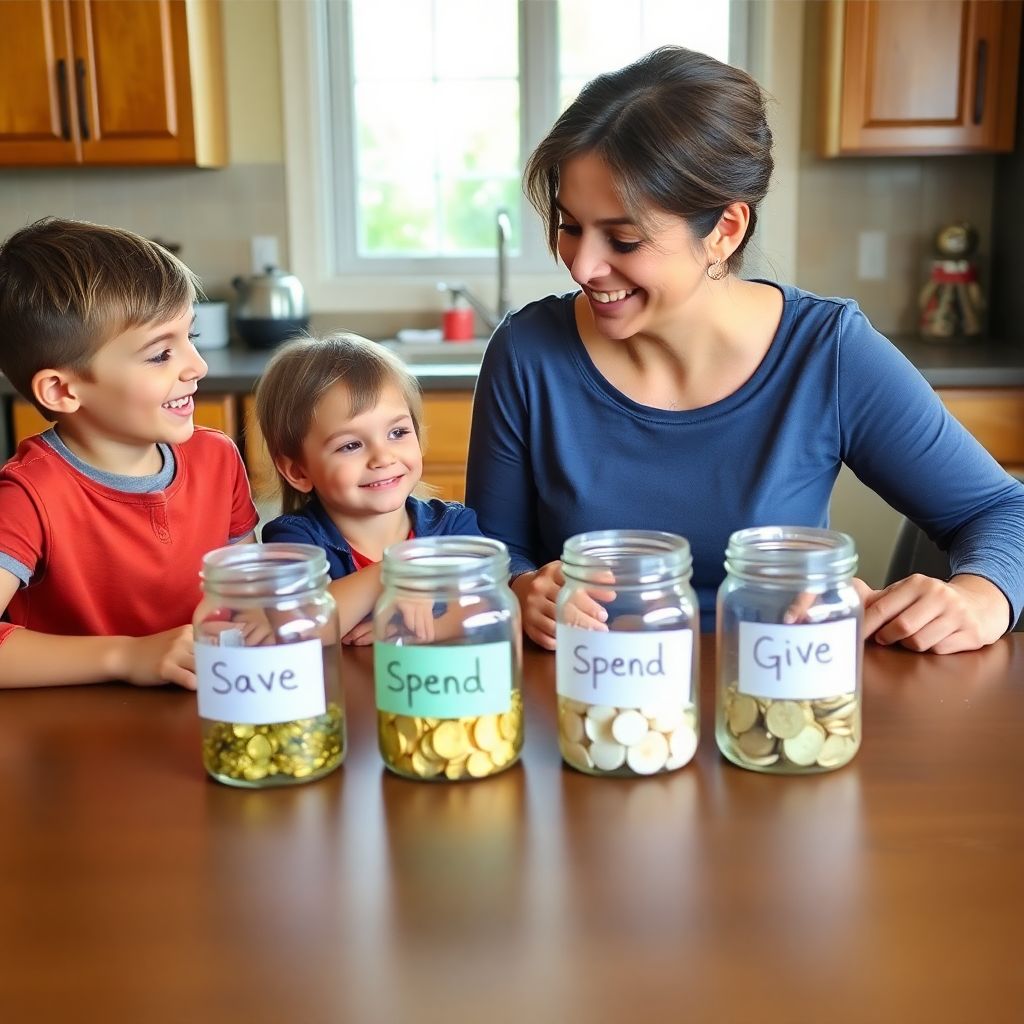
Teaching kids to budget their allowance with a save/spend/give system means giving them regular money, then guiding them to divide it into three clear purposes. You help them set simple goals, track choices, and reflect on results so smart money habits become routine, age-appropriate, and low-risk.
Core Principles of the Save/Spend/Give Allowance System
- Give a predictable allowance so kids can plan, not guess, their money decisions.
- Separate money physically or digitally into clear save, spend, and give “buckets.”
- Match rules and amounts to your child’s age, attention span, and real-world expenses.
- Talk through each decision so kids connect short-term wants to long-term goals.
- Use safe tools: simple jars, supervised accounts, or the best allowance apps for kids.
- Review regularly, adjust ratios, and keep the kids allowance budgeting system flexible.
Setting Age-Appropriate Allowance Amounts
Before defining numbers, decide whether your child is ready. The system works best when a child can count to at least ten, wait a few days for something they want, and understand “later” versus “now.” If money triggers conflict or anxiety at home, start with pretend money first.
Who this approach suits
- Young children (5-8): Learning basic counting, separating money into save/spend/give jars for kids, and waiting a little for small toys or treats.
- Preteens (9-12): Handling slightly larger amounts for snacks, low-cost games, and simple savings goals like a board game or headphones.
- Teens (13+): Managing parts of real expenses: outings with friends, phone add-ons, or contributions toward bigger purchases.
When not to start yet
- When basic needs at home are unstable and money talk feels unsafe or overwhelming.
- When a child cannot handle frustration at all; practice with points or stickers first.
- When you plan to frequently skip or change allowance; inconsistency undermines learning.
Choosing a safe starting amount
- Aim for an amount that feels meaningful to your child but still comfortable for your budget.
- Keep the amount low enough that mistakes are affordable lessons, not disasters.
- Tell your child clearly: how much, how often, and whether the amount might change as they grow.
Age-based examples (without strict formulas)
- Young children: Small weekly allowance mainly for treats and tiny toys; you still cover essentials.
- Preteens: Allowance big enough to cover small wants and some “extras” you no longer buy by default.
- Teens: Larger allowance linked to specific responsibilities such as school lunches or some clothing choices.
Explain that allowance is a learning tool, not a reward for existing. That clear framing helps when you later adjust amounts as needs, maturity, or family finances change.
Designing Clear Save/Spend/Give Ratios
Ratios are the backbone of the save/spend/give method. They answer: “When I get money, what happens automatically?” Keep them simple and visible so your child can explain the rules back to you.
Basic tools and conditions you will need
- A regular allowance schedule (weekly or biweekly works well for most kids).
- Three distinct containers or categories labeled Save, Spend, and Give.
- A shared understanding of what each category is for, with age-appropriate examples.
- Five minutes on allowance day to divide money and talk about the choices.
Setting starting ratios by age

- Young children: Large save and give portions encourage patience and generosity; spending stays small and simple.
- Preteens: More balanced ratios so they can experience meaningful saving and realistic discretionary spending.
- Teens: Higher spend portion tied to real responsibilities, but still a clear portion locked into longer-term saving.
Clarifying category rules
- Save: Used only for goals that take multiple weeks or months, like a special toy or a larger tech item.
- Spend: Day-to-day wants, like snacks, in-game purchases you approve, or small accessories.
- Give: Donations to causes you have vetted together, or safe community projects at school or faith groups.
Before moving to more advanced financial education programs for children, this simple ratio rule creates a solid base. Kids learn that every dollar already has a job before they touch it.
Practical Tools: Jars, Apps and Tracking Sheets

This section turns ideas into a concrete, safe kids allowance budgeting system. You can keep everything offline with jars and paper, or combine jars with digital tools if your child is ready.
Risks and limitations to keep in mind
- Oversharing real banking details can expose your child to privacy and security risks; never give them unsupervised access.
- Complex apps may distract younger kids with features instead of teaching real trade-offs.
- Inconsistent tracking weakens the link between decisions and outcomes, making lessons less effective.
- Pressure to give or save “perfectly” can turn money into a source of shame instead of learning.
- Online purchases should remain under your direct control to avoid accidental overspending.
-
Choose your primary tracking method
Decide whether your family will start with physical save spend give jars for kids, a simple notebook, a digital solution, or a mix. For young children, physical jars plus a basic chart are usually enough.
- Jars: Clear, labeled containers so kids can literally see money accumulate.
- Apps: Only age-appropriate, parent-controlled options; treat them as visual ledgers, not payment tools.
- Tracking sheets: A simple table with columns for date, amount, category, and what they chose.
-
Label save, spend, and give clearly
Write the three category names in large, readable letters on jars or envelopes. In an app, create three “pots” or categories that mirror the jars exactly so your child sees the same structure in both places.
-
Set up a safe allowance routine
Pick a consistent “money moment” each week, such as Sunday evening. Sit with your child, count the allowance together, and help them split it according to your agreed ratios, placing or recording amounts in each category.
-
Record each decision, not just amounts
Whenever your child spends, saves more, or gives, write down what happened and why. In apps or on paper, include short notes like “saved for new game” or “gave to class fundraiser” to connect actions with values and goals.
-
Review progress and adjust gently
Once or twice a month, review balances together. Ask what felt good, what was hard, and whether goals still make sense. If your child is frustrated or always running out of spending money, consider slightly adjusting the ratios or goals.
-
Introduce supervised digital tools for older kids
For preteens and teens, you can gradually add debit-style cards or the best allowance apps for kids, as long as you retain full visibility and controls. Start by mirroring the same save/spend/give structure digitally before enabling any online purchases.
Teaching Decision-Making Through Real-World Scenarios
Use everyday situations to show your child how budgeting works beyond jars. Go slowly, and always talk through risks and trade-offs together.
Checklist: is your child applying the system?
- They can explain, in their own words, what Save, Spend, and Give each mean.
- When they want something, they first check their Spend money instead of asking you to cover it automatically.
- They have at least one concrete savings goal and can state how many allowance cycles it might take.
- They can name at least one safe, real place or cause where their Give money might go.
- They accept “not yet” or “I’ll save for next week” at least some of the time.
- They participate in small real-world choices, like comparing prices or choosing between two fun options.
- They can describe a past money decision they would handle differently now, and why.
- They show curiosity about how your family makes money decisions without being burdened by adult worries.
- They understand that mistakes are part of learning and are willing to keep using the system.
These signs indicate that your efforts in how to teach kids about money management are translating into durable skills, not just rules they follow for allowance day.
Adjusting the System for Chores, Rewards and Milestones
Once the basics are stable, you can connect allowance to chores or special achievements in a thoughtful way. The aim is to build responsibility without making every helpful act about getting paid.
Frequent pitfalls to avoid
- Paying for every small helpful action, which can reduce intrinsic motivation to contribute to the household.
- Threatening to remove the entire allowance as punishment, which undermines the learning structure.
- Adding too many bonus rules at once, making the system confusing and hard to track.
- Linking all money to grades, which can create intense pressure and hide the actual budgeting lessons.
- Letting irregular chore payments replace a predictable base allowance, weakening planning skills.
- Ignoring big life changes (new school, new sibling, job for a teen) that may require new allowance levels or responsibilities.
- For teens, jumping straight from jars to full banking independence without a supervised transition phase.
When you adjust the system, make one change at a time, explain it clearly, and keep at least part of the allowance predictable so budgeting practice continues.
Measuring Progress and Reinforcing Long-Term Habits
As your child grows, you may shift from hands-on jars to more advanced tools and experiences. The goal is always the same: confident, thoughtful money choices.
Alternative and complementary approaches
- Project-based budgeting: Instead of a standing allowance, occasionally give a fixed amount for a specific event (like a day trip or party supplies) and let your child plan all spending within that limit.
- Short courses and clubs: Enroll older kids in age-appropriate financial education programs for children that use simulations and games, then connect lessons back to their save/spend/give practice at home.
- Family money meetings: Hold brief, regular check-ins where kids help review a simple family decision, such as planning a low-cost outing, to show how the same principles scale up.
- Teen side projects: For responsible teens, pair allowance with supervised earning opportunities so they can budget both predictable allowance and variable income.
Whether you stay with jars or move to digital tools, keep reinforcing that money is a tool to support values, not a measure of worth, and that small, consistent choices matter more than perfect ones.
Common Concerns and Troubleshooting
What if my child spends all their money immediately and regrets it?
Let the regret be a small, safe lesson rather than rescuing them every time. Talk through what happened, help them name the feeling, and adjust future goals, but keep the next allowance on schedule so they can practice again.
Should I tie allowance directly to chores?
Many families separate basic chores (everyone helps, unpaid) from extra tasks that can earn bonus money. This balance teaches responsibility as a family member while still connecting extra work to extra income in a clear way.
How do I handle siblings with different ages and amounts?
Explain that money rules follow age and responsibilities, not fairness by equality. Share simple reasoning for each child’s allowance and encourage them to focus on their own goals rather than comparisons.
Is it okay to change allowance amounts if our finances change?
Yes, as long as you explain the reasons honestly and with reassurance. Frame changes as part of real-life money management, give advance notice when possible, and adjust goals together to fit the new reality.
What if my child doesn’t care about saving at all?
Start with very small, short-term saving goals that feel exciting and reachable. Use visual trackers, celebrate milestones, and share your own saving stories so saving feels rewarding, not like a punishment.
How can I keep digital tools safe for my child?
Use only parent-managed accounts, disable direct online purchases at first, and review all notifications together. Treat apps as visual trackers and conversation starters, not as a way for kids to spend independently.
When should we move from jars to banking products?
Consider this step when your teen regularly tracks spending, respects limits, and can talk calmly about money mistakes. Start with a supervised card or youth account that mirrors their save/spend/give categories.