
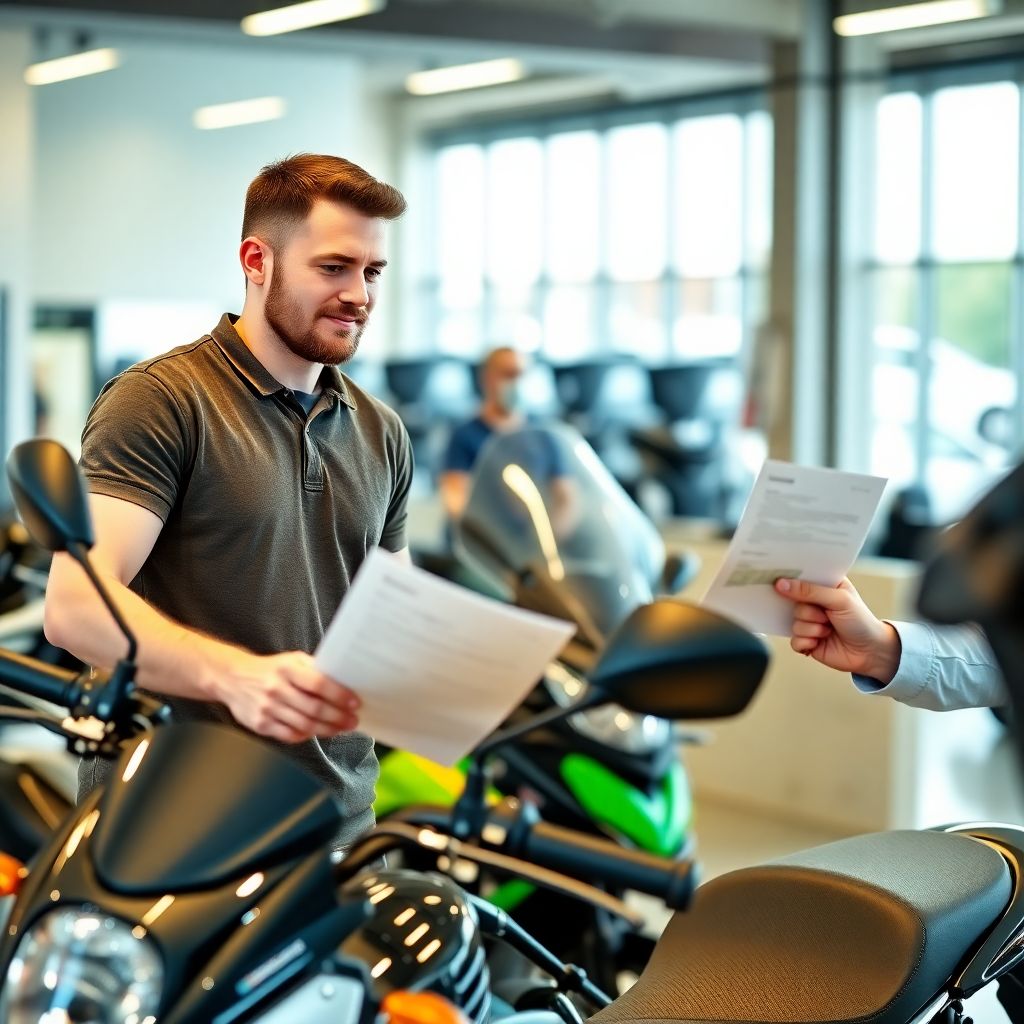
Buying your first brand‑new motorcycle is exciting, but it’s also a financial decision that can affect you for years. In your case, the situation is fairly ideal: you’re 31, you’ve owned bikes before, you want a practical daily rider, your wife has a car for bad weather, the motorcycles you’re considering are in the 9,000-13,000 dollar range, you have the full amount in cash, and your credit score is above 800. That combination of cash and excellent credit opens up all three realistic paths:
1. Pay outright in cash
2. Finance with a low‑interest loan
3. Decide not to buy (or at least not yet)
The “right” choice depends on more than just whether you can technically afford it. It’s about opportunity cost, risk, lifestyle, and long‑term financial goals.
—
Step 1: Confirm whether a new bike actually fits your life
Before getting into cash vs. financing, answer a more basic question: should you be buying a new motorcycle at all?
You say:
– You’ll use it as a daily driver.
– You have a car in the household for rainy or very cold days.
– You have riding experience from previous ownership.
– You have the cash ready and are not going into debt just to “feel good” or impress others.
Those are all strong arguments in favor of buying if:
– You have a solid emergency fund (3-6 months of expenses minimum).
– You’re not neglecting higher‑priority goals (retirement, high‑interest debt, housing stability).
– The cost of the bike plus gear, insurance, and maintenance won’t strain your monthly budget.
If any of those pieces are shaky, that’s an argument to delay the purchase, downsize to a cheaper model, or buy used instead of brand new. A shiny new motorcycle is never worth losing your financial safety net.
—
Step 2: Cash vs. financing – how to think about it
Because your credit score is over 800, you’re likely to be offered attractive interest rates, sometimes promotional rates that look extremely low. That makes financing much more tempting, even when you have the cash in hand.
The key question is:
Will financing the bike leave you better off overall than paying cash?
To answer that, compare three things:
1. The interest rate on the motorcycle loan
2. The after‑tax return you realistically earn (or could earn) on your savings and investments
3. The psychological value, to you personally, of being debt‑free vs. having more cash on hand
—
Option 1: Paying cash for the motorcycle
Paying cash is the simplest, cleanest route.
Pros:
– No monthly payments. Your income stays flexible. If your job or expenses change, you don’t have a loan hanging over you.
– Zero interest, zero fees. You’re not paying a cent beyond the price, taxes, and fees.
– No risk of being “upside down.” New motorcycles, like cars, depreciate fast. If you finance most of the price and the bike loses value quickly, you could owe more than it’s worth. Cash avoids that.
– Emotional freedom. Many people find real peace of mind in owning a vehicle outright. Crashes, theft, or deciding to sell later feel less stressful when there’s no debt attached.
Cons:
– Smaller cash cushion. Dropping 9,000-13,000 dollars in one go reduces your liquid savings. If that money is your only serious buffer, that’s risky.
– Lost investment growth. If your investments could realistically earn more than the loan’s interest rate, you’re giving up potential gains by paying cash instead of financing.
Cash makes sense when:
– You’ll still have a strong emergency fund even after the purchase.
– You don’t have very high return opportunities elsewhere (and you’re not actively investing that money at a higher rate).
– You value simplicity and freedom from payments more than the slight financial optimization financing might offer.
—
Option 2: Using a low‑interest motorcycle loan
With an 800+ credit score, lenders see you as low risk. That means you’re in a strong position to negotiate interest rates and avoid junk fees.
Pros:
– Keeps your savings intact. You preserve more of your cash for unexpected expenses, opportunities, or investments.
– Potential arbitrage. If your investments can reasonably earn more (say 6-8% long‑term in a diversified portfolio) while your loan is at a much lower rate (for example 2-4%), you could, in theory, come out ahead.
– Builds credit history further. On‑time installment payments can strengthen your credit mix and depth, even though your score is already excellent.
Cons:
– You pay interest and fees. Even a “low” rate still costs money, especially over several years.
– Locked into payments. A job loss, health issue, or new baby doesn’t stop the loan. Your flexibility drops.
– Depreciation risk. If you finance a large portion of the bike, it loses value the moment you ride it off the lot. If it’s totaled or stolen and insurance doesn’t fully cover the balance, you could be out of pocket.
Financing makes sense when:
– The loan rate is genuinely low and transparent (no hidden insurance, add‑ons, or mandatory extras rolled into the loan).
– You have a clear plan for the “saved” cash (e.g., boosting retirement accounts, keeping a robust emergency fund, or investing).
– You’re disciplined enough not to treat the preserved cash as “fun money” for random spending.
One powerful compromise is to finance the bike but choose a short term (for example 24-36 months) and then aggressively prepay the loan. That way, you keep more cash early on but avoid dragging the debt out for years.
—
Option 3: Walking away (or buying differently)
“Not buying” is a perfectly valid financial decision, especially if:
– Your emergency savings are thin.
– Your job or income isn’t very stable.
– There are upcoming big expenses (children, moving, education, medical procedures).
– The bike price range you’re considering would make you feel stretched.
You’ve mentioned a budget of 9,000-13,000 dollars. If that upper range makes you hesitate, consider:
– Dropping to a cheaper new model in the 7,000-9,000 range.
– Looking at lightly used bikes, possibly with existing accessories.
– Delaying a year, saving more, and paying an even larger chunk in cash.
Walking away now does not mean “never.” It might simply mean waiting until buying a bike is such a small hit to your finances that it barely registers.
—
Practical decision framework for your situation
Given your specifics, here’s a structured way to decide:
1. Check your safety net first.
– After buying the bike in cash, will you still have 3-6 months of living expenses in a liquid account?
– If not, financing (or lowering the bike budget) may be safer.
2. Evaluate your other goals.
– Are you investing regularly for retirement?
– Do you have any high‑interest debt remaining (credit cards, personal loans)? If yes, those should usually be attacked before financing a toy or hobby vehicle.
3. Get real loan offers.
– Don’t decide based on theoretical rates. Ask multiple lenders (bank, credit union, manufacturer finance) what they can actually give you.
– Watch for extras: extended warranties, add‑on insurance, GAP coverage, “protection” packages. These can quietly turn a good loan into a bad deal.
4. Compare the numbers.
– If the offered interest rate is higher than what you can reasonably earn elsewhere, paying cash is often the better call.
– If the rate is extremely low and your investments are set up and growing, financing part of the cost can make sense.
5. Factor in your risk tolerance.
– If carrying any debt makes you anxious, the mental stress alone can outweigh the small financial benefits of a cheap loan.
– If you’re comfortable managing investments and you sleep fine with a monthly payment, a smart, low‑rate loan isn’t inherently bad.
—
Hidden costs that should influence your choice
Whatever you decide on financing vs. cash, remember the bike’s sticker price is only the beginning. When running the numbers, don’t forget:
– Insurance:
New bikes, especially sportier or higher‑powered models, can be expensive to insure. Get quotes for full coverage, not just liability.
– Protective gear:
Helmet, jacket, gloves, boots, pants, rain gear. Good gear can easily run into the low four figures, but it’s non‑negotiable for daily use.
– Maintenance and tires:
Oil changes, chain and sprockets, brake pads, and especially tires (they can wear out quickly on a daily commuter, depending on riding style).
– Registration and taxes:
These vary by region but can add a noticeable chunk on top of the 9,000-13,000 dollar range.
– Security:
If theft is a concern where you live, factor in disc locks, chains, alarms, or secure parking.
These ongoing costs matter because they affect whether you can comfortably handle a monthly loan payment. If total ownership cost is near your financial limit, it pushes the balance toward paying cash for a slightly cheaper bike or waiting.
—
Leveraging your excellent credit wisely
A score above 800 is an asset, but it’s also a temptation. Because lenders will be eager to finance you, you’ll see attractive offers that might encourage you to spend a little more than you planned.
Use your strong credit to:
– Negotiate better terms, not a more expensive bike. Go into the dealership with a clear maximum price and refuse to creep above it just because the monthly payment “looks low.”
– Shop lenders against each other. Your bank, a credit union, and the manufacturer’s financing arm may all give different offers. Having options helps you avoid being pressured into a bad deal.
– Insist on transparency. Know the total loan amount, interest rate, term, any fees, and the exact monthly payment. If anything seems fuzzy, walk away.
Your credit score is already excellent. You don’t need this loan to “build” credit; at this point, it’s purely about whether the loan setup makes financial sense.
—
A practical middle‑ground strategy
For many people in your position, a balanced approach looks like this:
1. Pick a bike at the lower to middle end of your budget (closer to 9,000 than 13,000).
2. Put down a significant down payment from your cash – for example 40-60% of the price.
3. Take a short‑term, low‑interest loan for the remaining amount.
4. Keep a solid emergency fund untouched.
5. If your finances remain stable, pay the loan down faster than required; if life gets bumpy, you at least have your savings to fall back on.
This way you:
– Avoid being upside down on the loan.
– Keep some cash in reserve.
– Limit the total interest paid.
– Preserve flexibility if circumstances change.
—
So, which of the three directions fits you best?
– “Buy it outright” is usually the best path if:
– You can pay cash and still have a healthy emergency fund.
– You dislike ongoing debt.
– You’re more interested in long‑term security than marginal financial optimization.
– “Buy it with a low‑interest loan” can be reasonable if:
– The loan terms are truly low‑cost and transparent.
– You have disciplined financial habits and clear investment goals for the freed‑up cash.
– You keep the term relatively short and avoid overextending your monthly obligations.
– “Don’t buy it at all (for now)” is wise if:
– Paying cash would nearly wipe out your safety cushion.
– Upcoming life events may increase your expenses or reduce your income.
– The thought of the total cost (bike + gear + insurance + maintenance) makes you even slightly uneasy.
With your age, experience, access to a car, and strong credit, buying a motorcycle can absolutely be a rational choice rather than an impulse. The crucial step is to treat this like any major purchase: run the numbers honestly, protect your downside, and choose the option that supports both your riding enjoyment and your long‑term financial stability.