
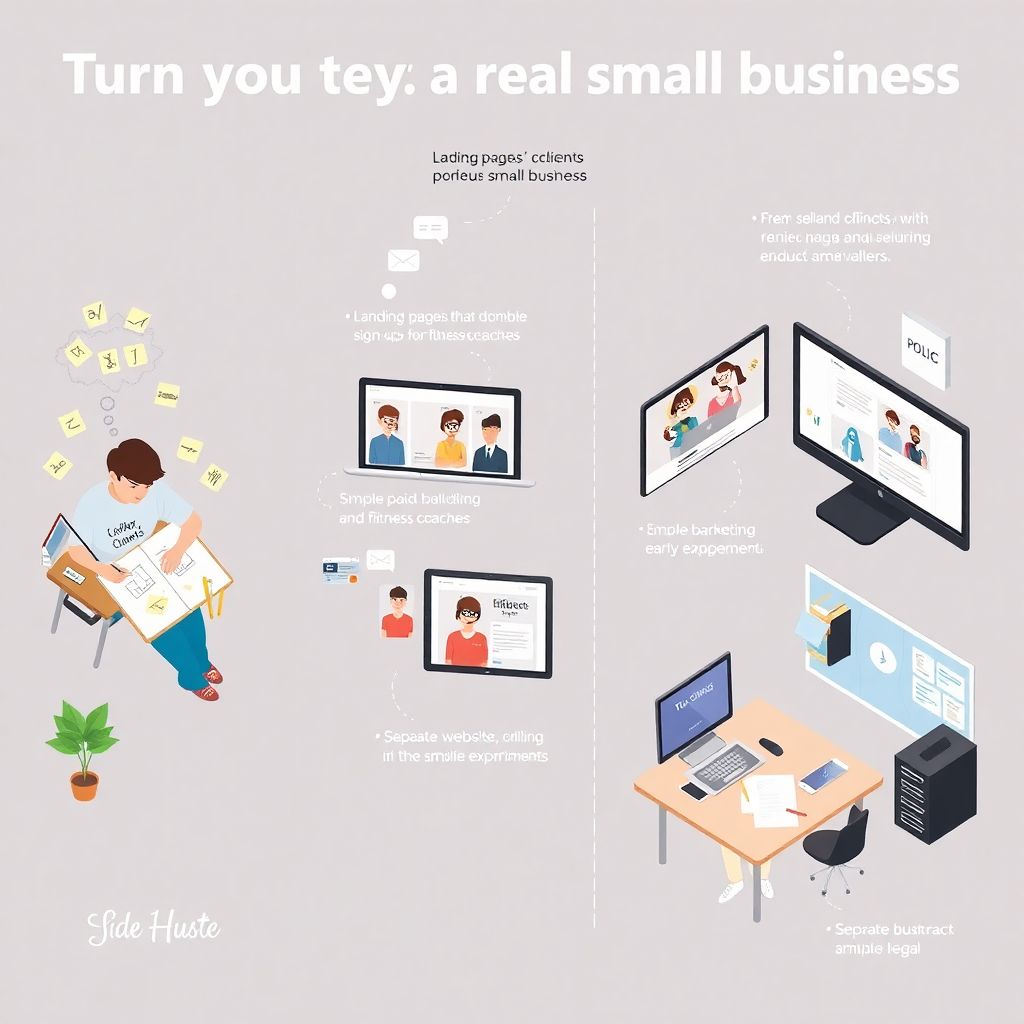
Laying the Groundwork for a Real Business
Defining What You Actually Sell
Before asking how to turn a side hustle into a small business, get painfully clear on your offer. Skip vague ideas like “I do design” or “I coach people.” Instead, describe a concrete transformation: “I design landing pages that double email sign‑ups for fitness coaches.” Break your passion into a specific outcome, target audience and price point. This positioning becomes a filter for every later decision: which clients to pursue, which features to drop and what you can confidently say “no” to as you grow.
Validating That People Will Pay
Now you need proof that real humans care enough to pay. Treat this like a small experiment, not a life decision. Talk to at least ten potential customers and ask what they’ve already tried, what annoyed them and what “success” looks like. Then pre‑sell a small, time‑boxed offer instead of building a giant product in secret. A simple landing page, a payment link and three to five paid test clients beat a pretty logo. This is where you truly learn how to turn your passion into profit without betting your entire savings.
Essential Tools and Systems
The Core Digital Toolkit
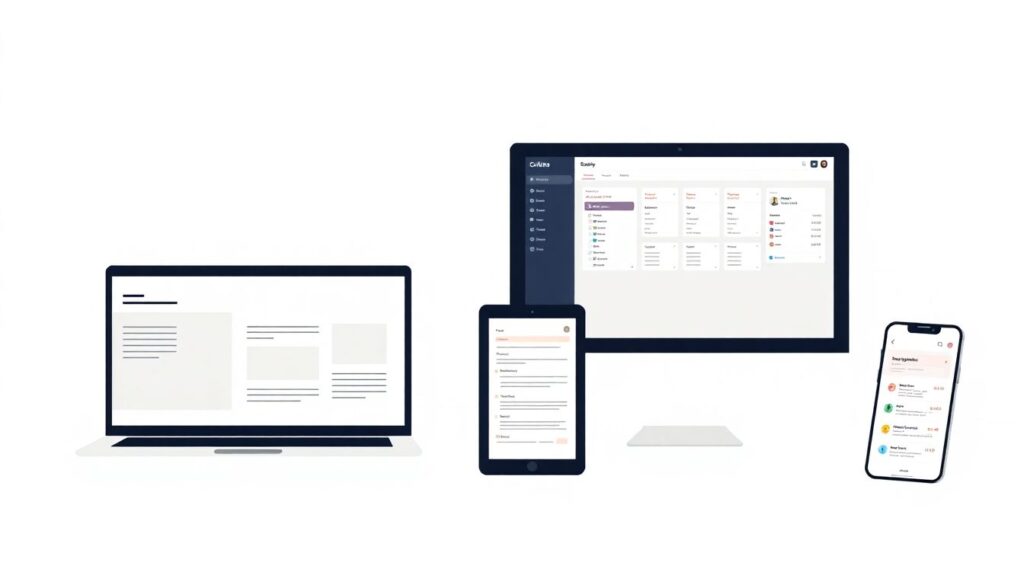
Even in a conversational, low‑key business, you still need some basic infrastructure. Start with a simple website or landing page builder, an email marketing tool, online invoicing and a project management app. These components form a lightweight “tech stack” that lets you operate like a real company, not just a hobby. Since many of the best side hustles that can become full time businesses run online, prioritize tools that integrate well, automate repetitive tasks and keep client communication visible in one place instead of scattered across chats.
Money, Legal, and Operations Basics
You don’t need a legal empire on day one, but you do need separation and clarity. Open a dedicated business bank account, use basic bookkeeping software and log every transaction from the start. Register a legal entity when your revenue and risk justify it in your jurisdiction; an accountant or small business advisor can translate the local rules. Put simple contracts or terms of service in place for every client. These boring foundations protect cash flow and help when you eventually seek funding, partners or even your first employee.
Step‑by‑Step: From Hustle to Company
Transition Roadmap and Milestones
If you want a realistic step by step guide to starting a small business from a side hustle, think in milestones, not magic. First, hit consistent monthly revenue that covers at least core living expenses. Second, document your repeatable process: how leads arrive, how you onboard, how you deliver. Third, reduce reliance on your full‑time job income by building a three‑ to six‑month runway. Only then consider dropping hours or quitting. Each milestone lowers risk and turns your story from “taking a leap” into executing a controlled transition.
1. Map your current skills and offers to specific customer problems.
2. Run small paid experiments instead of free “portfolio building.”
3. Standardize your service into clear packages or product tiers.
4. Implement basic systems: CRM, invoicing, task tracking, automations.
5. Gradually reinvest profits into marketing, tools and expert help.
6. Decide on a formal business model, entity and long‑term positioning.
Going Online and Expanding Reach
Once the engine works locally, you can explore how to make money from your passion online. Start with one core channel where your ideal clients already hang out: LinkedIn for B2B, Instagram or TikTok for visual brands, maybe YouTube or podcasts for education‑heavy offers. Publish practical content that demonstrates how you solve specific problems, not just motivational quotes. Capture emails, nurture subscribers with useful sequences and occasionally pitch a focused offer. This organic funnel compounds over time and steadily reduces your dependence on word‑of‑mouth alone.
Troubleshooting and Common Pitfalls
Fixing Revenue, Marketing and Offer Issues
If sales stall, don’t immediately assume your idea is bad. Diagnose systematically. Are you getting enough traffic or leads each week? If not, your marketing channels are the bottleneck. Are leads engaging but not buying? Then your offer, pricing or messaging is misaligned. Record sales calls, collect objections and adjust copy and packages accordingly. When you wonder how to turn a side hustle into a small business that’s stable, think like an engineer: change one variable at a time, measure the result and keep iterating instead of randomly adding more services.
Handling Burnout, Capacity and Growth
As demand grows, personal capacity becomes the new constraint. Many founders hit a wall when they try to do everything themselves. Standardize your workflows into simple SOPs (standard operating procedures), then outsource low‑value tasks like editing, admin or support. Learn basic project management terms—throughput, work‑in‑progress limits, lead time—and use them to prevent overload. This is how you turn your passion into profit without destroying your health. Over time, your documented processes and systems are what transform a fragile hustle into a resilient, scalable small business.