
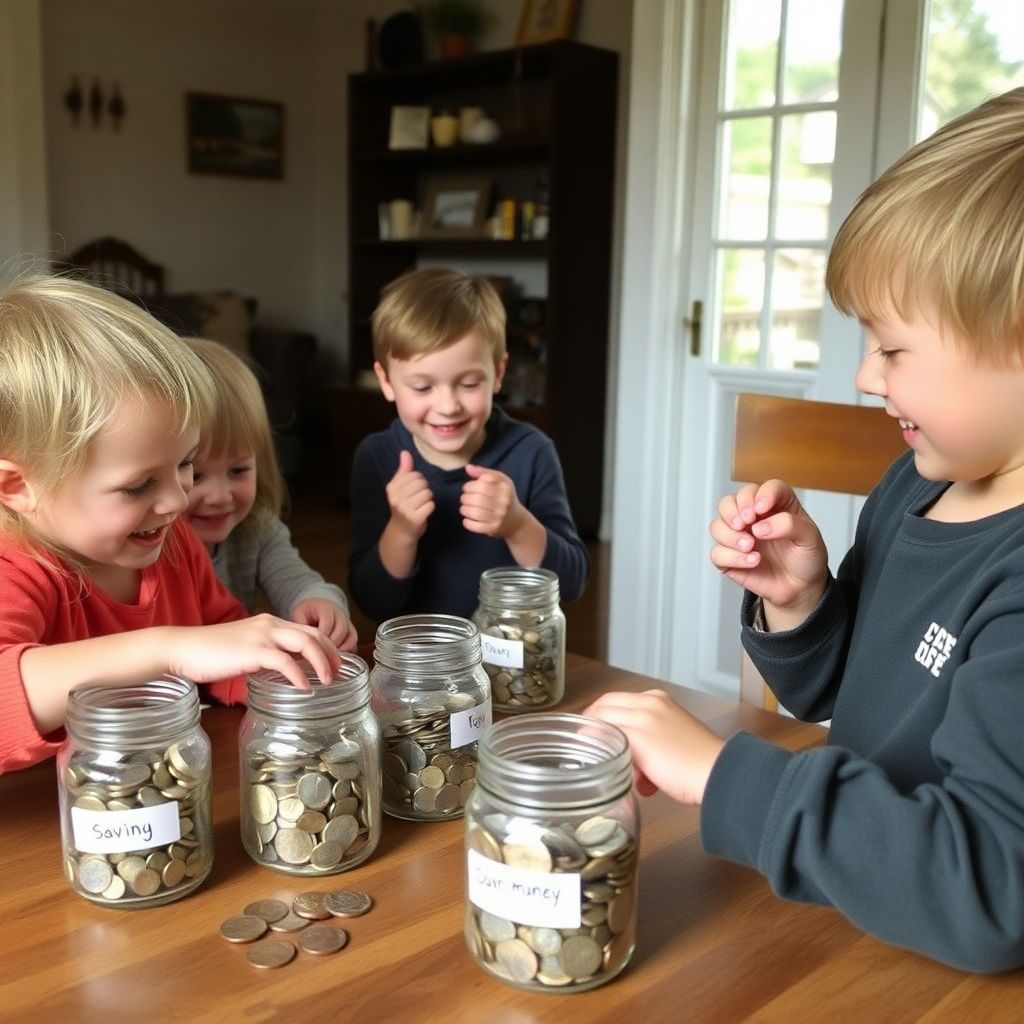
Fun money games for kids should be short, repeatable activities that model saving, spending, and sharing with real choices and simple consequences. Use coins, jars, and stories to turn financial literacy games for children into everyday routines, then gradually add challenges, reflection questions, and kid-led decisions as skills grow.
Core Concepts to Reinforce Through Play
- Money has jobs: saving for later, spending now, and sharing with others.
- Every choice has a trade‑off: choosing one thing means not choosing another.
- Goals work best when they are specific, visible, and tracked over time.
- Small, repeated decisions matter more than rare big decisions for kids.
- Talking about mistakes calmly teaches more than trying to prevent every error.
- Kids learn faster when they can touch, move, and sort money instead of only hearing rules.
Simple Games That Teach Saving: Mechanics and Scripts
Who this works for: Ages 4-12, at home or in small groups. Best with an allowance, chore points, or play money. Avoid these games when kids are stressed about real family finances; separate learning play from adult money worries.
Game 1: Three Jars Saving System
Objective: Practice splitting income into saving, spending, and sharing every time money appears.
Time per round: 5-10 minutes, repeated weekly.
Materials: 3 clear jars (Save, Spend, Share), stickers or tape, coins or tokens.
Low‑prep alternative: Draw three circles on paper and place coins or counters on them.
- Setup the jars. Label three jars Save, Spend, and Share. Explain in one sentence each: Save is for later goals, Spend is for small fun now, Share is for helping others.
- Set a simple rule. Choose a fixed split (for example, 1 coin to each jar, or any pattern you prefer) and say it aloud every time money is divided.
- Run the ritual. Whenever kids receive money or points, pause for this game: count the total together, then sort into jars using the rule.
- Quick debrief. Ask one question: “Which jar grew most today?” or “What are you working toward in your Save jar?” Keep it light and encouraging.
Game 2: Goal Thermometer
Objective: See progress visually toward a saving goal.
Time per round: 5 minutes to update, ongoing over weeks.
Materials: Paper, marker, tape, coins or digital balance.
Low‑prep alternative: Use a simple note on the fridge or a whiteboard with tick marks.
- Choose one clear goal. Example: “Stuffed animal,” “Book,” or “Online game credit.” Write the name and total amount needed at the top of the page.
- Draw the thermometer. Make a vertical bar with marks for small steps (for example, each dollar or each 10 points).
- Update together. Each time the Save jar grows, color in the bar to the new level. Name how much is done and how much is left.
- Celebrate completion. When the bar is full, let the child participate in buying the item and physically emptying that goal’s saved money.
Game 3: Delayed Reward Challenge
Objective: Practice waiting for a better reward later instead of taking a smaller one now.
Time per round: 5-15 minutes, plus a follow‑up day.
Materials: Small treats, stickers, or privilege cards.
Low‑prep alternative: Use extra story time, screen minutes, or a parent‑kid game as the reward.
- Offer a simple choice. “You can have one treat now, or two treats tomorrow.” Keep the options visible so the child can see the trade‑off.
- Let them decide. Stay neutral; accept either answer. The learning comes from experiencing both outcomes over time.
- Follow through exactly. If they choose later, deliver the bigger reward at the promised time. Reliability is the core lesson.
- Reflect briefly. Ask: “How did it feel to wait?” or “Was it worth it?” No lectures; keep it curious.
Interactive Spending Exercises: Realistic Decisions and Consequences

These activities focus on everyday purchases, needs versus wants, and simple budgets. They can be in‑person, with paper and coins, or adapted as online money management games for kids using safe, adult‑controlled apps or simulated stores.
Game 4: Mini Store at Home
Objective: Choose how to spend a limited budget on clearly priced items.
Age range: 5-11.
Time per round: 15-25 minutes.
Materials: Small toys, snacks, or coupons; sticky notes with prices; play money or coins.
Low‑prep alternative: Use a printed catalog or an online wishlist and pretend coins.
- Set the budget. Give each child a fixed amount of play money and say: “When it’s gone, the game is over.”
- Price the items. Mark some as cheap, some as expensive, and include more options than they can afford.
- Let them shop. Kids choose items, pay you, and see their remaining budget. Do not adjust prices mid‑game.
- Debrief choices. Ask: “If you could redo, what would you change?” Highlight how planning before spending might help next time.
Game 5: Needs vs. Wants Sorting
Objective: Learn to distinguish items kids must have from items that are just nice to have.
Age range: 6-12.
Time per round: 10-15 minutes.
Materials: Picture cards (food, rent, toys, apps, clothes, etc.) or drawn icons.
Low‑prep alternative: Use magazine cutouts or draw quick stick‑figure icons on scrap paper.
- Create two zones. Mark spaces on the table or floor as “Need” and “Want.”
- Sort and discuss. Kids place each card and explain their choice in one sentence.
- Add gray areas. Include tricky items (sports, birthday gifts, name‑brand clothes) and talk about how families may decide differently.
Game 6: Simple Weekly Budget
Objective: Plan spending for a short period and compare plan versus reality.
Age range: 8-14.
Time per round: 20-30 minutes for planning, 5 minutes for review after the week.
Materials: Paper with three columns: Planned, Actual, Notes; pen; allowance or points.
Low‑prep alternative: Use a basic note app or spreadsheet with the same three columns.
- List categories. For example: snacks, games, gifts, savings.
- Assign amounts. Kids decide how many units (coins or dollars) to put in each category, making sure the total matches their allowance.
- Track during the week. Each time they spend, they mark it under Actual.
- Compare and reflect. At week’s end, check differences between Planned and Actual. Ask what they might change next week.
Sharing and Charity Activities: Building Empathy with Money
These activities connect money with generosity and impact. They support teaching kids about saving and spending activities while also building a habit of sharing. They work best when you keep amounts small, explanations concrete, and choices child‑driven.
-
Pick a simple cause together.
Briefly list 2-3 options kids can relate to, such as helping animals, supporting a local playground, or buying books for other children. Let them vote or combine ideas when possible.- For younger kids (4-7), choose something they can see in daily life.
- For older kids (8-12), add one short story or photo about the cause.
-
Define the sharing rule.
Agree on how much will go to sharing: a fixed coin amount each week, a percentage of allowance, or a piece of birthday/holiday money. State the rule once, simply, and write it down nearby. -
Use a dedicated Share container.
Place a clearly labeled jar or envelope in a visible spot. Each time kids get money, pause the activity so they can move the share portion into that container themselves. -
Set a short‑term target.
Decide on a concrete milestone, like “When the Share jar reaches this line, we will donate” or “After four weeks, we see how much we have.” Short cycles help maintain interest and understanding. -
Research giving options together.
With older kids, briefly look up two organizations or local options related to their cause. Compare in simple terms what each one does, avoiding heavy topics or upsetting images. -
Make the donation visibly.
If possible, let kids click the donation online, drop cash in a local box, or hand over a small gift card. Narrate the step: “We are sending X to help Y.” This connects the jar to real action. -
Reflect with feelings and facts.
Ask 2-3 short questions: “How do you feel about giving this?” “What might this help someone do?” “Would you change anything next time?” Accept all answers without judgment.
Fast-Track Version for Busy Days
- Ask the child to pick one thing they care about (animals, playgrounds, books).
- Agree on a small share rule for this week only (for example, one coin each time they get money).
- Use any cup as a Share jar and drop coins in during the week.
- At week’s end, donate the total in one simple action and talk for one minute about how it might help.
Designing Short-Session Money Games for Home or Classroom
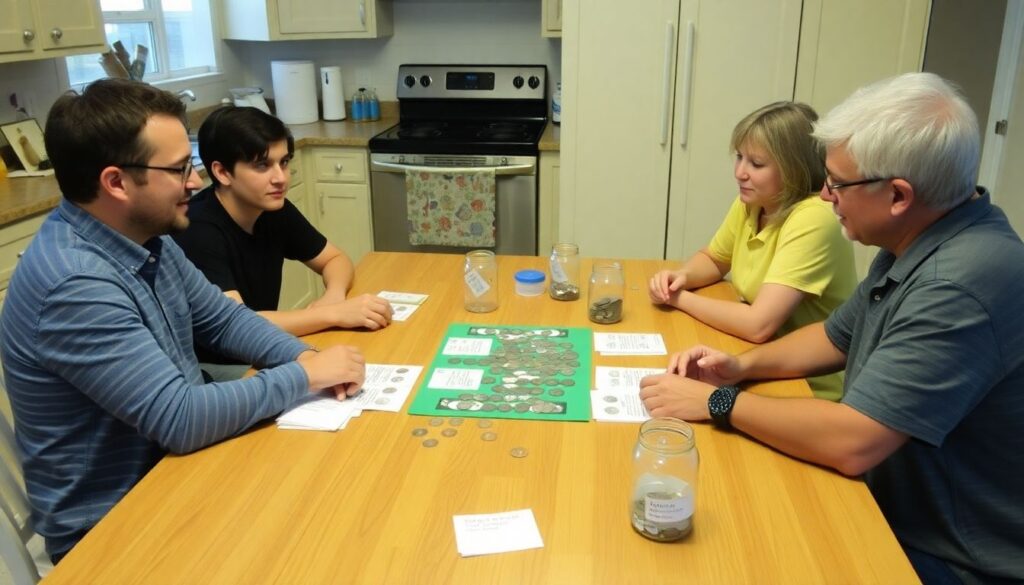
Use this checklist to see if your money games are practical, safe, and effective for your group.
- The game fits within 10-25 minutes, including setup and a quick debrief.
- Rules can be explained in under two minutes with one short example.
- Materials are simple: coins, paper, jars, or common household/classroom items.
- Each child gets repeated chances to decide, not just watch adults or peers.
- Consequences are small and safe (play money or minor privileges), never essential needs.
- The activity includes at least one reflection prompt (“What would you change next time?”).
- Kids can succeed in more than one way (saving more, planning better, choosing thoughtfully).
- You can easily adjust difficulty by changing time, budget size, or number of choices.
- The same core idea can be replayed weekly with minor tweaks to avoid boredom.
- Instructions are written down so another adult could run the game if needed.
Adapting Activities by Age and Developmental Skill
Common mistakes when adjusting financial literacy games for children by age or ability.
- Using real money stress with young kids, which can create anxiety instead of curiosity.
- Making rules too complex for the child’s reading or math level (for example, multi‑step percentages for early readers).
- Skipping visuals (jars, charts, icons) and relying only on verbal explanations.
- Expecting long attention spans; many kids under 8 need games under 15 minutes.
- Never letting teens handle realistic numbers or online prices, which can feel childish.
- Not revisiting the same concept at higher levels of difficulty as kids grow.
- Comparing siblings or classmates directly, which can create shame around money skills.
- Ignoring sensory needs: some kids need to move, sort, or color while learning.
- Leaving no room for kids to disagree or suggest changes to the rules.
- Assuming one successful session means the concept is fully mastered.
Measuring Progress: Quick Metrics and Reflection Prompts
When you want variety or less structure, these alternative formats can replace or supplement formal money games for kids while still building skills.
-
Story-based money talks.
Once a week, read or invent a short story where a character must save, spend, or share. Pause and ask: “What would you do?” Track changes in kids’ answers over time. -
Real receipt reviews.
After a simple shopping trip, show a receipt (with sensitive info hidden). Ask kids to find one “need,” one “want,” and one item they might cut next time. -
Board and card game nights.
Use educational board games about money for kids or adapt classic games by narrating decisions about buying, renting, or saving. Focus less on winning, more on talking through choices. -
Digital simulations.
Try child‑friendly online money management games for kids in short sessions. After each session, ask one metric question like: “Did you end with more or less than you started? Why?”
Practical Concerns and Straightforward Answers
How often should we play money games without overwhelming kids?
One or two short sessions per week are plenty. Keep them predictable (for example, weekend mornings) and end while kids are still engaged so they want to play again.
Do I need real cash, or is play money enough?
Play money is usually safer and simpler, especially with younger kids. Real coins can be useful occasionally to connect games to real life, but keep amounts small and supervised.
What if my child gets upset about losing or making a bad choice?
Normalize it by saying that games are for practicing. Briefly review what they might try differently next time, then switch to an easier round or end on a success.
How do I connect these games to our family values about money?
After each activity, add one short statement that reflects your values, such as focusing on generosity, careful planning, or avoiding waste, and invite kids to respond or ask questions.
Can teachers run these activities in mixed-age classrooms?
Yes, by grouping kids with similar skills, simplifying numbers for younger ones, and giving older students extra challenges like tracking totals or designing new game rules.
Are digital money games safe for children?

Use only kid‑friendly, supervised sites or apps with no real purchases. Treat them as simulations, and always follow with a short conversation to link the experience to real‑world decisions.
How do I know if my child is actually learning from these games?
Look for changes in daily behavior: thinking before spending, remembering goals, or bringing up saving and sharing without prompts. Periodically ask them to explain a rule to someone else.