
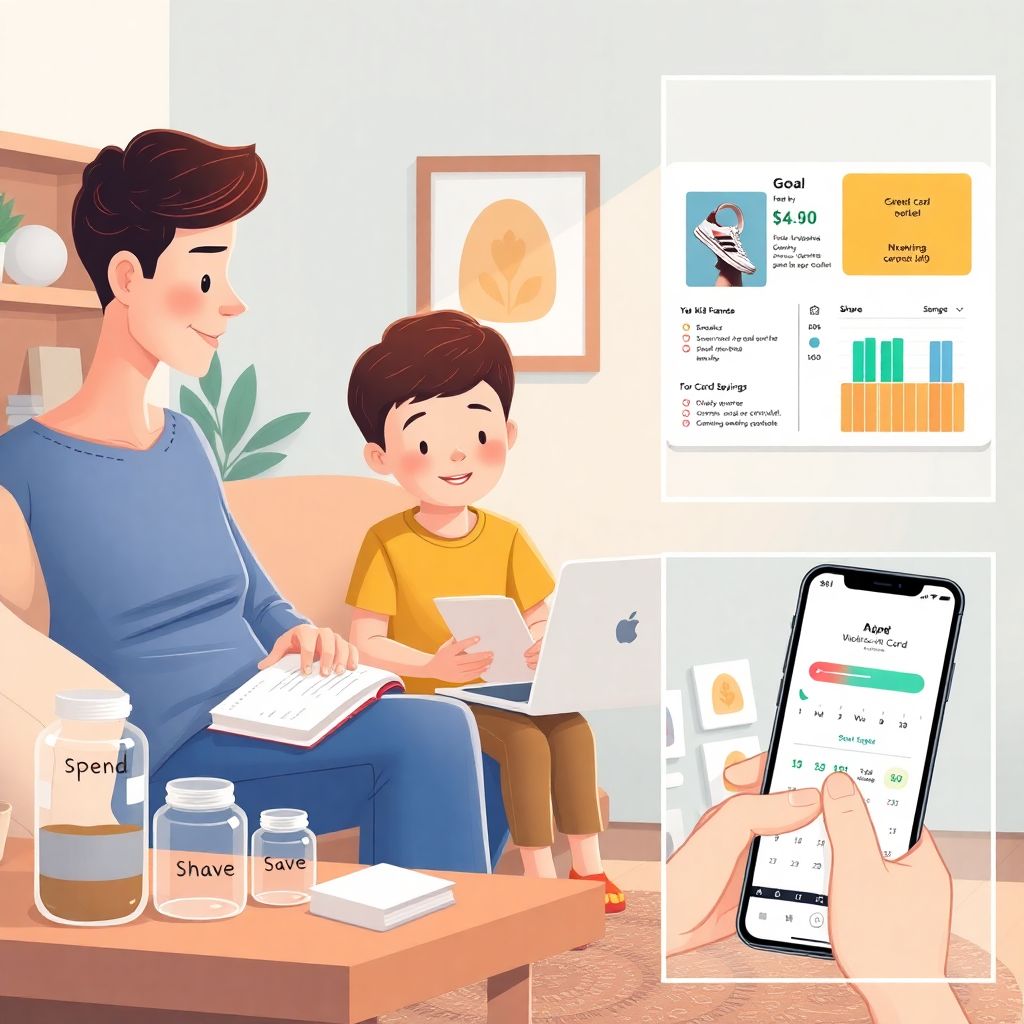
Teaching kids to save in 2025 isn’t just about a piggy bank on a shelf. Their world is cashless, app-based, and full of instant purchases, so your strategy has to match that environment. When you think about how to teach kids about saving money now, you’re really designing a mini financial system around your child: digital tools, clear rules, and real-life goals like sneakers, gadgets, or a school trip. The idea is to connect their everyday decisions (Do I buy this now?) with visible outcomes (How much closer am I to my goal?). That’s where real-life goals become more powerful than abstract lectures about “being responsible with money” or “saving for the future.”
Instead of aiming for perfection, aim for repeatable routines and short feedback loops. Kids learn best when they can see something change every week, not once a year.
—
Core Tools You Need in 2025
The toolkit for saving money for kids real life goals is now a hybrid of physical and digital instruments. Start with three basic components: a visible “parking place” for savings (jars, envelopes, or a kids savings account to teach money management), a structured income source (allowance, chore payments, or project-based gigs), and a tracking interface (an app, a shared spreadsheet, or a simple notebook). In technical terms, you’re creating an input (income stream), a storage mechanism (savings container), and an analytics layer (tracking progress). This small ecosystem makes money concrete, even if most transactions happen electronically via virtual cards and online purchases.
On top of that, you’ll want simple “rules of engagement”: how money is earned, how it’s split between “spend, save, share,” and what counts as a goal that deserves official “project” status.
In practice, you don’t need premium fintech to start. A transparent jar plus a free banking app that offers child sub-accounts can deliver 80% of the learning effect.
—
Digital-First Tools and Modern Trends
By 2025, kid-focused fintech apps are essentially training simulators for real-world finance. Many come with prepaid debit cards, parental dashboards, goal-setting modules, and gamified progress bars. Used correctly, these are among the best ways to teach children financial responsibility because they mirror adult banking behavior: tap-to-pay, automatic transfers, balance notifications, and even basic interest calculations. When you link a specific goal—say, a gaming console—to a digital savings pot, the child can see each deposit move them closer in real time. That visual feedback loop taps into the same dopamine system that social media and games use, but to reinforce saving instead of impulsive spending.
Still, avoid “black box” apps that hide what’s going on. Prioritize tools where you can explain each transaction and setting in plain language.
You’re not just outsourcing education to an app; you’re co-piloting it with your child, turning each notification into a tiny financial lesson.
—
Step-by-Step Process: From Idea to Saved-Up Goal
Think of this as a repeatable protocol rather than a one-off lesson. Step one: define a specific, time-bound, realistic goal with your child—something they genuinely want and can reach in 1–6 months. Step two: quantify it. Look up the current price, include taxes and shipping if relevant, and write the number down. Step three: map the income stream. How much allowance or chore pay is coming in weekly, and what proportion will be assigned to this goal? Step four: choose the storage mechanism and set an “automation rule” (for example, 40% of all income auto-routed to the goal). Step five: establish a weekly “money check-in” to log progress, adjust for unexpected expenses, and celebrate milestones.
Keep each step visible. Kids should see prices, amounts, and timelines, not just hear you talk about them.
If a goal is too big, split it into stages, each with its own mini-deadline and reward.
—
Turning a Wish into a Real-Life Goal
When your child says, “I want new headphones,” don’t dismiss it or instantly buy it. Convert that wish into a structured saving project. This is where financial education for children parents guide principles meet day-to-day parenting. First, validate the desire, then research options together: models, prices, reviews. Next, choose a target item and create a simple “goal card” (digital or paper) showing the item, total cost, weekly savings target, and estimated completion date. Attach the goal to their chosen savings tool—jar label, app goal, or sub-account name. Every time money comes in, you both execute the agreed rule: a fixed percentage flows to the goal until it’s met.
Use micro-celebrations at 25%, 50%, 75% completion to keep momentum, especially for younger kids.
The final step is crucial: when the goal is reached, let the child execute the purchase themselves (online checkout or in-store payment) so the feedback loop closes.
—
Embedding Habits with Simple Systems
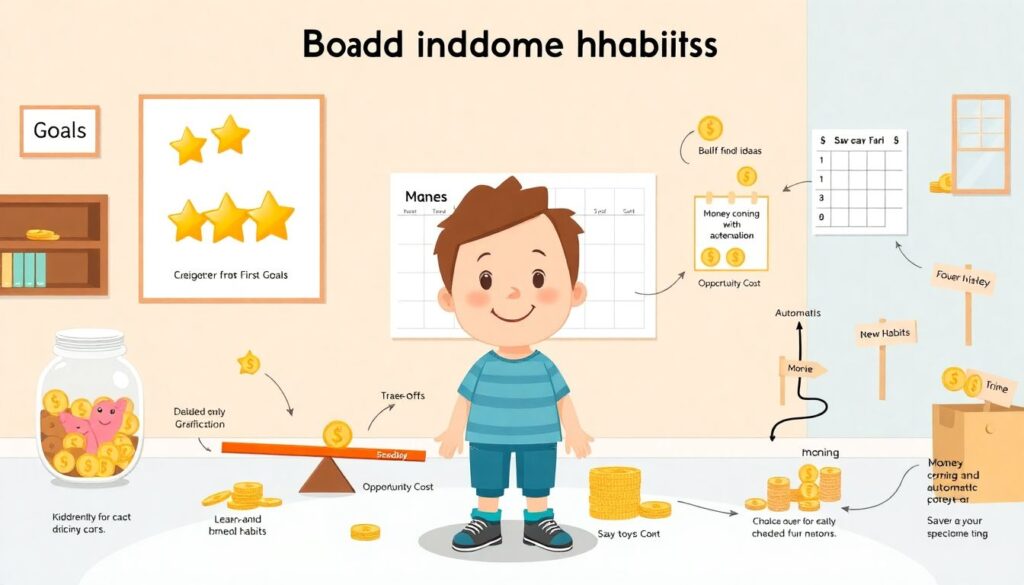
After one or two successful goals, the objective shifts from single projects to durable behavior. Here you can introduce more technical concepts in kid language: “delayed gratification,” “trade-offs,” and “opportunity cost.” Design a baseline system: money comes in on a schedule, it’s automatically split into spend/save/share buckets, and savings are always attached to an active goal. Add simple constraints such as a 24-hour “cooling-off period” before large impulse purchases, which mirrors adult best practices like waiting before big online orders. Over time, you can layer in more advanced elements: interest on savings you pay from your own pocket, matching contributions for long-term goals, or basic budgeting categories tied to recurring expenses.
Keep the system lightweight. If it feels like an accounting job, kids will opt out.
Short, frequent conversations (“What are you saving for right now?”) do more than rare, heavy lectures.
—
Troubleshooting Common Problems

Even the cleanest system will hit friction: forgotten goals, impulse buys, or resistance to saving at all. When a plan breaks, treat it like debugging code rather than a moral failure. Start with observation: what actually happened—did the allowance structure change, did peers influence spending, or did the goal lose relevance? Then adjust one variable at a time: goal size, timeframe, allowance amount, or incentive structure. For a child who consistently overspends, add friction, such as keeping the spending card at home on school days or requiring a quick “pros and cons” chat before purchases above a threshold. For a child who hoards and never spends, discuss utility and enjoyment; saving is a tool, not an end state.
If motivation collapses, shorten the loop—smaller goals, faster wins, clearer visuals.
And if digital tools become a distraction, temporarily revert to low-tech jars until focus returns.
—
Financial habits take repetition, not perfection. When you anchor saving money for kids real life goals in concrete objects, visible progress, and tools that feel native to 2025, you’re quietly building skills they’ll need for decades. Over time, your home setup will resemble a tiny, age-appropriate financial lab—where mistakes are cheap, feedback is fast, and your child practices with real numbers before the stakes get high.