

Why Your First Stock Is a Bigger Deal Than You Think
Buying your first stock feels a bit like jumping into cold water: you know millions of people do it every day, но всё равно не по себе. The thing nobody tells you is that the very first purchase is less about profit and more about building your system: how you choose companies, how you handle fear, how you react when the price suddenly drops 5% after you click “Buy”. Instead of chasing the “hot pick”, treat this moment as a training lab. You’re designing habits that will either protect you for decades or quietly drain your account while you convince yourself it’s just bad luck.
Step Zero: Decide What Game You’re Actually Playing
Owning a Stock Is Owning a Business, Not a Lottery Ticket
Before googling *how to start investing in stocks for beginners*, pause and ask a blunt question: “If this stock never went back to my purchase price for two years, would I still be okay owning this business?” Most beginners think in ticker symbols, not in businesses. That’s why they panic-sell at the first red candle. If you switch your mindset to “I’m buying a slice of a real company that sells real stuff to real people”, the entire process changes. Suddenly you care less about this week’s chart and more about revenue trends, customer loyalty and debt levels. This temperament shift alone filters out half of the impulsive mistakes you were about to make.
Real Case: The Friend Who Bought a Logo, Not a Company
One of my clients (call him Mark) bought a famous EV stock because “everyone knows the brand.” He didn’t check valuation, cash flow, or even how cyclical the business is. The stock fell 35% over the next year, even though the company kept selling more cars. The problem wasn’t that the business was bad; it was that Mark paid a party price for a solid-but-volatile company. When we reframed it as “Would you buy this entire business at this price if you could?”, he immediately realized he’d never have paid that multiple in real life. Owning a logo instead of a business is how otherwise smart people burn their first capital.
How Much Money Do You Actually Need?
The Real Answer to “How much money do you need to start investing in stocks”
Technically, you can start with almost nothing thanks to fractional shares, but that’s not the real question. A more useful version is: “At what amount does learning become meaningful but losses stay survivable?” For most people, that’s a number that hurts just enough to pay attention, but not enough to wreck your plans if the market drops 30%. For some, that’s $100; for others, $2,000. If $200 going to zero would ruin your mood for a month, you’re not ready for stocks — you’re ready for building a cash buffer. Treat the first sum as tuition: money you pay to learn live, with controlled risk, not to become rich in a year.
Non-Obvious Trick: Separate “Learning Capital” From “Serious Capital”
One unconventional but effective approach: split your money into two mental buckets from day one. Bucket A is “learning capital” — a small, fixed sum you experiment with: a few stocks, maybe an ETF, trying different order types. Bucket B is “serious capital” — cash that stays parked in a high-yield savings account or money market fund until you can prove (on paper) you have a repeatable process. The rule: you’re not allowed to scale up until Bucket A has been managed according to a written checklist for at least six months. This artificial constraint slows down reckless behavior more reliably than any YouTube warning.
Choosing a Platform Without Getting Trapped by “Free”
What Beginners Miss About “Best Platforms”
Searching for the *best online stock trading platforms for beginners* usually leads you to flashy apps with confetti animations. The problem: what’s “best” for marketing is rarely what’s best for decision-making. Look past the free trades and ask: “Does this platform make it easy to be calm and analytical?” You want: clear fee disclosure, simple order input, no casino-style gamification, and easy access to statements and tax forms. Extra points if the app makes it boring to overtrade — for example, shows your performance by year, not by hour. The right platform nudges you to act like an investor instead of a day-trader with no plan.
Pro Lifehack: Use Two Brokers for Psychological Firewalling
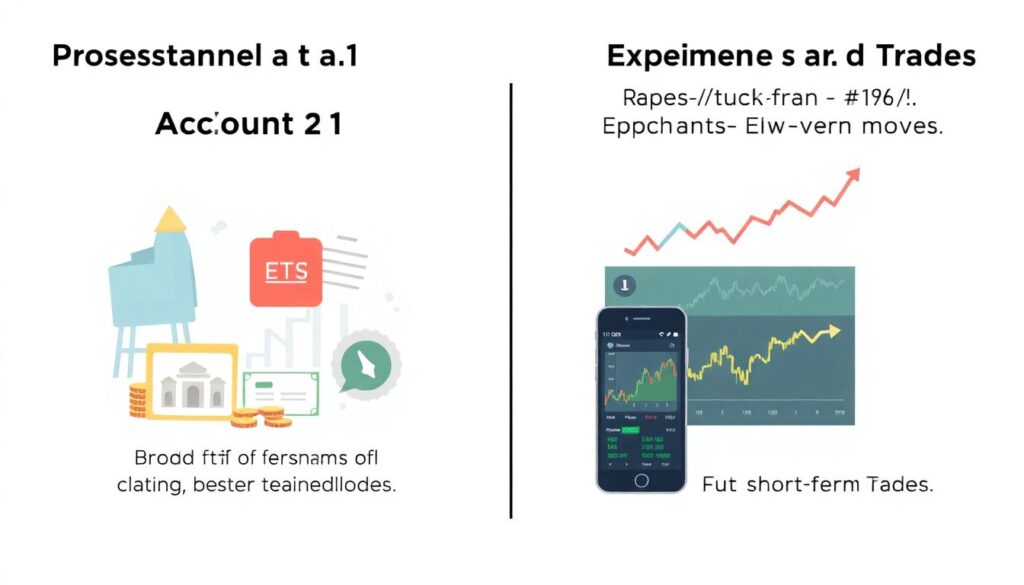
A professional-grade trick that beginners can borrow: open two brokerage accounts with different purposes. Account #1: long-term holdings you rarely touch — broad ETFs and a couple of well-researched stocks. Account #2: experiments, swing trades, anything short-term. You can even use a “fun” app for #2 and a boring, spreadsheet-like broker for #1. That separation stops you from liquidating your long-term positions just because you got excited (or scared) in your play account. Pros do this to protect their core capital from their own impulses; beginners need it even more.
Learning the Game Without Drowning in Content
Why Random YouTube Binge-Watching Is a Trap
Typing *stock market investing tips for beginners* into YouTube is like walking into a casino disguised as a library. You’ll get some quality content, surrounded by overconfident predictions and cherry-picked returns. Instead of passively absorbing dozens of conflicting opinions, treat education like a project. Pick a small set of structured materials: one book on fundamentals, one on behavior, and one practical source explaining mechanics (orders, taxes, dividends). That’s your “starter curriculum”. Once you’ve built this base, every video and article suddenly becomes easier to filter: you’ll quickly recognize who’s selling hopium vs. who’s explaining risk.
When Beginner Investing Courses Online Actually Make Sense
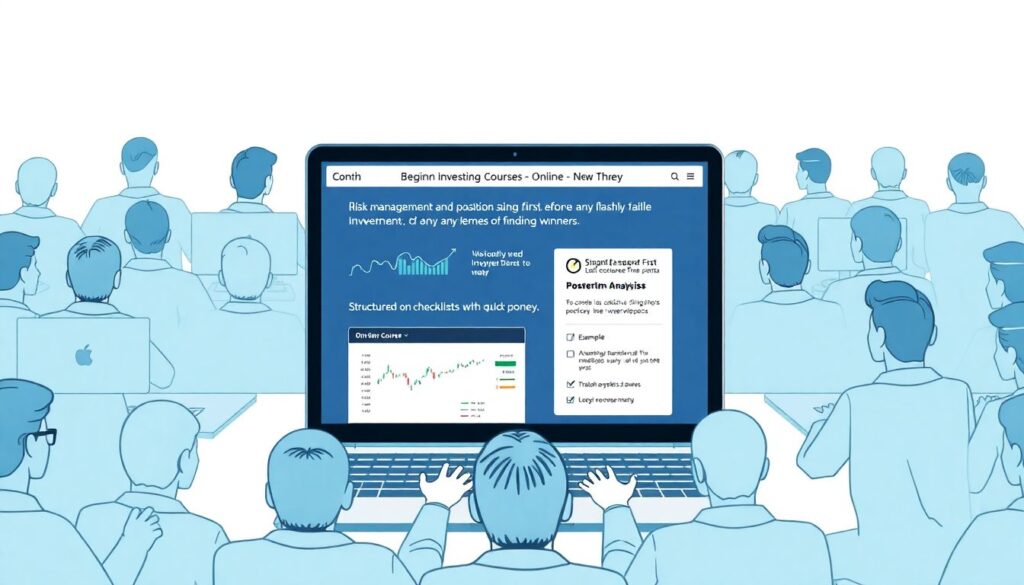
Many people ask whether *beginner investing courses online* are worth the money. They can be — but only if they meet three criteria: (1) they teach risk management and position sizing before they teach “finding winners”; (2) they show examples of failed investments with full post-mortems; (3) they make you do assignments: build a watchlist, write an investment thesis, simulate a portfolio. If a course is mostly “secret strategy” slides and screenshots of big gains, you’re not buying education, you’re buying a story. A course that forces you to write down your reasoning is much more valuable than one that only entertains you.
A Simple But Non-Obvious Research Framework
The “One Page Thesis” Before Every Purchase
Before buying anything, write a one-page investment thesis. Not a school essay, just short answers to five questions:
1. What does this company actually sell, and to whom?
2. Why do customers choose it instead of alternatives?
3. Where does the profit come from, and is it growing?
4. What could realistically go wrong in the next three years?
5. At what price would I admit I was early or wrong?
This single page will do more for your returns than any technical indicator. It forces you to think in plain language. When the stock price starts moving, you can revisit that page and see whether your original reasons still hold, instead of improvising new justifications on the fly. Professionals call this “pre-commitment”: deciding on your rules before emotions show up.
Real Case: The Investor Who Stopped Overtrading With One Rule
A beginner named Elena used to buy and sell based on Twitter threads. Her portfolio looked like a graveyard of half-baked stories. She adopted a simple rule: “No written thesis, no trade.” Every position had to fit on one page, with at least one clear, measurable metric (like revenue growth or debt ratio) she would monitor each quarter. In a year, her number of trades dropped by 70%, her stress level collapsed, and her results improved simply because she stopped acting every time someone posted a fancy chart. The unusual move was not another indicator, but adding writing to her process.
Alternative Ways to Start If Picking Stocks Feels Overwhelming
Index Funds as a “Practice Field” for Your Process
You don’t have to start with individual stocks at all. One underrated method: begin with a broad market ETF while you practice your research skills on companies without putting money into them yet. You get exposure to the market’s average return, which historically has beaten most active traders, and you free up mental bandwidth to learn analysis at a calmer pace. You can still create “virtual portfolios” of specific stocks, tracking them on a spreadsheet as if you’d invested, noting buy and sell reasons. This lets you test your ideas without risking real capital — a sandbox most newbies skip because it’s not as thrilling as instant action.
Using “Time-Boxed Experiments” Instead of Endless Tweaking
Another non-obvious approach is to treat each new method as a 6–12 month experiment with fixed rules, instead of changing strategies every few weeks. For example, you might decide: “For the next 9 months, I will invest only in dividend-paying companies with at least 5 years of increasing payouts, buying once per month, equal amounts each time.” You stick to it, log every decision, then review at the end: what worked, what didn’t, how did you behave during drawdowns? This beats the chaotic “I’ll try value today, growth tomorrow, crypto on Friday” pattern that never generates usable data about what actually suits your psychology.
Risk Management: The Boring Part That Saves You
Position Sizing: The Rule Pros Respect and Beginners Ignore
Professionals obsess over how much to put into each idea; beginners obsess over whether the idea will “moon.” A simple starting rule: no single stock should be more than 5–10% of your total portfolio. That way, even a complete disaster cannot destroy your finances. Combine that with a basic diversification rule — at least 10–15 positions over time, in different sectors and geographies — and you’ve eliminated the most common beginner catastrophe: all-in on one hyped name that crashes 80%. This isn’t about being timid; it’s about staying alive long enough for your skills to compound.
Pro Lifehack: Pre-Write Your Panic Playbook
Instead of hoping you’ll “stay calm” during a crash, write a one-page “panic playbook” now, while you’re rational. Include: the maximum drawdown you accept before you review (not automatically sell), the conditions under which you’ll add more, and situations where you’ll simply hold and do nothing. For example: “If my portfolio falls 25% due to a broad market crash and my stocks’ fundamentals are intact, I will not sell; I will increase monthly contributions by 20% if my income allows.” When volatility hits, you read the playbook instead of doomscrolling. This is how professionals make surprisingly fast, confident decisions when the screen is screaming red.
Turning Mistakes Into an Advantage
Build a “Museum of Errors” Instead of Hiding Them
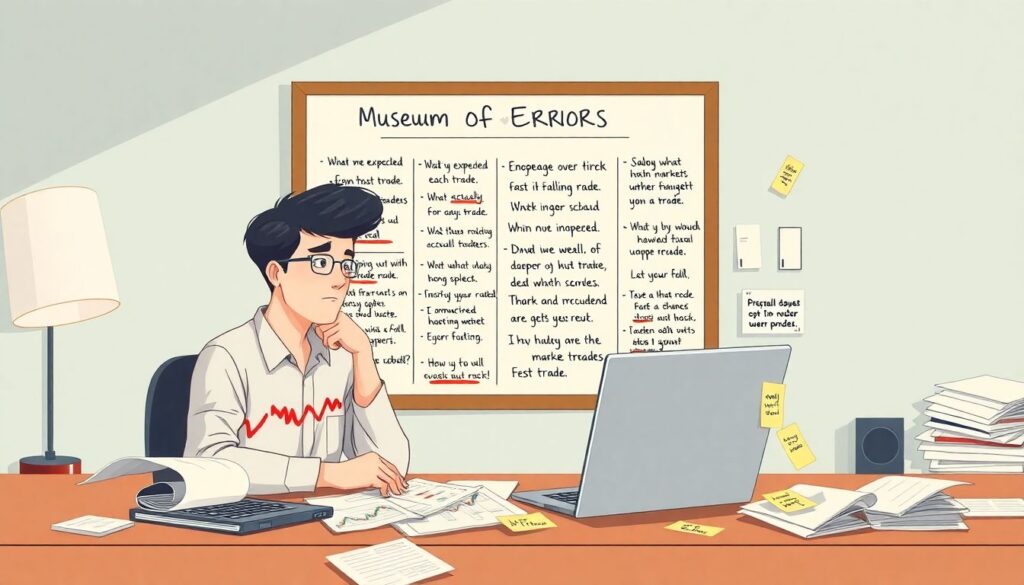
One of the most powerful, oddly underused *stock market investing tips for beginners* is to keep a visible log of your worst decisions. Create a document titled “Museum of Errors.” For each bad trade, note: what you thought would happen, what actually happened, what you ignored, and the emotional trigger (FOMO, boredom, fear of missing out on friends’ gains). Review this museum once a quarter. Over time, patterns will jump out — maybe you overreact to headlines, or you buy right after big spikes. That pattern recognition, grounded in your own behavior, is something even the best textbook can’t give you.
Non-Obvious Exit Strategy: Sell in Slices, Not All at Once
Beginners tend to think in extremes: either “hold forever” or “sell everything.” A more nuanced approach: scale out in portions. Suppose a stock doubled from your original thesis target. Instead of agonizing over whether to hold or sell, you might sell 25–30% to lock in profit, move part of the gain to a safer asset, and let the rest run with a clearly raised stop or new thesis. This staggered exit reduces regret — you’ve banked real returns, but you’re still participating if the company keeps executing. Pros use this method because it respects both uncertainty and human emotion.
Putting It All Together: A 5-Step Starter Blueprint
A Practical Path From Zero to Your First Stock
To streamline everything into action, here’s one possible sequence:
1. Clarify your game. Decide if your primary goal for the next 12–24 months is education, wealth building, or speculation. Write it down.
2. Set your learning capital. Choose an amount that hurts if lost, but doesn’t wreck you. Treat it explicitly as tuition.
3. Pick a sober platform. Choose a broker that minimizes distractions; if needed, use a second account for experiments.
4. Create your process. For every stock: write a one-page thesis, define position size (max 5–10%), and log your decisions.
5. Schedule reviews. Once a month, review your portfolio and your “Museum of Errors,” adjusting your rules — not your impulses.
This approach doesn’t promise quick riches; it does something more realistic and more powerful. It turns your first stock from a random event into the first deliberate step in a long-term system. Investing 101 isn’t about memorizing jargon or predicting markets; it’s about designing behavior, constraints and habits so that even an average set of stock picks can compound into something impressive over time.