
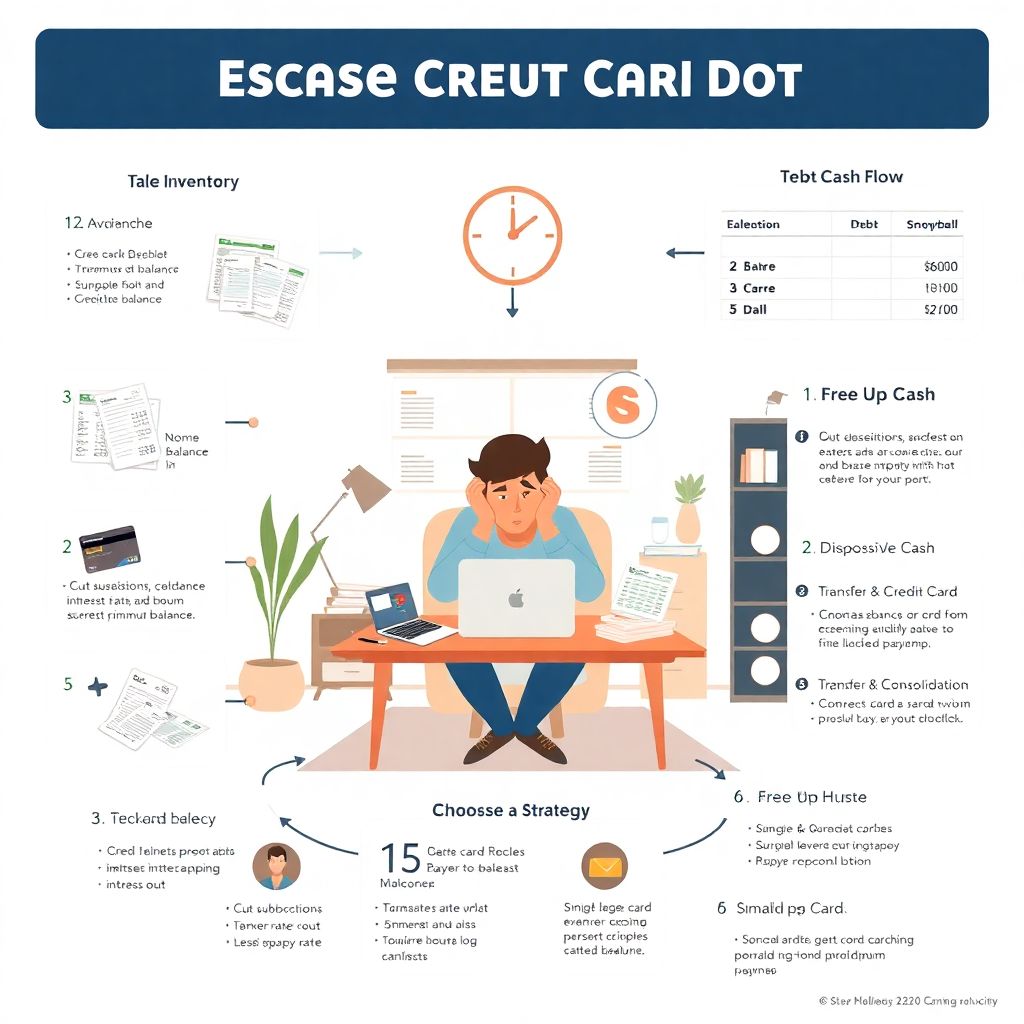
Why Getting Out of Credit Card Debt Feels So Hard (and Why It’s Totally Possible)
Credit card debt is sneaky. You start with a small balance, tell yourself you’ll pay it off next month, and suddenly you’re staring at multiple cards, minimum payments, and interest that eats half your paycheck. It feels overwhelming because the rules are stacked in favor of the lender, not you.
But this isn’t a moral failing or a character flaw. It’s a math and behavior problem. And math problems can be solved.
This guide focuses on practical steps: specific actions, in a specific order, using tools that actually move the needle. We’ll walk through how to get out of credit card debt fast *without* burning out or relying on wishful thinking.
Step 1: Take Inventory of Your Debt (No Guessing Allowed)
Gather the Data
Before you decide on the best ways to pay off credit card debt, you need a clear, honest snapshot of the situation. That means numbers, not feelings.
Collect for each card:
– Current balance
– Interest rate (APR)
– Minimum monthly payment
– Due date
Put this into a simple spreadsheet or note app. No fancy formulas needed yet—just get everything in one place.
Now, calculate:
– Total balance (sum of all cards)
– Total minimum payments per month
This is your baseline. If you can’t cover the minimums, you’re not in a payoff plan yet—you’re in a crisis that needs a different approach (we’ll cover that in troubleshooting).
Track Your Cash Flow
Next, look at your monthly money flow: what comes in, what goes out.
– Net monthly income (after taxes and deductions)
– Fixed expenses (rent, utilities, insurance, minimum debt payments)
– Variable expenses (food, transport, subscriptions, “fun” money)
The key number:
Disposable cash = Income – Essential expenses – Minimum payments
This disposable chunk is where your payoff power lives. If that number is negative or tiny, the strategy will be different than if you have a few hundred dollars of breathing room.
Step 2: Set Up the Core Tools You’ll Need
Tool 1: A Basic Budget You Can Stick To
You don’t need a perfect budget. You need a realistic one you’ll actually follow. Use whatever tool you’ll open more than once:
– A budgeting app (YNAB, Mint, or a banking app with budgeting)
– A spreadsheet with simple categories
– Even a notes app with three columns: NEEDS / WANTS / DEBT
The analytical part here: track for 30 days, then adjust. Don’t guess your spending; verify it. Reality will always beat intuition.
Tool 2: Automatic Payments
Automation protects you from missed payments and late fees—two things that slow your progress.
Set up:
– Auto-pay at least the minimum on every card
– Ideally, auto-pay the target card (the one you’re focusing on) with an extra fixed amount
This way, your plan isn’t dependent on your memory or mood that month.
Tool 3: Simple Tracking Dashboard
Create a one-page snapshot (spreadsheet or note) updated once a month:
– Balances for each card
– Total debt
– Total interest paid this month
This dashboard becomes your feedback loop. Without feedback, you’ll feel stuck even when you’re making real progress.
Step 3: Choose a Payoff Strategy That Fits Your Brain
Debt Avalanche vs Snowball: Pick One and Commit
There are two classic methods; both work. The “best” one is the one you’ll stick with consistently.
1. Debt Avalanche (mathematically optimal)
– You pay extra on the card with the highest interest rate first.
– You keep paying minimums on all others.
– Once the highest-APR card is paid off, you roll that payment to the next-highest APR.
This method reduces total interest the most and is usually recommended if you’re focused on efficiency.
2. Debt Snowball (psychologically powerful)
– You pay extra on the card with the smallest balance first.
– You keep minimums on the others.
– Each time you clear a balance, you move that payment to the next smallest balance.
This creates fast wins and momentum. It’s often better if motivation, not math, is your main challenge.
If you’re wondering how to get out of credit card debt fast, the avalanche method usually wins on speed and total cost, but a snowball that you actually follow will beat an avalanche you abandon after two months.
How to Decide Rationally
– If you’re analytical and like optimizing: use the avalanche.
– If you tend to lose motivation quickly: start with the snowball.
– Hybrid option: pay off one small balance for quick momentum, then switch to avalanche.
Step 4: Free Up Extra Cash the Smart Way
Cutting Costs Without Making Life Miserable
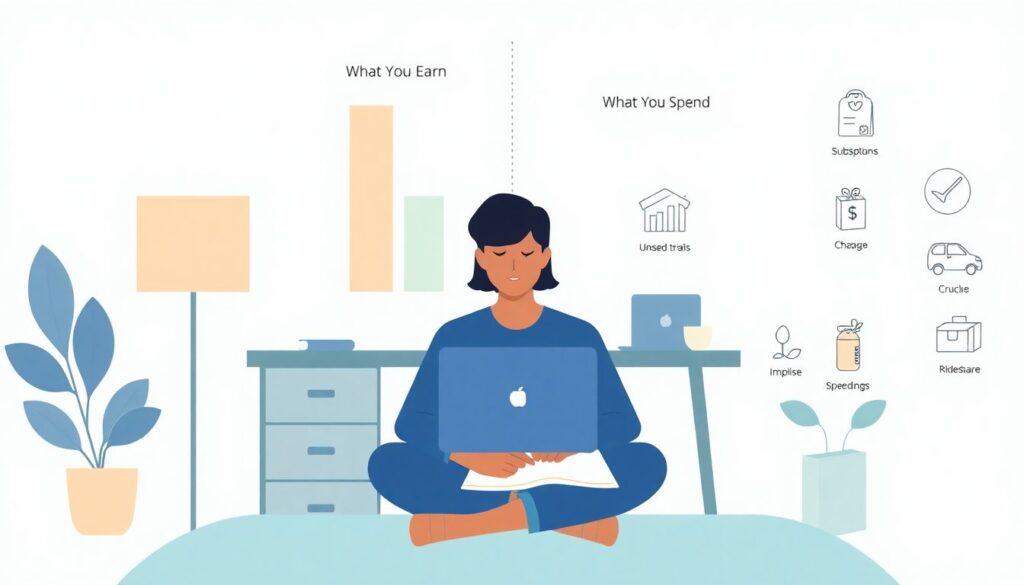
You don’t need to strip your life to bare bones, but you do need to create an intentional gap between what you earn and what you spend.
Look at these levers first:
– Subscriptions you barely use (apps, streaming, software trials)
– “Convenience” spending (delivery fees, impulse snacks, rideshares instead of public transport)
– High-cost habits (frequent dining out, daily premium coffee, random online shopping)
The goal: find an extra $100–$300 per month that you can redirect to your highest-priority card.
Increase Income Strategically
There’s a limit to how much you can cut, but more upside to how much you can earn.
Consider:
– Overtime or extra shifts (if available and sustainable)
– Freelance or gig work aligned with your skills
– Selling unused items (electronics, clothes, furniture)
Every extra dollar should have a job: it either stabilizes your situation (emergency fund) or attacks your highest-priority debt.
Step 5: Use Financial Products Carefully (Transfers & Consolidation)
When It Makes Sense to Move Your Debt
Sometimes you can lower your interest significantly using credit card balance transfer offers or consolidation. These are tools, not magic; they help only if you change the behavior that created the debt.
Balance Transfer Cards
A balance transfer can help if:
– You have decent credit
– You qualify for a 0% or low introductory APR for 12–18 months
– You can realistically pay off (or mostly pay off) the transferred balance within that promo period
Watch for:
– Transfer fees (often 3–5% of the amount transferred)
– What the APR becomes after the promo period
– Penalties if you miss a payment (you can lose the promo rate)
Used well, this is one of the best ways to pay off credit card debt faster, because more of your payment hits the principal instead of interest.
Credit Card Debt Consolidation Options
If juggling multiple cards is overwhelming, or your APRs are very high, consider these credit card debt consolidation options:
– Personal loan: A fixed-rate loan to pay off all cards at once. You then make a single monthly payment at a lower interest rate.
– Credit union loan: Often better rates than big banks, especially if your credit is “okay but not great.”
– HELOC or home equity loan (only if you understand the risk): you’re turning unsecured debt into debt secured by your home. That can lower interest, but it increases the stakes.
Consolidation helps when:
– The new interest rate is clearly lower than your current weighted average
– The total loan term doesn’t extend so long that you pay more interest overall
– You don’t rack up new balances on the now-empty credit cards
If your main problem is overspending, consolidation alone won’t fix it. It might even make room for more debt if you’re not disciplined.
Step 6: When to Consider Professional Help
Debt Relief Programs and Counseling
If minimum payments are crushing you and you can’t cover essentials, it’s time to look at structured help. There are legitimate debt relief programs for credit card debt, but you need to separate real solutions from aggressive marketing.
Options include:
– Nonprofit credit counseling agencies: They can help you set up a Debt Management Plan (DMP), where they negotiate lower interest with your creditors and you make one consolidated payment through them.
– Debt settlement companies: They negotiate with creditors to settle for less than you owe, often after you stop making payments. This can damage your credit, come with fees, and may create tax issues. Reserve as a last resort.
– Bankruptcy: A legal reset button with major long-term consequences, but sometimes the only realistic way to stop the bleeding.
Warning signs you might need help:
– You’re using one card to pay another
– You’re regularly late or missing payments
– You’re choosing between necessities (rent, food) and debt payments
Step 7: Troubleshooting Common Problems
Problem 1: You Keep Slipping Back Into New Debt
If your balances go down for a few months and then creep up again, the underlying issue is usually spending patterns, not the payoff method.
Practical fixes:
– Separate “everyday” spending from debt: use a debit card or one single low-limit card dedicated to necessary expenses and paid in full each month.
– Put a hard cap on discretionary spending: a weekly “fun” budget in cash or a prepaid card.
– Remove frictionless spending: delete stored card info from shopping sites; turn off one-click ordering.
Problem 2: An Emergency Knocks You Off Course
A car repair, medical bill, or job disruption can wipe out months of progress if you’re not prepared.
To protect yourself:
– Build a small emergency fund (even $500–$1,000) while paying down debt.
– Keep this fund in a separate savings account so you’re less tempted to dip into it for non-emergencies.
Yes, this can feel slower at first. But without a buffer, you’ll keep cycling back into debt every time life happens.
Problem 3: You Feel Burned Out and Unmotivated
Debt repayment is a medium- to long-term project. Motivation will dip. Expect that, and plan for it.
Try:
– Monthly “progress check-ins” where you compare your current total debt to last month’s, and to six months ago.
– Setting non-monetary milestones (“I’ll celebrate when I clear this card,” or “When I hit 50% paid off”).
– Allowing a small amount of “guilt-free” spending each month so your life doesn’t feel like deprivation.
Problem 4: Your Numbers Just Don’t Work
Sometimes the math refuses to cooperate. If after budgeting honestly you still can’t:
– Cover minimum payments
– Pay for basic living expenses
– Reduce balances at all
Then you’re not looking for optimization—you’re looking for stabilization.
At this point:
– Contact your card issuers, explain the situation, and ask about hardship programs or temporary rate reductions.
– Reach out to a reputable nonprofit credit counseling agency to review your full picture.
– Explore whether a DMP, settlement, or bankruptcy is the least damaging long-term option.
Step 8: Locking In a Debt-Free Future
Redesigning Your System Once You’re Out
Paying off credit cards is only half the story. The other half is preventing a repeat.
Key changes to make:
– Keep at least one card open for credit history, but use it with a clear rule: only for purchases you can pay off in full each month.
– Maintain and grow your emergency fund until it covers several months of living expenses.
– Treat your old “debt payment” amount as a permanent line in your budget, redirected into savings or investing.
This way, when your balance hits zero, your financial system doesn’t suddenly go back to “normal”—it upgrades.
Putting It All Together: A Practical Action Plan
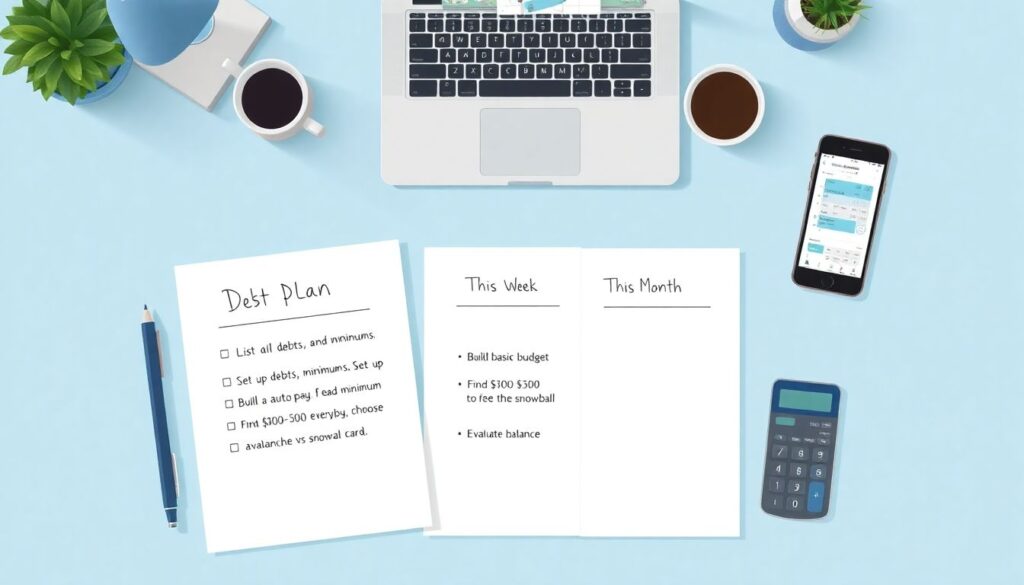
Here’s a condensed, practical roadmap you can start this week:
– Today: List all debts, interest rates, and minimums. Set up auto-pay for at least the minimum on every card.
– This week: Build a basic budget, find $100–$300 to free up, and choose avalanche vs snowball.
– This month: Evaluate balance transfers or consolidation if your rates are high and your credit is decent. Start directing all extra cash to your target card.
– This quarter: Build a starter emergency fund, adjust your budget based on real tracking, and review progress monthly.
– If stuck: Explore counseling or structured debt relief options rather than silently sinking.
You don’t need perfection, advanced math, or iron willpower. You need a clear view of the numbers, a strategy that fits how you actually behave, and systems that keep working even on your worst days. Follow the steps, tweak as you learn, and your credit card balances will eventually move in only one direction: down.