

Why “Smart Insurance Planning” Matters More Than Ever in 2025
If you feel overwhelmed every time you look at an insurance policy, you’re not alone. Policies are packed with exclusions, riders, limits and legal jargon, while your life and finances keep changing. Smart insurance planning is basically about turning that chaos into a system: using data, tools and a bit of strategy to get the best insurance coverage at lowest price without gambling with your future.
In 2025, this is no longer just “talk to a broker and hope for the best”. You’re operating in a world of AI-based underwriting, dynamic pricing, usage-based products and real-time risk scoring. That’s both powerful and risky if you don’t understand what’s happening under the hood.
Core Idea: Smart Insurance Planning in Plain Terms
At its core, smart insurance planning is a decision-making framework. You match three things:
1) your real risks,
2) your financial tolerance (what you can afford to lose),
3) the market options that exist right now.
Instead of asking “What’s the cheapest policy?”, you ask: “Given my risk profile and financial goals, how to find the right insurance policy that covers what actually matters, at a sustainable cost?” Once you frame it that way, tools and technology start to work for you, not the other way around.
Key Components of a Smart Plan
In 2025, a smart strategy usually includes:
1. Risk mapping (health, property, liability, cyber, income, life, travel).
2. Prioritization (what could realistically hurt you most).
3. Market scan (you compare insurance quotes online and offline).
4. Gap analysis (what’s underinsured or overinsured).
5. Optimization (deductibles, limits, riders, bundling).
This sounds technical, but in practice it’s a series of small, clear decisions, not one giant leap.
Comparing Different Approaches to Insurance Planning
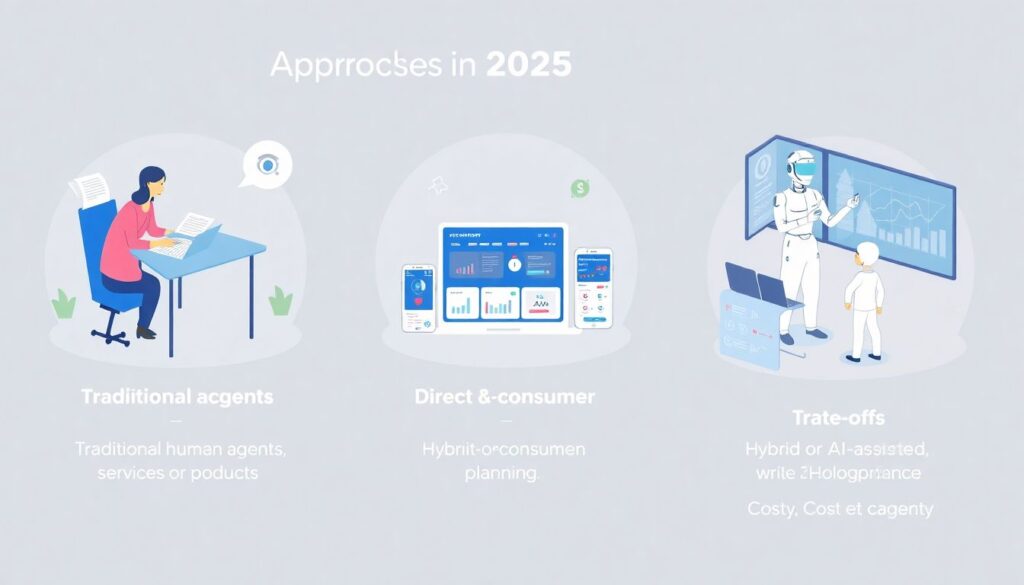
There are three dominant approaches in 2025: traditional agents, direct-to-consumer online platforms, and hybrid/AI‑assisted planning. Each has trade-offs in transparency, personalization and cost efficiency.
1. Traditional Agent-Driven Approach
The classic “I have my insurance guy/gal” model still exists and still works for many people. You talk to a human, explain your situation, they recommend products from their portfolio.
This is strong on context and weak on data transparency. An experienced agent can surface risks you never thought about (for example, professional liability or cyber exposure if you freelance online), but you rarely see the full market. Commission structures can bias recommendations, even if unintentionally.
2. Direct Online DIY Approach
Here you go directly to insurers or aggregators, fill out forms, and compare premiums and coverage yourself. You can compare insurance quotes online in a few minutes across dozens of carriers. That gives you price transparency, but only if you understand what you’re comparing.
The big trap: people often sort by price, skim the coverage details, then are shocked at claim time. Policy wording differences—sub-limits, waiting periods, exclusions—can matter far more than a small price gap.
3. Hybrid and AI-Assisted Planning
The fastest-growing segment in 2025 is the hybrid model: robo-advisors plus human experts on demand. You plug in your data—age, health metrics, driving patterns (telematics), property details, even credit and lifestyle info—and AI engines estimate your risk, propose bundles, and flag coverage gaps.
You end up with something closer to affordable comprehensive insurance plans tuned to your profile rather than a generic “bronze/silver/gold” choice. When things get complex—business insurance, multi-country coverage, estate planning—you escalate to a human specialist.
Technology in Insurance: Strong Points and Weak Spots
Tech has changed almost every part of the insurance value chain: underwriting, pricing, distribution and claim handling. But “more tech” doesn’t automatically mean “better for you”.
Advantages of Tech-Driven Insurance
The positives are real and significant.
Longer paragraph:
Data-driven underwriting lets insurers assign risk more precisely. If you’re a low-risk driver with telematics data to prove it, you might pay 30–40% less than the old “age + zip code” model. Digital health data (with your consent) can unlock dynamic life and health pricing. Automated claim processing means some simple claims (lost luggage, flight delays, cracked phone screens) are now approved in minutes using rule engines and image recognition.
Another benefit is personalization at scale. Instead of a single generic product, insurers can spin up micro-products: short-term travel medical add-ons, usage-based property coverage for expensive gadgets, even parametric policies that pay out automatically when a defined event occurs (e.g., earthquake magnitude or rainfall level). From a planning perspective, this granularity gives you more levers to fine-tune coverage.
Limitations and Hidden Risks of Insurance Tech
Short paragraph: you pay for convenience with complexity.
Algorithmic underwriting can introduce opaque biases. Many consumers don’t know which data sources (location analytics, social media traces, shopping patterns) are influencing their risk scores. If you’re not careful, “smart” pricing can turn into stealth discrimination, and you might never understand why your premium jumped.
Another issue is behavioral. Apps that gamify insurance (“get rewards for safe driving” or “steps-based health discounts”) can push people to optimize for discounts instead of actual risk protection. Also, dynamic pricing means your premium becomes less predictable year to year, making long-term budgeting harder.
How to Use Smart Planning to Get the Right Coverage at the Right Price
To turn all this into something practical, you need a repeatable process, not one-off decisions made under pressure (like renewing a policy the night before it expires).
Step-by-Step Framework for Individuals and Families
1. Define worst-case scenarios, not products.
Forget brands for a moment. List events that would seriously damage your life or finances: losing income, a major illness, fire or flood, liability claims, data breach, long-term disability. Work backwards from those scenarios.
2. Quantify your risk tolerance.
How much loss can you absorb without insurance? Decide on maximum out-of-pocket amounts for health, property and auto. This guides your deductibles and coverage limits.
3. Segment must-have vs. nice-to-have coverage.
In 2025, core categories usually include health, life/income protection, liability (auto/home/umbrella), and digital/cyber risks. Travel and gadget cover can often be add-ons or short-term policies.
4. Scan the market using both online tools and human advice.
Start by using comparison platforms to compare insurance quotes online and get a premium baseline. Then validate your shortlist with a fee-based advisor or a transparent broker who can explain policy wording, not just prices.
5. Optimize structure, not just provider.
Tweaking deductibles, co-pays and limits often saves more than switching insurers. Moving from a very low deductible to a medium one can significantly reduce premiums while keeping catastrophic protection intact.
Recognizing “Smart” vs. “Cheap” Policies
A smart policy is designed around your risk pattern; a cheap one is just low-cost on paper. If you want best insurance coverage at lowest price, you’re really chasing cost-efficiency per unit of risk covered, not sticker price alone.
Some signals of a smart setup in 2025:
– Clear exclusions you actually understand and accept.
– Coverage aligned with your income/assets (no $1M liability for a student with no property, no $50k sum insured for a high earner with dependents).
– Bundling where it reduces cost without locking you into inflexible, proprietary ecosystems.
If a policy is marketed mainly via discounts, cashback and “instant approval” but has dense, ambiguous wording, treat it as high-friction despite the nice UI.
Choosing Between “Comprehensive” and “Lean” Plans
Everyone likes the sound of “comprehensive”. The problem is, people often pay for broad but shallow coverage, and then hit low sub-limits when they actually claim.
When Comprehensive Makes Sense
If you’re in a high-risk phase—dependents, mortgage, single primary earner, expensive property or high-profile online presence—then leaning toward affordable comprehensive insurance plans is rational. You’re protecting a complex asset mix and future income stream, not just today’s bank balance.
Think: higher liability limits, good disability or income protection, robust health coverage with critical illness riders, plus some cyber or identity protection. The goal is resilience.
When a Lean, Targeted Setup Is Smarter
Short paragraph: sometimes “good enough” is optimal.
If you’re young, have low fixed obligations, and a strong emergency fund, you can often accept higher deductibles and more targeted policies. Instead of maxing out every coverage, you prioritize catastrophic protection (serious illness, major liability, total loss of property) and self-insure minor, predictable costs.
Practical Tips for Choosing Smart Insurance in 2025
Let’s ground this with a few concrete moves you can make this year.
Data You Should Collect Before Shopping
Prepare a simple dossier on yourself: annual income, net worth, current debts, dependents, health history summaries, property lists (with replacement value, not purchase cost), digital assets (domains, online businesses, crypto), and existing coverage details. Bringing this to any adviser—or plugging it into a planning app—instantly improves the quality of recommendations.
Short paragraph: your time is worth more than repeating the same form ten times.
What to Watch for in Policy Documents
Longer paragraph:
Focus on definitions (what counts as an “accident”, “pre-existing condition”, “cyber incident”), sub-limits (dental within health; jewelry within homeowners; electronics within travel), waiting periods, and claim procedures. The friction usually appears here, not in the glossy brochure. In 2025, more insurers provide machine-readable summaries; use them to highlight gaps. If something is vague, ask for a written clarification via email or chat so you have a record.
Negotiation and Retention Tactics
Insurers now run retention algorithms. If you approach renewal with competitor quotes in hand, you’re often flagged as a “churn risk”. That’s your leverage. You don’t need aggression, just data: show alternative quotes, coverage details, and ask explicitly which elements your current insurer can match or improve. Sometimes, simply adjusting risk parameters (increasing deductible, confirming security systems, adding telematics) unlocks better terms.
Trends in Smart Insurance Planning for 2025 and Beyond
The insurance landscape in 2025 is mid-transition. Several developments are reshaping how smart planning works in practice, and they’ll matter even more over the next 3–5 years.
1. Hyper-Personalization and Continuous Underwriting
The old model: you fill out a form once, get a fixed price for a year. The new model: continuous underwriting. Wearables, driving apps, connected homes—these generate a constant stream of behavioral data that can adjust your risk score in near real time.
From a planning angle, this means premiums become more like a utility bill: fluid, behavior-dependent, and partly controllable. The upside is better deals for genuinely low-risk people; the downside is volatility and increased surveillance. Expect regulators to push for transparency on which data is used and how long it’s stored.
2. Parametric and Event-Triggered Insurance
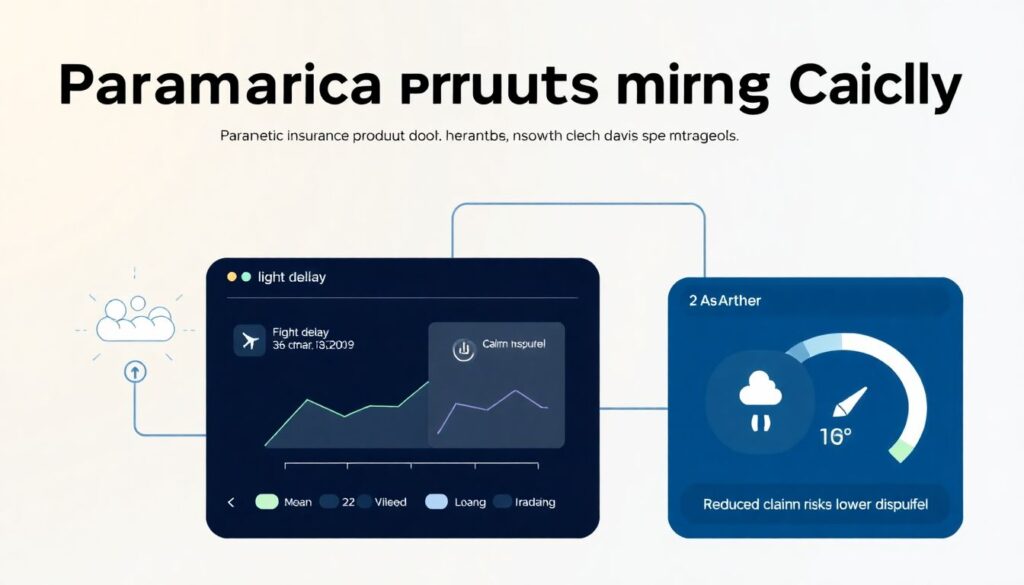
Parametric products are maturing quickly. Instead of proving “loss”, the policy pays out automatically when a specific trigger occurs (e.g., a flight delay of more than three hours or local rainfall above a certain level). This dramatically reduces claim friction and dispute risk.
Short paragraph: for planning, this is ideal for well-defined, high-frequency issues—travel disruptions, certain climate risks, supply-chain delays for small businesses.
3. Embedded and Invisible Insurance
By 2025, more coverage is “embedded” inside products and services—phone insurance inside your mobile contract, travel coverage inside credit cards, crypto wallet insurance inside the platform. Some of it is great value; some is pure margin extraction.
Smart planning here means auditing all the “invisible” protections you already have before buying standalone policies. You may be double-covered in some areas and exposed in others.
4. Climate and Systemic Risk Repricing
Climate change is no longer a theoretical input to actuarial models; it’s a live pricing driver. Expect continued premium increases or coverage withdrawals in high-risk areas (flood zones, wildfire regions, coastal properties). For long-term planning, that means location choice is now also an insurance decision.
Over the next decade, more people will use climate analytics tools at the home-shopping stage, not just mortgage calculators. The smartest planners in 2030 will be the ones who treated environmental risk like a financial variable in 2025.
5. AI Advisors and Regulatory Guardrails
AI-based guidance is improving, but regulators are catching up. Anticipate clearer rules on explainability: if an algorithm proposes or rejects coverage, you’ll have a right to a human review and an explanation. This will make hybrid models (AI plus human oversight) the default, which is good news for consumers who want speed without losing recourse.
Forecast: Where Smart Insurance Planning Is Heading
Looking ahead, expect planning to feel less like buying “policies” and more like managing a portfolio of protections.
– Insurance will integrate more tightly with financial planning; you’ll see combined dashboards showing your investments, emergency fund and risk cover in one place.
– Personal “risk scores” will matter for more than premiums; they’ll influence credit access, business partnerships and even employment in sensitive roles.
– DIY will remain possible, but the information gap between casual buyers and professional planners will widen due to model complexity.
In other words, smart insurance planning will become a continuous, data-informed process rather than a once-a-year chore. Those who embrace that shift—using tools but staying critical of them—will be the ones who truly manage to find the right insurance policy balance: the right protections, at the right limits, for the right price band.
If you start now—even with a simple audit of what you have, what you need, and what you can self-insure—you’re already ahead of most people in 2025 navigating this rapidly evolving landscape.