
Why Home Maintenance Costs Keep Sneaking Up on You
If it feels like your house eats money every month, you’re not imagining it. In the U.S., homeowners spend on average about 1–4% of their home’s value per year on upkeep and repairs. For a $350,000 home, that’s anywhere from $3,500 to $14,000 annually. As homes age and materials wear, that share tends to move toward the upper end of the range.
On top of that, construction labor costs in many regions have grown faster than general inflation since around 2019. So learning how to save money on home maintenance costs is no longer “nice to have” — it’s survival for your budget.
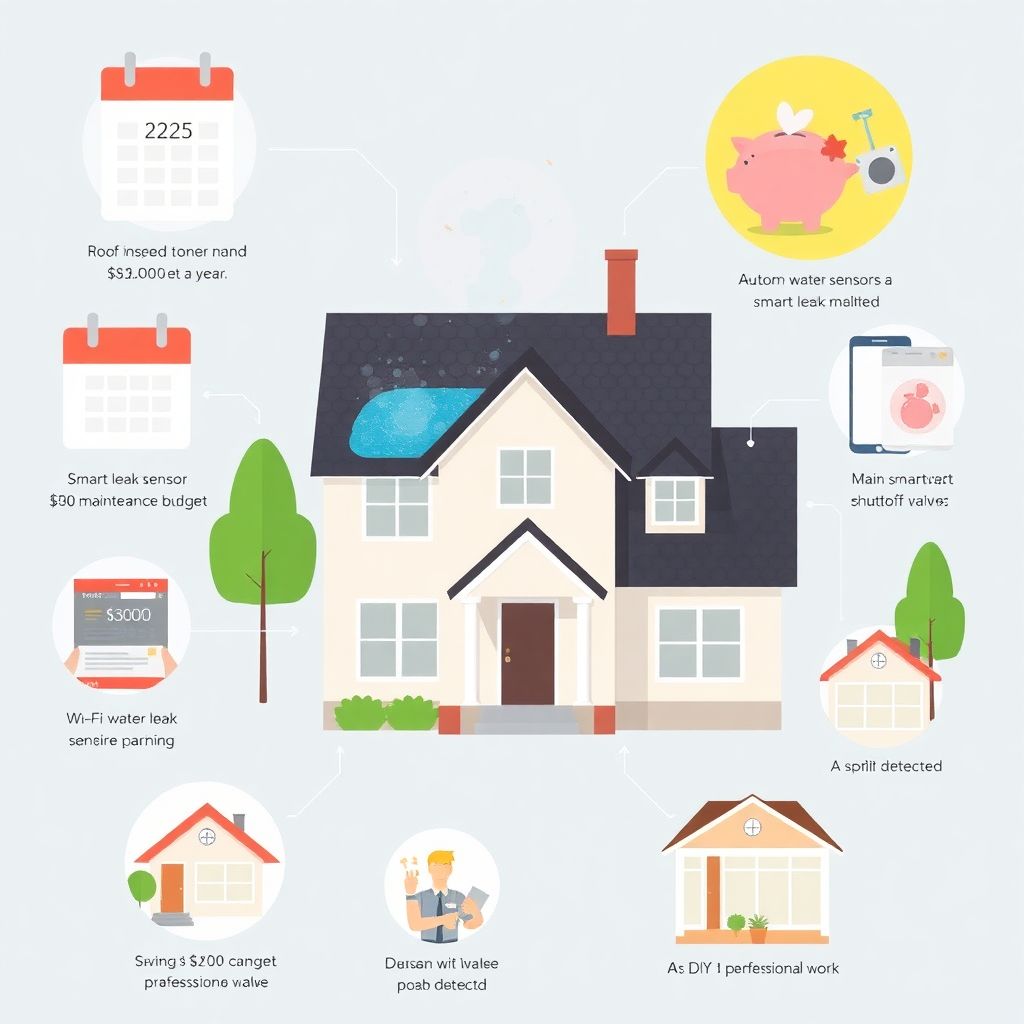
Case Study #1: The $3,000 Roof Leak That Never Happened
Mark and Alina bought a 15‑year‑old house in a rainy climate. Like many new owners, they focused on decorating, not the roof. Their neighbor, who was a retired contractor, suggested they pay for a detailed roof inspection before the wet season.
They spent $225 on an inspection. The roofer found a few cracked shingles, two unsealed nail heads, and a failing seal around a vent. Repairs cost another $280.
Six months later, during a major storm, several nearby homes had ceiling leaks. Insurance claims in the neighborhood averaged $3,000–$6,000 for water damage and mold remediation. Mark and Alina? Dry ceilings and intact savings.
What’s the takeaway? Preventive work feels like an expense, but statistically it’s one of the most reliable ways to cut lifetime maintenance costs. A few hundred dollars at the right time can block a four‑figure bill later.
Smart Way #1: Treat Maintenance Like a Utility Bill, Not a Surprise
Most people treat repairs as emergencies and pay whatever it takes. That’s the most expensive possible strategy.
Analysts often recommend setting aside 1–2% of your home’s value annually for ongoing upkeep. But very few actually earmark that money. Instead, they swipe a credit card when the water heater dies and wonder why they’re always behind.
Build a Simple, Realistic Maintenance Budget
Here’s a practical approach:
1. Set a baseline
Start with 1% of your home’s value per year if your house is under 15 years old; closer to 2–3% if it’s older or in a harsh climate.
2. Automate it
Put that amount into a high‑yield savings account monthly. Treat it like utilities — non‑negotiable.
3. Track big life‑cycle items
Roof, HVAC, water heater, exterior paint, and major appliances each have typical lifespans. Roughly map out expected replacement years and ballpark costs.
4. Adjust annually
Revisit based on actual spending. If you consistently use less, don’t drop your saving rate — let the surplus create a buffer for bigger projects.
This sounds dry, but it changes your economics. You move from high‑interest emergency spending to low‑stress planned spending — that difference alone can save thousands in interest charges over a decade.
Smart Way #2: Use Data, Not Guesswork, for Preventive Maintenance
Smart homes aren’t just about voice assistants. Sensors and data are quietly changing how we maintain buildings.
Leak detectors under sinks and near water heaters, smart thermostats tracking HVAC behavior, and whole‑home monitoring systems are getting cheaper every year. Analysts expect the global smart home market to keep growing at a healthy rate through the late 2020s, with maintenance and energy management as key drivers.
Case Study #2: $40 Sensor vs. $12,000 Disaster
Jasmine installed a $40 Wi‑Fi leak sensor behind her washing machine after a minor scare at a friend’s condo. Six months later she got an alert on her phone while at work: “Water detected.”
The supply hose had cracked. Because she got the alert early, she shut off the main valve remotely (thanks to a smart shutoff) and called a plumber. Total bill: $320 for a new hose and service call.
A neighbor two floors below wasn’t so lucky a year earlier — a similar hose failure flooded two units and triggered more than $12,000 in combined insurance claims and out‑of‑pocket expenses.
Smart monitoring doesn’t eliminate risk, but it radically improves your odds by shrinking the time between “problem starts” and “problem spotted.”
Smart Way #3: Be Strategic About What You DIY
Doing everything yourself isn’t automatically cheaper. Doing the *right* things yourself is.
Plenty of cheap home repair and maintenance services exist for routine work, but labor is still the largest line item in many jobs. You can cut that cost without taking on dangerous tasks.
Good DIY Candidates

Short tasks with clear instructions and low risk are solid options:
– Basic caulking and weatherstripping
– Changing HVAC filters and return grille cleaning
– Replacing shower heads and faucet aerators
– Patching small drywall holes
– Painting single rooms or touch‑ups
These are forgiving tasks: if you make a mistake, it’s mostly cosmetic and inexpensive to fix.
When Professional Help Is the Cheaper Option
Anything involving:
– Structural changes
– Major electrical work
– Gas lines
– Roofing at height
– Complex plumbing inside walls
should be done by pros. Mistakes here often lead to code violations, voided insurance, or hidden damage that costs far more than hiring a competent contractor in the first place.
Case Study #3: The $900 “DIY” That Cost $5,500
Alex decided to remodel his tiny bathroom himself to save money. He watched tutorials, moved a wall, rerouted plumbing, and installed new tile. Materials: $900.
Within a year, hairline cracks formed in the grout. A home inspector later found the wall he moved was bearing load, and the shower pan wasn’t properly waterproofed. Fixing the structural issue and redoing the shower cost $5,500.
If Alex had hired a pro for structural and plumbing work and done only demolition and painting himself, his total would likely have been under $3,000 — and problem‑free.
Smart Way #4: Squeeze Value Out of Contractors and Service Providers
Typing “home maintenance services near me” into a search engine usually yields an overwhelming list of options. Prices for the same job can vary by 30% or more in the same city.
The trick is not simply finding the cheapest quote, but maximizing value over time.
How to Get Better Pricing Without Sacrificing Quality
– Bundle tasks
If a handyman is already there, having a prioritized checklist ready lets you get multiple small jobs done in one visit. That spreads the trip fee across more work.
– Ask about seasonal rates
HVAC tune‑ups are often cheaper in the off‑season. Exterior painting and roofing can be less expensive during slower months, depending on your climate.
– Request “good‑better‑best” options
This reveals where the real cost drivers are (labor vs. materials) and allows you to selectively upgrade only where it actually matters.
Over time, maintaining an ongoing relationship with a reliable contractor or small firm can also lead to more honest advice and faster scheduling in emergencies.
Smart Way #5: Evaluate Home Maintenance Plans and Warranties Critically
Many people Google “home maintenance plans and pricing” or look up the best home warranty for maintenance and repairs hoping for a straightforward answer. Unfortunately, it isn’t simple.
A plan or warranty is essentially an insurance product. To make economic sense, it should either:
– Offer a meaningful discount vs. paying out of pocket *at the utilization rate you expect*, or
– Smooth out cash flow and guard against specific high‑ticket risks you can’t easily absorb.
When a Home Maintenance Plan Can Make Sense
– You own an older home with multiple aging systems (HVAC, electrical, plumbing).
– You’re not comfortable vetting contractors yourself.
– You value predictable monthly costs over the possibility of saving more by self‑managing.
Red Flags to Watch For
1. Narrow coverage
Read the exclusions line by line. Many plans look comprehensive but exclude common failure modes or “pre‑existing conditions.”
2. Low payout caps
A $10,000 HVAC coverage limit sounds generous until you learn it’s spread from day one over the life of the contract.
3. Mandatory use of network providers only
If you’re forced to use whoever they send, check reviews of those vendors before signing.
Run a simple scenario: estimate the average yearly cost of covered breakdowns in a typical decade of ownership. If the plan premiums plus fees are consistently higher than that expected cost and you have the emergency fund to self‑insure, you may be better off without a plan.
Smart Way #6: Energy Efficiency as Maintenance Defense
Energy upgrades are often sold as purely “green” initiatives, but they’re also a maintenance strategy. One system working too hard to compensate for inefficiency wears out faster.
Economic Logic Behind Efficiency Upgrades
Upgrading to a high‑efficiency HVAC isn’t just about lowering the power bill. Properly sized, modern equipment cycles less aggressively, which reduces mechanical stress. This can extend lifespan and cut repair frequency.
Similar logic applies to:
– LED lighting (less heat, fewer replacements)
– Better attic insulation (less HVAC strain)
– High‑quality window seals and weatherstripping (reduced drafts, less moisture intrusion)
The combined effect tends to show up as fewer service calls, quieter operation, and slower degradation of related components.
Smart Way #7: Use Local Market Dynamics to Your Advantage
Here’s a counterintuitive economic aspect: your timing often matters more than your negotiation skills.
Contractors operate in cycles. During booms — after storms, in hot real‑estate markets, or during regional building sprees — their schedules fill and prices rise. During slow periods, many are more open to discounts, long‑term agreements, or value‑added extras.
How to Leverage Industry Seasonality
1. Schedule non‑urgent work in slower months
For example, chimney cleaning after the winter rush, or AC replacement in spring before the first heat wave.
2. Ask for multi‑year service pricing
Some firms will lock in rates for two or three years if you commit to annual maintenance, especially for HVAC and pest control.
3. Get on “priority customer” lists
Many companies quietly offer preferred scheduling for repeat clients. This doesn’t just save time; in an emergency it can prevent damage from escalating.
Industry Impact: Where Home Maintenance Is Headed
The home maintenance industry is in the middle of a gradual but noticeable shift.
– More bundling and subscription models
Companies increasingly market membership programs — annual HVAC plans, whole‑home service subscriptions, or app‑based maintenance scheduling.
– Data‑driven recommendations
As more systems go smart, service providers can predict failure risks based on usage patterns and performance metrics. That favors preventive visits over late‑night emergencies.
– Skill shortages and higher labor costs
In many regions, aging tradespeople are retiring faster than they’re being replaced, which keeps upward pressure on labor prices. This, in turn, boosts demand for automation, modular components, and off‑site fabrication that can cut onsite labor hours.
For homeowners, that means two things: DIY‑friendly products will likely become more common, and professional labor will remain relatively expensive. Planning, monitoring, and selective outsourcing will matter even more.
Case Study #4: A Five‑Year Strategy That Paid Off
Sonia bought a 30‑year‑old home and decided from day one that her goal was to beat the “average” maintenance cost curve. She built a simple five‑year plan:
– Year 1: Full inspection, address critical issues only, establish maintenance fund.
– Year 2: Add attic insulation, seal ductwork, tune up HVAC.
– Year 3: Replace aging water heater proactively; install leak detectors.
– Year 4: Repaint exterior trim and repair gutters before wood rot started.
– Year 5: Upgrade main electrical panel and add whole‑home surge protection.
During those five years she tracked every expense. Her total outlay, including both proactive projects and small repairs, averaged about 1.3% of home value per year — on the low side for a 30‑year‑old house. Her neighbor in a similar home, who only fixed things when they broke, reported several large emergency bills and landed closer to 2.5% per year.
What Sonia “saved” wasn’t just money; it was predictability. There were no panicked calls, no surprise credit‑card debt, and no major damage claims.
Pulling It All Together: A Practical Action Plan
To make this concrete, here’s a concise sequence you can follow:
1. Audit your current situation
Get a thorough whole‑home inspection if it’s been more than a few years. Note remaining lifespans of major systems.
2. Create a dedicated maintenance fund
Start with 1–2% of your home’s value annually, auto‑transferred monthly.
3. Install basic monitoring
Leak sensors in key spots, smart thermostat, and, if budget allows, a main water shutoff with remote control.
4. Choose your DIY sweet spot
Decide in advance which tasks you’ll learn and which you’ll always outsource. Don’t improvise mid‑emergency.
5. Build a vetted pro network
Identify at least one reliable plumber, electrician, HVAC company, and general handyman now — not after something fails.
6. Evaluate any offers for home maintenance plans and pricing calmly
Compare premiums and likely payouts against your maintenance fund and risk tolerance. Include the option of self‑insuring.
7. Schedule seasonal checkups
Small, routine visits (roof checks, HVAC tune‑ups, gutter cleaning) are your best defense against catastrophic, budget‑killing failures.
If you approach your house the way a good property manager approaches a portfolio asset — with planning, data, and clear rules — you’ll find that saving on maintenance isn’t about extreme frugality. It’s about timing, information, and deliberate choices that quietly keep your total cost of ownership in check year after year.