
Why planning after a break is different now
Context and recent numbers you can trust
After a career pause, your finances rarely snap back overnight: income timing shifts, benefits restart on a delay, and habits formed during the break can linger. Over the last three years, the backdrop has changed fast. In 2023–2024, U.S. prime‑age labor force participation hovered around multi‑decade highs (roughly 83% for ages 25–54), with prime‑age women hitting record levels in 2023. Yet households still felt stretched: Bankrate reported in 2023 and again in 2024 that a majority of Americans couldn’t cover a $1,000 emergency with savings. Early 2025 industry updates show retirement account limits stable at elevated levels, while market volatility remains episodic. In short, the opportunity to rebuild is real, but the margin for error is thin—so a precise plan matters.
Historical background
How career breaks and money planning evolved
Decades ago, stepping out of work often meant losing defined‑benefit pensions and seniority, with limited paths back. The 2000s mainstreamed portable, employee‑directed accounts—401(k)s, IRAs, HSAs—which helped returning workers restart faster, but also shifted responsibility to the individual. The 2010s normalized nonlinear careers, gig work, and upskilling, making career breaks less stigmatized but financially patchier. The 2020–2022 period accelerated exits for caregiving and health reasons; 2023–2024 data showed many re‑entries as wages rose and openings remained high. Meanwhile, rules around rollovers, auto‑enrollment, and catch‑ups matured, and 2024–2025 contribution limits stayed relatively high, creating a window to restore momentum if you apply disciplined steps the moment paychecks resume.
Basic principles that actually work
Cash‑flow triage first, not later
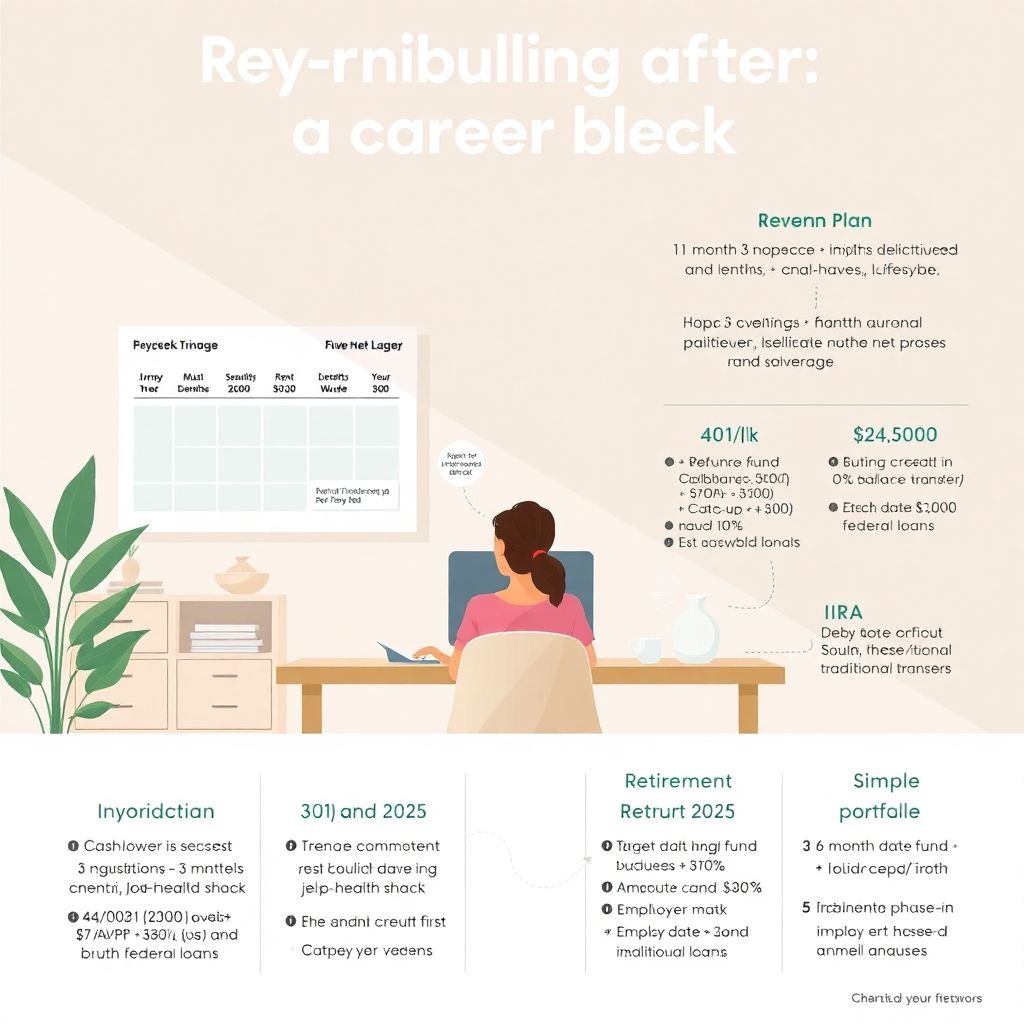
The first 90 days back are make‑or‑break. Map your pay cadence, benefit start dates, and any blackout periods for health coverage. Build a “restart budget” that prioritizes fixed essentials, variable must‑haves, and only then lifestyle creep. Automate transfers on payday so saving happens before spending. Track the delta between pre‑break and post‑break costs—commuting, childcare, wardrobe—so you don’t underestimate. If you freelanced, replace irregular invoices with a consistent draw to stabilize decisions. This is the practical core of how to rebuild savings after a career break: normalize income, lock in savings rules, and let routines carry you when motivation dips.
Safety nets and risk buffers
Aim for a three‑to‑six‑month emergency fund, but stage it: month one covers one paycheck gap; month three covers deductibles and rent; month six handles job or health shocks. Use high‑yield savings for near‑term needs, not the market. Verify insurance: employer health effective dates, disability waiting periods, and life coverage tied to dependents. HSAs can stretch dollars; limits rose from 2023 to 2025 (individual caps moved from $3,850 in 2023 to $4,300 in 2025), reinforcing their role as a medical buffer with long‑term tax perks. Treat the buffer as infrastructure, not an investment bet—resilience beats yield here.
Debt, credit, and timing
During a break, balances and credit scores may drift. On re‑entry, refinance high‑APR debt first; every point you shave is guaranteed return. If you paused federal student loans, resume on autopay to capture rate discounts, or consider income‑driven plans if cash‑flow is still tight. Stagger big moves: rebuild an emergency buffer before accelerating principal prepayments, unless a teaser rate is expiring. For credit repair, keep utilization under 30% per card and overall; set calendar prompts to avoid late‑payment dings that can cost more than any market dip.
Retirement planning after a career break
Your retirement track can recover if you compress the savings timeline smartly. For 2025, 401(k) employee limits remain $23,000, with catch‑ups at $7,500 for ages 50+. Traditional vs. Roth hinges on your new marginal rate and expected future bracket—many returners benefit from blending both to hedge tax risk. If your employer offers a match, fund it before taxable investing; matches are instantaneous return. IRAs stay at $7,000 in 2025 (plus $1,000 catch‑up if 50+). Missed years aren’t fatal if you combine higher deferrals now with later flexibility on retire‑later or spend‑less levers.
Practical implementation examples
A 12‑month roadmap that respects real life
Months 0–3: auto‑enroll emergency transfers the day payroll starts; enroll in benefits; contribute at least to the 401(k) match; audit debts and refinance high‑APR cards. Months 4–6: raise 401(k)/IRA contributions by 1–2% each paycheck; complete rollover of any old accounts to simplify choices; set HSA contributions if eligible. Months 7–9: revisit budget creep; add sinking funds for annual expenses; build a small “career cushion” for training. Months 10–12: top off the emergency fund to your target; pre‑fund holiday and travel; schedule an annual review to lock in raises toward savings, not lifestyle.
Case: mid‑career parent returning in 2024
A 38‑year‑old reenters at $95,000 salary after an 18‑month caregiving break, with $6,000 in savings and $4,500 credit‑card debt at 22% APR. They set a 10% 401(k) deferral to capture a 4% match, route $300 per paycheck to high‑yield savings, and execute a 0% balance‑transfer offer to clear debt in 12 months with fixed payments. By the first annual review, savings reach roughly three months of expenses, the card is gone, and the deferral bumps to 12%—a workable balance of resilience and retirement catch‑up.
Case: age‑52 return using 401k catch‑up contributions rules
At 52, a professional returns in early 2025 at $140,000. Leveraging 401k catch-up contributions rules, they target $23,000 regular plus $7,500 catch‑up, front‑loading at 20% deferral until the match is maximized year‑round. A Roth IRA catch‑up adds $1,000 on top of the $7,000 limit, funded monthly. With an HSA at the 2025 family cap, they invest the HSA aggressively for future medical costs. This stack, combined with a delayed car purchase, compresses lost savings time without sacrificing essential cash flow.
Investment strategies after a career break
Right‑sized risk and simple portfolios
Don’t overcorrect by swinging for the fences. If you were out of markets, reenter with a target‑date fund or a three‑fund mix (broad U.S., international, and bonds) aligned to your horizon. Use automatic contributions and, if nervous about timing, phase in over 3–6 months. Keep risk where it belongs—inside tax‑advantaged accounts—and reserve taxable money for medium‑term goals. After a break, clarity beats complexity; minimize fund count, costs, and behavioral triggers that tempt market‑timing.
Tax wrappers, fees, and 2025 rules you can use
In 2025, 401(k) and IRA limits remain elevated versus 2022, making this a favorable window to rebuild. Consider Roth contributions in lower‑income transition months, then pivot to pre‑tax as your bracket rises. If your plan offers after‑tax contributions plus in‑plan Roth conversions, the “mega‑backdoor” can accelerate savings once basics are met. Keep an eye on expense ratios and avoid duplicating similar funds across accounts. Rebalance annually or when drift exceeds 5 percentage points—process over prediction.
Common misconceptions to drop now
“I missed my shot; compounding won’t help me anymore.”
Compounding still works, even over a shortened runway, if you increase savings rate and cut drag. Market returns are lumpy; your edge is consistent contributions, fee control, and tax efficiency. Many 2023–2024 studies showed that steady savers outperformed sporadic timers, even across volatile stretches. The math is stubborn: a 3–4% fee and tax drag can erase more than a modest bull market—so focus on what you control.
“I should invest aggressively to make up for lost time.”
Higher risk doesn’t guarantee higher realized returns on your timeline. Sequence risk—bad returns early—hurts most when you’re rebuilding. A disciplined, diversified allocation with forced savings increases expected outcomes more reliably than chasing hot sectors. If you want upside, adjust savings rate first, then tilt modestly, not recklessly.
“Debt first, then savings—always.”
Blanket rules backfire. Pay the highest‑APR debt hard, yes—but don’t skip an employer match or basic emergency buffer to do it. The match is instant return; the buffer prevents new debt after the next hiccup. A blended approach outperforms “all or nothing” in most real‑world cash‑flows.
When to bring in help
Using professionals without overpaying
If your situation involves stock options, multiple rollovers, or benefits trade‑offs, consider financial planning services for returning to work. Ask for fiduciary duty, flat or clearly disclosed fees, and planning software outputs you can revisit. A good pro will tailor retirement planning after a career break, coordinate benefits start dates, and test scenarios like part‑time bridges or phased retirement. If you’re DIY‑inclined, schedule at least an annual check‑in to pressure‑test assumptions as pay, taxes, and goals evolve.
Final take
Your playbook in one breath
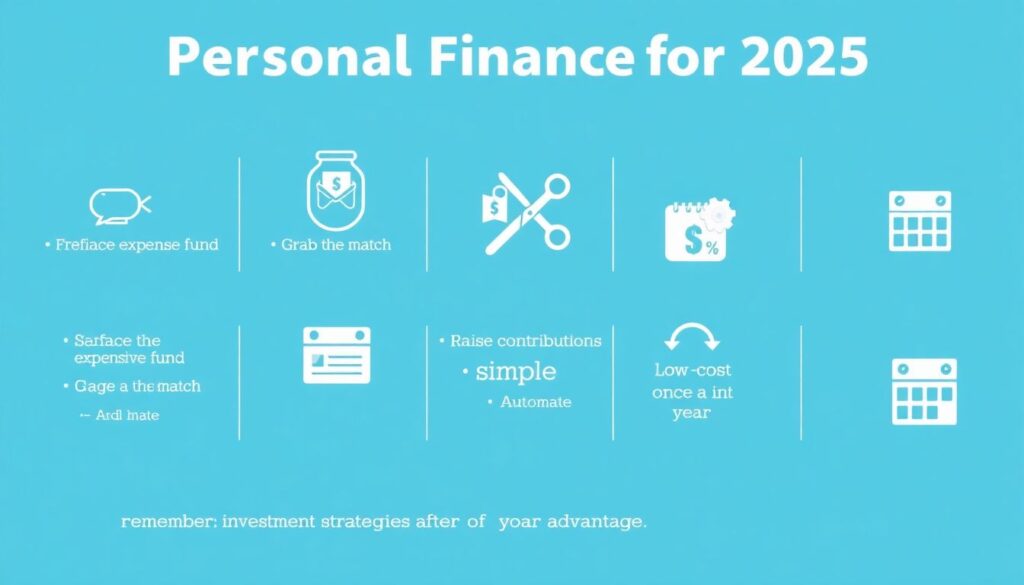
Stabilize cash flow, stage the emergency fund, refinance expensive debt, grab the match, then raise contributions on a schedule. Keep investments simple, automate everything, and review once a year. Use the 2025 limits and tools to your advantage, and remember: investment strategies after a career break don’t have to be flashy to be effective—they have to be repeatable. With clear steps and steady habits, you’ll rebuild momentum faster than you think.