
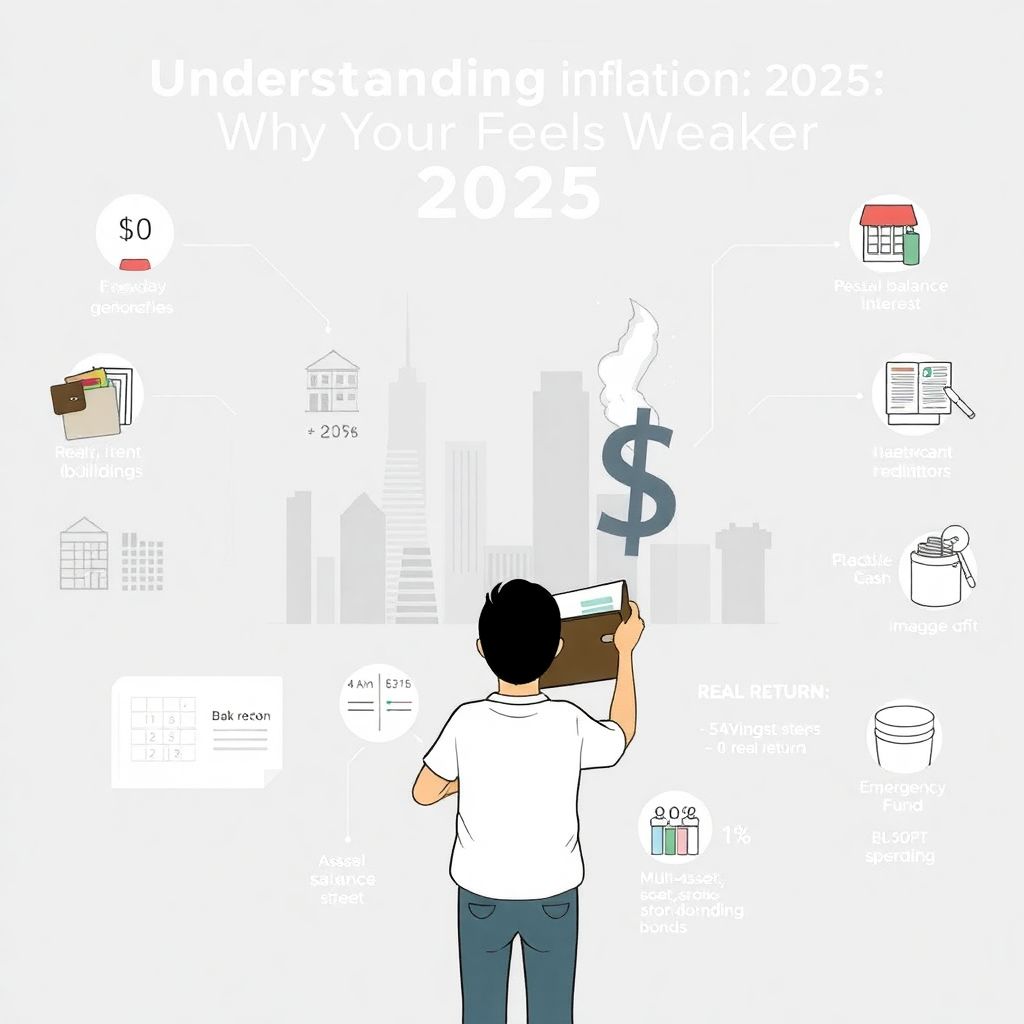
Understanding Inflation in 2025: Why Your Money Feels Weaker
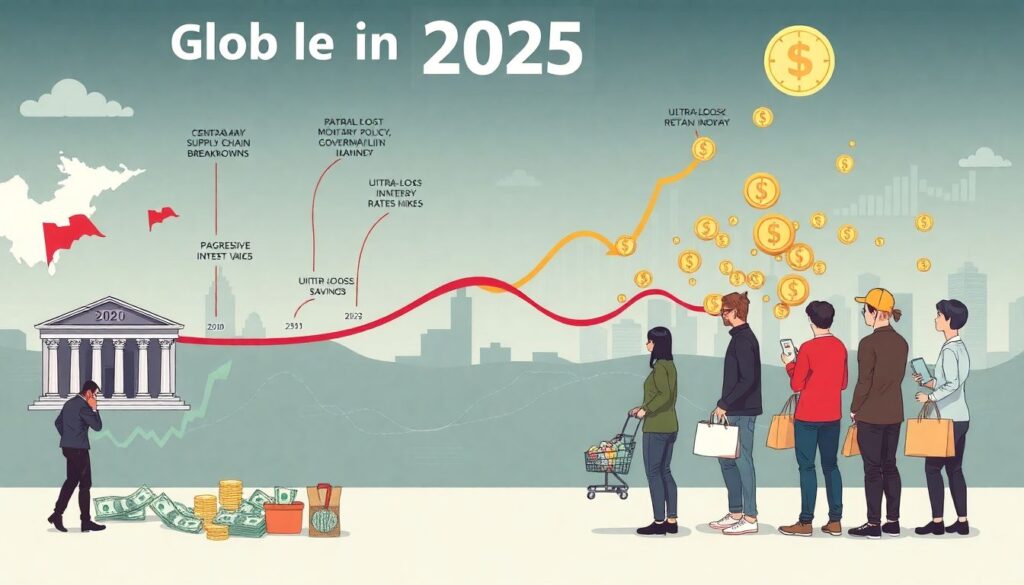
Inflation in 2025 isn’t a one-off spike; it’s the tail of a long shock that started with the pandemic, supply-chain failures, and then years of ultra‑loose monetary policy followed by aggressive rate hikes. If you feel like your salary and savings buy less every year, that’s not a perception error—that’s the real erosion of purchasing power.
Historically, we’ve seen this movie before:
– In the 1970s, the U.S. and many other countries went through “stagflation” — high inflation plus low growth. Cash savers were punished; real assets and certain equities survived better.
– In the post‑WWII era, governments inflated away part of their debt burden while wages slowly tried to catch up. People who owned productive assets did better than those holding only cash.
Knowing that pattern helps you figure out how to protect savings from inflation today: you can’t rely on nominal numbers. The only thing that matters is what your money can actually buy over time.
—
Necessary Tools: Your Anti‑Inflation Toolkit
To deal with inflation, treat your finances like a small balance sheet you actively manage, not a passive bank account. You’ll need a few core “tools” — not just products, but data and processes.
– Real return calculator: A simple spreadsheet or app that lets you subtract inflation from your nominal returns. If your savings account pays 4% and inflation is 5%, your *real* return is –1%.
– Multi‑asset brokerage account: Access to stocks, bonds, ETFs, inflation‑linked securities, and possibly commodities. Without this, your options for inflation proof investment strategies are limited.
– Budget tracking software: You need visibility on your consumption basket to see where inflation hits you hardest (e.g., energy vs. rent vs. food).
– Emergency fund structure: A mix of cash and short‑term, low‑volatility instruments, so you don’t have to liquidate long‑term investments at the wrong time.
Short but important point: if you can’t see your numbers in one place (net worth, cash flow, liabilities), you’re flying blind. That’s when inflation quietly wins.
—
Step 1: Diagnose Your Personal Inflation Rate
Not everyone experiences the same inflation. A retiree with medical expenses and a commuter with a mortgage feel price changes differently.
Longer step here: export 3–12 months of bank and card statements and tag each transaction (housing, food, transport, healthcare, leisure, etc.). Compare how those categories changed over time. If your rent went up 8% while the official CPI reads 4%, your *personal* inflation on housing is double the headline rate.
This gives you a practical basis for how to hedge against inflation in your own life: you focus on the categories where your personal price pressure is highest.
—
Step 2: Stabilize Cash Flow Before Chasing Returns
Before hunting the best investments during inflation, lock down your defensive side. When prices are unstable, liquidity risk can hurt you faster than market risk.
Keep it tight and explicit:
– Build an emergency fund covering at least 3–6 months of essential expenses, held in a mix of:
– High‑yield savings accounts or money market funds
– Short‑term government bills or very short‑duration bond funds
– Avoid new high‑fixed‑cost commitments (luxury leases, long contracts) in periods of uncertain inflation and rates.
A small but critical note: an emergency fund is *allowed* to lose a bit to inflation. Its priority is liquidity and capital preservation in nominal terms, not high return.
—
Step 3: Reframe Risk — Cash Is Not “Safe” in Real Terms
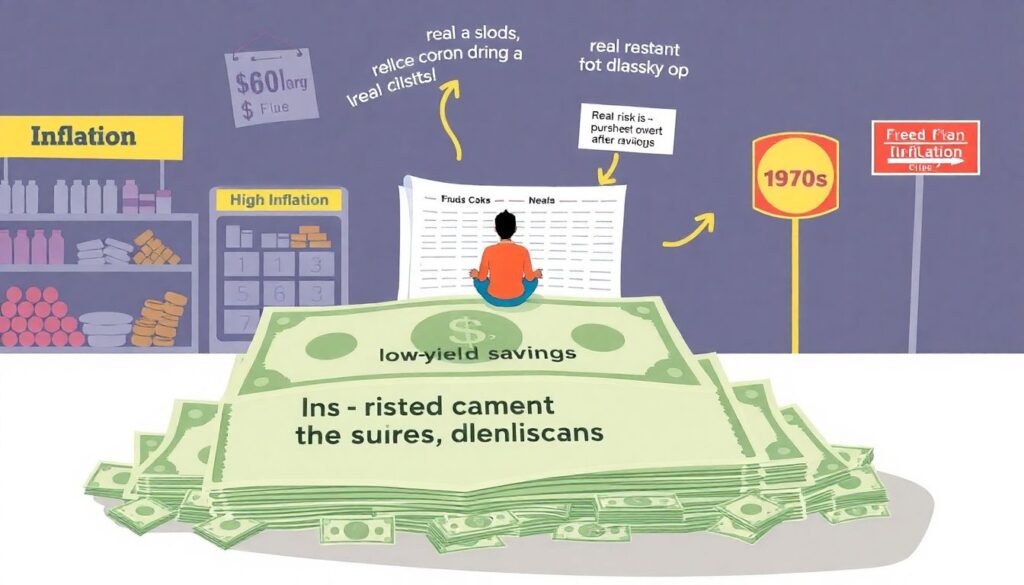
In high or persistent inflation, “risk‑free” cash can quietly become “loss‑guaranteed.” The risk you care about is real capital loss (after inflation), not just market volatility.
Historically, during the 1970s, people sitting in low‑yield deposits systematically lost purchasing power year after year. Meanwhile, diversified equity portfolios and certain real assets were volatile, but protected more value over a full cycle.
So, when you decide where to invest money in high inflation, your thinking shifts from:
– “What won’t go down?” to
– “What has a reasonable chance of outpacing inflation over 5–10 years, even if it swings in the short term?”
This mindset change is the foundation of an actual strategy, not just a reaction.
—
Step 4: Core Inflation‑Resilient Asset Classes
Now we move into portfolio construction. No single asset is magic, but a mix of these tends to improve resilience.
Longer rundown of key building blocks:
– Equities (stocks): Ownership in companies with pricing power can pass part of inflation on to customers. Broad market ETFs, value stocks, and sectors like consumer staples, energy, and infrastructure often handle inflation better than cash or long bonds over time.
– Inflation‑linked bonds (e.g., TIPS, index‑linked gilts): The principal and interest payments are indexed to inflation, providing a direct hedge on part of your portfolio. They’re not perfect, but they directly address consumer price risk.
– Short‑duration bonds and cash‑like instruments: When rates adjust upward in response to inflation, short‑term bonds can be rolled into higher yields relatively quickly. Duration risk is the enemy here.
– Real assets: Real estate (direct or via REITs), infrastructure funds, and sometimes commodities can benefit from rising nominal prices, though each has its own cycle and volatility.
Used together, these form the backbone of inflation proof investment strategies, rather than a speculative bet on any one sector.
—
Step 5: Decide Your Allocation — A Practical, Stepwise Process
Here’s a simple, structured way to tilt your existing portfolio toward inflation resilience without guessing:
1. Map current exposure
– Percentage in cash and near‑cash
– Percentage in bonds (and average duration)
– Percentage in equities (and sector splits)
– Percentage in real assets
2. Set constraints
– Maximum drawdown you can emotionally tolerate (e.g., could you handle a 20–30% temporary portfolio drop?).
– Time horizon for most of your money (5+ years should lean more toward growth assets).
3. Incremental rebalancing
– Reduce long‑duration bonds and idle cash.
– Gradually add:
– Broad equity ETFs with global diversification
– A slice of inflation‑linked bonds
– A controlled allocation to real assets or commodity‑linked vehicles
4. Implement in phases
– Move in 3–4 tranches over 6–12 months instead of all at once. This reduces timing risk, especially in volatile, inflation‑driven markets.
5. Automate contributions
– Set monthly or quarterly auto‑investments into your chosen mix. Regular, disciplined buying matters more than trying to predict the exact cycle peak.
This phased process answers in practice how to protect savings from inflation: you systematically replace guaranteed real losses (idle cash) with assets that historically have a fighting chance.
—
Step 6: Tactical Overlays (Use with Caution)
There’s always a temptation to get clever during inflationary periods. Some tactics can help, if kept small and controlled:
– Sector tilts: Slightly overweight sectors that tend to benefit from higher nominal prices — energy, materials, financials — via ETFs rather than individual stock bets.
– Commodities exposure: A modest allocation to diversified commodities or resource producers can hedge spikes in raw material prices but is very cyclical.
– Floating‑rate instruments: Loans or bonds with coupons that reset with interest rates can be more adaptive when central banks hike aggressively.
Keep these as overlays, not the core. In history, the people who blew up their finances in inflationary episodes were often those who over‑concentrated in one hot theme.
—
Step 7: Historical Lessons to Apply in 2025

Running back through the last 100 years, a few patterns repeat in almost every inflationary episode:
– Debt structure matters:
– Fixed‑rate debt in a stable job can be your friend (you repay in cheaper future dollars).
– Variable‑rate debt can crush your cash flow when central banks slam rates higher to fight inflation.
– Real assets vs. nominal promises: Assets that *produce* something (goods, services, rent, energy) tend to survive better than fixed nominal promises (long bonds, long‑term fixed cash contracts).
– Policy volatility is part of the game: In the 1970s, sudden hikes; post‑2008, ultra‑cheap money; post‑2020, a whiplash from zero rates to rapid tightening. In 2025, you should assume policy can shift again. Your portfolio must work across multiple regimes, not just today’s.
The big takeaway: your strategy must be *regime‑agnostic* — robust whether inflation stays elevated, moderates, or oscillates.
—
Common Mistakes and Troubleshooting Your Strategy
Even a good plan can go off the rails. Here’s how to debug typical problems.
– Problem: “My portfolio is losing value even after I rebalanced”
– Check your *time horizon*: are you judging after 3 months what was intended to work over 5–10 years?
– Verify your mix: if you still hold a large share of long‑duration bonds, rising yields may be dragging you down despite inflation hedges.
– Confirm costs: high fund fees and trading costs quietly eat into returns, especially when nominal returns are only slightly above inflation.
– Problem: “I’m overloaded with cash because markets look expensive”
– Remember, in prolonged inflation, waiting for the “perfect” entry can be more expensive than average‑pricing in.
– Implement a rule‑based schedule (e.g., invest X% of your sidelined cash every month for 12 months) instead of relying on gut feeling.
– Problem: “I don’t know if my portfolio really hedges inflation”
– Run a simple scenario analysis:
– What happens if inflation stays at current levels and rates rise another 1–2 percentage points?
– What if inflation drops but growth slows (mini‑stagflation)?
– If your portfolio only looks good in one scenario and disastrous in the rest, it’s too concentrated.
– Problem: “I feel anxious about volatility”
– Scale down your equity allocation until you can sleep at night. An optimal strategy you can’t stick with is worse than a slightly less aggressive one you can hold through a full cycle.
—
Practical Checklist: Daily and Yearly Habits
You don’t need to micromanage markets, but you do need a repeatable routine.
On an ongoing basis:
– Track monthly cash flow and adjust for price changes in key categories.
– Keep your emergency fund intact and regularly topped up.
– Continue automatic investments unless your life situation (job, health, dependents) changes materially.
Once or twice a year:
– Rebalance your portfolio back to target allocations.
– Reassess the interest rate profile of your debt and consider refinancing if the structure is unfavorable.
– Review whether your asset mix still matches your age, risk tolerance, and income stability.
These habits make your approach to how to hedge against inflation systematic instead of emotional.
—
Final Thoughts: Building an Inflation‑Resilient Life, Not Just a Portfolio
Protecting your finances in inflationary times in 2025 is less about a secret product and more about structure:
– Accept that inflation is a permanent background risk, not a temporary glitch.
– Treat cash as a *tool for liquidity*, not a long‑term store of value.
– Own a diversified mix of productive, real, and inflation‑linked assets.
– Borrow carefully, favoring fixed rates when your income is stable and predictable.
– Rely on processes — automatic investing, periodic reviews, explicit rules — instead of market predictions.
With that framework, whatever the next policy cycle or economic narrative looks like, you’re not just guessing where to invest money in high inflation this year. You’re running a durable, adaptable system designed to keep your purchasing power — and your options — alive over decades, not months.