

Why personal finance feels different when you’re a working parent

Personal finance advice usually assumes you either have no kids or unlimited free time. Working parents live in другой реальности: two schedules, daycare drop‑offs, sick days, school emails at 10 p.m., and a budget that can implode because someone suddenly needs new sneakers, a costume, and three birthday gifts in one month. So “The Essentials of Personal Finance for Working Parents” isn’t about being perfect with money; it’s about building a system that’s durable enough to survive that chaos and still move you toward long‑term goals.
In plain language, personal finance here means: how money comes in, where it goes, what’s protected, and what grows over time. The twist for families: every decision has a small human attached to it, plus a clock constantly ticking in the background (school in 3 years, college in 13, retirement in 25–30). Let’s break it down without jargon overload and with examples that actually sound like your life.
—
Core concepts: The four “buckets” that run your money life
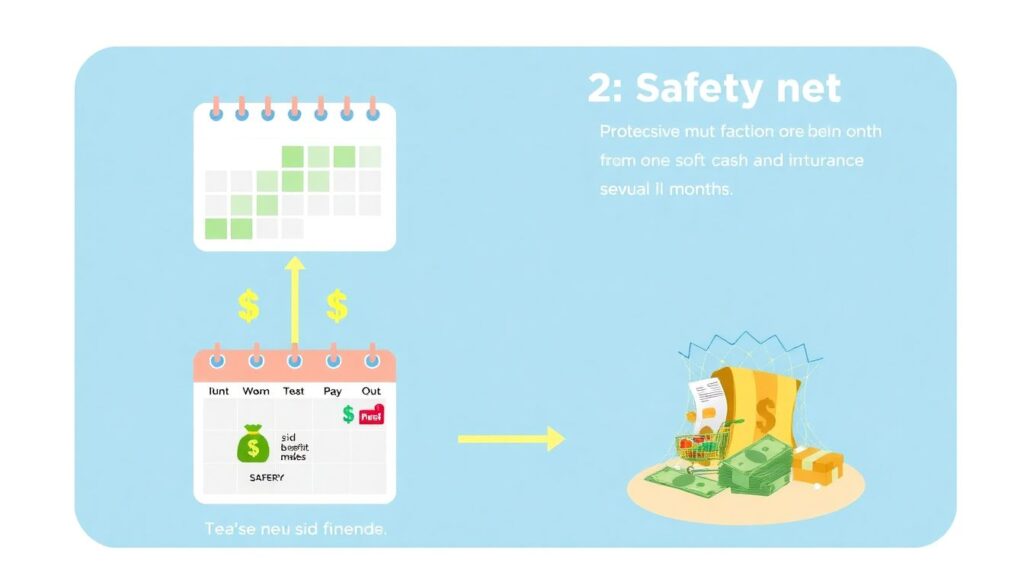
Let’s define the big pieces before we go into the weeds:
1. Cash‑flow – Money moving in and out each month. Salary, side jobs, child benefit payments in; rent, groceries, daycare, activities out.
2. Safety net – Cash and protections (like insurance) that keep one bad month from turning into three bad years.
3. Future goals – College, buying a home, retirement, maybe helping kids with a first car.
4. Everyday systems – The tools and habits (apps, automations, shared calendars) that keep everything from falling apart at 11:58 p.m. on bill‑due day.
You don’t need to be an economist. You just need enough structure that money serves your family instead of the other way around.
—
Diagram: How money actually flows for working parents
Imagine a simple text diagram:
– Income (two paychecks, maybe a side hustle)
↓
– Step 1: Non‑negotiables (rent/mortgage, utilities, minimum debt payments, basic groceries)
↓
– Step 2: Safety net (emergency fund, insurance premiums)
↓
– Step 3: Future you & kids (retirement accounts, college savings plans for children)
↓
– Step 4: Flexible life (eating out, kids’ activities, vacations, gifts, hobbies)
Most people accidentally run it backwards:
Flexible Life → Non‑negotiables → Maybe Safety Net → Almost Never Future You.
Your main “job” in personal finance is to flip that order on purpose, as much as your income allows.
—
Budgeting when you have kids (and no time)
The word “budget” sounds like meetings and spreadsheets. In real life, a family budget is just a plan that answers: “How much can we spend on normal life without wrecking next month?”
For working parents, the key isn’t hyper‑detailed tracking; it’s setting a few spending guardrails. Think “we spend up to $X per month on groceries and $Y on everything fun,” and the rest is allocated to bills and goals. That already puts you ahead of most people.
A simple comparison:
– Traditional budget – Every category has a line item: $12 for haircuts, $35 for school supplies, etc. Great for details, terrible for busy schedules.
– Parent‑friendly budget – Fewer, bigger buckets: “Essentials,” “Kids & School,” “Fun & Takeout,” “Future.” Less precise, far more realistic.
—
Choosing tools: best budgeting apps for families vs. plain spreadsheets
You absolutely can run family finances in a spreadsheet, but for many working parents, automation wins.
Text diagram of how an app can help:
– Bank sync → pulls transactions automatically
↓
– Auto‑categories → “Groceries,” “Childcare,” “Transport,” “Kids’ Activities”
↓
– Shared view → both partners see the same numbers
↓
– Alerts → “You’ve hit 80% of your ‘Eating Out’ budget”
That’s why so many people look for the *best budgeting apps for families* instead of starting from scratch. Compared with spreadsheets, these tools:
– Save time on data entry.
– Reduce arguments (“The app says we’re over; it’s not about blame”).
– Make it easier for a non‑money‑nerd partner to participate.
If you’re old‑school and love Excel or Google Sheets, that’s fine; the key is that both adults can access and understand the system with minimal effort.
—
Emergency funds: how to start an emergency fund for family without stalling your whole life
Definition first: an emergency fund is cash you can reach in days, not weeks, for real problems: job loss, broken car, medical bill, boiler failure. Not for vacations or sales.
Text‑style comparison:
– Short‑term cushion – 1 month of basic expenses: rent, food, utilities, insurance.
– Full emergency fund – 3–6 months of those same basics.
A lot of advice says “build 6 months now” and parents quietly tune out because it feels impossible. Here’s a more realistic, step‑by‑step path:
1. Hit your “mini buffer” first. Aim for $500–$1,000 in a separate savings account. That’s enough to cover 80% of typical surprise bills (tire, urgent dentist, school trip).
2. Automate something small. Even $25–$100 per paycheck going into a labeled “Family Emergency Fund” is progress.
3. Use raises and childcare milestones. When daycare costs drop or you get a raise, send half of that “new money” into the fund until you hit 1 month of expenses.
4. Then stretch toward 3–6 months. This may take years; that’s fine. The direction matters more than the speed.
If you’re wondering how to start an emergency fund for family on a tight budget, the answer is usually: start tiny, make it automatic, and protect it from non‑emergencies.
—
Debt: managing it without letting it run your parenting decisions
Debt itself isn’t “bad.” The problem is debt that blocks you from doing core things: living in a safe area, paying for childcare so you can work, or saving anything at all. Working parents often carry a mix: student loans, car loans, maybe a credit card balance from maternity leave or a rough year.
Short text diagram of priorities:
– High‑interest debt (credit cards, buy‑now‑pay‑later gone wrong) → attack first
– Medium‑interest (personal loans, older car loans) → pay steadily
– Low‑interest “productive” debt (mortgage, some student loans) → pay on schedule, don’t obsess
Compared with people without kids, you have less margin for “all‑in” payoff strategies. A plan that leaves you with zero emergency savings is risky when you’ve got dependents. So the family‑friendly approach is:
– Always pay at least the minimums.
– Build a small emergency fund first.
– Then increase payments on the highest‑interest debt while still contributing at least something to future goals (like retirement).
—
Insurance: boring, but non‑negotiable for parents
Insurance is simply risk‑sharing. You pay a smaller known amount now so a company pays a huge unknown amount later if something goes wrong.
For parents, two areas matter most: health and income/life.
1. Health insurance – Compare total annual cost, not just the premium. A low premium but huge deductible can hurt when kids visit doctors a lot.
2. Life and disability – This is about protecting your child’s lifestyle if one or both incomes disappear.
When people talk about *life insurance for working parents*, they usually mean term life insurance:
– Term life – Cheap, simple. You’re covered for a set period (e.g., 20 years). If you die in that time, your family gets the payout. After that, it expires.
– Whole/permanent life – More expensive, more complex, comes with an investment component.
For most young families, term life is the straightforward option: cover at least 10–15 years of income per parent (and yes, stay‑at‑home parents usually need coverage too, because replacing their unpaid work costs real money). Disability insurance, which replaces income if you can’t work due to illness or injury, is equally crucial but often overlooked.
—
College savings: balancing your kids’ future with your own
This topic can trigger guilt fast, so let’s start with a rule of thumb: you can borrow for college, but you cannot borrow for retirement. That’s why the priority order is usually:
Retirement basics → Modest college savings → Extra college help only if it doesn’t wreck your future.
For *college savings plans for children*, the most common example in the U.S. is a 529 plan:
– Tax‑advantaged (you don’t pay taxes on growth if used for qualifying education).
– Flexible: can often be used for college, trade schools, and in some cases K–12 tuition or even certain apprenticeship programs (rules vary by country/state).
– Transferable to another child if one doesn’t use it.
Without naming products, a 529‑style plan usually beats just saving for college in a generic savings account because of potential tax benefits and investment growth. The trade‑off is that money is somewhat “locked” toward education; using it for other things may trigger taxes or penalties, depending on the jurisdiction.
If your budget is tight, even $25/month per child matters. It’s not about funding 100% of a degree; it’s about giving your future teenager options and signaling that education is a shared responsibility.
—
Retirement: why parents shouldn’t wait “until the kids are older”
Retirement feels far away when you’re dealing with daycare invoices, but it’s the foundation under everything else. If you skip retirement saving now with the idea that you’ll “catch up later,” you’re betting against math.
Two comparisons:
– Start at 30, save a little → compound growth has 30+ years to work.
– Start at 45, save a lot → you need dramatically more each month to hit the same target.
For many working parents, the baseline approach is:
1. If your employer matches contributions (e.g., 401(k) match in the U.S.), contribute at least enough to get the full match. That’s literal free money.
2. Once you have a small emergency fund and are paying down high‑interest debt, try to raise retirement contributions once a year—often when you get a raise or when a childcare cost ends.
Remember: helping your kids most often means not needing to rely on them financially when you’re older.
—
One-page family money plan (a practical checklist)
Here’s a lean, numbered roadmap you can adapt without needing a weekend retreat:
1. Know your “bare‑bones” monthly cost of living. Add rent/mortgage, utilities, essential groceries, insurance, minimum debt, basic transport, childcare.
2. Build a mini emergency fund (Step 1). Target $500–$1,000, automated, in a separate account labeled “Family Safety Net.”
3. Grab any free money. Contribute enough to your workplace retirement plan to get the full employer match if available.
4. Protect your family. Check health coverage, then price out term life insurance for working parents and disability insurance if not already included at work.
5. Tackle high‑interest debt. Pay minimums on everything else; throw any surplus toward the highest‑interest balance.
6. Grow the emergency fund (Step 2). Slowly expand it toward 3–6 months of bare‑bones expenses, especially if your income is unstable.
7. Start or feed college savings. Open or fund a 529‑style account or similar college savings plans for children, even with small, automatic contributions.
8. Review once per year. Update income, expenses, goals. Adjust contributions as kids grow and costs shift.
This isn’t a speedrun; it’s a long‑term route map. You move up and down the list as life changes.
—
When to call in help: financial planning services for young families
You don’t have to figure all of this out alone. There’s a growing category of financial planning services for young families that work differently from old‑school advisors who only wanted wealthy retired clients.
Compared with traditional models, modern services might:
– Charge flat or subscription fees instead of commissions on products.
– Meet via video in short sessions that fit between nap time and bedtime.
– Focus on questions that matter to you now: maternity leave planning, childcare vs. second income, saving for two goals at once.
If your situation includes blended families, special‑needs planning, stock options, or complex visas/tax issues, investing in a few hours with a professional who understands working parents can save you years of trial and error.
—
2025 and beyond: where personal finance for working parents is heading
Since it’s 2025, the landscape is already shifting under our feet, and it’s going to keep evolving over the next decade. A few realistic trends:
– More automation, less manual budgeting. Apps are getting better at predicting bills, smoothing variable income, and even nudging you to save before you notice the money’s gone. Expect “invisible” saving—round‑ups, paycheck splitting, auto‑investing—to become the default.
– Family‑centric financial products. We’re seeing more tools that bundle features: shared child‑expense accounts for co‑parents, debit cards with parent‑controlled limits for teens, and joint dashboards where partners can see a unified picture without sharing every password.
– Work flexibility changing money patterns. Hybrid and remote work will keep affecting childcare needs, commuting costs, and even where families choose to live. That means budgets will be more personalized: one family might pay more for a bigger space and less for transport; another the opposite.
– Rising education costs vs. new paths. Traditional college will likely stay expensive, but alternative routes—online degrees, bootcamps, apprenticeships—should keep expanding. Those college savings plans for children will probably gain more flexible rules, letting you use funds for wider types of education and training.
– Regulation and AI advice. AI tools (like the one you’re reading) will increasingly plug into your actual numbers, offering tailored nudges: “You’re on track for your emergency fund goal but behind on retirement.” Expect governments and regulators to step in more to set guardrails so automated advice is safer and more transparent.
Most importantly, the cultural conversation is slowly moving away from “perfect parents do it all” toward “working parents need systems and support.” That includes money systems—more employer benefits, better parental leave design, and family‑focused planning services.
—
Bringing it all together without burning out
Personal finance for working parents is less about mastering every detail and more about locking in a few big wins:
– A simple, realistic budget that both adults can see.
– An emergency fund that keeps surprises from becoming crises.
– The right mix of insurance so a bad event doesn’t derail your kids’ lives.
– Early, consistent steps toward retirement and education savings.
– Occasional, targeted help—from tech or professionals—when life gets complicated.
You don’t need to transform everything this month. If you pick one area—maybe finally opening that emergency fund, checking your life insurance coverage, or setting up a tiny automatic transfer to a college account—you’ve already started building a safer, calmer financial base for your family. The rest can follow, one season at a time.