
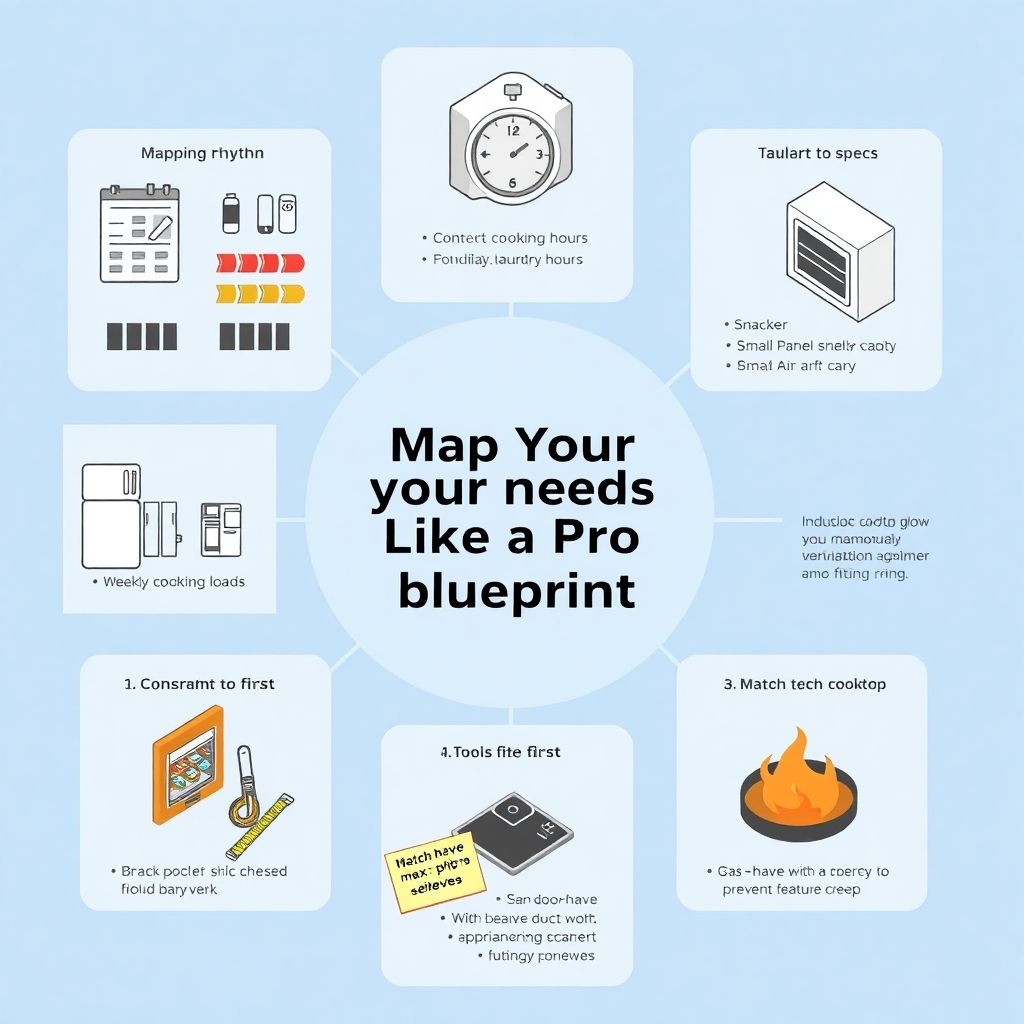
Map Your Needs Like a Pro
Before chasing shiny features, map your real-life rhythms. Count weekly cooking hours, loads of laundry, and storage habits; then convert that into specs, not vibes. If you batch-cook, you need rapid preheat and a convection fan with even airflow; for snackers, a smaller cavity plus a robust air-fry mode wins. When you Google “appliance store near me,” don’t just browse: bring a phone watt-meter, a magnet for checking door steel quality, and a tote with containers to test shelf geometry. Data beats guesswork, and in appliances, geometry is destiny.
Step‑by‑Step Selection Blueprint
Step 1: Define constraints, not dreams
Start with electrical circuits, ventilation, water pressure, and doorway widths; they’re your hard limits. Measure cutouts twice, diagonals included, and photograph breaker labels. Translate meals, laundry cycles, and cleaning tolerance into quantifiable features: liters, BTUs, decibels, spin speed, and filter types. If you’re tempted by kitchen appliances on sale, anchor yourself with a must-have list capped at five items. Everything else is negotiable, preventing feature creep that bloats budgets and complicates installation.
Step 2: Match tech to behavior
Induction makes sense if you crave speed and precise simmering; gas only wins if you need high-heat wok cooking and are willing to maintain vents. Heat-pump dryers slash energy use but need patient cycles and lint vigilance. For cold storage, prioritize compressor type and evaporator design; dual-evap systems keep produce crisp longer. If a refrigerator sale lures you, compare pull-down times, door seal integrity, and real usable volume, not just cubic feet, because shelf intrusions steal space.
Step 3: Budget with total cost of ownership
Sticker price lies; operating costs and consumables tell truth. Map energy use (kWh/year), water per cycle, filter frequency, and repair likelihood beyond warranty. Plan a 10% buffer for hoses, surge protection, and ducting. Consider rebates, retailer haul-away credits, and extended warranty terms that cover sealed systems, not just cosmetic mishaps. A precise budget lets you pounce when timing aligns with rebates rather than panic-buy because a motor failed during a holiday weekend.
Step 4: Stress-test in-store and remotely

In person, open doors with both hands full, simulate greasy fingers, and listen for hinge chatter. Check shelf adjustability while wearing winter gloves to mimic friction. Online, read failure-mode reviews, not star ratings; search for recurring faults like evaporator icing or control board resets. Bring a cooler thermometer to test display units if staff allows. During a weekend demo, ask to run a quick cycle preview; even a dry spin can reveal vibration and poor isolation.
Step 5: Time your strike
Seasonality is your ally: model refreshes precede major holidays, clearing inventory. Track price histories with alerts, then cross-check warehouse inventory depth; shallow stock means fewer concessions. Bundle only when each piece fits your constraints; otherwise, negotiate piecemeal add‑ons like free installation or hoses. If you spot kitchen appliances on sale but the logistics are messy, ask for delayed delivery and price protection—good retailers will lock the deal while you prep utilities.
Smart Buying Tactics and Pitfalls
A minimalist hack: decouple form from function. Choose a mid-tier core with excellent internals, then upgrade touchpoints—racks, spray arms, or add a smart plug for granular energy logs. For laundry, target washer dryer deals with separate motors and accessible pumps; they’re easier to service. If you’re set to buy dishwasher models, favor soil sensors you can recalibrate and stainless tubs over plastic, which dampen noise and withstand higher sanitize temps for reliable biofilm control.
– Common traps to avoid: chasing peak wattage over heat distribution; ignoring service maps; skipping surge protection on control boards; and trusting showroom silence, which never matches a tiled kitchen. Watch for proprietary filters or pods that lock you into subscriptions, because long-term friction beats day-one delight.
– Negotiation moves that work: ask for scratch-and-dent backs-of-house photos, bundle install kits instead of pointless warranties, and request old-appliance haul-away. Anchor your offer to documented price drops and inventory age; managers respond to data-backed, polite firmness.
Installation, Care, and Future‑Proofing
Setup that prevents headaches
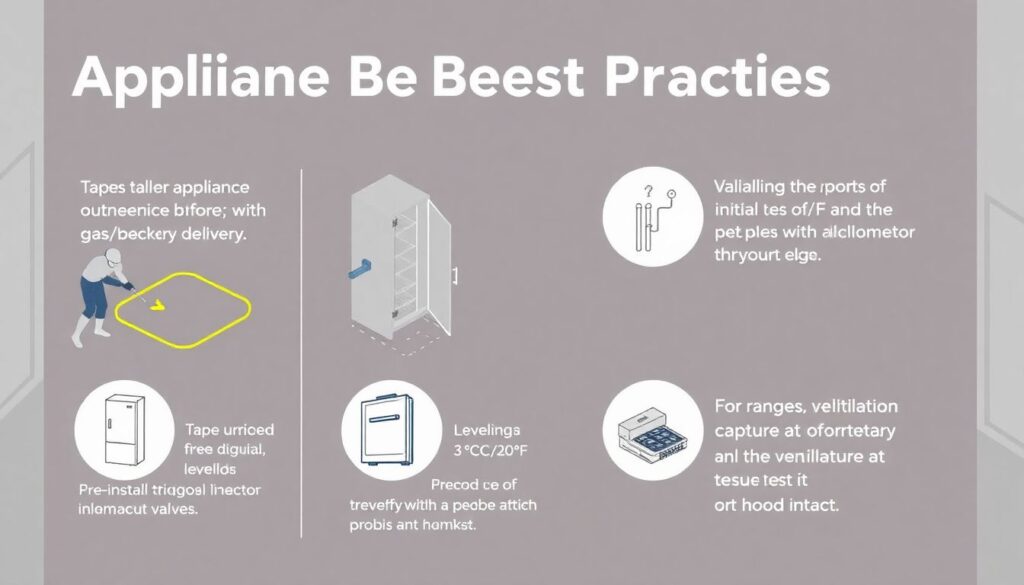
Before delivery, tape outlines on floors, pre-install shutoff valves, and label circuits. Level with a digital inclinometer, not eyeballing. On fridges, set initial temps to 3 °C/38 °F and −18 °C/0 °F, then verify with a probe after 12 hours. For ranges, validate ventilation capture with a tissue test; if the tissue doesn’t hold, increase hood CFM or shorten duct runs. Document serials and baseline noise and power draw; this “day-zero” snapshot speeds warranty claims.
Maintenance that actually matters
Ignore gimmicks and stick to physics: clean condenser coils quarterly, descale heaters based on water hardness, and replace door gaskets at the first sign of curl to stop efficiency bleed. Run a monthly hot sanitize cycle with an enzymatic cleaner, not bleach, to protect seals. Calibrate oven probes with a boiling-water test, and check dishwasher spray patterns with water-soluble paper. Small rituals prevent the slow drift that makes efficient machines feel “tired” years too soon.
Automation and unconventional upgrades
Slip a smart energy monitor on the appliance circuit to flag bearing wear by rising amperage weeks before failure. Add a water-leak sensor with auto-shutoff under sinks and behind fridges with ice makers. For aging cabinetry, mount vibration-damping pads and a mass-loaded vinyl liner around laundry alcoves—cheap, dramatic noise cuts. During a refrigerator sale season, consider a second compact fridge for produce-only storage; separating ethylene sources measurably extends freshness and reduces food waste.