
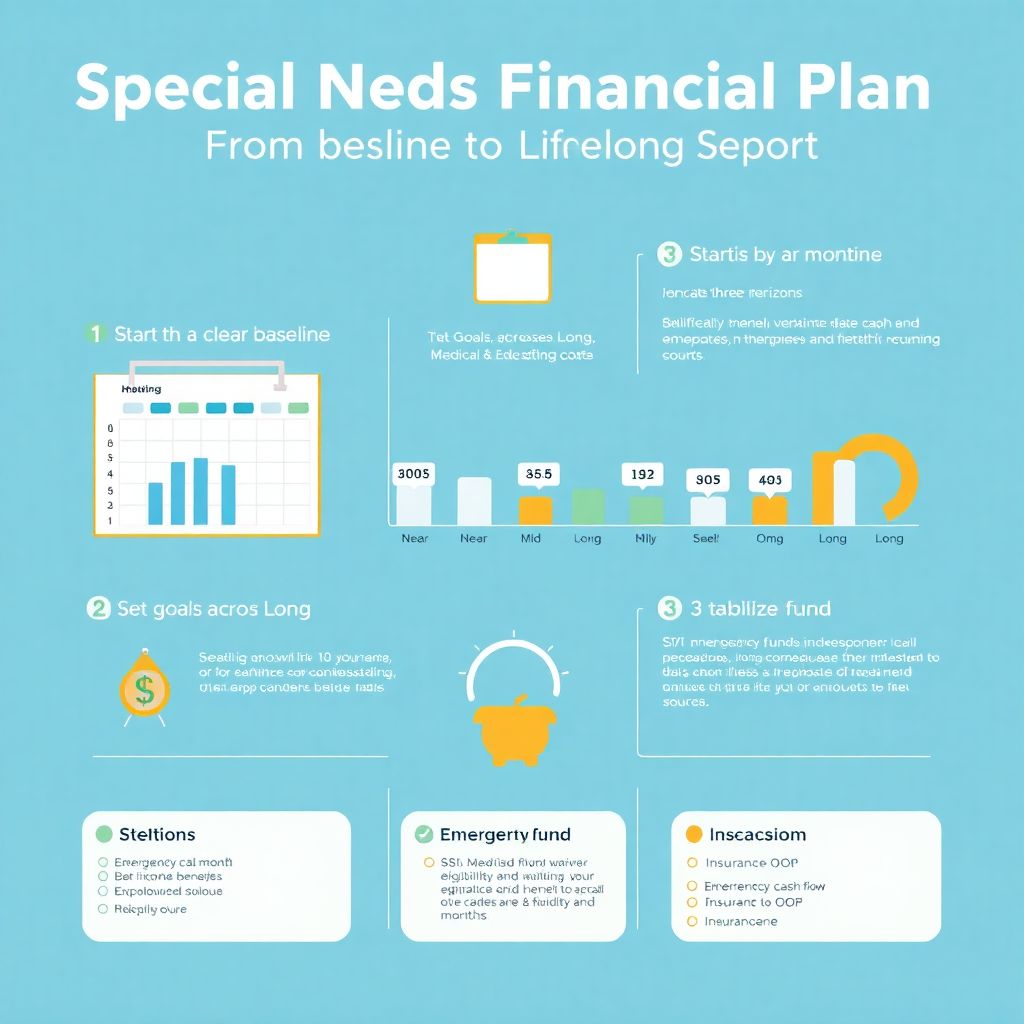
Start with a clear baseline
Before you buy products or call experts, map the current reality. List all sources of income, government benefits, therapies, and recurring costs, then contrast them with your child’s support needs across school, work, and daily living. Build a month-by-month cash snapshot for a year to catch seasonal spikes like camp or medical deductibles. Collect medical and education records in one digital folder; you’ll need them for benefits reviews. Beginners often skip this audit and jump to investments, but without a baseline you can’t size emergency reserves or know which expenses are stable versus volatile.
Set goals across three horizons
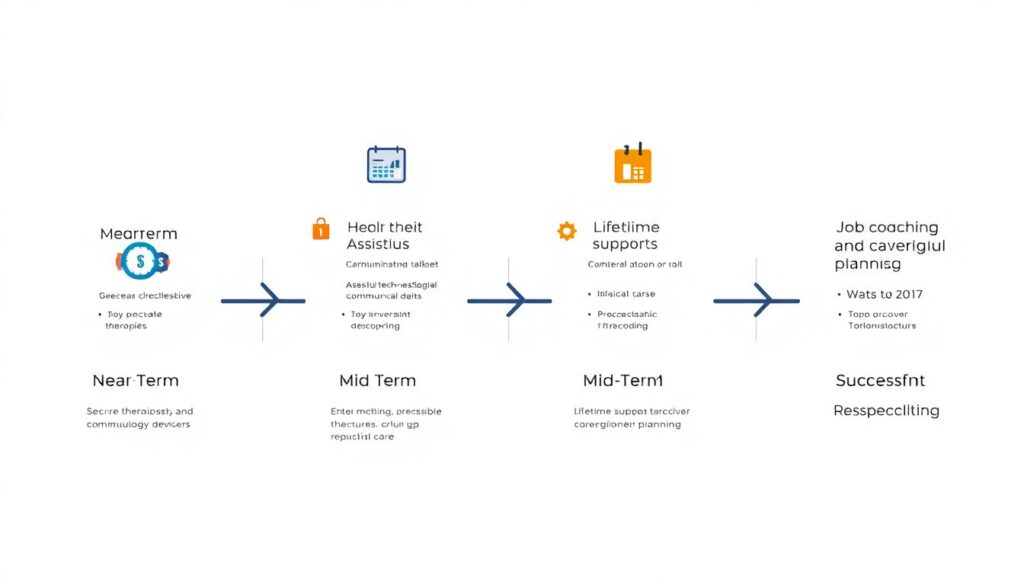
Translate hopes into near-, mid-, and long-term targets with price tags and dates. Near term could be securing therapies, assistive tech, or respite care; midterm might include job coaching or accessible housing; long-term involves lifetime supports and caregiver succession. Assign responsibility: who does what, by when, with which funds. Quantify each goal in today’s dollars and then add reasonable inflation. A frequent mistake is treating goals as a wish list; prioritize them and identify must-haves. If a goal lacks a funding source, flag it early rather than papering it over with optimistic returns.
Stabilize cash flow and benefits
Build a 6–12 month emergency fund in a high-yield account, sized to therapy and care costs, not generic rules of thumb. Map eligibility for SSI, Medicaid waivers, and local programs; timing matters, and waitlists can be long. Track out-of-pocket caps on insurance to avoid surprise bills late in the year. Automate bill pay for critical services to reduce lapses. Newcomers often mix the individual’s funds with family money, complicating benefits reporting. Keep clean records and separate accounts to show clear ownership; commingling can trigger reviews and, in worst cases, overpayment claims you must repay.
Assemble a coordinated team
You don’t need a stadium of professionals, but you do need alignment. A special needs financial advisor can model cash flows, insurance, and investment trade-offs, while a special needs trust attorney structures legal protections and beneficiary designations. Ask for special needs financial planning services that include benefits analysis, funding projections, and coordinated estate documents. Vet for experience, not just titles: request sample plans (redacted), fee transparency, and ongoing review cadence. A common error is hiring experts in isolation; insist they collaborate so legal, tax, and investment moves support the same objectives.
Protect against the big risks
Start with guardianship alternatives, powers of attorney, and a detailed letter of intent describing routines, preferences, and care philosophies. Review health, life, and disability insurance; term life often funds trusts cost-effectively, while disability insurance protects the caregiver’s income. Check beneficiary forms—never name the individual directly if benefits are a factor. Document backup caregivers and access to passwords. Beginners frequently buy insurance by premium price alone; instead, stress-test scenarios: if a caregiver dies, which expenses spike, for how long, and what liquidity is required within 30 days versus 12 months?
Use ABLE accounts strategically
ABLE account setup can preserve means-tested benefits while allowing tax-advantaged savings for qualified expenses like education, housing, or assistive tech. Keep annual contribution limits and the SSI resource threshold in mind to avoid benefit disruptions; know the state-specific rules and investment options. Set alerts so balances don’t creep above sensitive limits. Newbies often treat ABLE as a catch-all, but it’s best for short- to medium-term spending and as a debit-like tool for autonomy. Track receipts; audits happen, and poor documentation can reclassify withdrawals, creating taxes, penalties, or eligibility headaches.
Build trusts and align your estate

A properly drafted special needs trust can hold inheritances, life insurance, or settlements without jeopardizing programs. Coordinate the trust with all beneficiary forms and wills; a missed retirement account designation can undo the plan. Work with a seasoned special needs trust attorney to choose first-party versus third-party structures and to set clear distribution standards. Estate planning for special needs families must also address who will serve as trustee and care advocate. A frequent mistake is leaving assets outright to a sibling “to share”; divorce, creditors, or death can derail that intention fast.
Invest with time and purpose
Match investments to the timing of goals: near-term funds belong in cash or short bonds, while long-term care endowments may justify a diversified equity mix. Identify which accounts hold which assets—trusts, ABLE, and taxable accounts each face different taxes and reporting. Rebalance annually and when life changes, not on headlines. Keep fees visible; small expense ratios compound into big dollars over decades. New investors often chase performance or get too conservative after volatility; instead, predefine risk bands and stick to them, so essential services aren’t hostage to market mood swings.
Plan transitions, not just destinations
Key milestones—diagnosis, IEP shifts, age-18 legal status, post-secondary options, employment, and housing—change financial assumptions. Start vocational and life-skills planning early to align supports with realistic work income and benefits coordination. Explore housing models with waitlists in mind; reserve funds for deposits, adaptations, or supportive roommates. Build transportation plans since mobility drives employment and social inclusion. A common error is assuming school services continue into adulthood; many do not. Budget for the gap years and identify community resources now, before you need them urgently.
Review, document, and communicate
Schedule an annual plan review to update costs, benefits, and account balances, and to refresh the letter of intent. Maintain a secure shared folder with legal documents, medical summaries, contacts, and a one-page emergency roadmap. Define trigger events—diagnosis change, caregiver job shift, inheritance—that prompt off-cycle updates. Share the plan with trusted family so responsibilities are clear; secrecy breeds confusion in crises. Beginners often “finish” a plan and shelve it. Treat this as a living system: small, regular adjustments beat heroic fixes after a mistake becomes expensive or irreversible.