
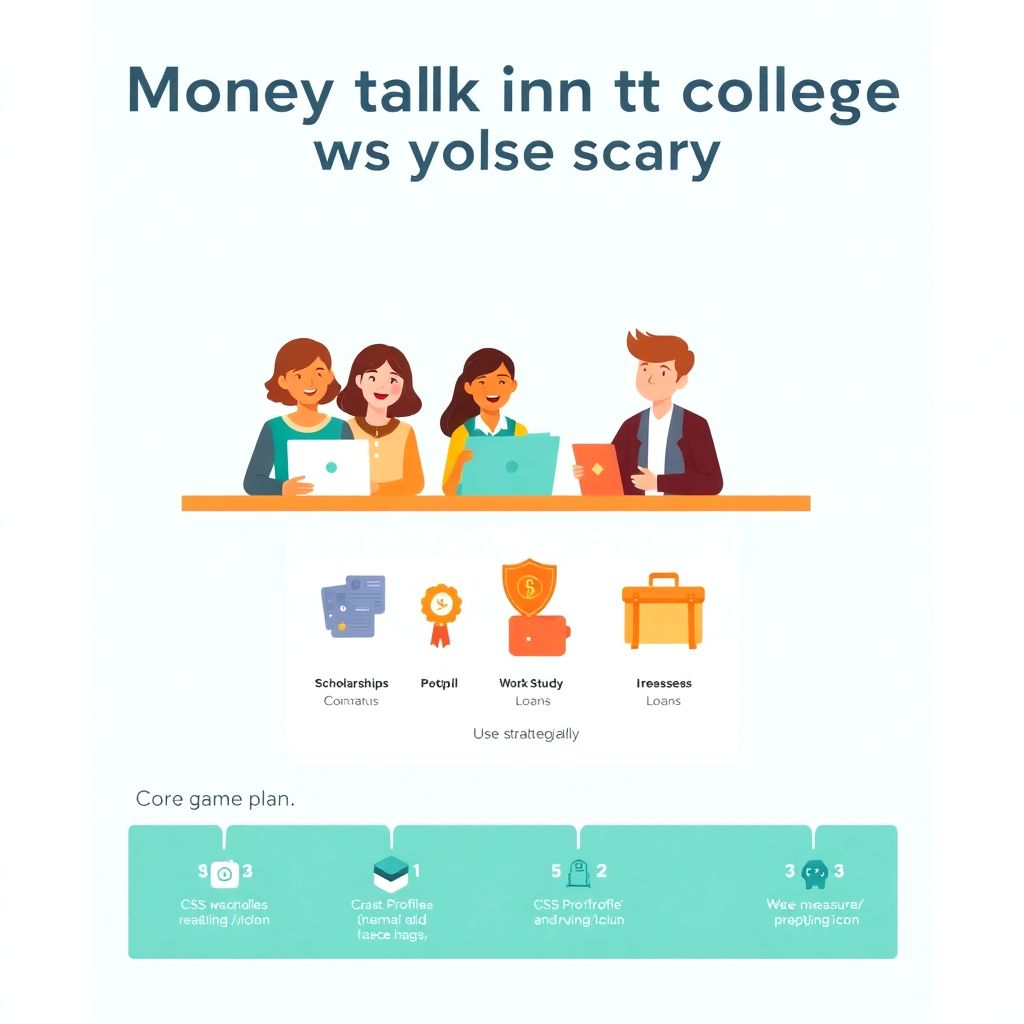
Why money talk doesn’t have to be scary
Paying for college has a reputation for being confusing, but it’s much more manageable when you treat it like a series of small, clear steps. Think of financial aid as a toolkit: grants you don’t repay, scholarships that reward your story and effort, work-study that adds experience, and loans you use strategically. The goal isn’t perfection; it’s momentum. Once you send the first application, gather your documents, and map deadlines, the process starts working for you. And yes, you can align aid with your goals—major choice, campus, and timeline—without losing sleep or drowning in jargon.
How to apply for college financial aid: the core game plan
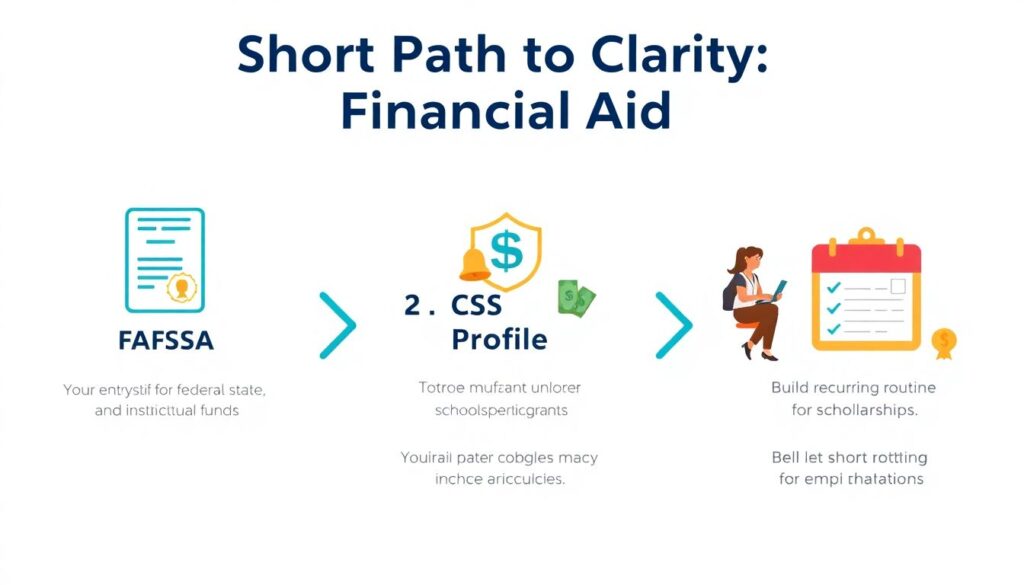
Here’s the short path to clarity. Start with the FAFSA—your entry ticket for federal, state, and many institutional funds. Then, if your prospective colleges use it, submit the CSS Profile to unlock school-specific grants. Next, build a recurring routine for scholarship applications weekly; this compounds your chances the same way saving does. Finally, compare aid letters line by line, focusing on net price after grants and scholarships rather than the sticker shock. If you’re still unsure how to apply for college financial aid, remember it’s mostly about timing, accuracy, and applying widely—more doors open when schools see a complete, on-time file.
FAFSA timing and grants you shouldn’t miss
Deadlines are strategy. The FAFSA deadline 2025-2026 at the federal level is June 30, 2026, with typical correction windows into September 2026, but state and campus funds often run out earlier—so file as soon as the form opens and always check your state’s earlier date. Grants are the most forgiving money: for example, meeting the Pell Grant eligibility requirements depends on financial need (now measured by the Student Aid Index), undergraduate status, satisfactory academic progress, and citizenship/eligible-noncitizen criteria. If your family situation changes (job loss, medical costs), ask for a professional judgment review; schools can update your aid on documented changes.
Inspiring examples that began with a form
– A first-gen student from Arizona filed early, appealed with proof of reduced family income, and saw an extra $5,400 in grant aid appear mid-spring. That small act—a timely FAFSA plus a thoughtful appeal—cut loan need by a third and let her accept a paid research assistantship instead of a second job.
– A community-college transfer used departmental scholarships and state grants to pivot into data science. He paired work-study in the campus analytics office with a modest loan, graduating with portfolio projects and an internship that started paying before final exams ended.
Each story started with one completed application, then consistent follow-through. Your version will look different, but the pattern—file, verify, ask, compare—works across majors and states.
Actionable growth tips to boost your odds

Winning aid is part persistence, part positioning. Translate your experiences—caregiving, part-time work, community projects—into results and impact, not just duties. Collect two or three flexible recommendation letters you can tailor to each prompt. And if you’re eyeing scholarships for high school seniors 2025, stack local awards; they’re less crowded and often renewable if you maintain GPA or community service. Treat your search like a weekly workout: small, consistent reps beat last-minute sprints every time.
– Build a 30–60–90 plan: first 30 days for FAFSA/CSS and documents, next 60 for scholarship bursts, last 90 for appeals and comparison.
– Create a brag sheet with metrics (hours, funds raised, outcomes) to fuel essays without starting from scratch.
– Schedule deadline audits every Sunday; catching a missing transcript or signature early saves awards later.
Cases of successful projects and community wins
– A rural robotics club partnered with a local manufacturer to sponsor micro-scholarships for members who completed safety certifications and logged 100 build hours. The “project-based” aid tied money to measurable milestones, and 7 of 10 seniors funded their first year without loans.
– A city library hosted monthly “scholarship sprints,” where students applied together for two hours; librarians pre-vetted opportunities by major and demographic. Collective accountability raised completion rates, and alumni returned to mentor, creating a self-sustaining pipeline.
These cases show that aid success scales when communities lower friction: templates, shared calendars, and peer review create momentum that individual students can ride.
Smart search: where to find opportunities
Finding money is easier when you narrow the funnel. Start with your college’s financial aid page and your department’s awards; professors often know niche funds with short applications. For broader searches, lean on the best scholarship websites for college students, but filter hard: set alerts by major, GPA, state, and identity to avoid spammy contests. Then cross-check eligibility and renewability so you’re building a multi-year plan, not just one-off wins.
– Use reputable platforms like BigFuture, Fastweb, Scholarships.com, Bold.org, and your state’s higher-ed portal; set weekly saved searches.
– Track each application in a simple sheet: deadline, award size, odds (local vs national), status, essay reused (yes/no).
– Bookmark learning resources: Federal Student Aid’s YouTube for walkthroughs, your state grant agency, and NACAC/NCAN guides for first-gen families.
Avoidable mistakes and how to course-correct
– Waiting to file until taxes are final. Use the IRS data tools and update if needed; filing early protects your place in line.
– Treating loans as “free money.” Borrow with a repayment picture: target total borrowing below your expected first-year salary in your field.
– Ignoring verification emails. If selected, respond within days—unanswered requests can quietly erase grants.
– Overlooking institutional appeals. A polite, documented letter comparing offers can unlock need-based adjustments or targeted scholarships, especially after merit updates.
Resources for learning and staying sharp
Deepen your knowledge with short, focused learning loops. Federal Student Aid’s site explains each program in plain language and offers calculators for net price. Your state’s higher education agency lists grants and emergency aid you can stack with federal funds. Many colleges host virtual workshops on completing forms, understanding award letters, and budgeting—recordings are gold if you can’t attend live. If you’re overwhelmed, nonprofit advisors and school counselors can triage your situation in one session, helping you map requirements and prioritize the next three actions.
What’s next: a 2025–2028 outlook
Aid is evolving faster than it has in a decade. Expect wider usage of Student Aid Index for earlier estimates, more automation in verification, and broader zero-dollar SAI thresholds that expand Pell access for the lowest-income families. State programs are shifting toward last-dollar promises tied to career fields, apprenticeships, and community-college pathways. Private funders are experimenting with micro-scholarships earned in small increments—badges, community hours, or course completions—verified through school systems. And AI-driven matching will make searches more precise, so your job is to keep data current and essays adaptable. The big takeaway for 2025: file early, document clearly, and apply widely. With smart habits and steady pacing, you’ll stitch together the funding mix that lets you focus on learning, not invoices.