
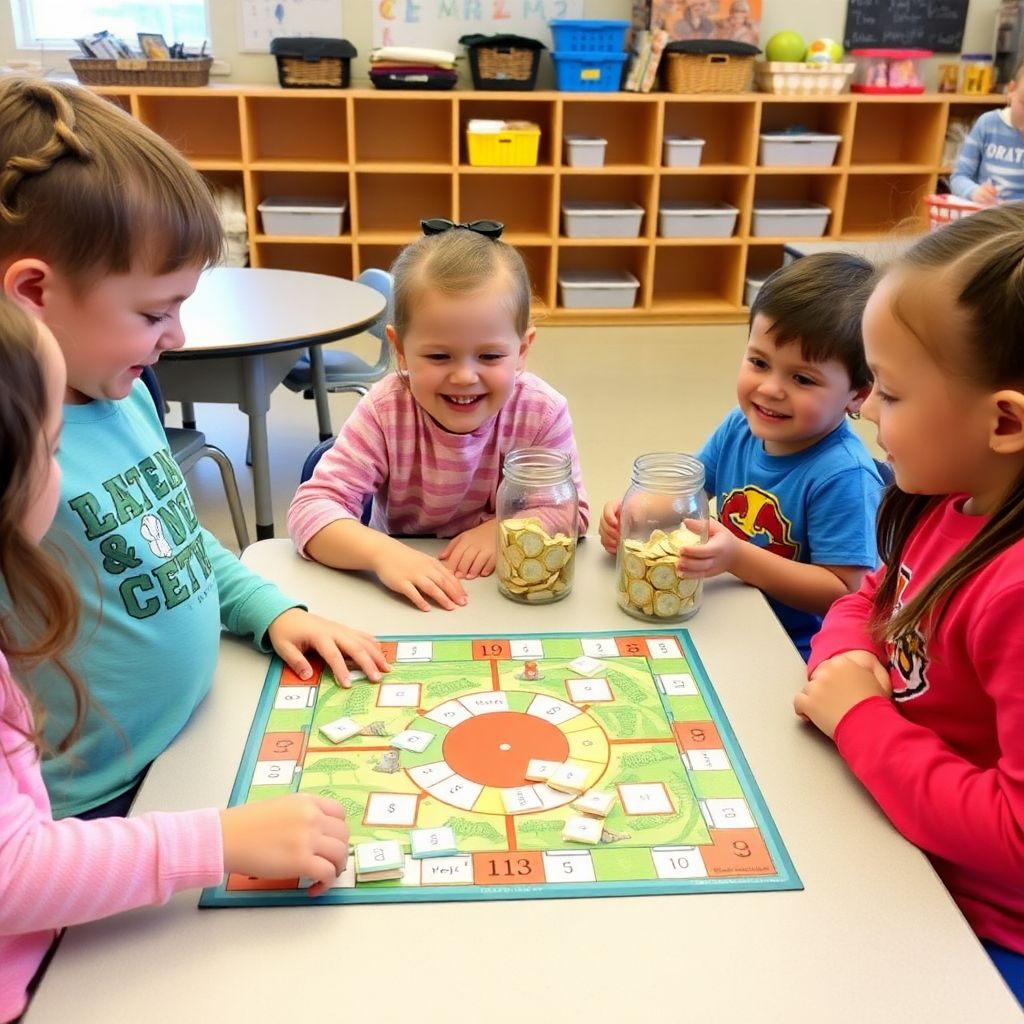
Use simple, repeatable money games for kids to practice saving, spending, and sharing with low risk. Mix educational board games about money for kids, quick DIY jars, and role‑plays about real‑life choices. Keep sessions short, fun, and age‑appropriate so financial literacy games for children become a natural part of family or classroom routines.
Essential Concepts to Reinforce
- Money choices are about trade‑offs: if you spend on one thing, you cannot spend the same money somewhere else.
- Saving is “paying yourself first” for future goals, not just leftover coins.
- Spending wisely means comparing options, prices, and needs versus wants.
- Sharing builds empathy: kids learn how their money can help others.
- Allowance and money management for kids work best with clear rules and regular practice.
- Short, game‑like repetitions beat long lectures for teaching kids about saving and spending.
Board and Card Games That Teach Money Choices
Board and card games are a safe, high‑engagement way to explore money decisions before kids handle real cash. They work well for ages 5-12, small groups, and family nights, especially when you want low‑prep financial literacy games for children that can be reused often.
Skip or adjust these games when a child is very frustrated by losing, still learning to count reliably, or highly anxious about money. In those cases, play in “co‑op mode” where adults guide choices and focus on discussion, not winning.
1. Classic Buy‑and‑Sell Board Game (Ages 7-12)
Goal: Practice comparing prices, making change, and planning ahead.
Time: 20-40 minutes
Materials: Any simple buying/selling board game or homemade track, play money, pencils, and score sheets.
- Assign each player a starting amount of money and a simple goal (e.g., “end with at least X saved”).
- As players move, they decide whether to buy items, skip, or save, saying out loud why they chose.
- At the end, compare who met their saving goal, not just who is “richest.”
Variation for larger groups: Run two shorter parallel games and switch tables halfway so kids see different strategies.
2. “Needs vs. Wants” Card Sort (Ages 5-10)
Goal: Learn to prioritize spending on needs before wants.
Time: 10-15 minutes
Materials: Picture cards of items (food, toys, clothes, internet, medicine, etc.).
- Give each child 10-15 mixed cards.
- Ask them to sort into “Need,” “Want,” and “Nice to Have Later.”
- Discuss 3-4 tricky cards together (e.g., birthday parties, new shoes vs. shoes that fit).
Variation: Give kids a “budget” of 5 items they can “buy” and ask which they pick first and why.
3. Saving, Spending, Sharing Card Game (Ages 6-11)
Goal: Introduce the three basic money jobs: save, spend, share.
Time: 15-20 minutes
Materials: Deck of cards labeled with small incomes (e.g., chores, gifts) and expenses/donations.
- Each round, kids draw an income card and decide how much goes to saving, spending, and sharing.
- Play several rounds, then reveal “surprise” goal cards (e.g., “bike,” “gift for friend”) and see who can afford them.
- Ask what they might change next time about saving or sharing.
This is a flexible template you can adapt into many money games for kids at home or in class.
Hands-On DIY Activities to Build Saving Habits
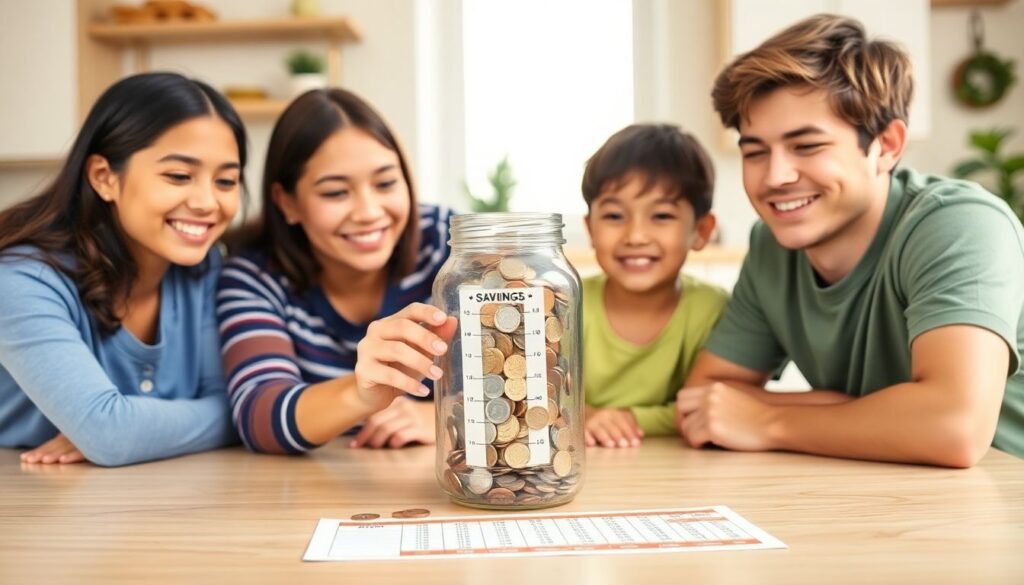
These low‑cost, simple activities make saving visible and concrete.
1. Three‑Jar Money Station
Goal: Build a habit of splitting money into saving, spending, and sharing.
What you need:
- 3 transparent jars or containers per child.
- Labels or markers: “Save,” “Spend,” “Share.”
- Real coins or play money.
Setup: After each allowance or money from chores, kids first divide it into the jars using a fixed rule (for example, a portion to each jar-choose the portion together). Talk through decisions so you are actively teaching kids about saving and spending instead of just moving coins.
Group variation: In a classroom, use one shared set of jars and discuss as a group where class “earnings” should go.
2. Savings Thermometer or Ladder Chart
Goal: Show progress toward a saving goal visually.
What you need:
- Paper or poster board and markers.
- Ruler to draw even steps.
- Optional: stickers for milestones.
Setup: Draw a thermometer, ladder, or staircase with clear steps to a target amount. Every time the child adds to their savings jar, color up to the new level. This turns saving into a visual game they can “level up.”
3. “Delay the Treat” Challenge
Goal: Practice waiting and comparing short‑term vs. long‑term rewards.
What you need:
- Two small reward options (e.g., 1 small candy now vs. 2 later; 10 minutes of screen time now vs. 20 after cleaning up).
- Timer or clock.
Setup: Offer a clear, safe choice: a smaller reward right away or a larger one if they wait and complete a simple task. Emphasize that both options are okay; the learning is in talking through the choice and what waiting feels like.
Role-Play Scenarios for Realistic Spending Practice
These step‑by‑step role‑plays safely rehearse real‑world money situations. Keep props simple and match prices to your child’s understanding.
-
Choose a realistic scenario
Pick one situation: grocery shopping with a list, buying a toy with limited money, or planning a small party. State a clear goal, like “stay under this budget” or “save some money for later.”
- Grocery example: planning snacks for a week with a set amount.
- Toy example: choosing between two similarly priced toys.
-
Set a simple, fixed budget
Use play money or paper slips labeled with amounts. Tell the child exactly how much they have and what must be paid for first. Keep numbers small and easy to add to ensure the activity is safe and not overwhelming.
-
Lay out choices with visible prices
Place items (real objects, pictures, or hand‑drawn cards) on a table, each with a clear price tag. Include some “need” items and some “want” items so kids practice deciding what to prioritize.
-
Let the child decide and “pay”
Have them choose items, count out the money, and hand it over. Ask them to say why they chose each item. Gently remind them when money is almost gone so they notice the trade‑off.
-
Reflect briefly on the outcome
After “shopping,” review: Did they stay within budget? Did they skip any needs? Would they change anything next time? Keep feedback positive and focused on learning, not on mistakes.
-
Add saving and sharing layers
In later rounds, introduce options to save some of the budget or to donate a small amount. Ask how those choices affect what they can still buy, reinforcing allowance and money management for kids as a whole system.
Fast-Track Mode: 5-Minute Role-Play Shortcut
- Pick one simple scenario (e.g., buying a snack with limited money).
- Give a fixed budget in play money and show 3-4 priced options.
- Ask the child to pick and pay while thinking out loud.
- Spend one minute asking what they would change next time.
Cooperative and Competitive Exercises to Foster Sharing
Use this checklist to see whether sharing activities are working and safe for group dynamics.
- Kids can explain in their own words why sharing part of their money can matter.
- No child is pressured to give away real money; sharing is practiced with tokens or agreed‑upon amounts.
- Group games reward teamwork (e.g., combining tokens to unlock a group prize), not just individual hoarding.
- Children take turns deciding how shared resources are used, and adults moderate to keep choices fair.
- Disagreements about sharing are handled calmly with guided discussion, not punishment.
- Every child has a chance to both give and receive in the activity over multiple rounds.
- After the game, you debrief for a few minutes about feelings when giving, receiving, or seeing others get more.
- Activities are adjusted if any child appears anxious, excluded, or teased based on how much they share.
- Cooperative wins (everyone reaches a goal together) are celebrated as much as competitive wins.
Digital Gamified Tools and Simple App-Based Challenges
Digital tools can support teaching kids about saving and spending, but some common mistakes reduce their impact.
- Relying only on apps and skipping real‑world practice with physical money and conversations.
- Choosing apps with complex interfaces or ads that confuse younger kids or encourage impulse clicks.
- Letting children use money‑themed games freely without setting clear time limits and goals.
- Using apps that focus only on earning or spending, without any saving or sharing components.
- Connecting real payment methods without strong parental controls, which can risk accidental purchases.
- Ignoring in‑game conversations; not asking kids to explain their decisions or strategies.
- Introducing digital tools too early, before kids can count confidently or understand basic prices.
- Picking flashy apps that do not align with your rules for allowance and money management for kids.
Measuring Progress: Quick Games to Assess Financial Skills
These alternatives help you see what kids have learned without formal testing.
1. “Money Story” Comic Strips
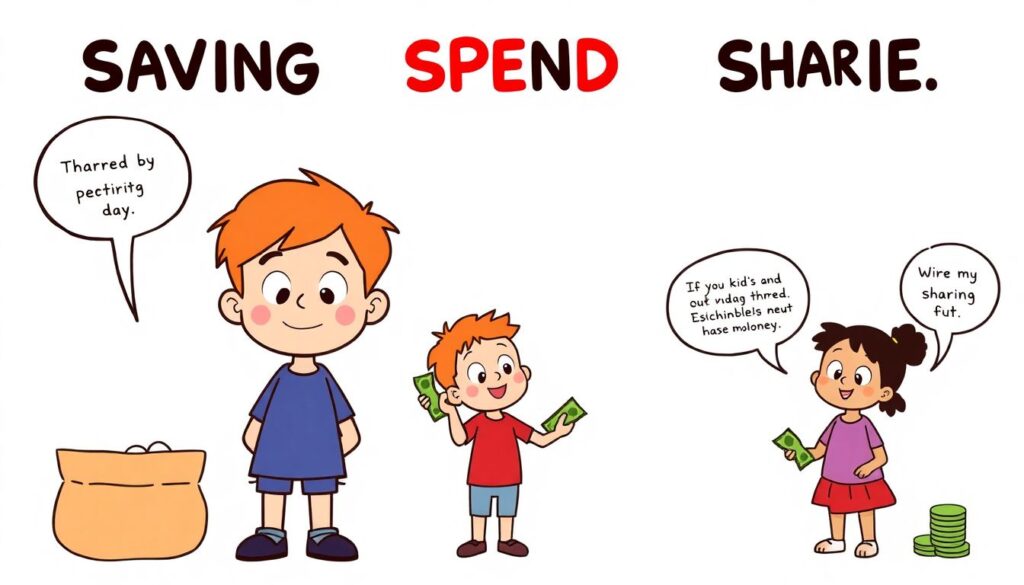
Ask kids to draw a short comic where a character must choose between saving, spending, and sharing. Review whether the character understands trade‑offs and goals. This works well when you want a low‑pressure alternative to quiz‑style financial literacy games for children.
2. Lightning Round Scenarios
Give rapid, age‑appropriate prompts: “You have enough for one toy or you can wait and buy a bigger set later; what do you do and why?” Note whether they identify needs, wants, saving, and sharing. This is ideal when time is limited but you need a quick snapshot.
3. Token Budget Races
In small groups, hand out identical tokens and a list of mini “shop” items. Kids plan one budget in two minutes, then explain it. Compare plans, not who “won,” to see how they reason. This option fits well with educational board games about money for kids you already use.
Practical Concerns, Quick Answers
How young can I start money games with my child?
You can start simple games around ages 4-5 using sorting, pretend play, and basic saving jars. Focus on taking turns, recognizing coins, and simple choices instead of exact math.
How long should a single money activity last?
For most kids under 10, keep activities between 10 and 20 minutes. Stop while they are still interested so they look forward to the next session.
Do I need real money for these games?
No, play money or tokens are usually safer and less stressful. Introduce small amounts of real money only when your child shows they can handle it respectfully and understands basic values.
How often should we practice saving, spending, and sharing?
Short, regular practice works best. Aim to use at least one small activity or conversation every week, especially around real events like allowance day or birthdays.
What if my child hates losing competitive games?
Use cooperative modes where everyone works toward a shared goal, and focus discussions on choices, not scores. Gradually introduce light competition once they can handle small setbacks calmly.
How do I connect games to real-life allowance decisions?

After a game, ask one or two direct questions linking it to real choices, like how they might divide their next allowance. Keep the tone curious, not controlling.
Can these activities be adapted for classrooms or groups?
Yes, most activities scale well by using teams, rotating roles, and shared jars or charts. Set clear rules and roles in advance so everyone participates safely and fairly.