

Why Your Money Strategy Needs to Match Your Career Strategy
If you want serious career growth, you can’t just “work hard and hope.” You also need a money plan that supports promotions, new skills, and big jumps in responsibility. That’s what budgeting for career growth is: deliberately setting aside time and cash so your future self has better options.
Think of it this way: every course, conference, or credential is an investment. A good budget makes sure those investments are intentional, affordable, and high‑impact, not random purchases you regret later.
—
Tools You Need to Budget for Career Growth
Core Financial Tools
You don’t need fancy software, but you do need clarity.
1. Budget tracker
Any app (YNAB, Mint, Notion templates, a spreadsheet, or even a notebook) that shows:
– Income
– Fixed expenses
– Variable expenses
– What’s left
2. “Career Fund” account
Experts in financial planning for professionals often suggest a dedicated sub‑account just for development. Treat it like a mini investment portfolio:
– Label it “Career Growth” or “Promotion Fund”
– Automate monthly transfers into it
– Spend only on career‑related expenses
3. Skill gap list
This is not software; it’s a simple documented list of:
– Skills you have
– Skills you need for the next role
– Targeted options: online courses for career advancement, mentorship, internal projects, etc.
Career development coaching programs often start with a similar inventory. You can do a DIY version and save a lot of money.
—
Information Tools
You’ll also need information, not just apps.
– Job descriptions for the roles you want in 1–3 years
– Industry salary reports (Glassdoor, Levels.fyi, Payscale, local salary surveys)
– Feedback from managers or mentors about gaps that slow down promotion
These sources help you avoid spending on random trendy skills and instead focus on what actually leads to promotions in your field.
—
Step‑by‑Step: How to Budget Specifically for Career Growth
Step 1. Define the Next 1–3 Career Moves
Before touching your budget, get specific.
Ask yourself:
– What’s the *next* role I want? (Job title + scope)
– What’s the *next after that*? (Manager? Specialist? Cross‑functional lead?)
– What’s my timeline? (6 months? 2 years?)
Keep it simple, but write it down. Career coaches say that “vague goals create vague spending.” If you’re not clear, you’ll overspend on things that don’t move the needle.
—
Step 2. Translate Roles into Concrete Skill Gaps
Take 5–10 job postings for your desired role and mark repeated requirements:
– Tools and technologies
– Soft skills (stakeholder management, presentations, negotiation)
– Credentials and degrees
– Years of experience in specific areas
Now identify:
– Skills: “I don’t have this at all.”
– Skills: “I have it, but not at the level they want.”
This becomes your *shopping list* for learning. It also helps you decide whether you need professional certification programs for promotion (e.g., PMP, CPA, AWS, SHRM, etc.) or whether projects plus courses are enough.
—
Step 3. Put a Price Tag on Your Development Plan
Here’s where you turn the wish list into a budget.
For each skill or credential, estimate:
– Learning path (course, certification, project, coaching, workshop)
– Approximate cost (tuition, fees, books, exam attempts)
– Time cost (weeks/months, hours per week)
Include options like:
– Free internal training
– Low‑cost online courses for career advancement (Coursera, Udemy, LinkedIn Learning)
– Local meetups or the best career growth workshops near me that are hands‑on and affordable
– More expensive but targeted options like 1:1 career development coaching programs
You’re not committing yet. You’re just creating a realistic price menu for your growth.
—
Step 4. Decide How Much You Can Safely Invest Each Month
Now you connect your career plan to your actual budget.
1. Calculate your current monthly surplus:
– Income – (rent/mortgage + utilities + food + debt + savings + fun) = surplus
2. Decide what percent goes to career growth.
Many experts suggest:
– 3–5% of net income if you’re stable and not aggressively job hunting
– 5–10% of net income for high‑growth phases (career change, promotion push, big pivot)
3. Protect the basics first:
– Emergency fund
– Debt payments
– Retirement contributions
You’re not sacrificing long‑term financial safety for a single exam fee. That’s reckless, not strategic.
—
Step 5. Build a Dedicated “Career Growth” Line in Your Budget
Add a separate line to your monthly budget called something like:
– “Career Education & Promotion Fund”
Treat it like rent or a loan payment: non‑negotiable.
Then:
– Automate transfers into your career fund account each pay period
– When an opportunity appears (course, workshop, exam), pay from that fund, not from random leftovers
This habit keeps you from saying, “I’d love to take this course, but I just can’t afford it,” every single time.
—
Step 6. Prioritize High‑ROI Investments
Not every shiny program deserves your money.
When evaluating options, ask:
1. Does this directly connect to a requirement in my target job descriptions?
If not, it’s a “nice to have,” not a top priority.
2. Is there a cheaper way to get the same skill or proof of skill?
– Could you use a structured online course instead of a pricey bootcamp?
– Could you do a small internal project to demonstrate experience instead of an extended program?
3. Is there a clear way to show the ROI?
For example:
– Raises or promotion eligibility
– Moving into a higher‑paying subfield
– Making yourself a strong candidate in a competitive market
Senior HR experts often advise: certifications and degrees are most valuable when they either unlock a required checkbox or clearly boost your market rate. If the connection is fuzzy, pause.
—
Step 7. Use Employer Money Before Your Own
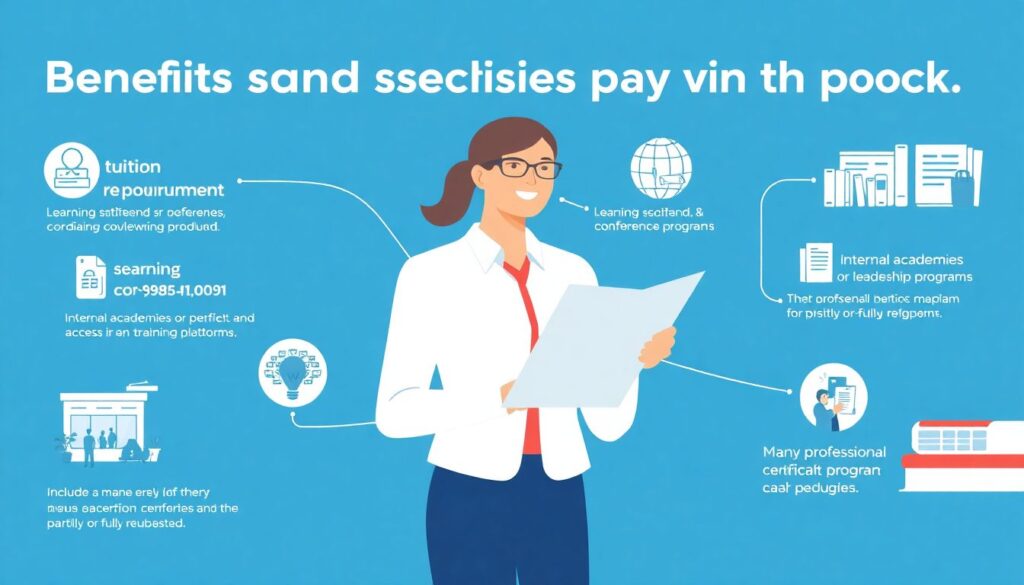
Before paying out of pocket, check what your employer offers:
– Tuition reimbursement
– Learning stipends
– Conference budgets
– Internal academies or leadership programs
– Access to external training platforms
Many professional certification programs for promotion can be partially or fully reimbursed if you:
– Ask your manager in advance
– Connect the program to your current role and team goals
– Show how completing it helps you take on more responsibility
Experts in corporate L&D (learning and development) say a lot of budget goes unused simply because employees never ask.
—
Step 8. Plan for Promotions and Negotiations as “Events”
Career growth isn’t only about spending on learning; it’s also about capturing the financial upside.
Before big moments like performance reviews, promotions, or offers, consider setting money aside for:
– Short‑term salary negotiation and promotion consulting services
– 1–2 sessions with a career coach specializing in compensation
– A mock negotiation or role‑play with a paid expert
Yes, this costs money, but the ROI can be huge. An extra 5–10% on a new salary, compounded over years, dwarfs the price of one or two expert sessions.
—
A Simple 5‑Part Career Budget Plan
To make this extra practical, here’s a compact structure you can copy into your own financial system.
1. Baseline Safety
– 3–6 months emergency fund
– Minimum retirement contribution (or company match at least)
– Debt under control
2. Career Growth Allocation
– Choose a fixed % of monthly income for your Career Fund
– Automate transfers
3. Annual Plan
– One “flagship” development activity (major course, certification, or substantial workshop)
– 1–2 smaller, flexible activities (short courses, books, meetups, micro‑credentials)
4. Employer Optimization
– Once per year, ask HR or your manager about:
– Reimbursements
– Available licenses or seats in online platforms
– Company‑sponsored programs
5. Negotiation & Promotion Readiness
– Document achievements quarterly
– Set aside a small budget for expert help around big negotiation windows
—
Expert‑Backed Tips to Stretch Your Career Budget
Don’t Pay Premium Prices for Introductory Skills
Career coaches commonly recommend:
– Use free or cheap resources for beginner foundations (YouTube, free MOOCs, low‑cost online courses)
– Save your money for advanced, specialized, or credential‑granting programs
You rarely need a $3,000 course to learn the basics of Excel or Python.
—
Bundle Learning with Real Work
Experts in talent development consistently highlight this formula:
> 10% formal learning, 20% feedback and mentoring, 70% doing the work.
In practice:
– Take a focused course (10%)
– Pair with a mentor or manager for guidance (20%)
– Volunteer for a project where you apply the skill immediately (70%)
This approach makes every paid course or workshop far more effective—and justifies the cost when you ask your boss for support.
—
Compare Cost per Outcome, Not Just Cost per Hour
Instead of asking, “How many hours of video do I get?” ask:
– Will this program produce a portfolio piece, certification, or measurable result?
– Do alumni actually get promotions or better roles?
– Are there structured projects, feedback, or live components that mimic real work?
A short but intense workshop that helps you land a higher‑paying internal role may be a better use of money than a long, unfocused course that you never finish.
—
Troubleshooting: When Your Career Budget Isn’t Working
Problem 1: “I Don’t Have Any Spare Money”
If your margin is tiny:
– Micro‑allocate: Even $20–$50 a month into a Career Fund builds up over a year.
– Use time as capital: Focus on free options and internal projects.
– Negotiate employer support: Ask for at least paid time off to learn, if not cash.
Also, check your budget ruthlessly:
– Subscriptions you don’t really use
– Convenience spending (delivery, impulse buys)
Any $20 you free up can become “future raise” money if you direct it into your Career Fund.
—
Problem 2: “I Spend on Courses but Don’t Finish Them”
Common issue. To fix it:
1. Set completion rules before buying:
– “I only buy one course at a time.”
– “I must finish or reach X milestone before purchasing another.”
2. Schedule learning like meetings:
– 2–3 blocks per week on your calendar
– Phone on do‑not‑disturb
3. Choose programs with:
– Cohorts or deadlines
– Accountability groups
– Live elements or projects
Behavioral experts point out that people are more likely to finish programs that require showing up in front of others.
—
Problem 3: “I’m Learning, but Promotions Aren’t Happening”
If you’ve been investing in yourself but not moving up:
– Confirm alignment: Do your new skills match what your organization actually rewards?
– Communicate value: Your manager needs to see how your new capabilities help the team. Regularly share:
– Improvements you’ve made
– Problems you’ve solved
– New responsibilities you can take on
– Ask directly: “What specific skills or results do you need to see from me in the next 6–12 months to consider me for promotion?”
Sometimes the issue isn’t your budget or skills—it’s visibility, timing, or company structure.
—
Problem 4: “Big Costs Scare Me, Even if They Might Pay Off”
High‑ticket certifications or degrees can be intimidating.
To approach them rationally:
– Run a simple ROI scenario:
– Cost vs. expected raise vs. time to recoup
– Talk to 3–5 people who actually completed the program:
– Did it help them?
– How quickly?
– Would they do it again?
If the numbers and real stories line up well, consider:
– Saving for it over time in your Career Fund
– Asking your employer to co‑finance
– Negotiating a partial reimbursement tied to staying for a certain period
—
Putting It All Together
Budgeting for career growth isn’t about depriving yourself; it’s about directing your money toward choices that widen your options, accelerate promotions, and raise your earning ceiling.
In practice, it comes down to:
– Know your next roles
– Identify concrete skills and credentials they require
– Attach real price tags and timelines
– Allocate a dedicated slice of your budget
– Use employer resources first
– Bring in experts when the upside is big (especially around negotiation and key promotions)
If you treat your career like a long‑term investment, your budget stops being just a list of bills—and starts becoming a roadmap to your next, better job.