

Why Fixed Income in Retirement Feels So Tight (and What You Can Actually Do)
Living on a pension, Social Security, or a small annuity can feel like you’re walking a financial tightrope. The money comes in like clockwork, but prices, medical bills and “surprise expenses” don’t care that your income is fixed. That’s exactly why retirement financial planning for fixed income retirees has to be different from what you’d do in your 40s or 50s. Less about chasing returns, more about controlling cash flow and avoiding nasty surprises.
Let’s walk through smart money moves that actually work in real life, compare different approaches, and look at a few non‑obvious tricks professionals use but rarely explain clearly.
—
Step One: Get Brutally Honest About Your Cash Flow
Case Study: Two Budgets, Two Very Different Retirements
Mary and John both receive $2,800 a month in combined Social Security and pension.
Mary “sort of tracks” her spending. John knows every dollar’s job.
– Mary pays her bills, uses a credit card “only when needed”, buys gifts for grandkids, eats out when tired. She ends the month a bit short and dips into her savings “just this once” — every month.
– John built a simple plan using an envelope system: digital or real envelopes for food, housing, health, fun, gifts. When one is empty, that’s it for the month.
Three years later, Mary has withdrawn $25,000 from her savings without any emergency. John hasn’t touched his savings at all; he even built a small emergency fund.
They have the same income. The difference is clarity.
If you’re wondering how to budget on a fixed income in retirement, the first upgrade is to move from “I think I’m okay” to “I know exactly what I can spend without touching savings.”
Simple But Powerful Budget Framework
Keep it light, but precise:
– List guaranteed monthly income (Social Security, pension, annuity payments, rental income).
– List true must‑have expenses: housing, utilities, food, medications, insurance, minimum debt payments.
– Decide on three “flex” categories: fun, gifts, travel/visits.
– Set a monthly savings target, even if tiny — $25–$50 — for irregular costs (car repairs, dental work).
Then ask: “If I live exactly like this, for 12 months in a row, will my savings grow, stay flat, or shrink?”
Only when the answer is “grow or at least stay flat” can you relax a bit.
—
Different Strategies to Stretch a Fixed Income
Approach 1: Cut Expenses Hard vs. Approach 2: Squeeze More from What You Already Have
There are two common mindsets:
1. “I must cut everything.”
2. “I’ll keep my lifestyle and hope my investments or kids bail me out.”
Both are extreme. Professionals usually combine trimming with smarter use of existing assets.
Aggressive cutting might look like:
– Moving to a smaller place or cheaper area
– Dropping a car and using rideshare or community transit
– Cutting cable, subscriptions, and impulse purchases
Smarter asset use might include:
– Refinancing or paying off high‑interest debt
– Adjusting how you draw from savings
– Renting out a room a few months per year
Realistically, the sweet spot is: “Trim 10–20% of pain‑free expenses, then optimize your income and assets.”
—
Best Investment Options for Retirees on Fixed Income: Comparing Approaches
Safety First vs. Seeking Extra Income
When people talk about the best investment options for retirees on fixed income, they often jump straight to products: bonds, dividend stocks, annuities. Before picking anything, be clear on what you’re solving:
– Do you need stable monthly cash?
– Do you fear running out of money at 85 or 90?
– Or do you mainly want to protect what you have from inflation?
Let’s compare three broad approaches.
Approach A: Ultra‑Safe and Simple
This is for someone who says, “I’d rather sleep well than chase higher returns.”
Common pieces:
– High‑quality government or investment‑grade bond funds
– CDs or high‑yield savings accounts
– Very short‑term bond ladders
Pros:
– Very low volatility
– Predictable income in most market conditions
Cons:
– May not keep up with inflation long term
– Income may feel lower than you’d like
This approach works best if your basic needs are already covered by Social Security, pension, and annuity income.
Approach B: Balanced “Income and Growth” Mix
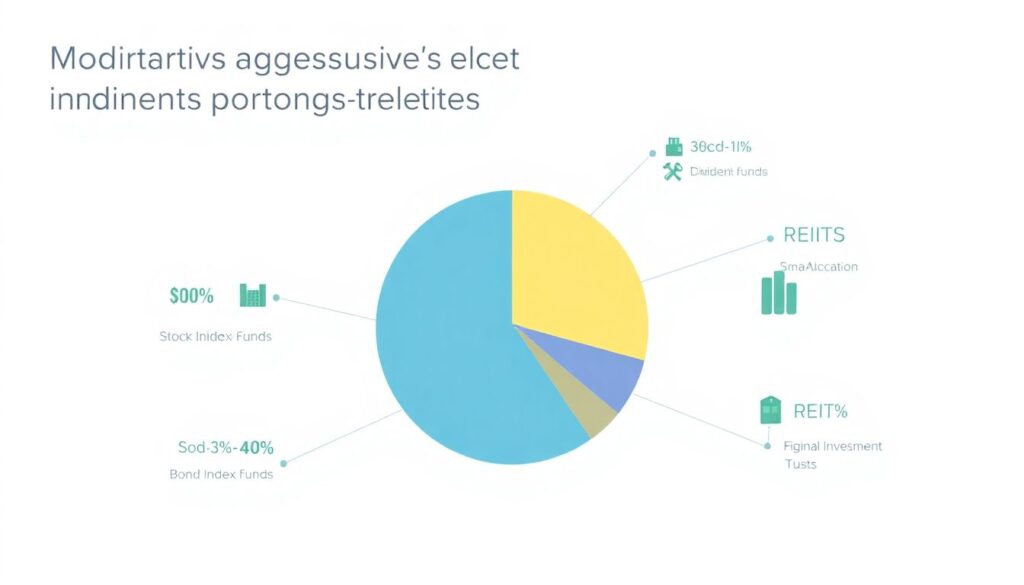
Here you accept a bit more risk for better inflation protection.
Typical ingredients:
– A mix of stock and bond index funds (for example 30–40% stocks, the rest in bonds)
– Some dividend‑paying stocks or dividend funds
– Maybe a small slice in real estate investment trusts (REITs)
Pros:
– Better long‑term growth potential
– More protection against inflation eating your savings
Cons:
– Portfolio can fall in value during market downturns
– Emotionally harder to watch if you rely heavily on it for income
This is where a lot of retirement advisors for seniors on fixed income try to land clients — not too risky, not too timid. But the exact mix depends on your age, health, and how much you truly need from your investments.
Approach C: Income Products and Guarantees
Some retirees want “paychecks for life” more than anything. That’s where annuities and income products for retirees with fixed income enter the picture.
You’ll hear terms like:
– Immediate income annuities
– Deferred income annuities
– Fixed indexed annuities with income riders
Pros:
– Can provide guaranteed income you cannot outlive (depending on the contract and insurer)
– Takes pressure off you to manage investments actively
Cons:
– Often complex and full of fees and conditions
– Money can be hard or impossible to access in a lump sum later
– Not all products are worth their cost
This is where you absolutely want a second opinion from a fee‑only planner, not just the person selling you the product.
—
Non‑Obvious Money Moves Most People Overlook
Trick 1: “Micro‑Retirement Raises” Instead of a One‑Time Lifestyle Cut
Instead of a painful 30% lifestyle reduction all at once, try this:
– Cut 5–8% of expenses this year.
– Every time a bill disappears (loan is paid off, subscription canceled, car insurance drops after selling a car), don’t absorb the savings into day‑to‑day spending. Move that amount to your “future bills” or savings bucket.
– Once a year, if your savings grew, you can give yourself a tiny “raise” in fun money — maybe $20–$50 a month.
You end up feeling progress each year instead of permanent sacrifice.
Trick 2: Coordinate Social Security with Portfolio Withdrawals
Many people grab Social Security as early as possible. Sometimes that’s necessary. But there’s another angle.
If you delay Social Security (for example from 62 to 67), your monthly benefit grows permanently. In those in‑between years, you may live off your savings more heavily. That sounds scary — but long term, the higher guaranteed benefit can reduce how much you draw from investments later, protecting you in your late 70s and 80s.
Comparing:
– Early Social Security + low use of savings now vs.
– Delayed Social Security + higher portfolio withdrawals now
The “best” answer depends on health, family longevity, and how worried you are about living into your 90s. A good planner can run the numbers for both scenarios so you’re not guessing.
—
Alternative Methods to Boost Security Without “Earning More”
House‑Rich, Cash‑Poor Solutions
If you own your home, even with a mortgage, you may be sitting on an asset that could change your retirement math.
Three very different approaches:
– Downsizing: Sell your current home, buy a smaller/cheaper one. Free up capital to invest and cut maintenance costs.
– House hacking light: Rent out a room to a student, traveling nurse, or long‑stay visitor a few months each year. This can cover property taxes or utilities.
– Reverse mortgage (with caution): Use part of your home equity to create a line of credit or monthly payment. It can be a lifesaver for some, a trap for others.
Comparing them:
– Downsizing is more permanent, often the cleanest solution.
– Renting a room is flexible but not for everyone socially.
– Reverse mortgages are complex; best used as part of a broader retirement financial planning for fixed income retirees strategy, not a quick fix.
Health Costs: Silent Retirement Killer
Two retirees can have identical income but wildly different lives because of health costs.
Under‑used strategies:
– Annual review of Medicare plans (Part D and Advantage) to avoid overpaying for coverage you don’t use
– Asking every provider, “Is there a lower‑cost alternative?” for tests, medications, and procedures
– Using community clinics, teaching hospitals, and prescription discount programs
You don’t control your diagnosis, but you do control how engaged you are in the cost side of care.
—
When and How to Use Professional Help
Not Every “Advisor” Is Your Advisor

There’s a difference between someone who sells financial products and someone who is legally required to put your interests first.
If you’re looking for retirement advisors for seniors on fixed income, consider:
– Fee‑only planners: They charge a flat fee or hourly rate, not commissions on what they sell.
– Fiduciary advisors: Legally required to act in your best interest.
– Hourly check‑up: Even a 2–3 hour session can give you a roadmap, which you execute on your own.
Questions to ask:
– “How are you paid?”
– “Are you a fiduciary at all times?”
– “What do you usually recommend to people whose main concern is not running out of money?”
Compare this with the “free steak dinner” seminar approach, where a slick presentation ends with a high‑commission annuity pitch. That doesn’t mean all annuities are bad, but the incentives matter.
—
Pro‑Level Retirement Money Hacks
Hack 1: The “Buckets” System Pros Love (Simplified)
Instead of one big pot of money, pros often break retirement savings into time‑based buckets:
– Bucket 1 (0–3 years): Cash, CDs, short‑term bonds. This covers several years of withdrawals.
– Bucket 2 (3–10 years): Slightly riskier bonds, conservative balanced funds.
– Bucket 3 (10+ years): Growth assets like stock index funds.
During market downturns, you live off Bucket 1 and 2, giving Bucket 3 time to recover.
This reduces the chance that you’re forced to sell stocks when they’re down just to pay bills.
Hack 2: “Guardrails” Withdrawals Instead of a Fixed Percentage
Many retirees hear about the “4% rule” — withdraw 4% of your portfolio per year and adjust for inflation. Professionals often refine this with “guardrails”:
– In good markets, you might allow yourself a modest raise.
– If your portfolio drops below a set threshold (say 20%), you temporarily trim withdrawals by 5–10%.
– Once it recovers, you can loosen up again.
This dynamic approach can significantly extend how long your money lasts, compared to a rigid withdrawal amount that ignores reality.
Hack 3: Automate the Hard Parts
Willpower is unreliable. Systems are not.
Consider automating:
– Utility, insurance, and minimum debt payments
– Monthly transfers from checking to a separate “future bills” savings
– Reinvestment of dividends you don’t actually need this year
You make a good decision once, then let automation protect you from low‑energy days and impulsive clicks.
—
Pulling It All Together: Designing a Fixed‑Income Retirement That Actually Works
Let’s recap the key comparisons:
– Mary vs. John showed how clarity and a simple budget beat “winging it,” even with the same income.
– Ultra‑safe investments vs. balanced portfolios vs. income products each solve different problems; the right mix depends on your risk tolerance and need for guarantees.
– Downsizing, renting a room, or reverse mortgages are very different ways to tap home equity — each with trade‑offs in flexibility, effort, and long‑term impact.
– Early Social Security vs. delayed benefits is not about “right or wrong,” but about what protects you best if you live longer than expected.
The most effective smart money moves for retirees on a fixed income aren’t flashy:
– Know your real cash flow.
– Pick an investment and income approach that matches your stomach, not your neighbor’s.
– Use alternative methods like home equity or part‑time income surgically, not out of panic.
– Steal a few pro hacks: buckets, guardrails, and automation.
You don’t have to become a financial expert. You just need a simple, realistic plan you understand well enough to stick to — and the willingness to adjust once a year, rather than once a decade.