

Why Tax-Advantaged Accounts Became a “Must-Have” for Families
If you’re raising kids in 2025 and *don’t* use at least one tax-advantaged account, you’re basically playing financial catch‑up with one hand tied behind your back.
Forty years ago, most Americans relied on pensions and basic savings accounts. IRAs were new (created in 1974), 401(k)s were just emerging in the early 1980s, and 529 college savings plans didn’t even exist until 1996. Health Savings Accounts (HSAs) only arrived in 2003. Flexible Spending Accounts (FSAs) were around earlier, but they were clunky and underused.
Fast‑forward to now:
– Over 15 million 529 accounts hold more than $450 billion in assets (College Savings Plans Network data, 2024).
– HSAs have grown to about 37 million accounts with assets above $120 billion in the U.S. (Devenir, 2024).
– Retirement accounts (IRAs, 401(k)s and similar plans) hold over $40 trillion in total (Investment Company Institute, 2024).
Put simply, the tax code quietly shifted the responsibility for education, healthcare and retirement onto families — and gave you a toolbox of tax breaks to handle it. Knowing the best tax-advantaged accounts for families, and how to coordinate them, has become a core part of long‑term planning, not a “nice extra.”
—
The Core Idea: Stack Tax Advantages Around Your Biggest Family Goals
Your three biggest long‑term expenses usually look like this:
1. College or other education for kids
2. Healthcare costs for the whole household
3. Retirement for you (so you don’t lean on your kids later)
Modern family financial planning with HSAs FSAs and 529 plans, plus IRAs and employer plans, is really about one thing: using today’s tax rules to “pre‑pay” those costs as cheaply as possible.
In a sentence:
You’re trading *some* current flexibility for *a lot* of tax benefits over time.
—
Smart Use of 529 Plans: Education as a Multi‑Generation Strategy
How 529 Plans Evolved (and Why That Matters in 2025)
When 529 plans were introduced in the late 1990s, they were narrow: mainly for college tuition, not very flexible, and not widely known. In the 2000s and 2010s, more states launched plans, fees dropped, and target‑date portfolios became standard. That made them more accessible.
The big shift came in the late 2010s–2020s:
– 2017: K–12 tuition up to a limit became eligible for 529 withdrawals.
– 2019–2022: Some student loan payments and certain apprenticeship costs became qualified expenses.
– 2024 onward: New rules began allowing limited rollovers from 529s to Roth IRAs for the beneficiary (subject to strict caps and conditions).
Now, a 529 is no longer just a “single‑use college bucket.” It’s morphing into a hybrid education‑plus‑retirement planning tool — which changes how you plan.
Practical Ways to Use 529 Plans in 2025
If you’re wondering how to use 529 plans and IRAs for family financial planning in a coordinated way, think in layers:
– Base layer: Open a 529 soon after birth and automate small monthly contributions. Even $100/month growing at 6–7% for 18 years can reach $40–50k.
– Flex layer: Choose a low‑cost, age‑based portfolio that automatically becomes more conservative as your child nears college.
– Backup layer: If you oversave, explore the new option (within federal limits) to roll a portion into the child’s Roth IRA later — turning “extra” education money into their retirement nest egg.
This backup option reduces the old fear of “What if my kid doesn’t go to college?” and makes 529s more appealing in 2025 than they were a decade ago.
—
529 vs Custodial Accounts: Control, Taxes and Trade‑Offs
A classic question: should you save in a 529 or a custodial account (UGMA/UTMA) for your kid?
If you compare 529 plan vs custodial account for kids education, the real trade‑offs are:
– Tax treatment:
– 529: Tax‑free growth and withdrawals if used for qualified education expenses.
– Custodial: Investment income is partially taxed at the child’s rate (with “kiddie tax” rules), and there’s no tax‑free withdrawal for education.
– Control and flexibility:
– 529: You (the account owner) control the money, can change beneficiaries, and keep it for other family members if one child doesn’t use it.
– Custodial: At the age of majority, the money *legally* belongs to the child. They can use it for *anything*, including things you might not approve of.
– Financial aid impact:
– 529 owned by parents: Usually treated as a parental asset on aid forms — generally a lighter hit on need‑based financial aid.
– Custodial: Treated as the *child’s* asset, which can reduce eligibility more.
In practice, a common 2025 strategy looks like this:
– Use 529 plans as your primary education savings vehicle because of the tax‑free growth and parental control.
– Use custodial accounts sparingly for non‑education goals (like a first car, gap‑year travel, or seed money for a small business), accepting the tax cost in exchange for flexibility.
—
IRAs and Roth IRAs: Not Just for Your Own Retirement
Historical Shift to Individual Retirement Accounts
Before the 1980s, defined‑benefit pensions dominated. The 401(k) revolution and the rise of IRAs moved risk and responsibility to workers. By the 2020s, over one‑third of all retirement assets sat inside IRAs, and Roth versions had become a key tax‑planning tool for many middle‑income families.
The twist now is that families use IRAs more strategically: not only to fund their own retirement, but also to support kids and grandkids in targeted ways.
Smart IRA Strategies for Family Goals
Here’s where tax efficient saving strategies for college and retirement start to overlap.
Consider these approaches:
– Using Roth IRAs as a “stealth” college backup
You can withdraw Roth IRA contributions (not earnings) at any time, tax‑ and penalty‑free. That means if you’re behind on college saving, a Roth can double as a backup college funding source — while still focusing primarily on retirement.
– Avoiding over‑reliance on retirement funds for college
Remember: you can borrow for school, but you can’t borrow for retirement. Use IRAs as *secondary* education backups, not your main college plan. It’s usually more tax‑efficient to prioritize your own retirement and use 529s for kids.
– Helping teens open Roth IRAs
If your teenager has real earned income, you can help them fund a Roth IRA (with their earnings or a parent “match”). Even small contributions in high school can compound for 50–60 years, turning a few hundred dollars into tens of thousands.
By 2025, more advisors are openly talking about how to use 529 plans and IRAs for family financial planning as a coordinated ecosystem — not as isolated accounts.
—
Health Planning: HSAs and FSAs as Underused Power Tools
From Niche Accounts to Mainstream Strategy
FSAs have been around since the 1980s, but they were often seen as “use‑it‑or‑lose‑it” hassles. HSAs, introduced in 2003, started slowly. Over the past decade, though, employers migrated more workers onto high‑deductible health plans, and the HSA market exploded — assets have roughly tripled since the mid‑2010s.
Why? Because HSAs quietly offer triple tax advantages:
1. Contributions are tax‑deductible or pre‑tax.
2. Growth is tax‑free.
3. Withdrawals for qualified medical expenses are tax‑free.
That’s a stronger combo than even a 401(k) or IRA, which typically only give you two of those three.
Building a Long‑Term HSA Strategy for Your Family
In the context of family financial planning with HSAs FSAs and 529 plans, think of the HSA as your future medical endowment.
You can approach it like this:
– Contribute as close to the annual maximum as your budget allows.
– Pay current medical bills out of pocket if you can afford it, letting HSA investments stay untouched and grow.
– Keep detailed records of medical expenses (receipts, EOBs). You can reimburse yourself years later, tax‑free, for those old expenses if you need a cash infusion.
By retirement, many families will face six figures in healthcare costs. Using an HSA as a long‑term investment vehicle rather than just a short‑term spending account can dramatically reduce that burden.
FSAs still matter too:
– Health FSAs: Useful if you *don’t* qualify for an HSA or you know you’ll have predictable annual expenses (like orthodontics).
– Dependent Care FSAs: Let you pay for daycare, preschool, or after‑school care with pre‑tax dollars, effectively cutting costs by your marginal tax rate.
—
Coordinating College, Healthcare and Retirement in One Plan
On paper, this sounds complicated. In practice, you’re really just lining up your accounts with your goals.
A straightforward priority order many families use:
– 401(k) or 403(b) to get the full employer match
– HSA (if eligible) for long‑term healthcare savings
– Roth/Traditional IRA contributions
– 529 contributions for education goals
– Extra taxable investing and/or custodial accounts
In other words, you’re stacking the highest tax benefits first, then adding more flexible (but less tax‑efficient) accounts as your budget allows.
—
Economic and Industry Impacts: Why These Accounts Keep Getting Better
Tax‑advantaged accounts are not just personal tools; they’re also big business.
– The asset‑management industry earns billions in fees from mutual funds and ETFs inside retirement accounts and 529s.
– Employers use HSAs, FSAs, and 401(k)s as core recruiting tools.
– State governments run 529 plans and rely on them to ease political pressure over tuition and student debt.
Because of this:
– Competition has driven fees down sharply. Average expense ratios in many 529 plans fell from over 1% in the early 2000s to well under 0.30% in many leading plans by the 2020s.
– More “set‑it‑and‑forget‑it” options (age‑based portfolios, target‑date funds, low‑cost index funds) have become the norm.
– Digital platforms and robo‑advisors have made it easier for younger parents to open and manage multiple accounts with small contributions.
On the macro level, as tax‑advantaged assets grow, they influence financial markets: they create a large, relatively stable base of long‑term capital, especially in equities and bonds. That can dampen volatility somewhat and shape demand for certain products (like target‑date funds and index funds).
—
Forecasts to 2035: Where Tax‑Advantaged Family Planning Is Heading
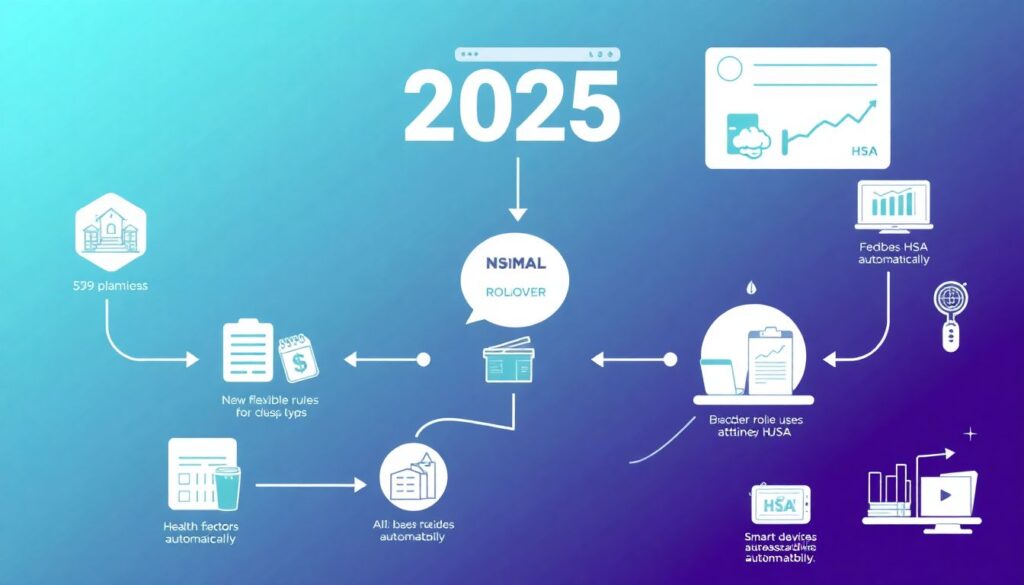
Looking ahead from 2025, several trends are very likely:
– Further integration and flexibility
Expect more rules allowing limited rollovers between account types (like the new 529‑to‑Roth pathways) and perhaps more flexible uses of HSAs for broader health‑related expenses.
– More automation and personalization
Robo‑advisors and workplace platforms will increasingly ask a few questions (“Kids? Health plan? Retirement age target?”) and then auto‑allocate contributions across HSAs, 401(k)s, IRAs and 529s according to best practices.
– Policy pressure around student debt and healthcare costs
As college and medical bills continue to outpace wages, lawmakers are under pressure to improve tax incentives. That could mean higher contribution limits, more generous credits, or expanded qualified uses over the next decade.
– Growing gap between “planners” and “non‑planners”
Families who consistently use tax-advantaged accounts will likely accumulate significantly more wealth than those who don’t, even at similar income levels. That widens the inequality between financially literate households and those who never get systematic advice.
For the industry, this means continued growth in retirement and education assets, more product innovation, and ongoing fee compression as investors become more cost‑sensitive and better informed.
—
Putting It All Together: A Simple Playbook You Can Actually Use
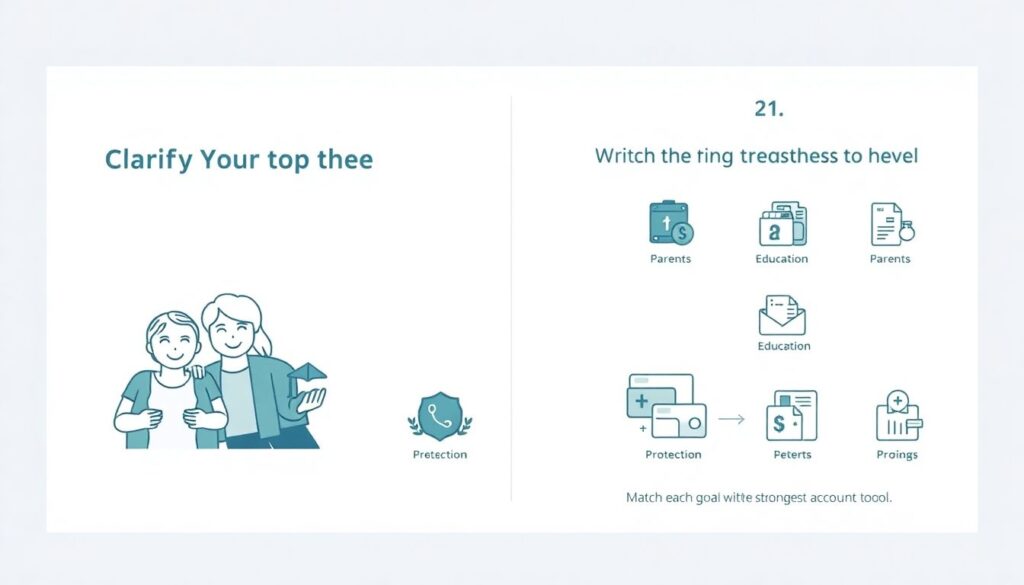
To make this concrete, here’s a practical way to organize your next few steps.
– Step 1: Clarify your top three goals
– Comfortable retirement for you
– Reasonable support for your kids’ education
– Protection against rising healthcare costs
– Step 2: Match each goal with the strongest account “tool”
– Retirement → 401(k)/403(b), IRAs, Roth IRAs
– Education → 529 plans first, with custodial accounts only as a flexible sidecar
– Healthcare → HSA if eligible; FSAs and Dependent Care FSAs where available
– Step 3: Automate contributions in a priority order
– Get the retirement plan match
– Fund HSA (if applicable)
– Fund IRAs/Roths
– Add 529 contributions
– Add extras to taxable or custodial savings
– Step 4: Review once a year
– Check whether you can nudge contributions up 1–2%
– Confirm your investment options are low‑fee and appropriate for your time horizon
– Adjust for changes: new child, job change, big medical event, etc.
—
Final Thoughts: Use the Rules While They Still Favor You
Tax laws change; your goals don’t. The accounts we’ve talked about — 529s, HSAs, FSAs, IRAs and employer plans — exist because governments decided to reward specific behaviors: saving for retirement, education, and healthcare.
Those rewards are real, and the math compounds over decades. The families that will be in the strongest position by the 2040s and 2050s are not necessarily the ones with the highest incomes, but the ones that:
– Start early, even with small amounts
– Use multiple tax-advantaged accounts in a coordinated way
– Let time and compounding do the heavy lifting
You don’t need to be a finance expert to make this work. You just need a clear set of family goals, a basic understanding of which account does what, and the discipline to automate small, consistent steps. The tax system has already laid out the rails — your job now is to put your family’s plan on the tracks.