

Introduction to Budgeting for a New Gym Membership
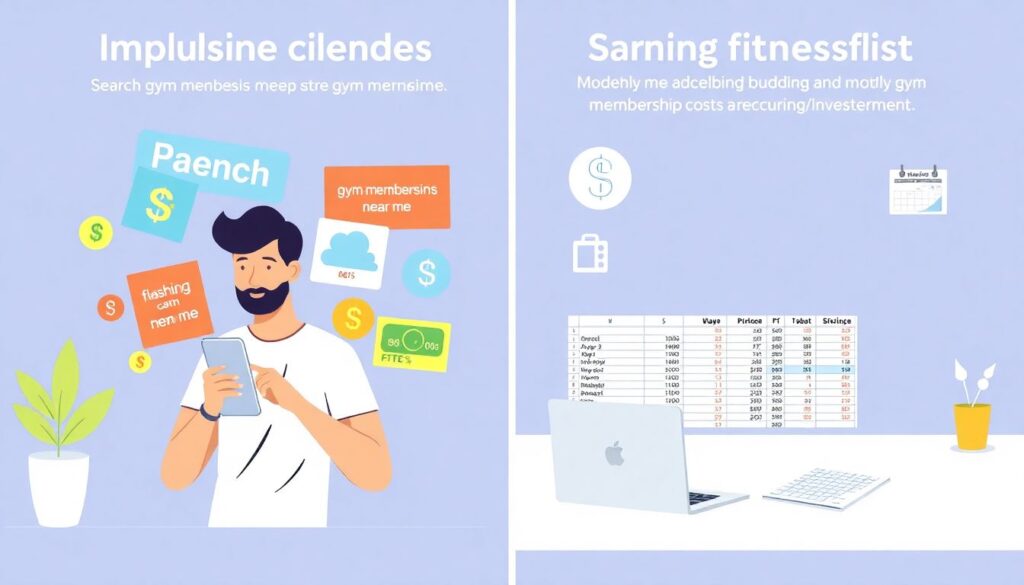
Пeople usually search for “cheap gym memberships near me” before they ever open a spreadsheet, but a sustainable fitness routine starts with a financial model, not a promo banner. Budgeting for a membership is essentially a small, recurring-investment decision: you’re trading monthly cash flow for long‑term health returns, measurable as reduced medical risk, improved productivity, and better mental resilience. In 2025, with subscription fatigue and inflation pressure, the key is to treat a gym contract like any other service‑as‑a‑subscription: calculate total cost of ownership, assess utilization rate (how many sessions per month you’ll really do), and compare alternatives such as home equipment or outdoor training. Once you factor in commute time, cancellation policy, and price dynamics after the introductory period, you can see whether a gym is a rational line item in your personal budget.
The goal is not to find the absolute lowest price, but to pay the least for the specific training effect you need and will actually use.
Historical Context of Paid Fitness and Budgeting
From Physical Culture to Subscription Models
Modern gym budgeting has roots in the early 20th‑century “physical culture” movement, when training was mostly pay‑per‑class or club‑style dues. As urbanization and office work expanded, fitness centers shifted toward standardized memberships, mirroring telecom and media subscriptions. By the 1980s, annual contracts with hidden fees and aggressive sales tactics became common, and consumers rarely applied structured budgeting methods; they treated the membership as a sunk cost rather than a variable expense to be optimized. In the 2000s, discount chains and boutique studios fragmented the market, introducing tiered pricing, prepaid packs, and automatic renewals. Today, best budget gyms with no contract respond to a more financially literate customer who expects transparency, flexible terms, and digital tools for monitoring both training metrics and monthly expenditures.
Historically, each economic downturn pushed gyms toward more flexible, price‑sensitive offers and forced users to think more analytically about recurring fitness costs.
Why History Matters for Your 2025 Budget
Understanding this evolution helps you recognize that most pricing structures are designed around predictable human behavior: we overestimate future motivation and underestimate total cost.
Core Budgeting Principles for a New Gym Contract
Calculating Total Cost of Ownership
When you evaluate a new membership, focus on total cost of ownership (TCO), not just the advertised monthly fee. TCO aggregates the sign‑up fee, recurring dues, mandatory “maintenance” charges, locker rental, transport costs, and opportunity cost of time. A good rule is to compute the effective price per planned workout: divide the full monthly cost by the realistic number of sessions you’ll attend, not the optimistic fantasy. If you expect 8 sessions per month and your all‑in cost is $80, you’re paying $10 per workout; that’s your real unit price. Then compare this to alternatives: low cost fitness clubs with classes, a public pool, or a modest home setup. This micro‑economics view keeps you from being anchored on headline discounts that hide a poor cost‑per‑use ratio.
If the cost per realistic workout makes you wince, the plan is misaligned with your budget or your behavior patterns.
Aligning Membership Type with Training Objectives
Your budget should follow your training goals, not the other way around.
Long‑term hypertrophy, weight‑loss, rehab, or general health each demands a different frequency, equipment set, and coaching level.
Budget Constraints vs. Program Design
From a budgeting standpoint, there is no universal “affordable gym membership for beginners”; the term is relative to income, goals, and adherence. For a novice who needs external structure and feedback, paying slightly more for qualified coaches and safe equipment may actually be cost‑effective, because it reduces injury risk and program dropout. In contrast, an experienced lifter might optimize costs by choosing a bare‑bones facility with solid racks and no extras. The trick is to map required training inputs (strength machines, free weights, classes, pool, sauna) to specific budget lines. If classes are central to your plan, prioritize clubs where group sessions are bundled, not add‑ons. If you only need a power rack and space, you’re effectively cross‑subsidizing other members if you buy a premium wellness package with features you’ll ignore.
Every piece of unused functionality is a hidden “luxury tax” inside your monthly payment.
Practical Implementation Examples
Beginner on a Tight Income
Imagine a student with limited disposable income exploring gym membership deals and discounts. Step one is to establish a maximum monthly fitness budget as a fixed percentage of net income, for example 3–5%. Step two: collect price data for several options within commuting distance, including traditional gyms, low cost fitness clubs with classes, and campus facilities. The student then estimates realistic weekly frequency—perhaps three sessions—and rejects any option where effective cost per session exceeds a pre‑defined threshold. Next comes qualitative assessment: safety, crowding at peak hours, trainer availability. By entering all this into a simple spreadsheet—columns for base price, hidden fees, commute cost, session count, and subjective rating—the student can rank options by cost‑utility. Finally, they choose a monthly or no‑contract plan first, treating the initial 2–3 months as a pilot study to confirm adherence before committing to longer terms.
This “test phase” is cheaper than buying a full year and stopping after six weeks.
Value Optimization with Flexible Contracts
For many users in 2025, flexibility is worth a moderate premium.
Choosing Between Contracts, Packs, and On‑Demand
If your work schedule or caregiving duties fluctuate, locking into a long contract can destroy your cost‑per‑use efficiency. In such cases, best budget gyms with no contract, session‑based passes, or hybrid models (e.g., 10‑visit packs plus online programs) can be economically superior. The key analytic tool here is scenario modeling: build two or three plausible monthly attendance scenarios (optimistic, realistic, pessimistic) and compute TCO for each pricing model. This reveals how sensitive your costs are to missed sessions. If a no‑contract plan costs 15% more per month but your attendance is volatile, you may still spend less over a year than with a discounted annual plan you barely use. As more gyms shift to dynamic, app‑managed pricing, the ability to run these calculations quickly becomes a real financial skill.
Budgeting isn’t only about minimization; it’s about resilience when life interrupts your training calendar.
Common Misconceptions and Cognitive Biases
Price vs. Usage: The Sunk Cost Trap
One of the most expensive mental errors is believing that paying more will force you to attend. Behavioral economics calls this a sunk cost effect: prior expenditure irrationally drives future behavior. In reality, motivation decays faster than contracts, and your attendance will mostly track habit design, not monthly fee level. Another misconception: assuming that more features equal better value. Many people choose premium low cost fitness clubs with classes, pools, and wellness zones “just in case”, then stick to the treadmill and a few machines. From a budget perspective, this is over‑specification—paying for system capabilities you don’t deploy. A cleaner model is “minimum viable membership”: the lowest‑priced plan that fully supports your current 6–12 month training microcycle. When your goals or routine change, you can re‑specify and upgrade.
Your wallet benefits more from honest self‑assessment than from glossy facility marketing.
Overestimating Future Willpower
We systematically imagine a future self who is more disciplined, less busy, and more excited about cardio than the current one.
Future Outlook: Gym Budgeting up to 2030
Tech, Data, and Dynamic Pricing
By 2030, budgeting for a gym membership will likely feel closer to managing a phone plan than buying a static pass. Expect increasing use of dynamic pricing, where monthly fees adjust based on off‑peak usage, long‑term loyalty, or even aggregated health data—provided regulations allow it. Wearables and training apps will generate detailed utilization metrics, letting users see an automated cost‑per‑workout and cost‑per‑improvement dashboard. We’ll also see more micro‑subscriptions: targeted add‑ons for strength coaching, mobility modules, or rehab, each with transparent marginal cost. For consumers, this cuts both ways: personalization can optimize spending, but complexity can obscure the real TCO if you don’t track all micro‑charges. Tools that now help people search “cheap gym memberships near me” will evolve into intelligent advisors that simulate scenarios and recommend optimal mixes of at‑home setups, digital programs, and physical gyms.
In such an environment, basic budgeting literacy becomes a core fitness skill, as crucial as learning proper technique for a squat.