
Shopping for a big family doesn’t have to feel like a second mortgage. With a bit of strategy (and some psychology), you can shrink your grocery bill without shrinking portions or nutrition.
Below — a structured, down‑to‑earth guide with history, principles, real‑life cases and common myths.
—
How We Got Here: A Short Historical Look at Family Food Costs
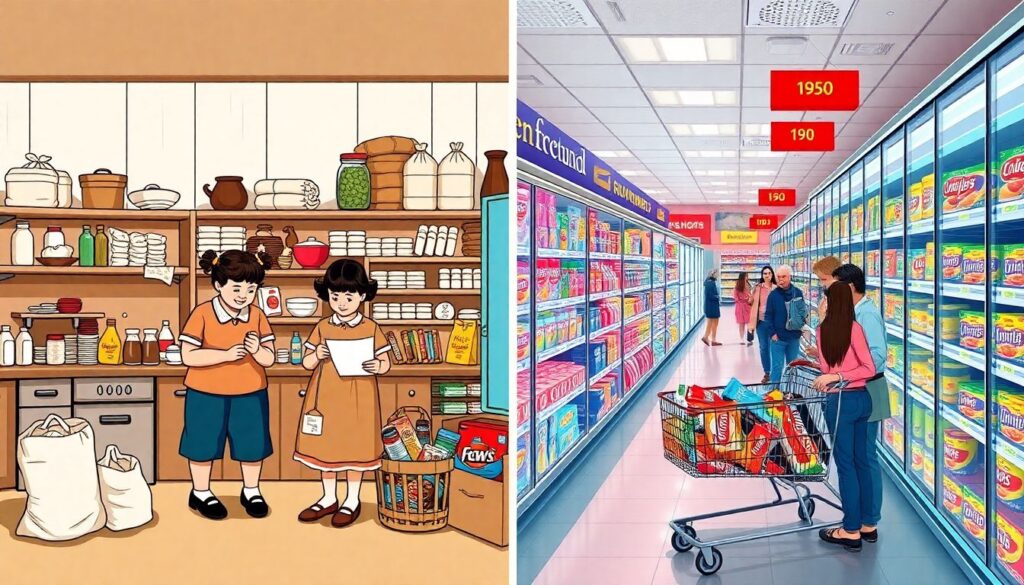
In the 1950s, the average family spent a big chunk of income on food, but the menu was simpler: seasonal produce, fewer snacks, almost no convenience foods. Bulk items meant sacks of potatoes and flour, not 48‑packs of mini-chips.
By the 1980s–1990s, supermarkets exploded with choice. Frozen dinners, sugary cereals, “kid snacks,” branded drinks — all of this made shopping faster but also quietly more expensive per calorie and per nutrient. Marketing started targeting children directly, which matters a lot if you’re feeding four or five kids.
Today, price tags are more volatile, but we also have tools previous generations didn’t: discount chains, digital coupons, price‑comparison apps, and online communities sharing tips on how to save money on food for a big family. The families who win financially are usually not the ones with the highest income, but the ones who systematize their food habits.
—
Basic Principles of Cost-Saving for Large Families
Hacking the “Total Cost” Mindset
The first shift is from “What’s the cheapest item?” to “What’s the lowest cost per useable serving?” That’s why bulk buying groceries to save money works only if you’ll actually eat everything before it spoils.
Three key questions to train yourself to ask:
1. Cost per 100 g or per serving?
2. Shelf life and storage? (Can I freeze this or dry it?)
3. How many meals can I realistically build around this?
Once you start thinking this way, “cheap groceries for large families” stops being about chasing random discounts and becomes a pattern.
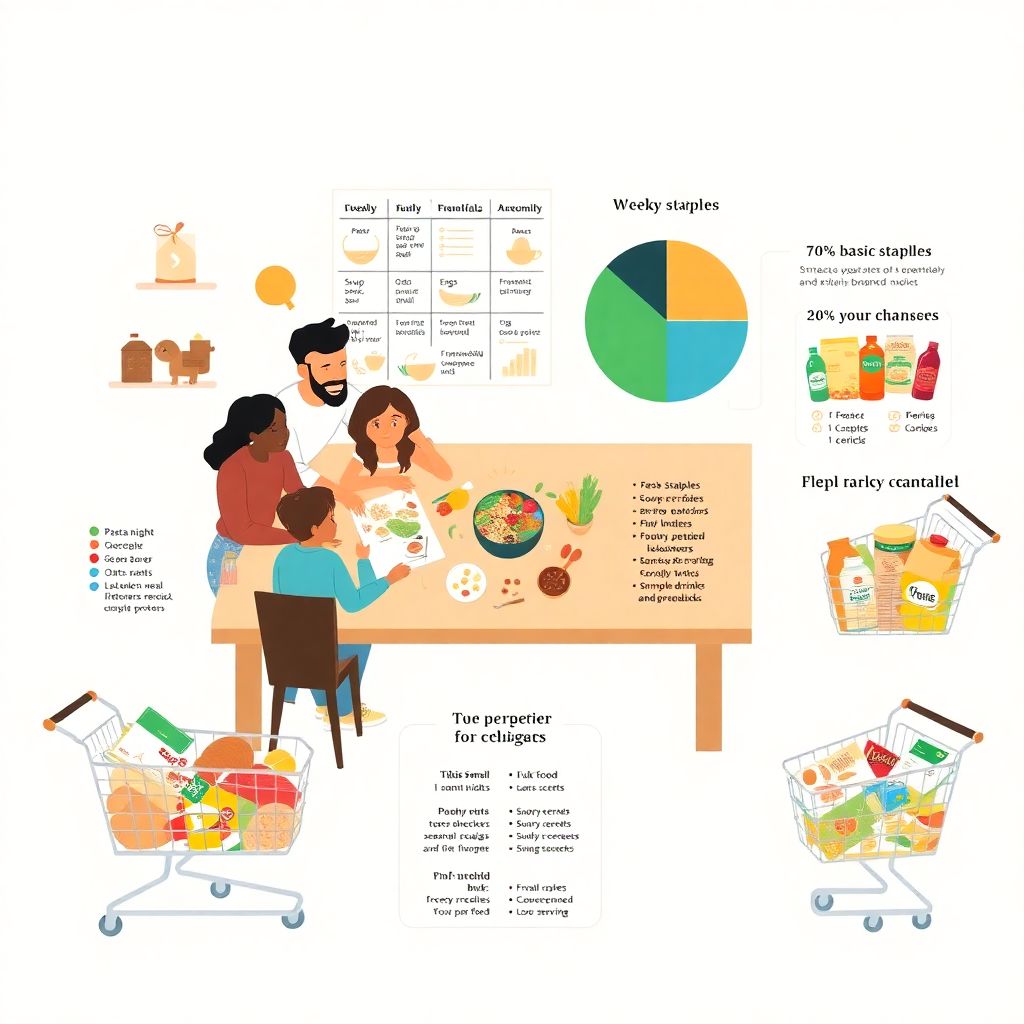
The 70/20/10 Rule for Food Spending
A practical way to structure a big family’s food budget:
– 70% on basic building blocks: rice, pasta, oats, beans, lentils, eggs, frozen vegetables, in‑season fresh produce, simple proteins.
– 20% on “flavor enhancers”: sauces, oils, herbs, spices, cheese, nuts in small amounts.
– 10% on “fun food”: desserts, special drinks, branded snacks.
This doesn’t have to be perfect, but using it even loosely keeps you from letting “fun food” creep up to 30–40% of your spending.
—
Smart Planning: Turning Chaos into a System
Meal Planning Without Becoming a Spreadsheet Zombie
You don’t need a rigid, minute‑by‑minute menu. What you need is meal planning on a budget for large families that sets direction, not handcuffs.
A simple weekly pattern could look like:
1. One pasta night
2. One soup or stew night
3. One rice or grain bowl night
4. One breakfast‑for‑dinner night (eggs, pancakes, oats)
5. One slow‑cooker / one‑pot meal
6. One leftovers remix night
7. One flex night for invitations, takeout, or freezer meals
You rotate specific recipes inside those slots based on what’s on sale.
Case: The “Theme Night” Family (5 kids)
A family of seven in Ohio adopted “theme nights” like above. Before, they were in the store 4–5 times a week, averaging about $1,250/month on groceries.
After three months of loose planning and shopping once a week (plus one small “milk and fruit” run), their average dropped to ~$950/month — without cutting portions. The savings came mainly from:
– Fewer impulse buys
– Better use of leftovers
– Less food going off in the fridge
They didn’t cook fancy, just repeated a limited set of family‑approved meals.
—
Where You Shop Matters More Than You Think
Choosing the Right Stores
If you’re trying to find cheap groceries for large families but shop only at high‑end supermarkets, you’re starting the game on “hard mode.”
Many families do best with a two‑store strategy:
– 1–2 of the best budget grocery stores for families (discount chains, ethnic markets, bulk clubs) for staples.
– A regular supermarket or local shop for specific brands or items you can’t find elsewhere.
Case: The Warehouse Club Skeptic
A family of six avoided warehouse clubs because of the membership fee. One month, they did a test:
– They listed their 15 most common staples (rice, oats, chicken, cheese, toilet paper, etc.).
– They compared per‑unit prices between their usual supermarket and a warehouse store.
Result: For 11 of the 15 items, the warehouse was 15–40% cheaper. Within two monthly trips, the membership fee had already paid for itself. They kept the supermarket for small quantities and specialty items, but shifted all core staples to the warehouse club and a nearby international market.
—
Bulk Buying: When It Helps and When It Backfires
The Science of Not Wasting Your “Savings”
Buying in bulk works only when three conditions are met:
1. Your family actually likes and consumes the item regularly.
2. You can store it properly (dry, cool, airtight, or frozen).
3. It won’t get forgotten at the back of the pantry.
Dry items like rice, oats, beans, lentils, sugar, salt, baking soda, and many spices are almost ideal for bulk buying groceries to save money. Same for frozen vegetables and frozen fruit.
Fresh produce is trickier.
Case: The “Giant Bag of Lettuce” Trap
A family of four children in a small apartment kept buying huge bags of salad mix “because it’s cheaper per gram.” They also threw out about a third of it every week. After tracking it for a month, they realized they were paying more per eaten portion than they would with smaller bags they actually finished.
They switched to hearty veggies that last longer (carrots, cabbage, frozen broccoli) and bought smaller amounts of salad mix. Their total vegetable spending dropped, and they were throwing out almost nothing.
—
Practical Implementation: Step‑by‑Step Hacks
1. Run a One-Week “Audit” Without Changing Anything
1. Keep every grocery receipt for a week.
2. At the end, mark items in three colors:
– Green: essential ingredients (meals depend on these)
– Yellow: nice‑to‑have (snacks, treats, premium brands)
– Red: waste or regret buys
3. Sum each color. Families are often surprised to see that “red + yellow” is 25–40% of their bill.
2. Lock In 10–15 “Core Meals”
Pick 10–15 inexpensive, repeatable meals your family generally likes, and build your pantry around them:
1. Two or three rice‑based meals
2. Two pasta dishes
3. Two soups or stews
4. Two “sheet pan” meals (veggies + protein roasted together)
5. Two breakfast‑for‑dinner ideas
6. A couple of meals built from leftovers (fried rice, quesadillas, frittata)
You don’t have to cook new recipes every week. Consistency is what stabilizes costs.
3. Pre‑Cook Key Ingredients, Not Full Meals
Batch‑cooking doesn’t always mean full freezer lasagnas. For large families, it’s often easier to pre‑cook “elements”:
– Big pot of rice or grains
– Boiled eggs
– Roasted vegetables
– A tray of seasoned chicken pieces or beans
Then you simply combine them into different meals across the week: bowls, burritos, salads, wraps, stir‑fries.
—
Real-Life Cases: What Actually Works
Case 1: From “We Shop Every Day” to “Twice a Week Max”
Family: 2 adults, 4 kids (ages 3–12)
Starting problem: Constant small trips, frequent takeout, no clear plan.
What they changed:
– Set two fixed shopping days (Wednesday and Saturday).
– Wrote a running list on the fridge — anything needed goes there immediately.
– No store visits outside those days, unless it was an emergency (medicine, etc.).
Outcome over 2 months:
– Monthly grocery + takeout total dropped from roughly $1,350 to about $1,000.
– Fewer “I forgot X, so I’ll order pizza” evenings.
– Kids got used to the idea that if snacks ran out, they had to wait until the next shopping day.
The science here is simple: every extra store visit increases exposure to impulse triggers — lights, smells, kid‑level packaging — designed to make you spend.
Case 2: The “Brand Loyalist” Turns Flexible
Family: 1 parent, 3 teens
Starting problem: Very loyal to specific brands, complaints if anything changed.
What they changed:
– For two categories (pasta and canned tomatoes), they tried cheaper store brands for a month.
– They did blind taste tests at home.
Result:
– Teens could not reliably tell which was which.
– They switched permanently for pasta, canned tomatoes, and pasta sauce, saving $25–$30/month just in that category.
– They kept a few “must‑be‑brand” favorites (a particular cereal and yogurt), but now saw them as special, not default.
—
Frequent Misconceptions About Saving on Food
Misconception 1: “Healthy Food Is Always More Expensive”
Highly marketed “health” foods are expensive — bars, fancy drinks, supplements. But basic healthy staples (oats, frozen vegetables, beans, seasonal fruit, eggs) are low cost per nutrient.
Nutritionally dense, minimally processed foods are often cheaper and more filling than processed snacks when you compare cost per 100 calories or per gram of protein.
Misconception 2: “Coupons Automatically Save Money”
Coupons are a tool, not a guarantee. Many coupons push you toward processed, branded items you didn’t plan to buy.
A useful rule: No coupon gets used unless that item was already on your list, or it beats the price of your usual brand for the same quality.
Misconception 3: “Cooking from Scratch Takes Too Much Time”
Cooking from scratch can take time — but it can also be faster than getting everyone into the car, driving to a store, waiting, buying, and coming back.
What actually matters is:
– How many base skills you’ve automated (chopping, cooking rice, roasting).
– Whether you batch tasks (e.g., chopping all vegetables for three days at once).
– Using tools like slow cookers or pressure cookers to trade time for attention.
Misconception 4: “Bulk = Savings, Always”
As we saw with the lettuce example, bulk without a plan is just large‑scale waste. Bulk only makes sense when you know:
– Your realistic weekly consumption
– Your storage limits
– What your family consistently eats
—
Pulling It All Together
Saving on food for a large household isn’t magic; it’s the compound effect of dozens of small, repeatable decisions:
– Shift your thinking to cost per serving and waste reduction.
– Choose stores strategically and lean on the best budget grocery stores for families for staples.
– Plan loosely but consistently, with a handful of core meals.
– Use bulk intentionally, not automatically.
– Question brand loyalties and “health halo” marketing.
Over a year, even a modest weekly saving adds up to hundreds or thousands of dollars — without shrinking appetites or living on instant noodles.