
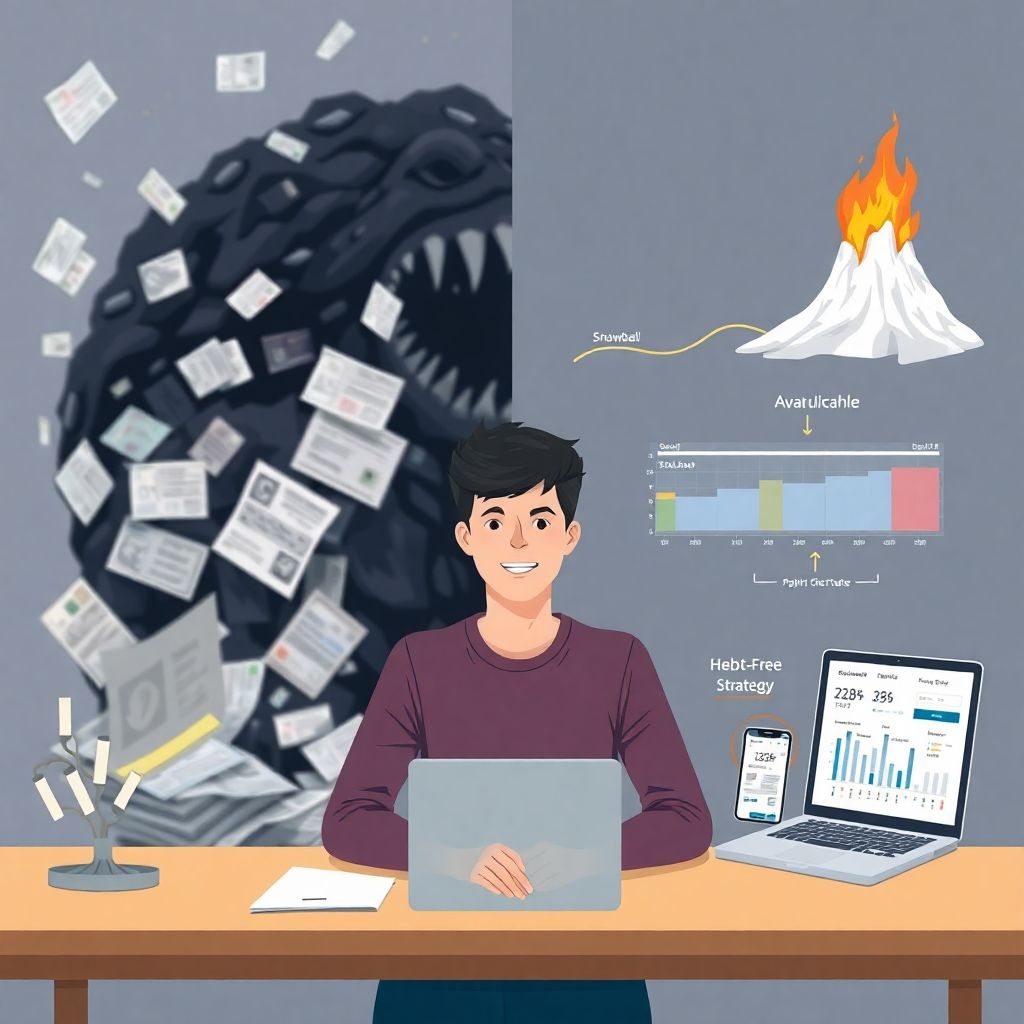
Why Your Debt Feels So Overwhelming (And Why That’s Normal)
If you feel like your debt is this huge, blurry monster you’d rather not look at, you’re in very crowded company. According to the New York Fed, total U.S. household debt hit about $17.5 trillion by the end of 2023, up roughly $3 trillion compared with 2019. Credit card balances alone passed $1.1 trillion in 2023 for the first time. Early 2024 data shows the trend still pointing upward, especially for younger borrowers juggling student loans, buy-now-pay-later plans and rising living costs. I don’t have full 2025 numbers yet (they’re not published as of my latest data), but the pattern over the last three years is clear: more people, more balances, and higher interest. So if you’re stressed, it’s not that you’re “bad with money” — you’re living in a pretty hostile environment for anyone trying to stay debt-free. The real issue isn’t willpower; it’s having a concrete, realistic plan you can actually follow day after day without burning out psychologically.
Core Strategies: Snowball, Avalanche, Consolidation And Hybrids
Before you open an app or a spreadsheet, you need a basic strategy. The three most popular approaches for a debt payoff plan are the snowball method, the avalanche method and some form of consolidation. With the snowball method you pay minimums on everything, then throw all extra cash at the smallest balance first. When that’s gone, you roll that payment into the next-smallest debt. It’s not always mathematically perfect, but it’s extremely satisfying because you see quick wins. The avalanche method is the opposite: you attack the highest interest rate first, which usually saves the most money over time. The emotional payoff is slower, but the long‑term math is better. Consolidation, whether via a fixed‑rate personal loan or a 0% balance transfer card, tries to simplify the chaos into one payment. Over the last three years, as rates climbed, many borrowers used consolidation to lock in lower fixed rates before credit costs increased further, though approvals have become tougher for people with weaker credit scores.
Сomparing Approaches: What Actually Works In Real Life
When you compare these approaches in practice, the biggest difference isn’t the spreadsheet; it’s how your brain reacts month after month. People who are very numbers‑driven tend to stick with avalanche because watching the total interest cost shrink gives them a sense of progress. Others start avalanche, get frustrated because no single debt disappears fast enough, and then quit entirely. In multiple surveys since 2022, a common theme shows up: about half of people who start a structured payoff strategy drop it within a year, often because they tried to be “perfect” instead of “consistent.” That’s why many coaches now suggest a hybrid: use avalanche to choose the top few expensive debts, but within that group, knock out the smallest first for a snowball‑style win. Consolidation adds another option: if you qualify for one of the best debt consolidation programs through a bank, credit union, or reputable online lender, you can turn five chaotic payments into one manageable bill, but only if you don’t keep swiping the now‑empty credit cards afterward.
Tech Tools: Calculators, Templates, Apps And AI
Technology can make or break how organized you feel. At the most basic level, a solid debt payoff plan template in a spreadsheet lets you plug in balances, interest rates and minimums and instantly see how long payoff will take under different strategies. Many budgeting apps now include a built‑in debt repayment calculator that lets you test “What if I throw an extra $150 a month at this card?” and visually see months disappearing from your timeline. Over the last three years, apps have become more automation‑heavy: automatic transfers on payday, alerts when you’re about to overdraft, and color‑coded progress bars that gamify the process. At the higher end, some platforms and banks started offering AI‑driven recommendations by 2024, suggesting which card to tackle next or how to reallocate payments when your income changes. The upside is convenience and fewer decisions; the downside is that not every algorithm knows your emotional triggers, and some tools quietly upsell you new credit products when you’re trying to dig out, not dig deeper.
Pros And Cons Of Modern Debt Technologies
Let’s be blunt: apps and online tools are only as helpful as the behavior they support. On the plus side, automation reduces missed payments, reminders keep you aware without obsessing, and real‑time tracking stops that “I have no idea what’s going on” feeling. For someone juggling multiple jobs or kids, having a single dashboard where all your loans, cards and payment dates live can be a sanity saver. But technology has its traps. Some “free” apps sell your financial data for marketing, while others push “offers” that nudge you toward more borrowing. Even some professional debt relief services advertise aggressively online and mix helpful calculators with scary countdown timers to pressure you into signing up instantly. Another con: if you rely only on notifications, one change of phone, email or app policy can disrupt your whole system. The best tech supports a plan you already chose consciously, instead of deciding the plan for you behind the scenes.
When To Get Human Help: Advisors, Counselors, Relief Services
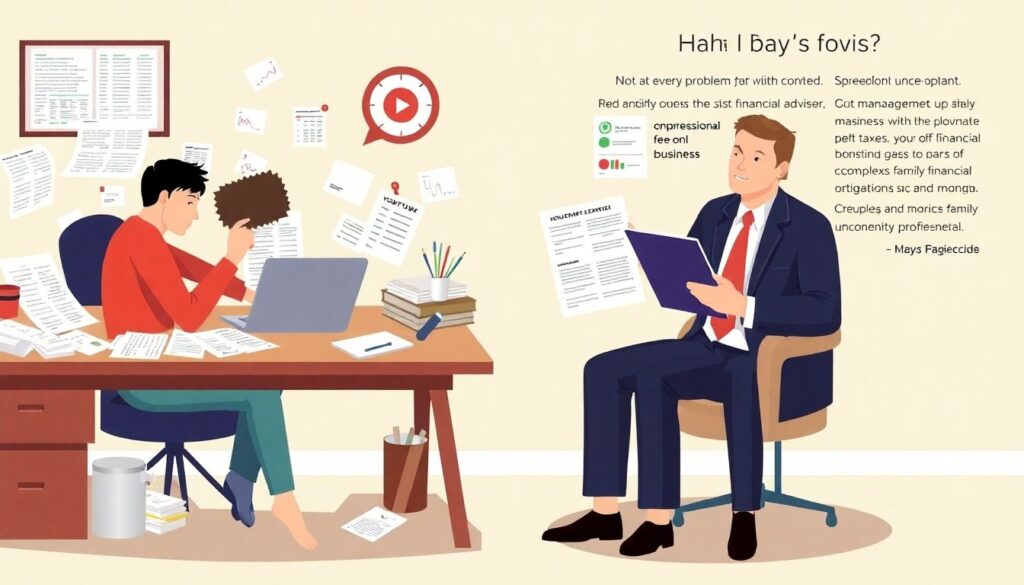
Not every problem can be solved with a spreadsheet and YouTube videos. Sometimes the smartest move is to hire financial advisor for debt management, especially if your situation includes business loans, back taxes, or complicated family obligations. A fee‑only planner can help you choose between DIY payoff, consolidation and more formal options like bankruptcy if things are truly unmanageable. Nonprofit credit counseling agencies are another layer; they can negotiate lower interest rates and set up a structured debt management plan, usually paid via one combined monthly payment. Finally, there are for‑profit professional debt relief services that promise to slash what you owe by negotiating lump‑sum settlements after you stop paying your creditors. These can work in extreme cases, but they can also wreck your credit for years, and scams are common. Over the last three years, regulators have repeatedly warned consumers to be cautious: check licensing, read contracts carefully and avoid companies that guarantee impossible results or tell you to ignore all creditor communications.
Step‑By‑Step: Building A Debt Payoff Plan You’ll Actually Stick To

Создать план, который выдержит не один месяц, а несколько лет, легче, если разбить процесс на понятные шаги. Вместо того чтобы бездумно нажимать «оплатить минимальный платёж», сядь на час с реальными цифрами — это неприятно, но именно с этого момента появляется контроль. Ниже — простой алгоритм, который можно адаптировать под свой доход, график и уровень терпимости к риску, не превращая жизнь в бесконечную экономию на всём подряд.
1. List everything you owe: creditor, balance, rate, minimum, due date.
2. Pick a primary strategy (snowball, avalanche, or hybrid) that fits your personality.
3. Use a debt repayment calculator or a debt payoff plan template to test timelines with different extra payment amounts.
4. Automate minimum payments and your chosen “extra” payment to the target debt on payday.
5. Add guardrails: a tiny emergency fund, spending limits and rules for using credit cards while you’re in payoff mode.
Choosing Your Strategy: How To Decide What’s Right For You
Выбор подхода зависит не только от математики, но и от того, как вы реагируете на стресс. Если вы знаете, что быстро теряете мотивацию без видимых побед, логичнее начать со snowball‑подхода, даже если он немного дороже по процентам. Если, наоборот, вас заводит сама идея «не кормить банки лишними деньгами», avalanche почти наверняка станет лучшим вариантом. Людям с разбросанными по разным картам и кредитам долгами может подойти консолидация, но только в связке с чётким бюджетом. Поиграйтесь цифрами в debt repayment calculator: прогоните сценарий с разными суммами доплат и посмотрите, как меняется дата полного обнуления. Важно не выбрать «идеальный» метод, а найти тот, с которым вы согласны жить ближайшие два‑три года, не срываясь каждые пару месяцев.
Где Подключить Консолидацию И Когда Она Реально Помогает
Консолидация долгов стала особенно популярной в период роста ставок, примерно с 2022 по 2024 год, когда по многим кредиткам проценты улетели далеко за 20% годовых. Если у вас нормальная или хорошая кредитная история, один из best debt consolidation programs способен заменить несколько «горящих» карт одним более дешёвым фиксированным кредитом. Плюсы очевидны: один платёж, понятный срок, меньше шансов забыть дату. Минусы — комиссии за оформление, риск получить ставку не намного ниже текущей и психологическая ловушка, когда вы облегчённо вздыхаете и снова начинаете пользоваться теми же картами. Консолидация имеет смысл, если вы параллельно режете лимиты, закрываете часть карт или хотя бы замораживаете их использование до полного закрытия нового кредита, иначе через пару лет можно очнуться с двумя слоями долгов вместо одного.
Тенденции 2026: Что Меняется В Погашении Долгов
Судя по трендам последних трёх лет, к 2026 году платёжное поведение людей продолжает меняться. Молодые заёмщики всё чаще управляют долгами через мобильные приложения, а не через интернет‑банкинг на компьютере, и хотят видеть не просто список счетов, а целостный сценарий: от сегодняшнего минуса к дате полного обнуления. Растёт спрос на гибридные решения, где приложение помогает контролировать бюджет, а живой специалист в чате даёт рекомендации, когда что‑то идёт не по плану. Регуляторы усиливают контроль за онлайн‑рекламой кредитов и услуг по урегулированию задолженности, поэтому рынок постепенно очищается от самых токсичных предложений. Со стороны работодателей набирает обороты тренд на финансовое благополучие: компании добавляют консультации и обучающие курсы, чтобы сотрудникам было проще держать под контролем долги и не выгорать эмоционально из‑за денег.
Как Использовать Профессиональные Сервисы С Умом
Если вы чувствуете, что одни и те же долги кочуют с карты на карту, а суммы почти не меняются, это знак посмотреть в сторону помощи со стороны. Необязательно сразу уходить в жёсткие схемы: начните с бесплатной консультации в некоммерческом кредитном агентстве или у независимого консультанта. Там с вами разберут доходы, расходы и предложат несколько сценариев, от мягкой реструктуризации до официальной процедуры банкротства, если она уместна. При выборе professional debt relief services важно не поддаваться на обещания «закрыть долги за полцены за пару месяцев» — такие заявления за последние годы не раз становились объектом расследований. Проверяйте отзывы не только на сайте компании, но и на ресурсах регуляторов и защитников прав потребителей. В идеале вы платите за прозрачный план и сопровождение, а не за красивую рекламу и агрессивный телемаркетинг.
Заключение: От Хаоса К Системе, Без Жёсткого Аскетизма
Переход от «я боюсь открывать банковское приложение» к «я точно знаю, когда буду без долгов» — это не один гигантский рывок, а серия очень приземлённых решений. Вам не нужно превращаться в фанатика экономии или разбираться во всех финансовых терминах. Достаточно честно выписать все долги, выбрать рабочую стратегию, подогнать её под свой характер и жизненные обстоятельства, автоматизировать часть рутинных действий и, при необходимости, подключить специалистов. Если по дороге вы решите hire financial advisor for debt management или обратиться в надёжные консультационные службы, это не поражение, а нормальный шаг взрослого человека. Главная цель плана — не только обнулить цифры, но и вернуть ощущение, что вы снова управляете деньгами, а не они диктуют вам, что делать каждый месяц.