
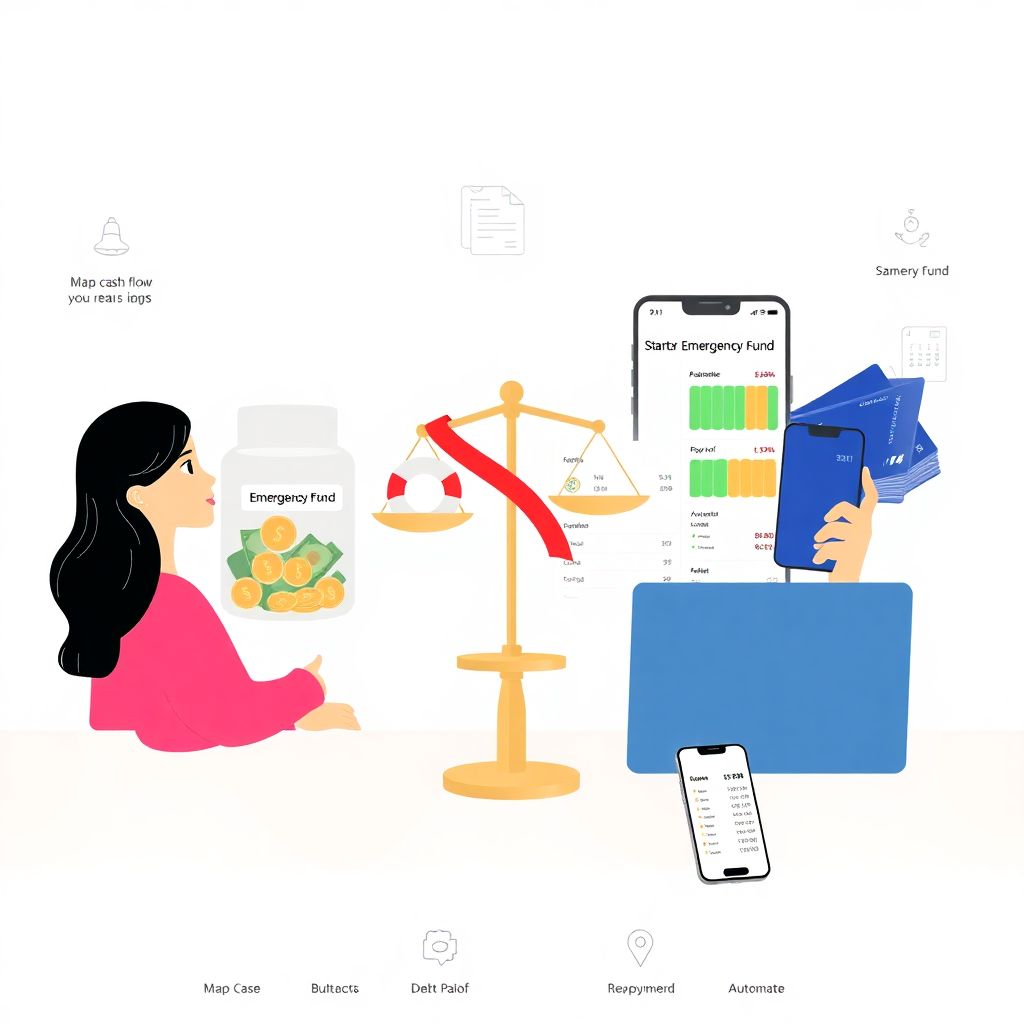
Why Balancing Savings and Debt Feels So Confusing
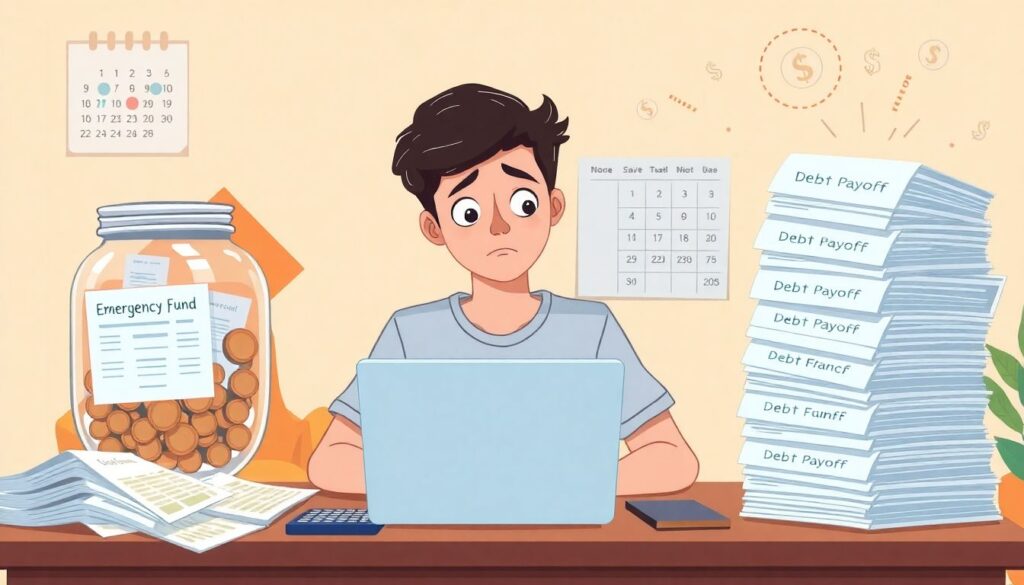
If you’re wrestling with how to build an emergency fund while paying off debt, you’re basically trying to solve two opposite problems at once: one wants you to stockpile cash, the other wants you to throw every spare cent at balances. The usual advice online sounds absolute — “pay off debt or save for emergency fund first” — but in real life, income swings, kids, health issues and unstable jobs make that either–or logic risky. A more realistic approach treats saving and repayment as a single system: reduce your vulnerability to surprises while shrinking interest costs as fast as your lifestyle and income actually allow.
Tools You Need Before You Start
Budgeting and Tracking Essentials
Before you look for the best strategies to save for emergency fund and pay down debt, you need a clear view of where your money actually goes. A basic checking account plus a separate savings account for your emergency cushion is the minimum. Then you need a way to track cash flow in real time: a spreadsheet, a notebook, or, more efficiently, budgeting apps to manage debt payments and build emergency fund contributions in one place. The specific tool matters less than consistency: you want to see income, fixed bills, variable spending and every debt, including interest rates and minimums.
Digital Helpers and Human Support
Apps can automate transfers, categorize spending and flag overspending, but software doesn’t replace judgment. Consider setting up automatic transfers to savings the day after payday, and automatic debt payments right after that. Alerts for low balances and due dates reduce late fees, which silently sabotage progress. On the human side, financial advisors for debt repayment and emergency savings planning can be useful if your situation is complex — multiple cards, variable income, or looming life changes. Even if you don’t hire anyone, talking through your numbers with a trusted, financially sensible friend can expose blind spots and habits you no longer notice.
Step-by-Step: How to Build an Emergency Fund While Paying Off Debt
1. Define the “Starter” Emergency Fund
A full emergency stash is usually three to six months of expenses, but trying to hit that while under heavy debt can stall you out. Instead, first set a “starter” target: often 500–1000 dollars if your income is fairly stable, or one month of bare‑bones expenses if your job is shaky or you have dependents. This amount won’t protect you from everything, yet it prevents minor crises — car repairs, vet bills, small medical costs — from going straight onto a credit card and undoing progress. Clarity about this first goal keeps you from drifting between saving and debt payoff without finishing either.
2. Map Your Cash Flow and Minimums
Next, lay out your monthly income after tax and list every recurring bill and debt minimum. Include irregular items pro‑rated monthly, like annual subscriptions or car insurance. Many beginners underestimate non‑monthly costs, so they end up “surprised” by predictable bills and reach for credit. Subtract all fixed obligations from your income; what’s left is your flexible money. From that, pre‑assign a realistic slice to the starter emergency fund and another slice to extra debt payments on top of minimums. If the leftover number is negative or tiny, your priority temporarily becomes cutting expenses and boosting income before you worry about accelerating payoff.
3. Split Every “Free” Dollar on Purpose
Once you know your surplus, decide an intentional split between saving and debt. For example, you might send 70% of extra money toward the highest‑interest debt and 30% into your emergency account until the starter fund is done. This structured compromise is one of the best strategies to save for emergency fund and pay down debt without feeling like you’re ignoring either risk. As your emergency cushion reaches that initial target, you can gradually tilt the split — maybe 90% to debt, 10% to maintenance savings — so the fund doesn’t stagnate but your expensive balances fall faster.
4. Choose a Debt Repayment Method
After minimums, focus your extra payments using a deliberate method instead of scattering small sums. The “avalanche” approach targets the highest interest rate first, saving the most money over time; the “snowball” attacks the smallest balance first, which many people find more motivating. Both can work while you’re saving, as long as you keep the split with your emergency contributions intact. Newcomers often change methods every few months, chasing quick wins, and lose momentum. Pick one that fits your personality and stick with it at least until your starter emergency fund and one or two key debts are under control.
5. Automate, Then Adjust Gradually
Once the plan is set, automate as much as possible: transfers to your emergency account and extra payments to the targeted debt should be scheduled, not left to willpower at month’s end. Treat them like non‑negotiable bills. As your income changes — a raise, side gig, or reduced expense — increase the automated amounts instead of letting extra money drift into lifestyle upgrades. The big mindset shift is this: you’re not asking, “Can I save something this month?” You’re designing a default system and only making manual changes when major life events occur or when your emergency cushion needs to move from “starter” to several months of expenses.
Common Beginner Mistakes and How to Fix Them
Ignoring Small Emergencies and Relying on Credit
One of the most common errors is starting an ambitious debt payoff plan with almost no cash buffer. It looks efficient on paper but collapses the first time a tire blows or a pet gets sick. The card balance jumps back up, and emotionally you feel like a failure, even though the problem was the strategy, not your discipline. The fix is accepting a short period of slower debt repayment while you reach that starter emergency fund. Another mistake is using the fund for non‑emergencies — vacations, gifts, sales — and then calling it “bad luck” when a real crisis arrives. Define in advance what truly counts as an emergency.
All‑or‑Nothing Thinking About “Good” Behavior
Beginners often ask whether they should pay off debt or save for emergency fund first as if there’s one moral answer. Then, when they overspend or miss a transfer, they declare the whole plan ruined and revert to old habits. This perfectionism is expensive. A more practical attitude sees the system as adjustable: if you overspend one month, you temporarily pause extra debt payments, rebuild the emergency fund with the next paycheck, and then resume. You’re tuning the dials rather than throwing away the radio. Progress comes from boring consistency, not from a flawless streak that collapses after the first imperfect week.
Overcomplicating Tools and Underestimating Feelings
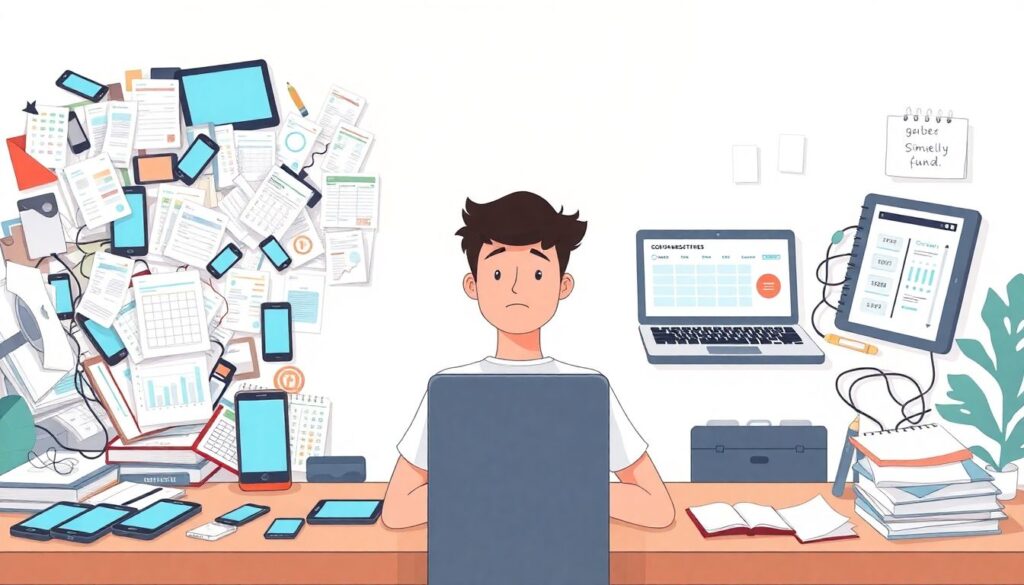
Another trap: downloading multiple apps, building complex spreadsheets, and then abandoning all of them because they feel overwhelming. Start with one simple system that you actually open regularly. Even the best budgeting apps to manage debt payments and build emergency fund goals are useless if they become digital clutter. At the same time, many people ignore the emotional side — shame about past mistakes, fear of checking balances, or the urge to “treat yourself” after a stressful day. Planning a small, guilt‑free fun budget each month is not weakness; it’s a pressure valve that makes your overall plan survivable over years, not weeks.
When to Get Outside Help
If you’ve tried to implement a plan and still feel stuck — balances aren’t shrinking, emergencies keep derailing you, or your income is irregular — it may be time to talk with a professional. Look for financial advisors for debt repayment and emergency savings planning who charge transparent fees and don’t push products you don’t understand. Nonprofit credit counseling agencies can also help you prioritize debts, negotiate lower interest in some cases, and organize payments. The goal isn’t to hand over control of your money, but to borrow expertise and structure until you feel confident running your own system and adapting it as your life changes.