

Why a Side Business Can Be Your Safest Bet, Not a Gamble
If you’ve been wondering how to start a side business without blowing up your work-life balance, you’re not alone. The smartest way to test a venture is to keep your salary intact while you validate demand, price, and delivery. Think of it like prototyping with training wheels: you get real customer feedback, real cash flow data, and a sober look at operations—without staking rent money on a guess. I’ve seen a backend engineer grow a paid newsletter from zero to $1,800 monthly recurring revenue in eight months, averaging 6–8 hours per week, before deciding whether to expand. That slow-and-steady approach lets you pressure‑test an idea before you scale it or walk away with minimal sunk cost.
Pick a Problem, Not Just an Idea
You’ll see endless side business ideas online, but the winners fix specific pains for specific people. “I’ll sell handmade candles” is fuzzy; “I’ll sell smoke-free, hypoallergenic candles for pet owners who complain about lingering odors” is a problem worth paying for. Start by listing ten repeat complaints you hear in your industry or community, then ask who loses money or time because of them. In practice, a nurse I coached built a micro-course for new grads on “first 90 days on the floor,” priced at $49, after collecting 47 stories about shift anxiety and documentation mistakes. She didn’t need a viral product—just a tight match between pain and promise, clear enough that buyers recognize themselves in the offer.
Realistic Formats That Work for Busy Professionals
If you’re doing a side business while working full time, pick a model with predictable hours and minimal context switching. Low-operational-load formats let you deliver consistent quality even on a Tuesday night after meetings. A productized service (e.g., “LinkedIn profile rewrites in 5 days, $249 flat”) or a digital product (e.g., templates, checklists) often beats open‑ended consulting early on. A designer I know did “30-minute teardown + 3 wireframes for landing pages,” capped at 4 slots per week, earning $1,000–$1,500 monthly with strict boundaries. That clarity keeps both clients and your boss happy.
Validate in Two Weeks: The Tiny Test Plan
You don’t need a custom app or a warehouse to start a side business with no money; you need proof that strangers will pay. In two weeks, you can run a no‑code experiment that tells you if the dog eats the dog food. Aim for 5–10 paid preorders, 10 discovery calls, or $500 in sales—any of these is a tangible “yes.” If results are thin, adjust price or positioning and re-run for another two weeks. Treat each sprint like a miniature science experiment, not a referendum on your self-worth.
– Draft a one‑page offer (problem, promise, price, delivery timeline).
– Build a simple landing page with a checkout link (Stripe/PayPal).
– Send 50 personalized outreach messages or run a $100 ad test.
– Book calls or collect preorders; deliver to a small cohort; measure NPS.
Technical details: Fast validation metrics
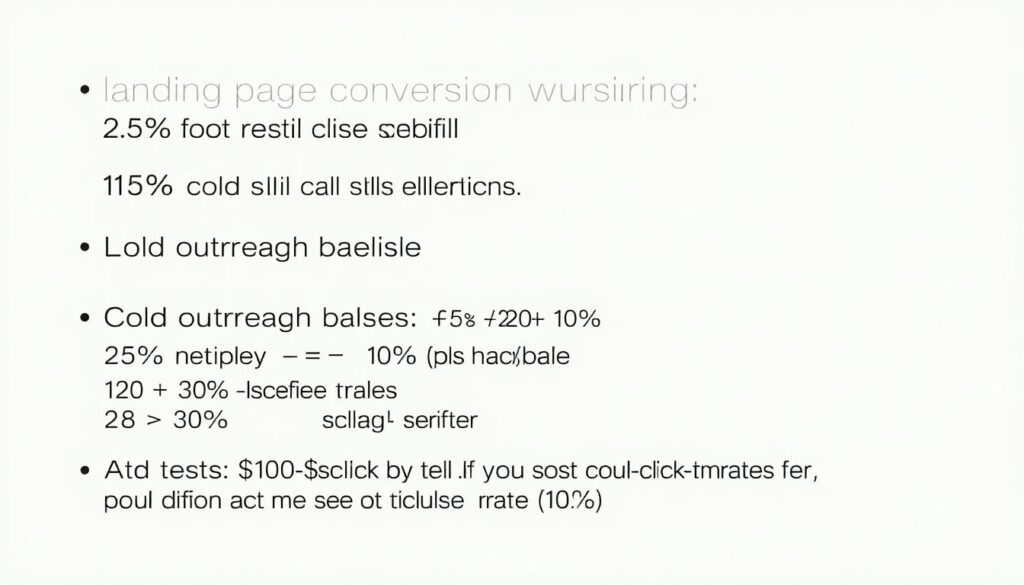
– Landing page conversion worth pursuing: 2–5% from cold traffic or 10%+ from warm referrals.
– Cold outreach baseline: 50 messages → 20% reply → 10% call‑booking → 20–30% close rate for a specific, well‑scoped offer.
– Ad tests: $100–$150 can tell you if your click‑through rate exceeds 1% (social) or 2–3% (search) and if your cost per lead stays below 10–20% of your price.
– Refund guardrail: offer a clear refund policy; keep refund rate under 5% to signal fit and delivery consistency.
Scheduling Without Burning Out
Time is the non‑renewable resource, especially when you’re juggling a side business while working full time. Block two 90‑minute “deep work” windows on weekdays and one 3‑hour weekend block. Batch similar tasks so your brain doesn’t thrash. One client, a CPA, produced one lead magnet per month on Saturdays, then scheduled three 45‑minute client slots on weeknights. She hit $2,200 monthly in 12 weeks without skipping family dinners. Constraints are your ally: cap clients, use templates, and shut the laptop at a fixed hour. Burnout kills more ventures than bad ideas.
– Weeknight blocks: research on Tue, delivery on Thu.
– Weekend block: outreach and system upgrades.
– Monthly checkpoint: price, margins, and bottlenecks.
Technical details: A simple capacity math
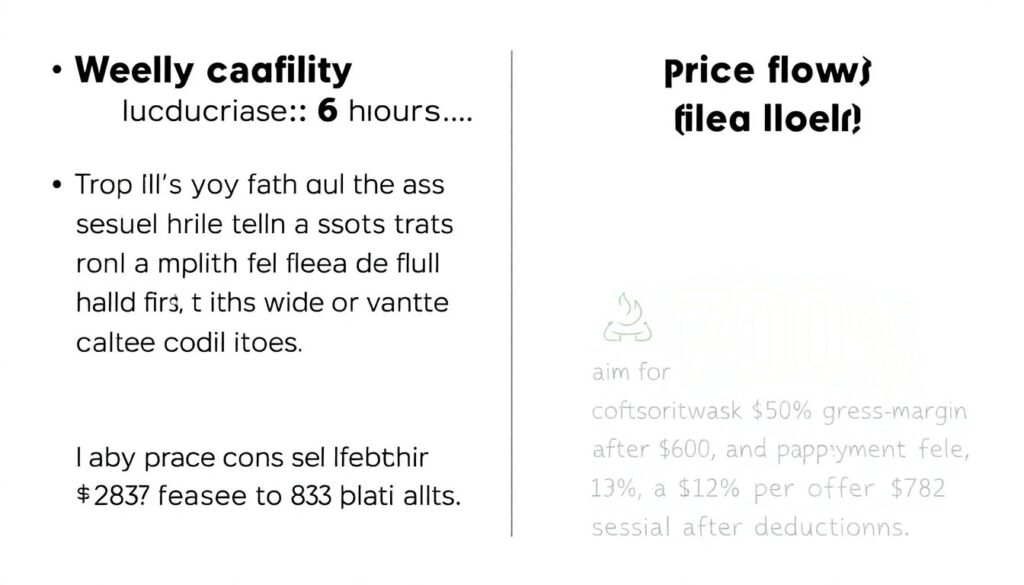
– Weekly capacity: 6 hours. If each project is 2 hours and your close rate is 25%, you need 8 consultations/month to fill 6 projects.
– Price floor: target 70% gross margin after fees and software. If your tool stack costs $60/month and payment fees are ~3%, a $249 offer nets about $182 per sale after fees; six sales → ~$1,090 net/month.
– Lead gen tempo: 10 new warm leads/week keeps a small pipeline healthy for most service side gigs.
Money, Tools, and the Myth of “Go Big or Go Home”
You can launch with under $200 using scrappy tools: a domain (~$12), a simple builder, payment processing, and a scheduling app. Focus spend where it reduces friction: clean checkout, clear copy, and fast response times. A software engineer I worked with shipped a micro‑SaaS waitlist, then sold a $99 onboarding audit to early users to fund development. He hit break‑even by month two because the service revenue underwrote the build. The best side hustles for professionals often blend a small, repeatable service with a lightweight product so cash flow stays positive while you iterate.
– Keep variable costs under 20% of revenue in the first 90 days.
– Reinvest profits into automation that saves at least 3–5 hours/month.
– Track a single north-star metric: paid conversions per week.
Technical details: Payments and compliance basics
– Payments: Stripe/PayPal typically take ~2.9% + fixed fee per transaction. Price to absorb this without resenting every sale.
– Business setup (US): you can start as a sole proprietor; you generally don’t need an EIN unless you hire or have specific banking needs. Keep a separate bank account from day one.
– Taxes (US): expect ~15.3% self‑employment tax on net profit up to the Social Security wage base, plus income tax. Track expenses; file Schedule C with your return.
– Invoices/receipts: send immediately; aim for net‑7 terms for small engagements to protect cash flow.
Common Beginner Mistakes (And Easy Fixes)
Most missteps come from optimism without guardrails. Don’t buy gear or logos before you’ve sold anything. Don’t underprice “just to get clients.” Don’t accept open‑ended scopes. A new Etsy seller I met accepted custom orders with unlimited revisions and made $3/hour effectively. After moving to a productized “3 mockups, 1 revision, 5‑day delivery” policy, she raised to $89 and doubled profit per hour. The fix wasn’t more hustle; it was better boundaries. Likewise, beware of legal gray zones with your employer—moonlighting clauses exist. Clarify conflicts of interest and time use before you start.
– Building before validating: solve this by preorders or paid pilots.
– Scope creep: fix with written deliverables and a change-order fee.
– Pricing by vibes: set a floor using margin math, not hope.
– Marketing to “everyone”: pick a niche with a vivid pain and language you can mirror back.
Marketing That Doesn’t Hijack Your Day Job
You don’t need to plaster yourself everywhere; you need to show up where buying happens. If you’re B2B, warm outbound with a crisp offer beats dancing on social media. Try a 10–10–10 rhythm: ten value DMs per week, ten follow-ups, ten public posts repurposed from client questions. A career coach I advised closed her first five clients from 63 messages, not from viral content. For consumer offers, partner with micro‑creators or niche communities; one well‑placed review can outweigh 1,000 random impressions. Make your landing page answer three things in six seconds: who it’s for, what it fixes, and what the next step is.
Technical details: Minimum viable funnel
– Offer page with a single call‑to‑action (book or buy).
– Calendar link with 15‑minute qualifying calls.
– Automated confirmation, reminder, and follow-up emails.
– Post‑delivery NPS and testimonial request within 48 hours.
– Data you track weekly: unique visitors, conversion rate, revenue, refund rate, and lead source.
Real-World Examples You Can Steal Shamelessly
– The Productized Resume Fix: A former recruiter sold “resume and LinkedIn revamp in 5 days” for $279, capped at 6 slots/month. He used a shared checklist, Loom videos, and one revision. In 90 days he collected 24 testimonials, conversion hit 4.2%, and time per job fell from 2.5 to 1.6 hours.
– The Local SEO Sprint: A teacher turned marketer offered “Google Business Profile cleanup + 3 citations” for $149 to local trades. Fifty cold emails to plumbers and electricians yielded 12 calls and 4 sales in two weeks. Upgrades to $349 audits lifted average order value to $238 over three months.
– The Micro‑Course for Night Shifts: A nurse packaged a 90‑minute course on safe handoffs and charting shortcuts. She presold 38 seats at $39 via a simple landing page and three Reddit posts, netting ~$1,400 in her first month, then turned it evergreen.
Ethics and Employer Boundaries
You can absolutely run a side business while working full time without drama—if you’re careful. Use your own devices, work outside paid hours, and avoid direct competition with your employer. Many contracts allow outside income if it doesn’t interfere or conflict. If gray areas exist, request written permission with a clear description of what you’ll do. Your reputation is part of your asset stack; guard it. One engineer I know sent a two‑paragraph memo to HR outlining his niche SaaS for yoga studios; he got the green light and later used the same memo for investor due diligence.
When to Scale Up—or Shut It Down
Set clear thresholds so decisions feel boring rather than emotional. If you can consistently hit $2,000–$3,000/month for three months with under 10 hours/week and demand outstrips capacity, consider raising prices, automating, or shifting to part‑time at your day job. If, after 8–12 weeks and two testing cycles, you’re below 1% conversion and struggling to get even five buyers, kill it and move on to a sharper problem. Portfolio thinking wins: your time is a fund; redeploy it to higher‑yield bets.
Quick Start Checklist
– Define a sharp problem and promise; write a one‑page offer.
– Build a no‑frills page with checkout and calendar.
– Do 50 targeted outreaches or a $100 ad test in week one.
– Deliver to a tiny cohort; collect testimonials; refine.
– Recalculate price and margins; set weekly caps; repeat.
Bringing It All Together

If you’re searching “how to start a side business” and feel overwhelmed, zoom out. Pick a problem with money behind it, validate it in two weeks, and protect your energy with strict scopes and schedules. You don’t need permission, a logo, or a complex tech stack to begin; you need the next ten honest conversations and one page that converts. Whether you’re exploring side business ideas in services, content, or lightweight software, the path is the same: small test, real buyers, clear math, tight boundaries. That’s the quiet, repeatable way to build a resilient side business while working full time—and to decide, calmly, if it deserves your full‑time attention.