

Why credit counseling services matter right now
If you’re juggling multiple cards, auto loans, and a personal loan, you’re not alone. After a run-up in prices and interest rates, U.S. credit card balances crossed the trillion‑dollar mark, and delinquency rates ticked up from historic lows. That’s exactly where credit counseling services can step in: they translate a messy financial picture into a practical plan you can stick to without guesswork.
What they actually do (in plain English)
A certified counselor reviews your income, expenses, and debts, then helps you build a budget and, if it fits, sets up a debt management plan (DMP). Think of it like hiring a trainer for your money habits: you still lift the weight, but someone designs the routine, spots you, and keeps you honest.
How to prepare so the first session pays off
Show up ready. The best outcomes start with complete numbers, not estimates.
Your pre-session checklist
1) Gather the last three statements for every credit card, loan, and line of credit (APR, balance, minimum due).
2) Download 60–90 days of bank transactions and tag spending (housing, food, transport, subscriptions).
3) List net income by source and frequency; note seasonal or gig fluctuations.
4) Capture fees and gotchas: late charges, over‑limit fees, promotional APR end dates.
5) Set a goal hierarchy: “Get current in 60 days,” “Pay off Card A first,” or “Free up $300/month.”
Short version: perfect info in, tailored plan out.
Choosing wisely: not all agencies are equal
Credentials matter. Look for nonprofit 501(c)(3) status, counselors certified by an independent body, transparent fee disclosures, and consumer‑friendly policies.
Finding the best credit counseling agencies without guesswork
– Verify accreditation (for example, agencies commonly seek independent oversight and adhere to national counseling standards).
– Read actual fee schedules on their sites; typical DMP fees are modest and capped by state.
– Call two or three agencies and compare how they explain options. If they push enrollment before seeing your numbers, walk away.
And yes, searching “credit counseling near me” can surface local options with in‑person appointments, but don’t overlook reputable national nonprofits that serve by phone or video just as effectively.
What to expect in your first session

Most agencies offer free credit counseling for the initial assessment. That first hour should focus on your cash flow and goals, not a sales pitch.
The flow, start to finish
– Intake: a counselor gathers your debt and income details and runs a soft credit pull (doesn’t affect score).
– Budget build: you’ll co‑create a realistic spending plan, including a small buffer for life’s surprises.
– Options: from do‑it‑yourself budgeting to credit counseling for debt management (a DMP), to referrals for housing help or legal aid if needed.
– Clear next steps: a written action plan with timelines.
If a DMP is recommended, make it work for you
A debt management plan consolidates eligible unsecured debts into one monthly payment the agency distributes to creditors. Many creditors offer interest rate reductions and waive certain fees when you’re on a DMP, which accelerates payoff.
Practical knobs you can turn
– Ask for scenarios. “If I can pay $450 vs. $520 monthly, what’s my payoff date?”
– Automate the payment and schedule it the day after payday.
– Keep one small emergency fund contribution alive (even $25/week) to avoid breaking the plan when a tire blows.
– Review the creditor concessions in writing. You should see new APRs, waived fees, and how long concessions last.
– Re‑shop car insurance, phone plans, and subscriptions to free cash for the DMP without feeling squeezed.
Short tip: pause new credit applications. Opening new lines can void concessions with some creditors.
Numbers you can use: impact and benchmarks
Across large nonprofit datasets, successful DMP clients commonly see credit card APRs drop from high‑teens/low‑20s into single digits and pay off in roughly 3–5 years when they stay current. On-time payment reporting can support score recovery over time because late fees stop and balances start shrinking consistently. While exact results vary by creditor and your starting point, the direction is clear: lower interest + structured payments = faster debt freedom.
Why the math favors action
Cutting a 22% APR to, say, 8% on $10,000 of revolving debt saves hundreds of dollars per year in interest alone. Those savings compound across multiple cards and shorten the payoff horizon dramatically.
Economic angles most people overlook
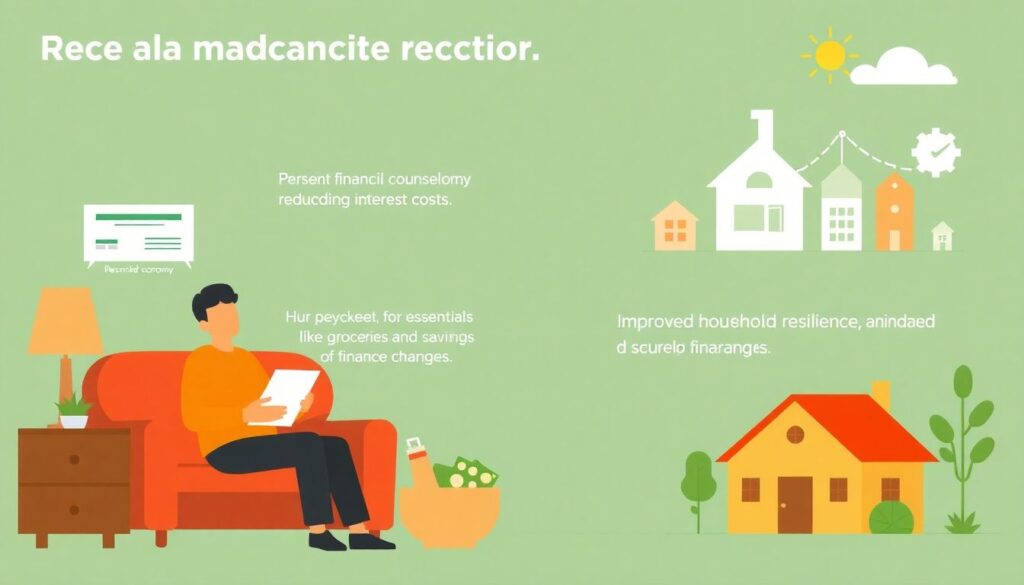
Your micro‑economy affects the larger one. When counseling curbs interest costs, more of your paycheck funds essentials and savings, not finance charges. That shift improves household resilience and reduces the risk of costly defaults.
Costs vs. savings, in context
DMP fees are typically modest and regulated. Compare them to the interest you’d otherwise pay: if concessions save $120/month in interest and fees cost $35/month, the net is still strongly positive. Moreover, consistent payments can reduce creditor collection costs and increase recovery rates, which is one reason many lenders cooperate with agencies.
Trends and forecasts: where counseling is headed
Expect more digital-first counseling: secure portals, open‑banking data pulls, and real‑time budget coaching. With rates elevated, demand for structured help tends to rise; if the job market softens, enrollments could climb further.
What the next 12–24 months may bring
– More granular hardship programs from card issuers integrated with agencies.
– Smarter budgeting tools that categorize spending automatically and flag “cancelable” subscriptions.
– Continued regulator focus on clear disclosures and fair fees, making outcomes more consistent across providers.
Short take: counseling will feel less like paperwork, more like an app-backed coaching relationship.
How this reshapes the industry
As consumer needs evolve, agencies are partnering with fintechs for data and payment automation. Larger nonprofits are setting service standards that smaller players emulate, nudging the field toward better transparency and measurable results.
Why that’s good for you

Better data means faster, more accurate budgets and fewer surprises. Competition around service quality encourages agencies to publish success metrics, making it easier to compare them on more than just price.
Common pitfalls (and how to dodge them)
– Enrolling when your issue is income, not debt. If your budget can’t cover essentials, press for counseling on benefits, housing, or job support first.
– Skipping creditor calls. Confirm concessions posted correctly within 1–2 billing cycles.
– Letting irregular income sink the plan. Use a “waterfall”: fund rent, food, transport, minimum DMP, then extras.
– Ignoring secured debts and taxes. DMPs usually target unsecured debts; keep car, mortgage, and tax obligations current.
Putting it all together: a simple game plan
1) Get your numbers straight (statements, budget, goals).
2) Vet two or three providers and pick one of the best credit counseling agencies you can find, not just the closest.
3) Take advantage of free credit counseling for the first assessment; ask tough questions and insist on written projections.
4) If you proceed with credit counseling for debt management, automate payments, build a small buffer, and verify concessions.
5) Review progress every quarter; if income rises, increase your payment to finish months earlier.
Last word
If you’ve been doom‑scrolling interest charges, you don’t need a miracle—you need structure. Search for reputable help (local or national, not just “credit counseling near me”), prepare like you would for a job interview, and treat the plan as a living document. Small, steady decisions beat heroic one‑offs, and counseling exists to make that consistency easier.