
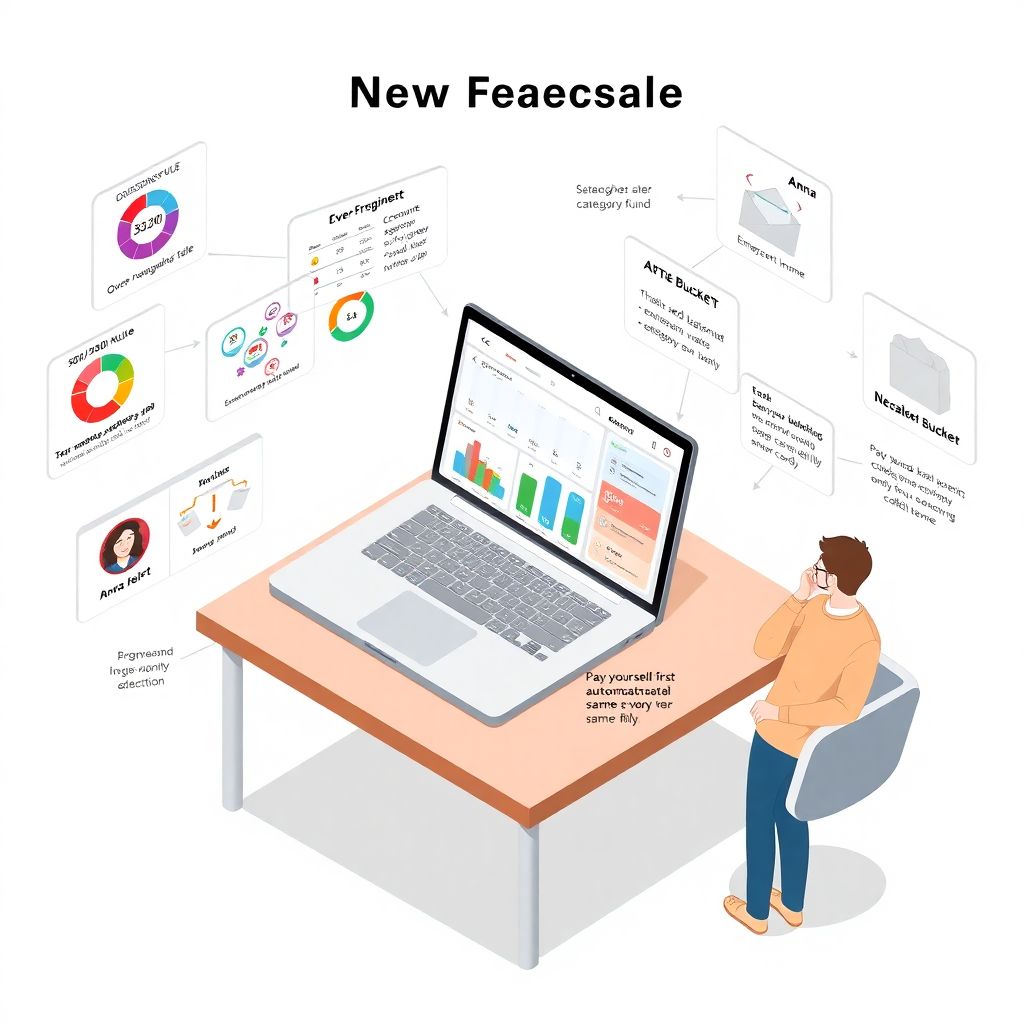
Most people enter January full of good intentions, open a spreadsheet, and within three weeks forget it ever existed. The problem isn’t willpower; it’s that the budgeting approach often doesn’t match how money actually moves through your life. Ниgher-level planning, real constraints, and technical tools have to work together.
Below is a practical, problem‑oriented guide to budgeting for a new year that compares several methods, shows real-life cases, and adds some non-obvious, “pro level” tweaks.
—
Why Classic New Year Budgets Fail
Сommon failure patterns
The traditional approach is linear: list income, list expenses, subtract, promise to “spend less.” From a financial engineering perspective, this is just a static cash-flow statement with no risk analysis and no behavioral model.
Why it collapses:
– Ignores volatility of income and expenses (bonuses, repairs, medical bills).
– Doesn’t include a buffer for planning errors (“model risk”).
– Is too granular or too abstract for everyday decisions.
– Conflicts with existing habits and mental accounting.
Short version: you built a model, but not a system.
—
Choosing the Right Budgeting Framework
Case study: Same income, different outcomes
Two people, same net income: 2,000 USD per month.
– Anna uses a classic category budget in an app.
– Mark uses a rule‑based system with only three buckets: obligations, growth, lifestyle.
In March both face a 600 USD car repair. Anna had a neat list of categories but no explicit emergency fund. She pulls from “Groceries,” “Subscriptions,” and then from a credit card. Mark has a pre-defined “reserve” inside obligations. The repair fits into his design; Anna’s plan implodes.
They didn’t have different discipline. They had different architectures.
—
Main approaches and where each shines

1. 50/30/20 rule (ratio-based budgeting)
– 50% needs, 30% wants, 20% savings/debt repayment.
– Strength: quick to deploy, good for beginners, low cognitive load.
– Weakness: too rough for volatile income or complex goals.
2. Zero-based budgeting (ZBB)
– Every unit of currency is assigned a job; end-of-month “free cash” must be zero on paper.
– Strength: maximal control, works well for debt payoff and tight budgets.
– Weakness: high maintenance, can be overkill if your cash flow is stable and high.
3. Envelope / “bucket” method (physical or digital)
– You split money into labeled envelopes or subaccounts: “Rent,” “Food,” “Travel,” etc.
– Strength: strong behavioral effect, visual constraints, great for overspenders.
– Weakness: less flexible, can be frustrating when real life doesn’t match categories.
4. Pay-yourself-first (PYF)
– Automated transfers to savings, investments, and goals on payday; you budget what’s left.
– Strength: excellent for long-term wealth building; aligns with “default options” research.
– Weakness: easy to underfund “boring” categories like maintenance or medical.
When people ask how to create a new year budget plan, the honest answer is: start from constraints (income stability, debt level, self-control) and only then pick one or combine two frameworks.
—
Designing a New Year Budget as a System
Step 1. Convert last year into hard data
Before you even think about “new year budgeting tips to save money,” you need an empirical baseline. Export 6–12 months of transactions from your bank or card, label them, and build a rough spending distribution.
Key technical idea: median spend per category is more stable than average. That one crazy month with a vacation or surgery won’t distort your model as much if you focus on median.
Short, but critical: no data, no real budget.
—
Step 2. Define constraints and priorities
Think of your budget like an optimization problem with constraints:
– Minimum savings rate you want (e.g., 15–20%).
– Non-negotiable fixed costs (rent, loans, utilities).
– Risk tolerance (how small can your buffer be without stressing you out).
– Strategic goals (down payment, career pivot, education, relocation).
Only after this, tools matter. The best budget planner for new year finances is the one that makes these constraints explicit and hard to violate—whether it’s a specialized app, a no‑frills spreadsheet, or multiple labeled bank accounts.
—
Step 3. Pick your tracking granularity
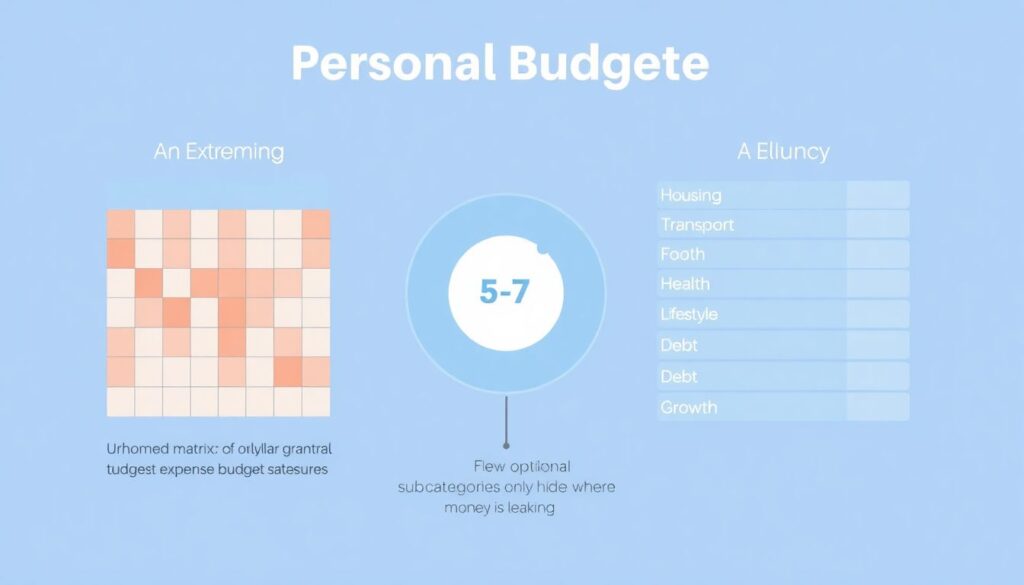
Overly granular categories lead to “budget fatigue.” Under‑detailed ones obscure where leaks are.
A robust compromise:
– 5–7 high-level categories (housing, food, transport, health, lifestyle, debt, growth).
– Optional subcategories only where overspending is chronic (e.g., “Eating out” as a child of “Food”).
Think in terms of signal-to-noise ratio. If you never overspend on utilities, you don’t need a separate weekly report about them.
—
Alternative Methods: Beyond “One Big Budget”
Method 1. Multi-account architecture
Instead of one account + one spreadsheet, build a micro‑ecosystem:
– Main income account (all salary/fees come here).
– Bills account (only recurring obligations get paid from this).
– Everyday spending account (card you use day‑to‑day).
– Long-term savings / investment account.
– “Irregulars” account (annual insurance, taxes, gifts, tech upgrades).
This is basically a physical implementation of envelope budgeting with built‑in friction. When the everyday account is low, you feel it without touching rent or savings. For many, this works better than any personal budget templates for new year 2025 that rely only on manual oversight.
—
Method 2. Goal‑driven budgeting (“reverse engineering”)
Instead of: “What can I save after expenses?”, flip it:
1. Set quantified goals with deadlines (e.g., 6,000 USD for an emergency fund in 18 months).
2. Compute required monthly cash flow (6,000 / 18 = 333).
3. Treat this as a fixed obligation in your budget.
This reverse approach turns vague wishes into hard constraints, similar to how corporations plan capital expenditures. You’re solving a feasibility problem: can current income + expense cuts satisfy all constraints? If not, you adjust scope, deadline, or income sources.
—
Method 3. “Event-based” budgeting for chaotic incomes
If you’re a freelancer or entrepreneur, monthly budgeting can be misleading because income waves are irregular. An event-based method builds a budget per cash inflow event:
– Every time money hits your account, you route fixed percentages:
– X% to tax bucket,
– Y% to business expenses,
– Z% to personal spending,
– remainder to reserves/investments.
This converts an unstable income stream into a stable decision rule. You still forecast, but you don’t rely on exact monthly numbers, you rely on allocation logic.
—
Non-obvious Solutions to Typical Budget Problems
Problem: Chronic overspending on “small stuff”
Most people try to “track harder.” It rarely works. A more technical fix is to limit transaction bandwidth:
– Use one specific card for all discretionary spending.
– Load it weekly with a fixed amount.
– Disable overdraft and credit on that card.
You move from after-the-fact analysis to hard caps. The constraint is structural, not moral.
—
Problem: Inconsistent tracking and “falling off the wagon”
Instead of daily tracking, switch to sampling:
– Take one “audit day” per week.
– Reconcile transactions for the last 7 days only.
– Log any anomalies or one-off hits.
From a data science point of view, weekly sampling still captures trends while dramatically reducing friction. You’re optimizing for adherence over theoretical accuracy.
Bullet ideas that help adoption:
– Automate as much as possible: standing orders, auto-savings, recurring payments.
– Keep your “visible” metrics minimal: one or two key ratios (e.g., savings rate, variable spending).
– Review monthly, overhaul quarterly, not daily.
—
Problem: Budget doesn’t survive emergencies
A robust budget must include a shock absorber. That’s not just an emergency fund; it’s also:
– Under‑committing your income by 5–10% (planned “slack”).
– Maintaining a list of variable costs that can be cut within 24 hours (subscriptions, dining out, optional services).
– Building a tiered response plan: mild, moderate, severe income drop.
This is essentially personal risk management. You pre‑decide how you’ll react, so you don’t improvise under stress.
—
Professional Lifehacks for a New-Year Budget
Use “financial sprints” instead of yearly resolutions
Professionals rarely plan only on a 12‑month horizon. Use 90‑day cycles:
– Quarter 1: focus on debt reduction.
– Quarter 2: increase savings rate.
– Quarter 3: optimize recurring costs and renegotiate contracts.
– Quarter 4: tax planning and next-year scenario modeling.
A year is too long for feedback loops. Sprints give you faster iteration and tighter control.
—
Treat yourself like a small business
Advanced trick: split your budget into P&L (profit and loss) and balance sheet:
– P&L: income and expenses by category, month-to-month.
– Balance sheet: net worth (assets minus liabilities), tracked quarterly.
Many people feel “good” because their P&L looks okay, but their balance sheet erodes due to debt or inflation. Monitoring both reveals if your budget actually compounds into wealth.
This is also where new year financial planning and budgeting services may add value: they help integrate tax optimization, risk coverage (insurance), and investment strategy into one coherent plan instead of a siloed “monthly budget.”
—
Build rules, not just numbers
Professionals operate with policy rules:
– “Any bonus over X is split: 30% debt, 40% investments, 30% fun.”
– “Any recurring cost over Y must be renegotiated or justified annually.”
– “No new fixed monthly obligations unless we increase income or cut something else.”
Translate these into personal rules and document them. Your budget then becomes an operating manual, not just a spreadsheet.
Some powerful rule-based ideas:
– Cap lifestyle inflation: “For every +1 in income, only 0.3 goes to lifestyle, rest to growth.”
– Set a max percentage for housing/local transport; review if you breach it.
– Define in advance what counts as a valid reason to break your own rules.
—
Practical Tools and Implementation
Apps vs Spreadsheets vs Hybrid
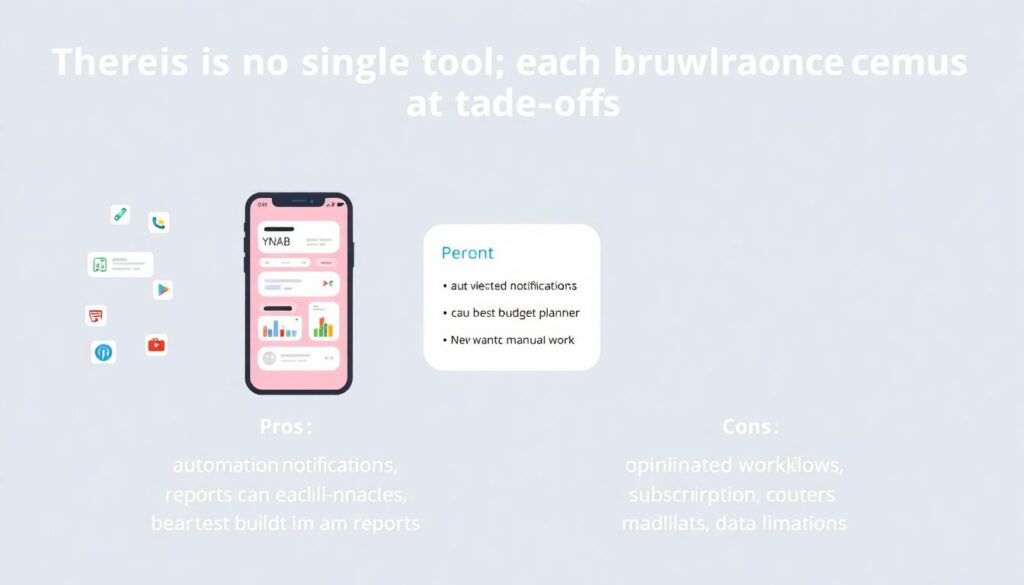
There is no single best tool; each has trade-offs.
– Apps (YNAB-style, banking apps, expense trackers):
– Pros: automation, notifications, built-in reports, can be the best budget planner for new year finances if you want minimal manual work.
– Cons: opinionated workflows, subscription costs, data lock-in.
– Spreadsheets (Excel, Google Sheets):
– Pros: full flexibility, transparency, version control, easy to customize indicators.
– Cons: more manual upkeep, requires basic modeling skills.
– Hybrid (apps for tracking, spreadsheet for planning and scenario analysis):
– Pros: strong day-to-day automation plus powerful long-term modeling.
– Cons: slightly more complex setup.
When you experiment with personal budget templates for new year 2025, treat them as prototypes. Iterate: delete what you don’t use, simplify where you get stuck, and add metrics only if they drive decisions.
—
How to roll out your new-year budget in 30 days
A simple deployment roadmap:
– Week 1 – Data gathering and diagnosis
– Export last year’s transactions.
– Build high-level categories.
– Identify 2–3 biggest overspending areas.
– Week 2 – Architecture design
– Choose your main method (50/30/20, ZBB, envelopes, PYF, or mix).
– Decide on accounts structure.
– Define core rules and constraints.
– Week 3 – Tool setup and automation
– Install and configure chosen apps or set up your spreadsheet.
– Open additional accounts/subaccounts if needed.
– Create automatic transfers and bill payments.
– Week 4 – Test run and adjustment
– Live with the budget for one full pay cycle.
– Log deviations, not as failures, but as model errors.
– Adjust categories, limits, or rules based on observed behavior.
—
Wrapping the System Together
A new-year budget stops being a fragile resolution once it becomes:
– Data-driven (based on last year’s real numbers).
– Constraint-aware (goals, risks, psychological limits).
– Rule-based (clear policies for income, expenses, and exceptions).
– Automated where possible (to reduce reliance on willpower).
– Iterative (reviewed and tweaked in short cycles).
Approach your finances the way an engineer or CFO would: design, test, measure, and refine. The budget is not a cage; it’s an operating system that lets you direct your money toward what actually matters over the next year—and beyond.