

Teaching kids about money works best as small, age-appropriate lessons: play with pretend cash in preschool, simple choices and coins in early grades, saving and earning in upper elementary, digital money and goals in middle school, and real-world banking, credit, and taxes through the teen years and into independence.
Core Financial Concepts to Cover at Every Stage
- Money is earned by providing value, not just taken from adults or machines.
- Spending, saving, and sharing are the three basic choices for every dollar.
- Prices, trade-offs, and opportunity cost: choosing one thing means not choosing another.
- Setting simple goals, making a plan, and tracking progress over time.
- Understanding cash, digital payments, and basic security with money.
- Building healthy habits around work, giving, and long-term planning.
- Recognizing that mistakes with money are normal and can be learned from safely.
Preschool (Ages 3-5): Building Foundations Through Play
This stage suits children who can count a little, follow simple instructions, and enjoy pretend play. It is not ideal if a child is overwhelmed by numbers or already anxious about family finances; in that case, focus on emotional safety and routines before introducing money ideas.
Simple goals for preschoolers
- Recognize that money is different from toys and must be given or earned.
- Practice basic counting with play coins or bills.
- Connect work-like actions with small rewards (e.g., putting toys away).
Quick, playful activities (5-10 minutes)
- Pretend store at home – Use stickers or sticky notes as prices on a few toys or snacks. Let your child “buy” items with play money, helping them count out 1-5 coins or bills.
- Sorting coins by size and color – Give a small pile of real or plastic coins. Ask: “Can you make a group of all the big ones? All the shiny ones?” Name coins casually without demanding memorization.
- Money story time – Choose picture books that show people working, buying, and sharing. Pause to ask, “Why did they share?” or “What are they saving for?” to gently start how to teach kids about money.
Helpful language examples
- “Money helps us buy things we need and want.”
- “We can’t buy everything today. We choose one and save for the other.”
- “When you help with a job, sometimes you can earn a small reward.”
What to skip at this age
- Detailed prices, bills, or family financial stress.
- Discussions about debt, credit cards, or online shopping.
- Shaming comments like “That’s too expensive for you” instead of simple, calm explanations.
Early Elementary (Ages 6-8): Introducing Money and Simple Choices

At this stage, kids can handle concrete tools and short, structured lessons. You will need only simple materials and a calm, consistent routine.
Basic tools and setup
- A small clear jar (or three jars) for saving, spending, and sharing.
- Real coins and low-value bills kids can touch and count.
- A simple chart or notebook page to track savings with tally marks or stickers.
- Short, regular time (5-10 minutes weekly) to talk about money.
Introducing earning and choices safely
- Use a modest allowance and savings plan for kids, clearly separate from chores that are simply part of being in the family.
- Connect extra, optional jobs (e.g., wiping baseboards, helping with yard work) to small earnings so kids see that money comes from effort.
Example script
“Every week, you’ll get this amount as allowance. You can decide how much to put in your spend jar for small things, your save jar for bigger things later, and your share jar to help others.”
Optional supports
- Age-appropriate storybooks or the best books to teach kids about money that use characters and simple plots.
- Short, game-like apps (with no real purchases) that let kids count coins and make basic choices.
Upper Elementary (Ages 9-11): Saving, Earning, and Basic Budgeting
Here you move into structured money management for kids and teens with real goals and simple plans. Use the steps below as a safe, clear howto sequence for this age group.
- Define one clear savings goal – Ask your child to choose something meaningful (a game, art supplies, sports gear). Write the goal and rough cost together. Keep the goal visible near their jars or in a notebook, and break it into smaller milestones to make progress feel achievable.
- Set up a three-part system – Use three jars or envelopes labeled “Spend,” “Save,” and “Share.” Agree on a simple percentage split (for example, some to each jar) without overcomplicating. Emphasize that over time, the save jar should move them toward the chosen goal.
-
Introduce regular income – Decide on an allowance and savings plan for kids that fits your family, and keep it predictable (e.g., same day each week).
- Clarify which chores are expected as part of family life (no pay).
- Add a short list of optional extra tasks with specific pay amounts.
- Avoid tying basic love or respect to money or performance.
-
Practice mini-budgets for small events – Before a fair, trip, or birthday money, sit down for 5-10 minutes and plan together.
- Ask: “How much do you have to spend today?” and write the number down.
- List possible items or categories (snacks, games, souvenirs) and rough costs.
- Help them choose what to buy first, and what they’ll skip if the money runs out.
-
Track progress and reflect weekly – Once a week, count money in each jar together and update a simple chart.
- Ask, “What changed this week?” and “What helped you move closer to your goal?”
- If they spent impulsively, stay calm and ask, “What will you do differently next time?”
-
Connect to real-world examples – Share simple stories about how you save for groceries, bills, or a future trip, without oversharing stressful details.
- Compare their save/spend/share jars to categories you use as an adult.
- Use receipts to show that prices add up and choices matter.
Fast-Track Plan for Busy Families
- Choose one savings goal together and write it on a sticky note.
- Start a three-jar system and agree on a simple way to split any money they receive.
- Give a small, regular allowance and pay for a few optional extra jobs.
- Do a 10-minute money check-in once a week: count jars, update the chart, and talk about one win and one lesson.
Middle School (Ages 12-14): Allowance, Goals, and Digital Money
At this stage, kids can understand more abstract ideas and digital tools. Use this checklist to see whether your approach is working and safe.
- They can explain, in their own words, how their allowance amount is decided and what it is meant to cover.
- They help design their own budget categories (e.g., snacks, apps, gifts, long-term goals) and can estimate simple monthly totals.
- They understand that debit cards and payment apps move real money, not “game points,” and can describe one way to keep those tools safe.
- They can log in to a supervised youth account or family card app and read a basic transaction list.
- Before buying something online, they can compare at least two options and explain why they picked one.
- They know that sharing passwords, card numbers, or one-time codes is never OK, even with friends.
- They have at least one medium-term goal (several months) and can say how much they need and how they plan to get there.
- After a spending mistake, they can describe what happened and suggest one change for next time instead of shutting down or blaming others.
- They can give a simple definition of “interest” as either money you earn when you save or money you pay when you borrow.
- You can talk about money without constant arguments; discussions are sometimes emotional but mostly respectful and solution-focused.
High School (Ages 15-17): Credit, Taxes, and Real-World Money Management
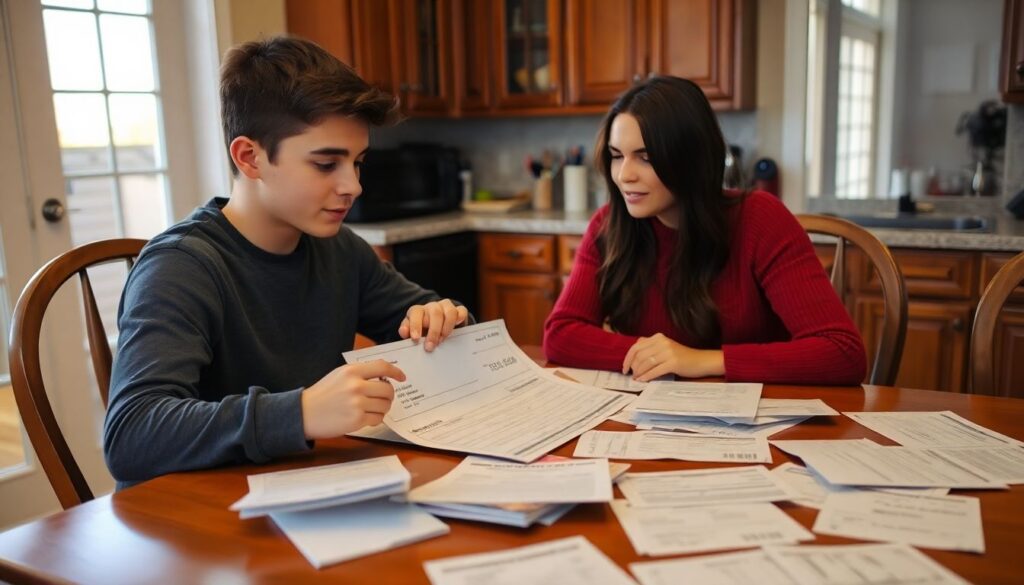
Teens are ready for more responsibility and complexity, including early exposure to taxes, paychecks, and basic credit. Avoid these common missteps when planning money management for kids and teens at this age.
- Waiting until college or a first full-time job to explain paychecks, taxes, and deductions.
- Letting teens use a debit or credit card without clear limits, shared visibility, and conversations about each month’s results.
- Talking about credit scores and debt using fear only, instead of combining real risks with practical habits.
- Co-signing for loans or credit cards before a teen has shown consistent, responsible behavior with smaller amounts.
- Covering every financial shortfall immediately, without requiring a reflection or a plan to prevent repeats.
- Ignoring the emotional side of money: shame, comparison with friends, social media pressure, and “fear of missing out.”
- Skipping written plans; relying only on verbal promises like “I’ll pay you back later” without tracking.
- Discussing advanced investing or complex products before a teen can clearly explain simple concepts like saving, budgeting, and the cost of borrowing.
- Using real credit cards or buy-now-pay-later apps in a teen’s name without safeguards, visibility, or teaching moments.
Transition to Independence (18+): Preparing Teens for Financial Autonomy
This stage bridges home and full independence. Combine practice, guidance, and gradual risk to prepare them for financial literacy courses for children and young adults, workplace learning, or self-study paths.
Structured campus or community programs
- Short community classes, first-year college seminars, or employer workshops that cover budgeting, banking, and intro credit skills in a guided setting.
- Useful when your teen prefers learning from non-parent adults or needs deadlines and group structure to stay engaged.
Self-directed learning with curated resources
- Use podcasts, online articles, and the best books to teach kids about money transitioning into teen-focused titles, plus simple budgeting templates.
- Works well for motivated teens who like reading, researching, and experimenting with their own small budgets.
Mentor-based or family apprenticeship approach
- Invite your teen to join parts of your real money life: reviewing a monthly budget, comparing insurance quotes, or reading pay stubs together.
- Best when trust is strong and you are comfortable sharing basic (not overly detailed) financial information.
Hybrid approach with professional guidance
- Combine a youth-friendly bank or credit union program, occasional sessions with a financial educator, and ongoing home conversations.
- Helpful for teens who benefit from multiple voices and need practical tools plus emotional support around money.
Common Parent Concerns and Practical Solutions
How early is too early to start talking about money?
You can start around ages 3-4 with very simple concepts like “we use money to buy things” and playful activities. Keep it concrete and short. Avoid detailed family financial worries; focus instead on sharing, waiting, and choosing between options.
How much allowance should I give my child?
Choose an amount that is small enough to be safe but large enough for real decisions. The key is consistency, not the exact number. Tie some expenses to their allowance so they practice trade-offs, and review together regularly.
Should kids be paid for regular chores?
Many families separate “family jobs” that everyone does without pay from extra, optional work that can earn money. This keeps the message clear: some tasks are part of being in the family, and some are opportunities to practice earning.
How can I teach digital money safely?
Start with supervised tools: a youth debit card or a family-controlled payment app with low limits and full visibility. Practice checking balances before purchases and discussing each month’s activity. Emphasize security rules and model safe behavior yourself.
What if my child keeps making impulsive purchases?
Expect some impulsive spending; it is part of learning. Instead of replacing lost money, pause and reflect together: what happened, how it felt, and what they might do differently. Help them create a simple rule, such as waiting 24 hours before larger buys.
How do I handle differences between our values and my child’s wishes?
State your non-negotiables clearly (for example, no spending on certain items) and explain your reasons calmly. Within safe boundaries, allow your child to make their own choices, even if you disagree, so they can learn from real but manageable consequences.
Do I need formal classes to teach my kids about money?
Daily life is the most powerful teacher, but structured financial literacy courses for children and teens can add clarity and confidence. Use classes and books as supplements, not replacements, for ongoing family conversations and real-world practice.