

Most people don’t actually need more willpower with money — they need a system that quietly pushes them in the right direction. The trick is picking a budgeting style that fits your real life, not your idealized, hyper‑organized future self. Below are five beginner-friendly ways to make your money finally behave, plus real‑world cases from coaching clients and current 2025 trends that make starting much easier than it used to be.
—
1. The 50/30/20 Rule: Gentle Training Wheels for Your Money
The 50/30/20 rule is often listed among the best budgeting methods for beginners because it’s simple:
– 50% of your take-home pay goes to needs (rent, food, utilities, transport).
– 30% goes to wants (restaurants, fun, subscriptions).
– 20% goes to future you (debt payments beyond the minimum, savings, investing).
It doesn’t track every coffee; it gives you rough “lanes” so you avoid drifting into overspending without feeling micromanaged.
This method shines when your main question is how to start a budget and save money without spending hours on spreadsheets. You can check your last three months of bank statements, estimate the percent going to needs, wants and savings, then adjust. Even that quick audit usually reveals leaks: forgotten subscriptions, expensive delivery habits, or rent that eats half your income by itself.
Case: Alice, 27, junior designer
Alice lived in a big city, earning about $2,600 after tax. Rent plus utilities were $1,500. She constantly felt broke and assumed she was just “bad with money.”
We ran her numbers against the 50/30/20 rule. Her split was roughly 65/28/7. That 7% for the future explained why her savings never grew.
She didn’t have the flexibility to lower rent, so we set softer targets:
– 60% needs
– 25% wants
– 15% future
Within three months of just watching those three buckets, she had $1,000 in an emergency fund for the first time in her life. She still didn’t track every dollar — but the guardrails alone changed her behavior.
Pros:
– Very easy to understand and remember.
– Low time commitment: monthly check-in is usually enough.
– Good “diagnostic tool” to see where the problem is.
Cons:
– Not ideal if your income is irregular or very low.
– Doesn’t tell you *exactly* where to cut, only which category is bloated.
– Can feel too vague if you’re trying to aggressively pay off debt.
If you feel allergic to detailed budgeting but want structure, this is a very forgiving first step.
—
2. Zero-Based Budgeting: Giving Every Dollar a Job
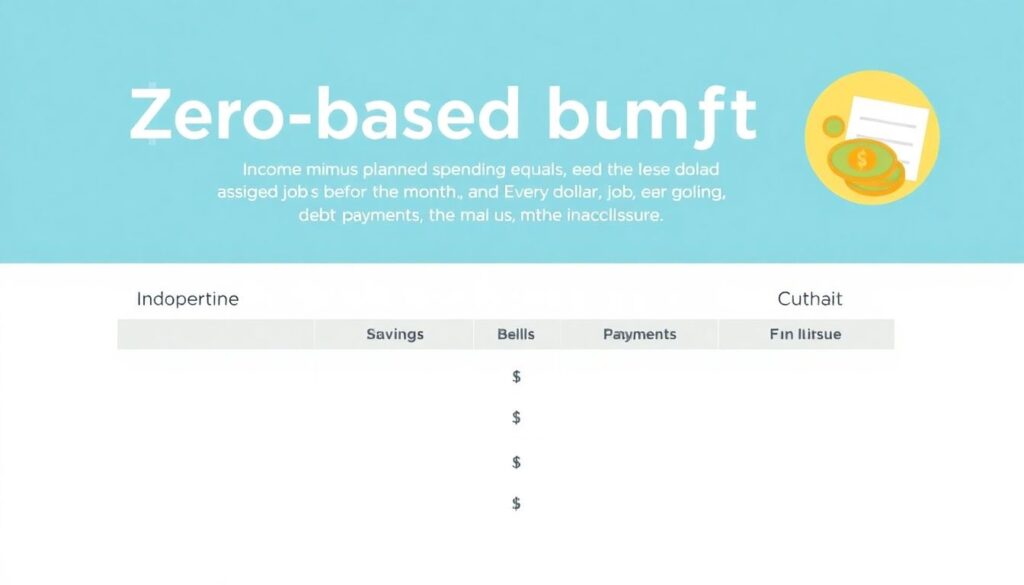
Zero-based budgeting sounds intense, but the idea is straightforward: your income minus your planned spending equals zero. Every dollar has a job before the month begins — bills, savings, debt, fun — so “extra” money doesn’t disappear into thin air.
This is the method people use when they want a simple budgeting plan to get out of debt quickly. You start by listing your income, then your fixed expenses, then your savings and debt goals, and finally your flexible spending. You keep adjusting until there’s no unassigned money left.
Case: Mark, 35, freelance developer with credit card debt
Mark’s income swung between $3,000 and $5,000 a month. He had about $8,000 in credit card debt and felt out of control. The 50/30/20 rule didn’t work well for him because his cash flow was choppy.
We switched to zero-based budgeting by month, based on the lowest predictable income (about $3,000).
His zero-based plan looked like:
– $1,400 rent and utilities
– $400 groceries
– $200 transport
– $200 insurance and phone
– $300 minimum debt payments
– $200 fun
– $300 emergency fund / extra debt
Any month he earned more than $3,000, he pre-assigned the surplus to “Extra Debt Paydown” and “Future Taxes.” Within 14 months, his credit cards were paid off, and he had a modest buffer for taxes instead of panicking every quarter.
Pros:
– Very effective for intentional debt payoff and rapid progress.
– Excellent clarity: you always know where your money “should” be going.
– Works well with automation and modern budgeting apps for beginners.
Cons:
– More time-consuming, especially the first 2–3 months.
– Can feel rigid or stressful if your income is highly unpredictable and very low.
– Some people burn out if they try to track every transaction manually.
If you want maximum control and you’re willing to invest an hour a week at the start, zero-based budgeting often delivers the fastest, most visible results.
—
3. Envelope & Digital Envelope Method: Making Money Tangible Again
The classic envelope system is delightfully low-tech: you withdraw cash, split it into envelopes labeled “Groceries,” “Gas,” “Eating Out,” “Fun,” etc., and once an envelope is empty, that category is done for the month.
In a world of contactless payments, many people now use digital envelopes inside banking apps or tools like Goodbudget, YNAB, or sub-accounts offered by challenger banks. The psychology is the same: separate pots of money you can “see.”
This is powerful if you consistently overspend on just one or two categories — usually food, shopping, or entertainment. Making those budgets physically or visually limited forces trade-offs early instead of at the end of the month when your account balance surprises you.
Case: Julia and Sam, 31 and 33, couple with “mysterious” spending leaks
They earned decent money together but couldn’t explain where $600–$800 disappeared each month. Rent and bills were stable, so the issue was variable spending.
We created four shared digital envelopes:
– Groceries
– Eating Out
– Household / Amazon
– Date Nights
They moved money into these “pots” every payday. Each partner could see the balances in real time.
Within two months:
– Eating out dropped from $550 to about $250 without any “no restaurant” rules.
– They started deliberately planning one nice date night instead of five random mediocre ones.
– For the first time, they agreed on what “too much” meant because the envelopes made it visible.
Pros:
– Ideal if your main issue is specific categories, not fixed bills.
– Very intuitive; you don’t need to love spreadsheets.
– Works well for couples and roommates since the rules are concrete.
Cons:
– Pure cash envelopes are inconvenient in a mostly-digital economy.
– Requires discipline not to “steal” from other envelopes.
– Doesn’t automatically handle savings or debt goals unless you create envelopes for them too.
A good middle ground is using digital envelopes for your weak spots plus a simpler rule (like 50/30/20) for the big picture.
—
4. Pay-Yourself-First Automation: Budgeting on Autopilot
Pay-yourself-first flips the usual script. Instead of paying bills, then spending, and saving “whatever’s left,” you decide how much you want to save and invest, move it out automatically on payday, and then live on the rest.
It’s less a detailed budget and more a behavioral hack. You treat savings like a non-negotiable bill. If you combine this with a few monthly budgeting tips to save more money — such as reviewing recurring subscriptions quarterly or setting spending alerts on your phone — you can get most of the benefits of budgeting with far less effort.
Case: Daniel, 29, software engineer “bad at follow-through”
Daniel earned solid money but couldn’t stick to any manual budgeting. He hated tracking and inevitably quit after two weeks.
We abandoned the idea of a traditional budget and instead:
– Set up an automatic transfer of 15% of each paycheck to a high-yield savings account.
– Automated retirement contributions at work to get his full employer match.
– Created a separate “Fun” account funded automatically with $250 per month.
He never tracked day-to-day spending. But within a year, his net worth jumped by around $10,000 simply because the important moves happened *before* he had a chance to spend the money.
Pros:
– Perfect for people who know what they should do but struggle to stick with details.
– Easy to maintain once set up; almost all effort is front-loaded.
– Pairs nicely with any other method on this list.
Cons:
– If you set the savings number too high, you might end up raiding savings mid-month.
– Doesn’t, by itself, reveal where your money leaks are.
– Requires some initial clarity about priorities (emergency fund, debt, investing).
In 2025, more banks let you create “rules” like “round up purchases and send the difference to savings” or “auto-move 10% of incoming payments.” That makes pay-yourself-first dramatically easier to implement than even a few years ago.
—
5. The Anti-Budget: For People Who Hate Budgets
The “anti-budget” is almost the opposite of zero-based budgeting. Instead of planning every category ahead, you:
1. Decide your automatic savings and debt payments.
2. Let all your other spending be flexible.
3. Track only how much is left over, not every detailed purchase.
It’s a good fit if you’ve tried traditional budgets and always quit. You still need to know your income and fixed bills, but you don’t micromanage groceries vs. coffee vs. movies. You care about two big questions:
– Did I hit my savings and debt goals this month?
– Did I stay within my total “spendable” money?
Case: Nia, 24, first job and overwhelmed
Nia was in her first year out of college and found detailed apps confusing. She lived with roommates and had relatively low expenses but no structure.
We built a minimalistic anti-budget:
– Automatically send $300/month to a savings account.
– Automatically pay $150/month above the minimum on her student loan.
– Keep at least $500 in her checking account as a buffer.
Everything else? She could spend as she wished but checked her account every Sunday. If the buffer dipped under $500, she treated that as a signal to cool discretionary spending for a week.
After six months, her savings account had almost $2,000, and her loan balance started noticeably shrinking — all without ever categorizing transactions.
Pros:
– Extremely low-friction; good for “budget allergies.”
– Still moves you forward on savings and debt.
– Easy to maintain over years.
Cons:
– Not precise; works poorly if your situation is very tight.
– If you ignore your accounts for too long, you can still overspend.
– Harder to optimize categories because you’re not tracking details.
Think of the anti-budget as the “minimum effective dose” of money management — not perfect, but far better than nothing, especially if you’ve failed with more complex systems.
—
Comparing the Five Methods: Which One Fits Your Brain?
Each method solves a different problem, so the “best” depends less on math and more on your personality, habits, and current situation. When people search for the best budgeting methods for beginners, they often expect one universal winner; reality is closer to “pick the one that matches your weak spots.”
If you like big-picture structure but hate details, 50/30/20 or pay-yourself-first probably feel natural. If you want maximum control or need a simple budgeting plan to get out of debt aggressively, zero-based budgeting is hard to beat. Chronic overspenders in specific categories usually benefit from envelope or digital envelope methods. And if you’re overwhelmed and likely to give up, the anti-budget is a surprisingly effective “gateway” to better money habits.
To see the differences more clearly, ask yourself three honest questions:
– How much time per week am I realistically willing to spend on money?
– Do I need strict rules or broad guardrails?
– Is my biggest issue *not saving at all*, or *overspending in specific areas*?
The method that feels easiest to *start* usually has a better chance of surviving past week two.
—
How to Choose Your First Method Without Overthinking It
Instead of hunting endlessly for theoretical perfection, experiment. Most people figure out how to start a budget and save money only after trying one or two approaches and adjusting them.
A practical way to pick:
– If your income is stable and you’re new to all this:
Try 50/30/20 for 2–3 months, then add envelopes for your weak spots.
– If you’re in serious debt and want structure:
Start with a basic zero-based budget and automate as many payments as possible.
– If you know you’ll quit anything complicated:
Set up pay-yourself-first and an anti-budget. Automate savings and debt, watch your total spending only.
Don’t be afraid to mix methods. For example, plenty of people use zero-based budgeting for their monthly plan, envelope budgeting for food and fun, and automation to handle savings. What matters is the result: more financial stability and less stress.
—
Tech, Trends and Budgeting in 2025
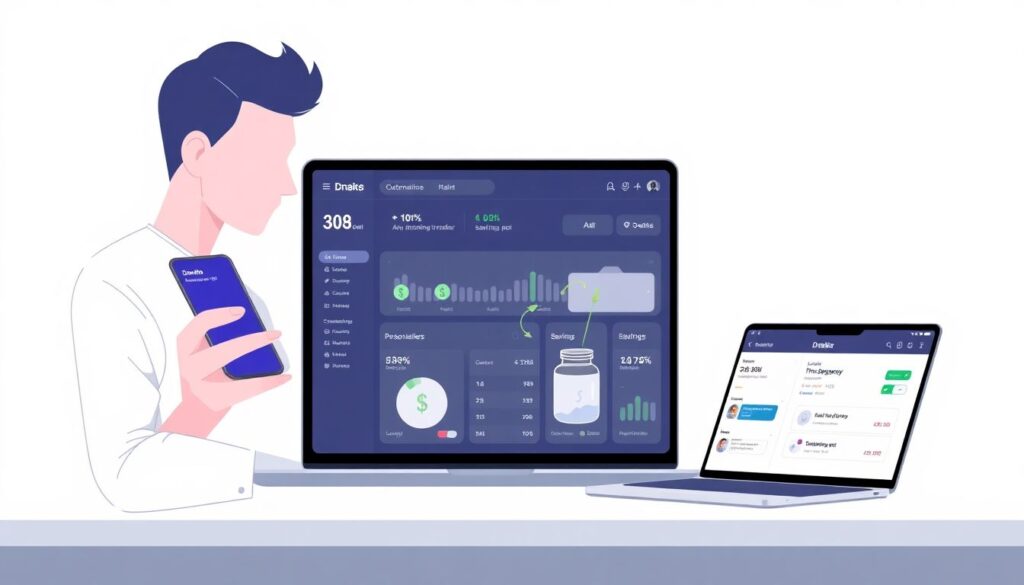
Budgeting in 2025 looks different from even five years ago because of three big shifts: automation, personalization, and behavioral nudges.
First, automation is everywhere. Banks and fintech apps now let you create rules like “send 10% of any incoming transfer to savings” or “lock this savings pot so I can’t instantly move it back.” This is a quiet revolution for people who struggle with willpower: you can design the system once, then let it quietly work in the background.
Second, personalization means that many budgeting apps for beginners now adapt to your patterns. They learn your typical bills, estimate safe-to-spend amounts, and sometimes flag unusual behavior (“Your restaurant spending is 40% higher than usual”). That makes the anti-budget and pay-yourself-first much more efficient, because the app can highlight issues without you manually tracking everything.
Third, behavioral design is now baked into many tools. Rounding up purchases to the nearest dollar and saving the difference, “lockboxes” with delay timers for withdrawals, or gamified streaks for no-spend days all exploit how human psychology actually works instead of assuming you’re a perfectly rational robot.
For someone starting today, this means:
– You can layer technology on top of any of the five methods instead of choosing between “app” or “paper.”
– You can get personalized monthly budgeting tips to save more money directly inside your banking app, often for free.
– You no longer have to be perfectly disciplined; you just have to be disciplined once, when you set up the system.
The common thread across all successful cases — from Alice with 50/30/20 to Mark with zero-based budgeting and Julia and Sam with envelopes — wasn’t perfection. It was choosing a method that matched their personality, then letting technology and small habits do most of the heavy lifting.
If you pick one method from this list, test it for a single month, and adjust instead of quitting, your money will already be behaving better than it did yesterday.