
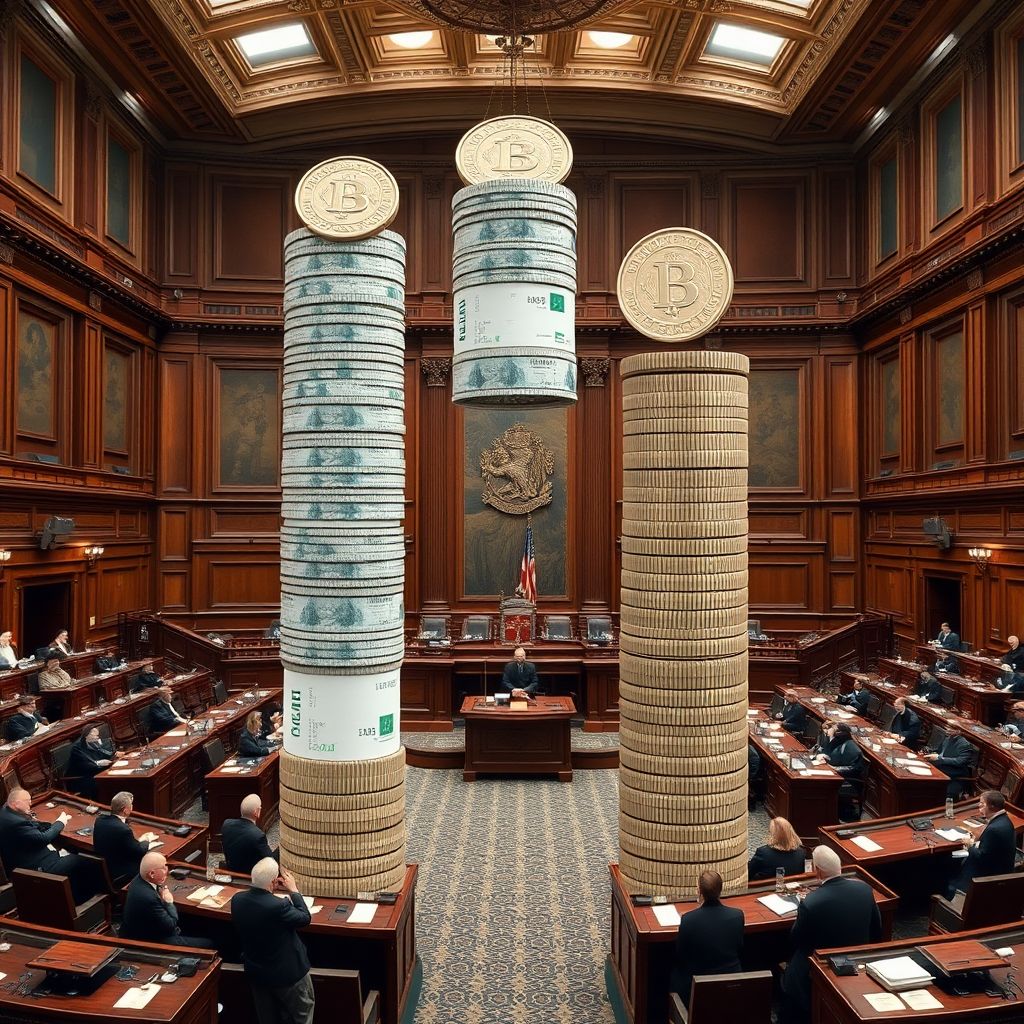
Cash in the constitution: why Switzerland’s vote matters far beyond its borders
Switzerland has taken an unusual step that is resonating well beyond its own borders: it is moving to anchor the right to use cash directly in its constitution. In an era when contactless cards, mobile wallets, and digital currencies dominate the conversation, this decision turns Switzerland into a test case for how far a modern democracy is willing to go to protect physical money.
At the core of the move lies a simple but powerful idea: cash should remain permanently available and widely accepted as a means of payment. Supporters argue that this is not nostalgia for banknotes and coins, but a strategic safeguard for economic freedom, privacy, and resilience in times of crisis.
Why protect cash at the constitutional level?
Most countries treat cash as a given, regulated through laws and central bank practices. Switzerland is going a step further by elevating cash to constitutional status. That means future governments will not be able to phase out notes and coins quietly or gradually, for example by making them inconvenient or limiting their circulation, without revising the fundamental law of the country.
The reasoning is straightforward. Once payments are fully digital, every transaction passes through intermediaries: banks, card processors, technology platforms, or state-run systems. This creates efficiency, but also centralizes power and data. A constitutional guarantee of cash is seen as a counterweight to this concentration, ensuring people retain at least one payment option that functions offline, doesn’t require an account, and leaves a minimal data trail.
The link between cash and individual freedom
For many Swiss citizens, the debate about cash is ultimately a debate about autonomy. Cash allows individuals to make purchases without building a detailed digital profile of their behavior. It also protects vulnerable groups who may not have access to banking services, smartphones, or stable internet connections.
Advocates of constitutional protection highlight several freedoms tied to cash:
– Freedom of choice: Citizens can decide whether to pay digitally or in cash, instead of being nudged into one system by corporate or state interests.
– Freedom from surveillance: Everyday transactions, from buying groceries to traveling, can be carried out without leaving an exhaustive digital record.
– Freedom under stress: In emergencies – power outages, cyberattacks, banking failures – cash remains operational when digital systems fail.
By embedding cash into the constitution, Switzerland is not trying to oppose digital payments outright, but to preserve a balance of power between digital and physical money.
Privacy vs. transparency: an unresolved tension
Digital payments have clear advantages: they can be tracked, audited, and analyzed to combat tax evasion, money laundering, and organized crime. Governments and international organizations often argue that moving away from cash improves financial transparency and helps close loopholes exploited by criminals.
Switzerland’s move underscores the unresolved tension between this desire for transparency and the right to privacy in economic life. If every transaction is traceable, citizens may feel that financial surveillance becomes the norm rather than the exception. Critics of a cashless future warn of a scenario where authorities or corporations can examine, score, or even restrict behavior based on spending habits.
By preserving cash constitutionally, Switzerland is signalling that while fighting crime is essential, it should not come at the cost of completely erasing anonymous, low-risk transactions that are part of daily life.
A hedge against technological and financial risk
Another argument in favor of constitutional protection is resilience. Cash requires no batteries, no passwords, no servers, and no software updates. When digital systems go down – whether due to technical errors, targeted cyberattacks, or financial crises – physical money continues to function as an emergency backup system.
History offers numerous examples where banking freezes, currency reforms, or network disruptions temporarily paralyzed electronic payments. In such situations, access to physical cash becomes more than convenient; it becomes essential to survival and social stability.
Switzerland, with its reputation for prudence and robustness in financial matters, is essentially codifying a backup plan: even in worst-case scenarios, citizens must be able to trade, buy, and pay using a simple, tangible medium of exchange.
The international context: a world leaning towards cashless
Switzerland’s decision does not come in isolation. Around the world, societies are moving at different speeds towards cashless models:
– In some Nordic countries, cash usage has fallen to single digits of all transactions, and many shops no longer accept it.
– In highly digitalized economies, mobile payments and contactless cards have almost completely replaced banknotes in daily life.
– Several central banks are testing or launching central bank digital currencies (CBDCs), which would give citizens a direct digital claim on the state, potentially reducing the role of physical cash over time.
Against this backdrop, Switzerland is positioning itself deliberately against a rapid, market-driven disappearance of cash. Instead of leaving the fate of banknotes to commercial habits and technological trends, it is setting a political and legal boundary: digital progress is welcome, but not at the cost of eliminating physical money entirely.
Does constitutional protection mean cash forever?
Enshrining cash in the constitution does not freeze the current system in time. It does not require citizens to use cash, nor does it forbid innovation in payments. Rather, it establishes a minimum standard:
– Cash must remain available in sufficient quantities.
– Infrastructure for distributing and withdrawing cash (such as ATMs and bank branches) cannot be dismantled purely for cost-cutting reasons if it undermines basic access.
– The state cannot intentionally phase out cash without undergoing a major constitutional revision and open political debate.
Over time, the role of cash may still shrink naturally as people choose digital options for convenience. But with constitutional protection, that decline would be the result of genuine choice, not the disappearance of alternatives.
Implications for businesses and banks
For retailers, transport operators, and other service providers, a constitutional right to cash raises practical questions: will they be compelled to accept cash in all circumstances? Where does the line lie between practical operations and legal obligations?
While specific regulations may differ, the general expectation is that essential services must continue accepting cash within reasonable limits. This may mean that businesses cannot declare themselves entirely “cashless” if doing so would exclude parts of the population or violate the constitutional guarantee.
Banks also face pressure. In many countries, they have been closing branches and ATMs as digital banking expands. If cash is constitutionally protected, the financial sector may have to maintain a certain level of physical infrastructure even when it is less profitable. This becomes a matter not just of business efficiency but of public service.
What about central bank digital currencies?
The rise of CBDCs adds another layer to the debate. A state-issued digital currency could offer some of the security and stability of cash, while still being traceable and programmable. For governments and central banks, CBDCs are attractive tools for implementing monetary policy more directly and ensuring everyone has at least basic access to digital money.
Switzerland’s move to protect cash does not exclude the development of a CBDC, but it does shape how such a system would coexist with physical money. The message is that even if a digital franc emerges, it should complement, not replace, banknotes and coins.
This stance is likely to influence international discussions. If a major financial center insists on keeping cash alongside any future digital currency, other countries may be more cautious about rushing toward fully cashless systems.
Social inclusion and the risk of digital exclusion
Not everyone is ready or able to go fully digital. Elderly people, rural communities, low-income households, migrants without stable legal status, and individuals without smartphones or bank accounts can be pushed to the margins when cash disappears.
By protecting cash, Switzerland implicitly addresses questions of social inclusion:
– How do we ensure that everyone can participate in the economy, not just those with access to the latest technology?
– What obligations do states and companies have towards people who cannot or do not wish to use digital tools?
– Is financial participation a right that must not depend solely on private digital infrastructure?
These questions are increasingly relevant worldwide as governments digitize public services and payments. Switzerland’s choice suggests that a fully digital system without a cash alternative risks creating new layers of inequality.
A signal to other democracies
Even if other countries do not immediately copy Switzerland’s constitutional approach, the decision places pressure on lawmakers elsewhere to clarify their own stance on cash. For years, many governments have allowed cash use to erode quietly, without a transparent, democratic debate about the endgame.
Switzerland is, in effect, forcing that debate into the open: should the right to use cash be considered a basic component of economic freedom? Or is a cashless future simply an inevitable by-product of technology and market forces?
By treating cash as a constitutional matter rather than a narrow technical topic, the Swiss are reminding other democracies that money is not just about efficiency or convenience. It is also about power, rights, and the relationship between citizens, the state, and private financial actors.
The broader lesson: balance, not nostalgia
The Swiss decision is not a rejection of digital progress. The country is highly advanced in digital banking and electronic payments, and its citizens use modern tools extensively. What the move really expresses is a desire for balance: rapid innovation paired with durable safeguards.
Cash in the constitution encapsulates that balance. It ensures that as societies race toward more data-driven, automated, and networked financial systems, they keep at least one simple, universal, and robust option alive. Whether other countries follow this path or not, the Swiss example turns the global debate on cash from a technical footnote into a central question of how free, inclusive, and resilient our economies should be.