
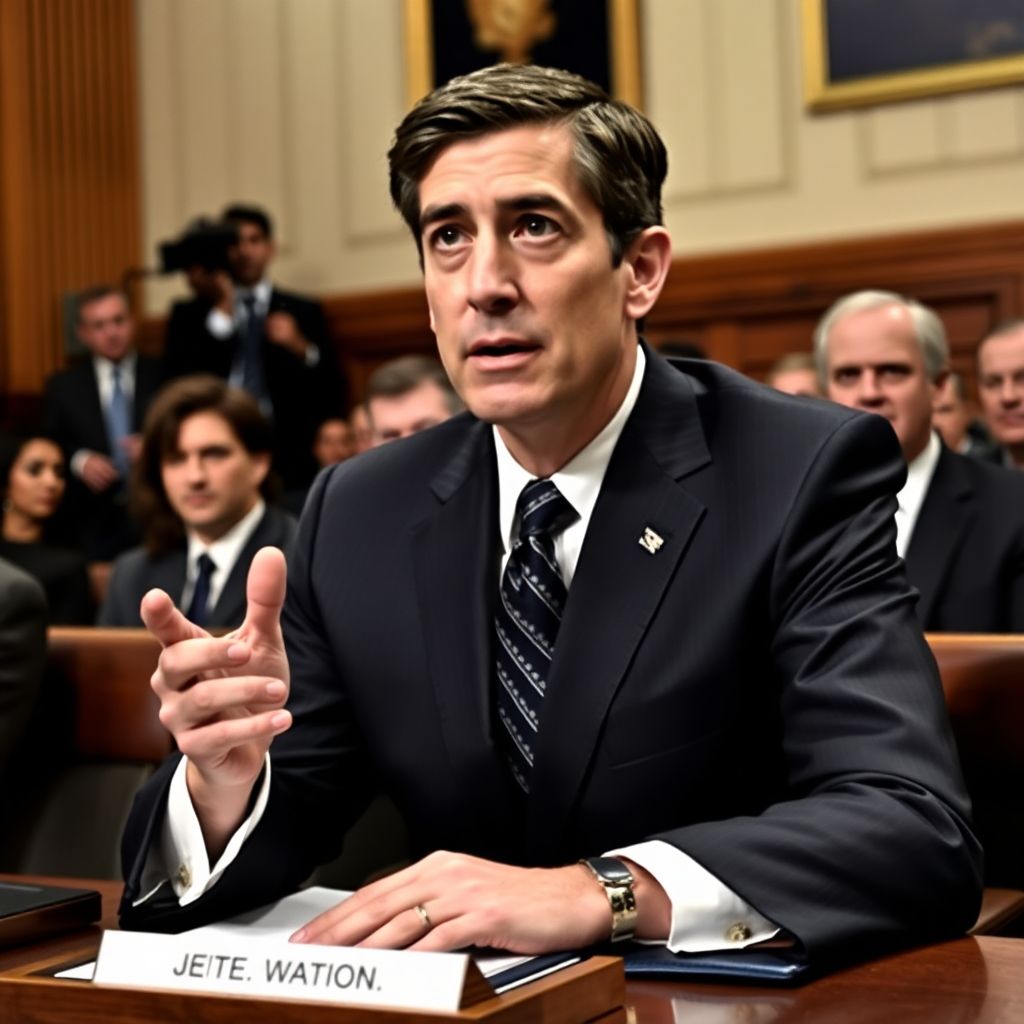
Federal Reserve Chair Kevin Warsh on Tuesday vowed to drive high inflation out of the economy, but carefully avoided saying whether the central bank is finished lifting interest rates.
Testifying before the House Financial Services Committee in his first congressional appearance since taking over as chair on May 22, Warsh stressed that policymakers are united on one key objective: bringing price growth back under control.
“We have no tolerance for persistently elevated inflation,” Warsh told lawmakers, underscoring that the central bank “shares a resolute commitment to restoring price stability.”
Despite that tough rhetoric, Warsh offered no clear hint about the Fed’s next move on interest rates. He declined to say whether the rate-hiking campaign that began earlier is now over, or if additional tightening might still be necessary later this year. His cautious language reflects both a fluid economic backdrop and deep divisions inside the central bank itself.
The 19 officials who set monetary policy are split almost down the middle. In projections published last month, roughly half indicated they expect to support at least one more rate increase before year‑end. The other half signaled they would prefer to leave borrowing costs where they are – or even begin lowering them if the economy weakens more than anticipated.
That internal rift leaves Warsh in a delicate position. As chair, he must forge a consensus among policymakers who interpret the same data in very different ways, all while responding to shifting inflation readings, evolving growth prospects, and mounting political pressure as the election season intensifies.
His testimony came just hours after new government figures showed overall consumer prices fell 0.4% between May and June, largely thanks to a drop in gasoline costs. The decline in headline inflation will likely fuel hopes that the worst of the price spike is behind the United States.
More notable for Fed officials, however, was the behavior of core inflation – a measure that strips out food and energy prices, which tend to swing violently from month to month. Core prices were flat in June compared with May, marking a broader and more encouraging cooling in underlying inflation than many forecasters had expected.
For some policymakers, those numbers are a sign that previous rate hikes are working their way through the economy and that the central bank can afford to pause and watch how conditions evolve. For others, they are not yet sufficient proof that inflation is decelerating in a durable way, especially given the risk that price pressures could re‑ignite if financial conditions ease too quickly.
Warsh walked a narrow line between those camps. He praised the recent progress on inflation but warned that one or two favorable reports would not be enough to declare victory. He reiterated that the Fed’s 2% inflation goal remains non‑negotiable and suggested officials are prepared to keep policy restrictive “for as long as necessary” to ensure higher prices do not become entrenched.
At the same time, Warsh acknowledged the risk of overdoing it. Excessive or poorly timed rate hikes could slow the economy more than intended, trigger unnecessary job losses, or expose vulnerabilities in the banking and credit system. That balancing act – quelling inflation without inflicting severe damage on growth and employment – is at the heart of the Fed’s current dilemma.
Complicating matters further is the looming specter of political pressure. Former President Donald Trump has a long history of criticizing the Fed when it tightens policy, and his allies have already begun framing high interest rates as a drag on workers, homeowners, and small businesses. As the campaign season heats up, the central bank is likely to find itself increasingly in the crosshairs of public debate.
Warsh, a former Wall Street executive and one‑time Fed governor, is no stranger to these tensions. He emphasized in his remarks that the central bank sets policy independently and “for the long‑run health of the economy,” not to satisfy any administration. Still, markets and lawmakers are acutely aware that vocal criticism from a potential future president could complicate the Fed’s communications and heighten the stakes of every decision.
Investors are parsing every word from Warsh and his colleagues for clues about the path ahead. Some are betting that the combination of softening inflation and signs of slower economic momentum will ultimately push the Fed toward rate cuts sooner rather than later. Others expect officials to hold rates steady for an extended period, preferring a “higher for longer” stance to make sure price pressures are fully extinguished.
Warsh’s refusal to commit to a specific timeline keeps those debates wide open. Instead of pinning himself to a forecast, he repeatedly stressed that future decisions would be “data‑dependent” – financial‑market shorthand for saying the Fed will react to incoming information on inflation, jobs, and growth rather than follow a pre‑set script.
Behind the technical language lies a message aimed at households and businesses: don’t assume that a few months of better inflation readings will automatically translate into cheaper borrowing costs. Mortgage rates, credit‑card rates, and business loan rates are likely to remain elevated until the Fed is convinced that inflation is on a sustainable path lower.
For consumers, that means the cost of financing major purchases – homes, cars, education – may stay high even as price increases slow. For companies, especially smaller firms that rely on bank loans, tighter credit could restrain expansion, hiring, or investment plans. Warsh suggested that this pain is part of the adjustment process after years of ultra‑low rates and that restoring price stability is ultimately in the long‑term interest of both workers and employers.
The split within the Fed also reflects broader uncertainty about how the economy is evolving post‑pandemic. Some officials focus on cooling wage growth, rising delinquencies on some consumer debts, and early signs of job‑market softening as reasons for caution. Others point to still‑solid employment levels, resilient consumer spending, and firm corporate profits as evidence that the economy can withstand somewhat higher rates without tipping into recession.
Warsh did not explicitly endorse either narrative. Instead, he framed the current moment as a transition phase: an economy moving away from the extremes of pandemic‑era stimulus and supply shocks toward something closer to normal – but not there yet. In such an environment, he argued, policy errors on either side (doing too much or too little) could be costly.
Over the coming months, a series of key data releases will test the Fed’s patience and convictions. If inflation continues to undershoot expectations and growth slows more visibly, the doves on the committee will gain leverage to argue for a pause or even for early rate cuts. If price pressures prove sticky or re‑accelerate, the hawks will likely press for at least one more increase, regardless of the political noise surrounding the institution.
For now, Warsh is trying to keep all options on the table while sending a firm signal on the Fed’s ultimate priority. High inflation, he insists, will be “a thing of the past.” How quickly that promise is fulfilled – and how much economic pain is endured along the way – will depend on the very decisions he declined to spell out on Capitol Hill.